
Space knowledge Normal Grade 1 Science Worksheets
3 filtered results
Difficulty Level
Grade
Age
-
From - To
Subject
Activity
Standards
Explore our engaging Space Knowledge Normal Grade 1 Science Worksheets, designed to ignite young minds with the wonders of the universe! Perfect for first graders, these printable resources seamlessly blend fun and learning, covering essential topics such as planets, stars, moons, and space exploration. Each worksheet promotes critical thinking, encourages creativity, and enhances vocabulary, ensuring a comprehensive understanding of space concepts. With colorful illustrations and interactive activities, students will have a blast while developing their scientific knowledge! Ideal for classroom use or at-home learning, our worksheets make it easy to inspire curiosity about the cosmos in your little learners. Start exploring today!
Favorites
With answer key
Interactive
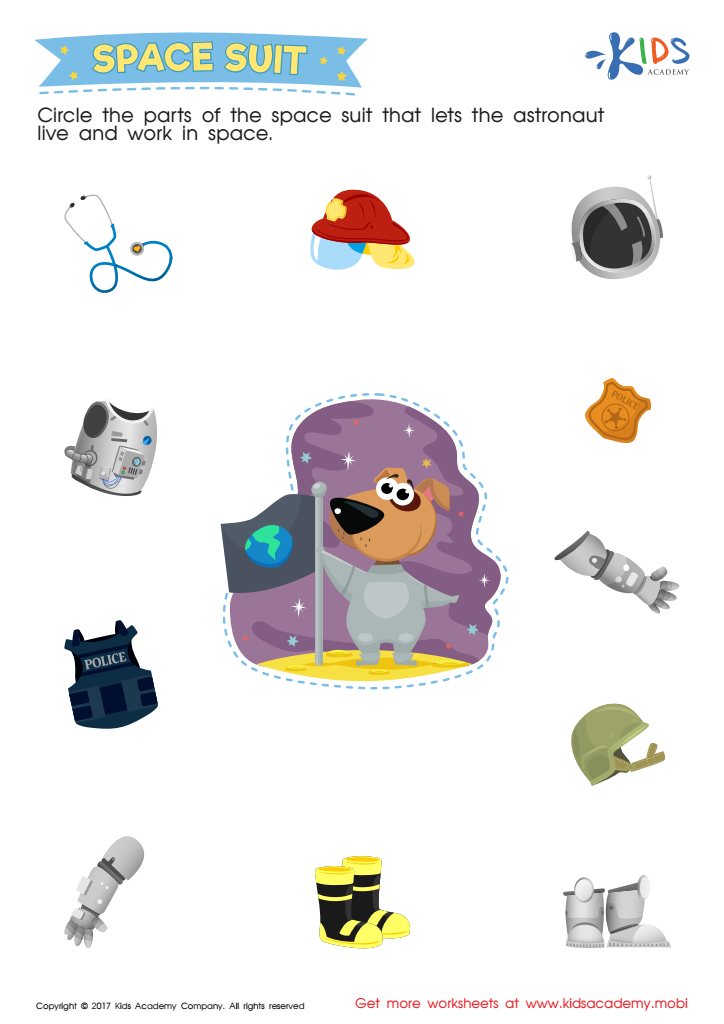
 Assign to My Students
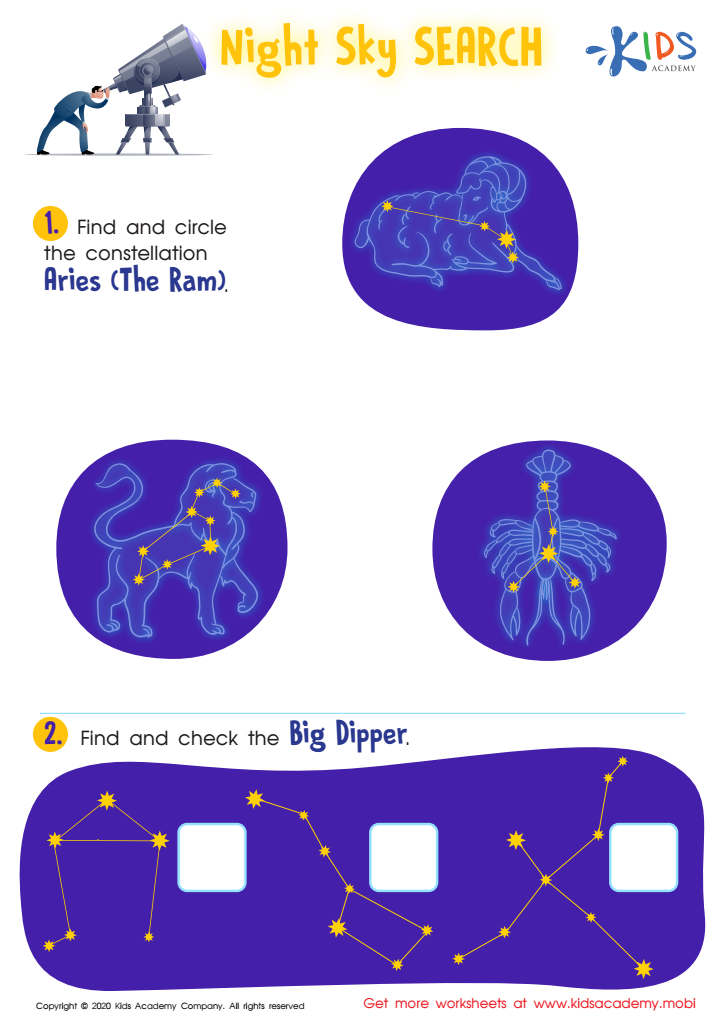
Night Sky Search Worksheet
Gaze up into the night sky and spot the stars! Your little astronomer can learn about Aries and Big Dipper constellations with this science worksheet. Simply find the ram for Aries and check the box for Big Dipper. Then, when the weather is right, go outside and look for them in the night sky!
Night Sky Search Worksheet
Worksheet
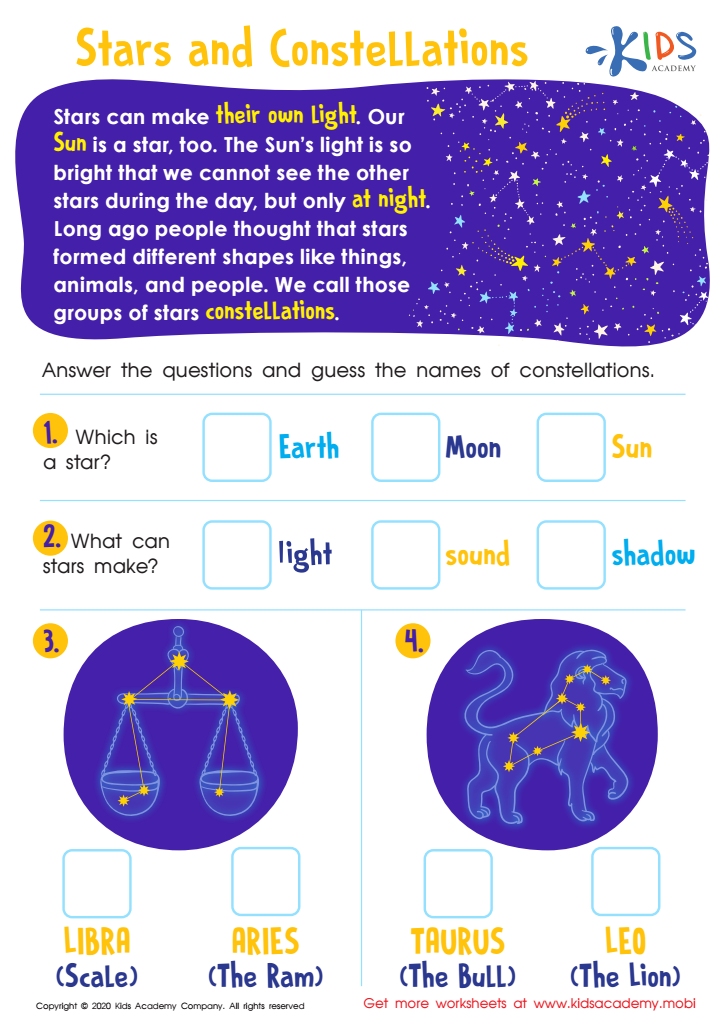
Stars and Constellations Worksheet
Learn about stars and constellations with this entertaining worksheet! Read the passage at the top of the page to gain an understanding of stars, then test your child's knowledge with the questions below. Check the right answers and finish this science worksheet with your child - they'll be amazed that stars can make their own light, just like the sun!
Stars and Constellations Worksheet
Worksheet
Join Kids Academy for Free
Who is primarily going to use this learning content?








Understanding space is essential for young learners, especially in Grade 1, as it ignites curiosity and fosters a love for science. Parents and teachers should care about teaching space knowledge because it lays the foundation for critical thinking and exploration. Space captivates children’s imaginations, encouraging them to ask questions about the universe, planets, stars, and even simple concepts like day and night.
Moreover, space education enhances literacy and vocabulary. Children learn new words like "planet," "star," "moon," and "orbit," which enriches their language skills. It also promotes observational skills, as children might look at the night sky and learn to identify familiar objects, cultivating a sense of wonder and appreciation for the world beyond Earth.
Incorporating space knowledge in the curriculum supports integrated learning. It can blend diverse subjects—such as math (counting stars), art (creating drawings of planets), and geography (understanding Earth’s position). Also, introducing concepts of space encourages teamwork during projects and discussions, fostering social skills.
By emphasizing space education, parents and teachers not only equip children with knowledge but also inspire future generations to explore scientific careers. This engagement is crucial for developing informed, curious, and capable citizens who appreciate our universe's complexities.







