Alphabet tracing Normal Kindergarten ABC Order Worksheets
4 filtered results
Difficulty Level
Grade
Age
-
From - To
Subject
Activity
Standards
Discover our engaging Alphabet Tracing Kindergarten Worksheets designed to help young learners master their ABCs in a fun and interactive way! These fun and colorful worksheets allow children to practice tracing each letter in the correct alphabetical order, enhancing their handwriting skills while promoting letter recognition. With an easy-to-follow format, kids will develop confidence as they trace uppercase and lowercase letters, forming a strong foundation for future literacy. Perfect for classroom activities or home learning, our worksheets ensure an enjoyable learning experience that makes mastering the alphabet a breeze. Download and watch your child's skills flourish!
Favorites
With answer key
Interactive
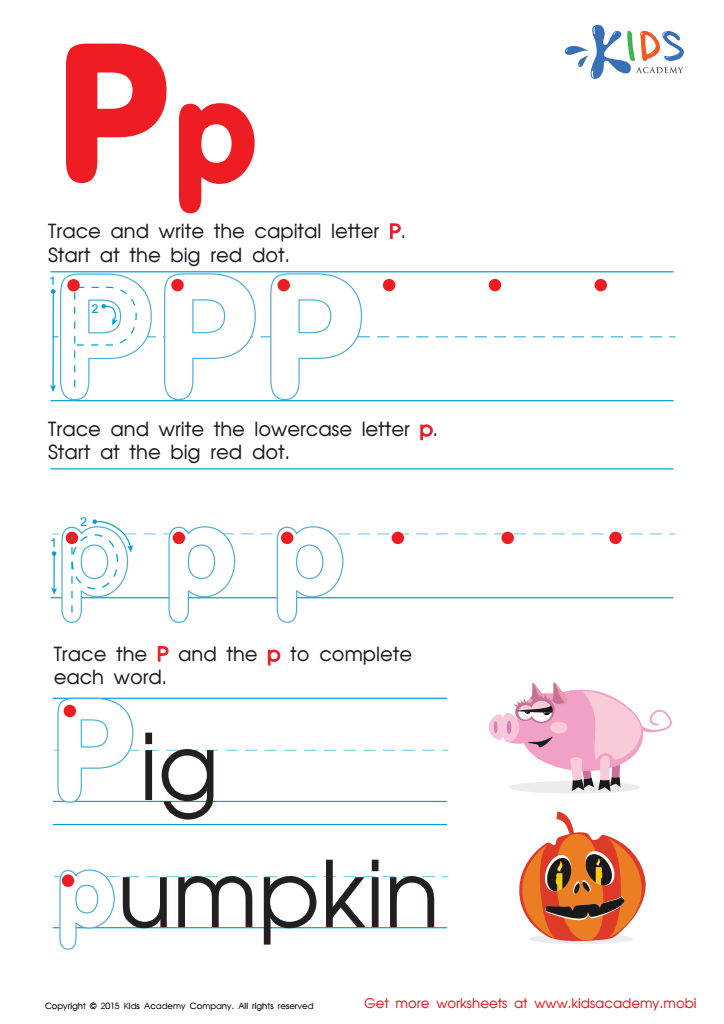
Letter P Tracing Page
Trace the lines from the red dot to learn to write "P"! Then practice this letter with the fun activities: complete the word "Pig" and "Pumpkin". Check out Kids Academy to get more free ABC worksheets.
 Assign to My Students
Letter P Tracing Page
Worksheet

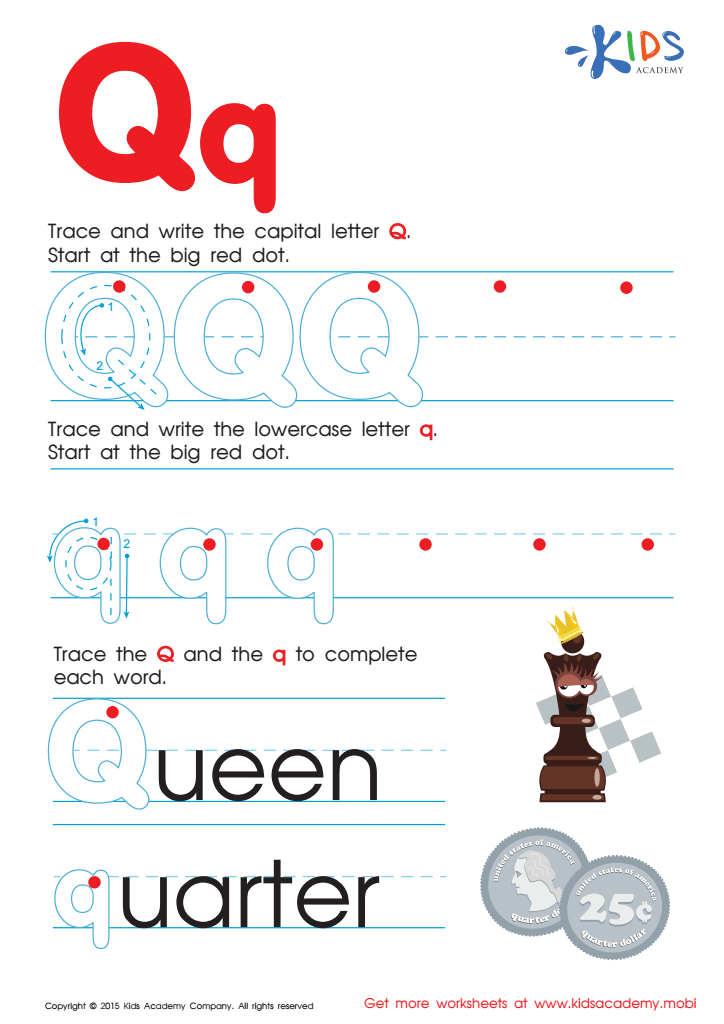
Letter Q Tracing Page
Learn the letter "Q"! Trace and write it a few times in upper and lowercase. Then help the Queen by writing her initial letter. Finally, write "quarters" and practice with more alphabet worksheets.
Letter Q Tracing Page
Worksheet

Letter H Tracing Page
Trace the letter "H", then practice writing its lowercase form. Finally, choose your favorite form of transport and ride away! Get our worksheets to make learning fun and easy.
Letter H Tracing Page
Worksheet

Letter D Tracing Page
Trace and write capital and lowercase letter "D" with our free printable alphabet worksheet! Be careful not to mix up "b" and "d" - just look at the ducks and write their first letter. The dolphin wants to join the fun too - do you like dolphins? Get more fun worksheets and activities at Kids Academy!
Letter D Tracing Page
Worksheet
Join Kids Academy for Free
Who is primarily going to use this learning content?






Alphabet tracing is a fundamental activity in early childhood education that plays a crucial role in developing literacy skills among kindergarteners. Parents and teachers should care about alphabet tracing for several compelling reasons.
Firstly, tracing letters helps children recognize and identify the shape and structure of each letter, which is essential for developing handwriting skills. This muscle memory not only enhances their ability to write but also boosts their confidence in expressing themselves.
Secondly, mastering the alphabet in a proper order supports phonemic awareness, which is the foundation for reading. When children learn the sequence of the ABCs, they can make connections between letters and sounds, aiding in their overall language development.
Furthermore, engaging in tracing activities fosters fine motor skills. Children develop the hand-eye coordination needed for more advanced writing and crafting activities, preparing them for future academic success.
Lastly, tracing letters can be a fun, interactive activity that encourages a love for learning. When parents and teachers incorporate playful strategies into the tracing process—like singing the alphabet song or using colorful materials—they make learning an enjoyable experience.
In summary, alphabet tracing activities lay the groundwork for essential skills in reading and writing and help cultivate a positive attitude toward learning in young children.