Handwriting practice Normal Kindergarten ABC Order Worksheets
4 filtered results
-
From - To
Our "Handwriting Practice Normal Kindergarten ABC Order Worksheets" are an excellent resource designed to enhance your child’s literacy journey. These engaging worksheets focus on mastering the ABC order while refining handwriting skills. Perfect for young learners, they combine educational rigor with playful exercises, ensuring kids find joy in learning. Each sheet presents clear, easy-to-follow activities that boost letter recognition, improves fine motor skills, and encourages writing confidence. Ideal for use at home or in the classroom, these worksheets support foundational alphabet skills and prepare children for future academic success. Available for instant download, making learning accessible and fun.
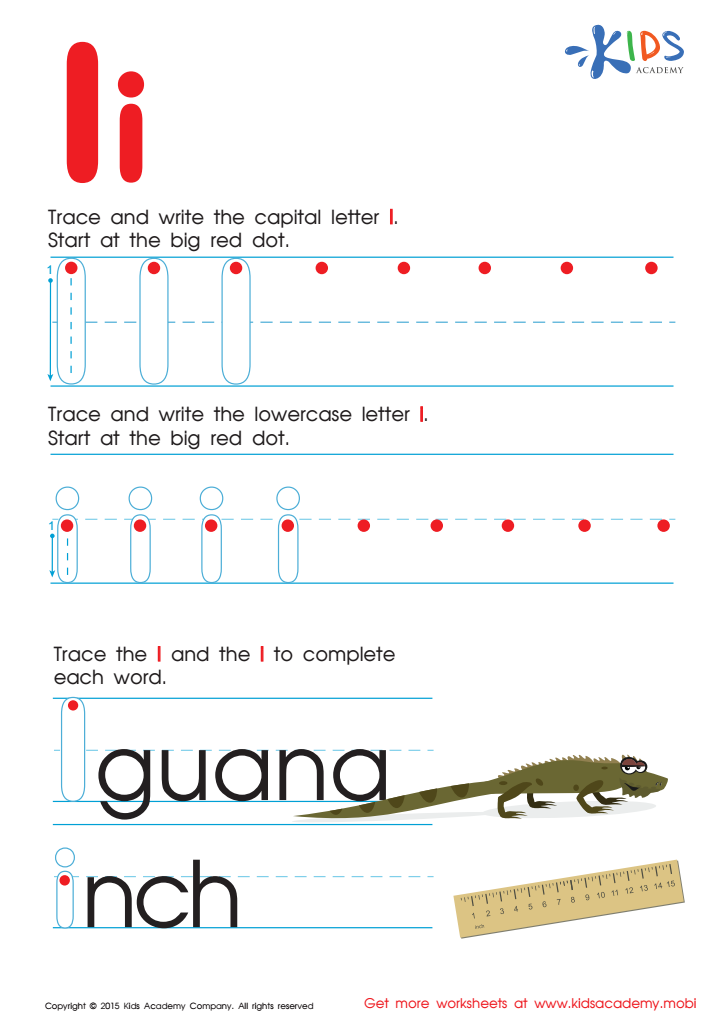
Letter I Tracing Page
 Assign to My Students








Letter C Tracing Page

Letter G Tracing Page
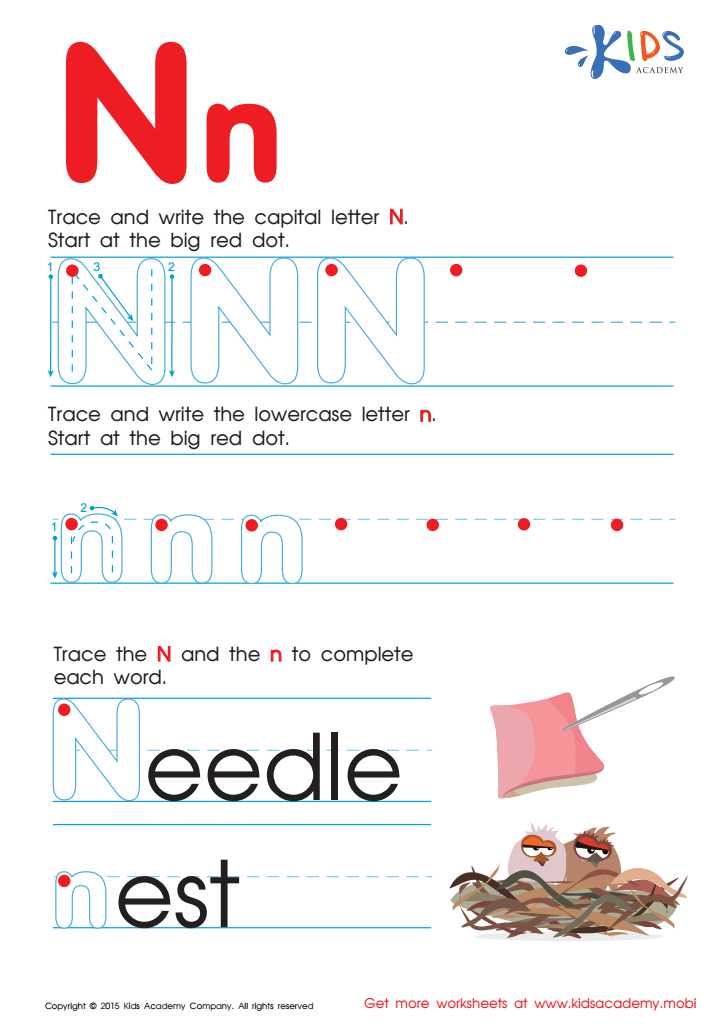
Letter N Tracing Page






Handwriting practice and mastering the ABC order are crucial foundational skills for kindergarteners, and parents and teachers should care because these early competencies significantly influence children's overall academic development. Mastering handwriting improves fine motor skills and hand-eye coordination, enabling children to produce legible, well-formed letters, which is important for efficient and clear written communication in later years. Additionally, regular handwriting practice reinforces letter recognition, a critical pre-reading skill that is necessary for developing fluency in reading and writing.
Incorporating these activities in a structured ABC order, or alphabetical order, helps children understand the sequence of the alphabet, fostering skills necessary for organizing information and following systematic patterns. This understanding enhances children's ability to use dictionaries, glossaries, and indices more effectively, which are vital tools for learning across various subjects. Furthermore, engaging in these practices can improve concentration, memory, and attention to detail.
By prioritizing handwriting practice and understanding of the ABC order, parents and teachers lay a solid foundation for literacy and cognitive skills, setting children up for future academic success. Encouraging steady progress in these areas inspires confidence and a positive attitude towards learning, nurturing well-rounded, capable young students.