Phonics practice Normal Kindergarten Beginning Sounds Worksheets
5 filtered results
Difficulty Level
Grade
Age
-
From - To
Subject
Activity
Standards
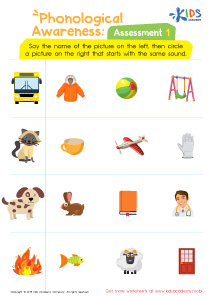
Enhance your child's phonics skills with our engaging Normal Kindergarten Beginning Sounds Worksheets! Designed for early learners, these worksheets help children identify and focus on the initial sounds of letters and words. With colorful illustrations and various fun activities, your little ones will practice their phonetic awareness while enjoying their learning experience. Each worksheet is tailored to reinforce their understanding of beginning sounds, setting a strong foundation for reading and writing. Perfect for at-home practice or classroom use, these phonics worksheets create a fun and interactive way for young learners to develop their language skills. Explore our worksheets today and watch your child thrive!
Favorites
With answer key
Interactive
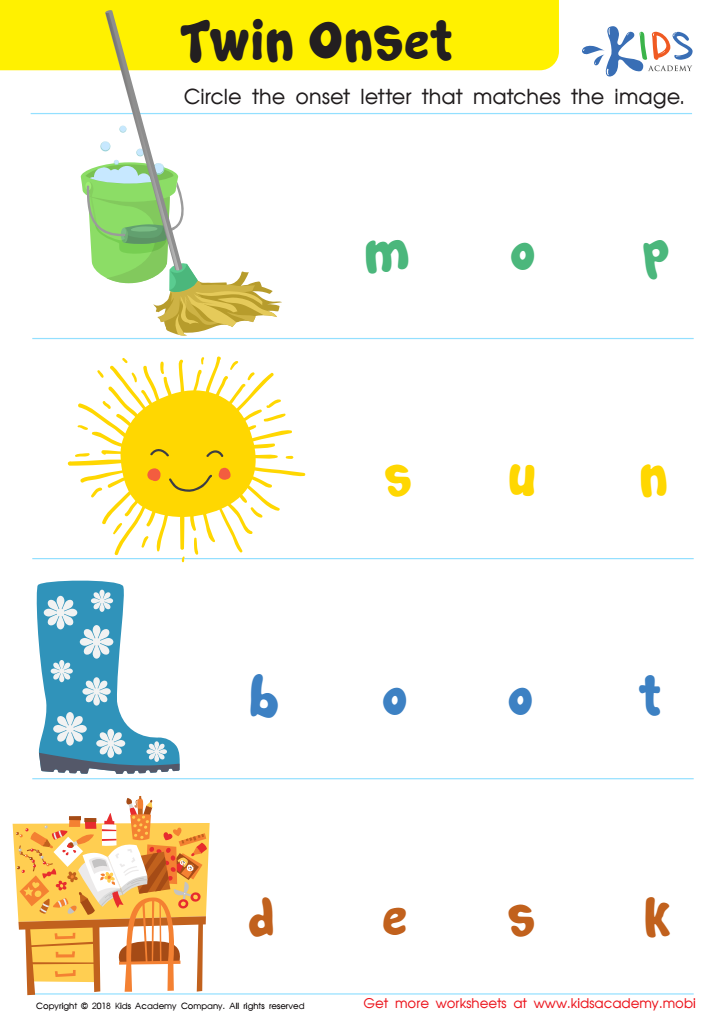
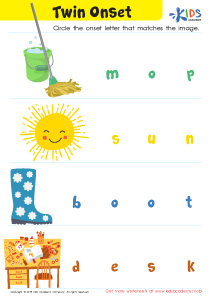
Twin Onset Worksheet
Children's phonological skills and reading/spelling strategies are strengthened by isolating initial consonants. This fun PDF worksheet encourages kids to trace the correct onset letter and hone fine motor skills. It's a great way to introduce early reading and spelling.
 Assign to My Students
Twin Onset Worksheet
Worksheet
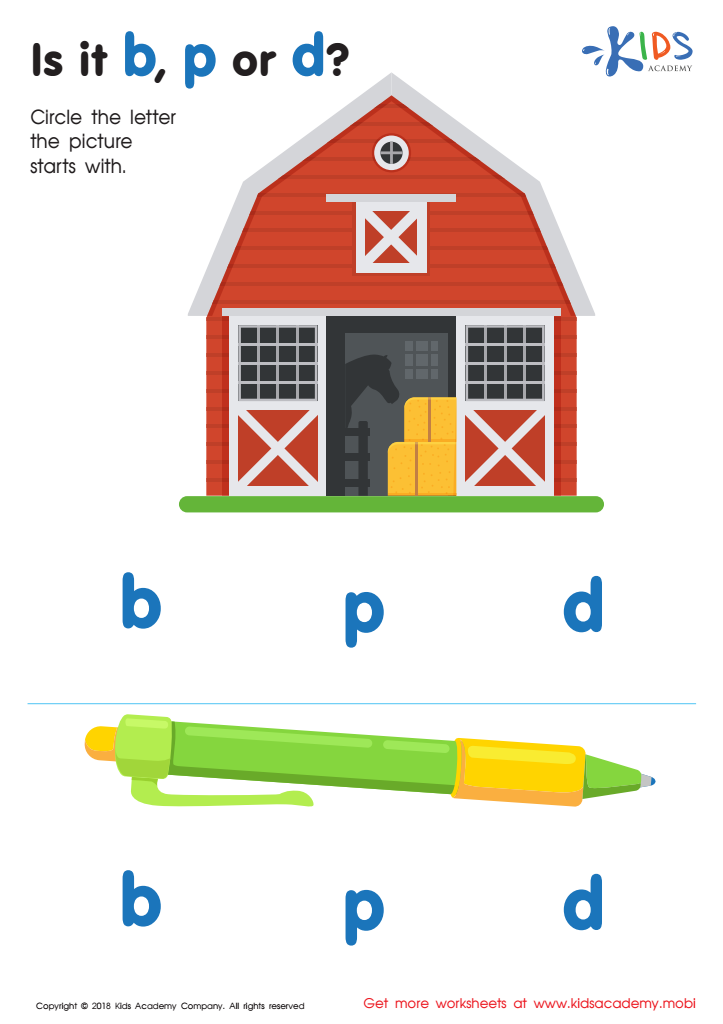
Is it b, p or d? Worksheet
Test your child's identification skills with this worksheet. They must identify the image and then circle the letter it begins with: 'b', 'p', or 'd' (e.g. an image of the sun would mean they circle 's').
Is it b, p or d? Worksheet
Worksheet
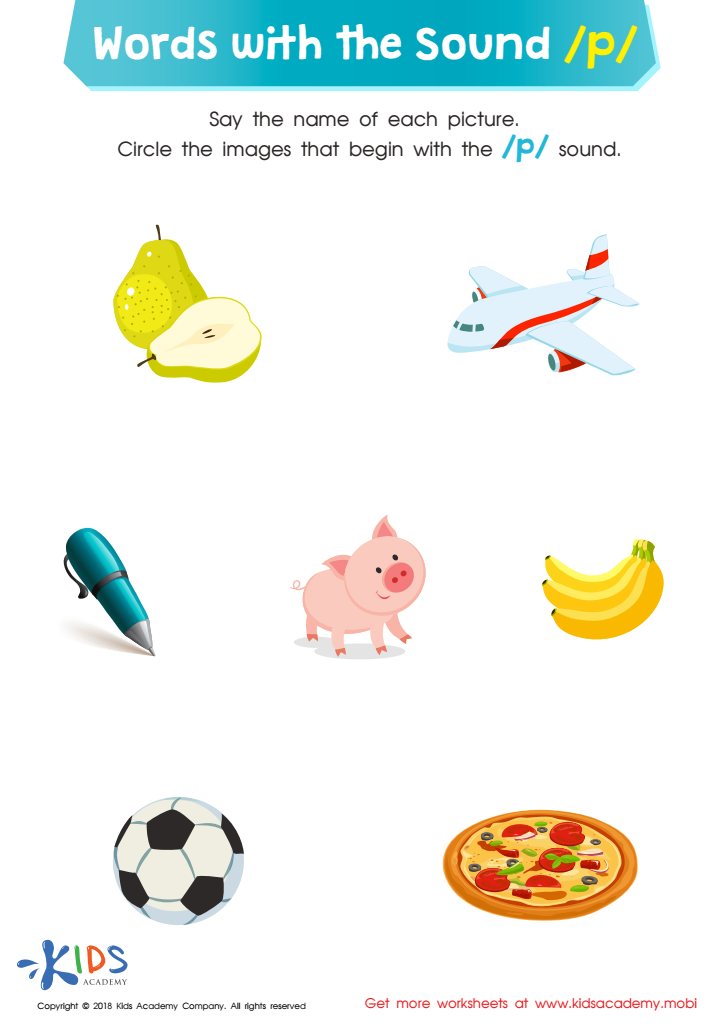
Words with sound p Reading Worksheet
Working on this fun worksheet? Name each picture aloud and listen carefully before circling those that start with the letter «p»! Pizza, pig, plane, or banana - practice phonics to help your child recognize the letter «p» sound for successful early reading and decoding!
Words with sound p Reading Worksheet
Worksheet
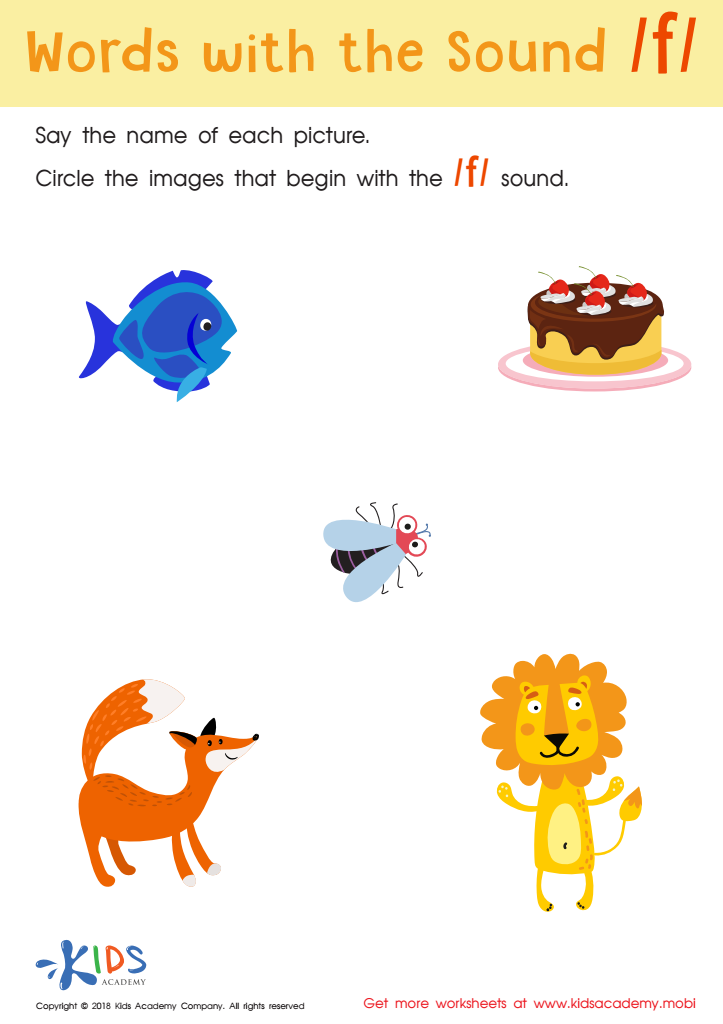
Words with sound f Reading Worksheet
This illustrated phonics worksheet is ideal for preschool or kindergarten. It helps boost learners' literacy skills with a focus on the letter "f". Ask your child to name all the pictures, listening for that sound. Examples are fish, fox, lion, bug. When they can identify which words start with "f", have them circle the images. Congratulate them on a job well done!
Words with sound f Reading Worksheet
Worksheet
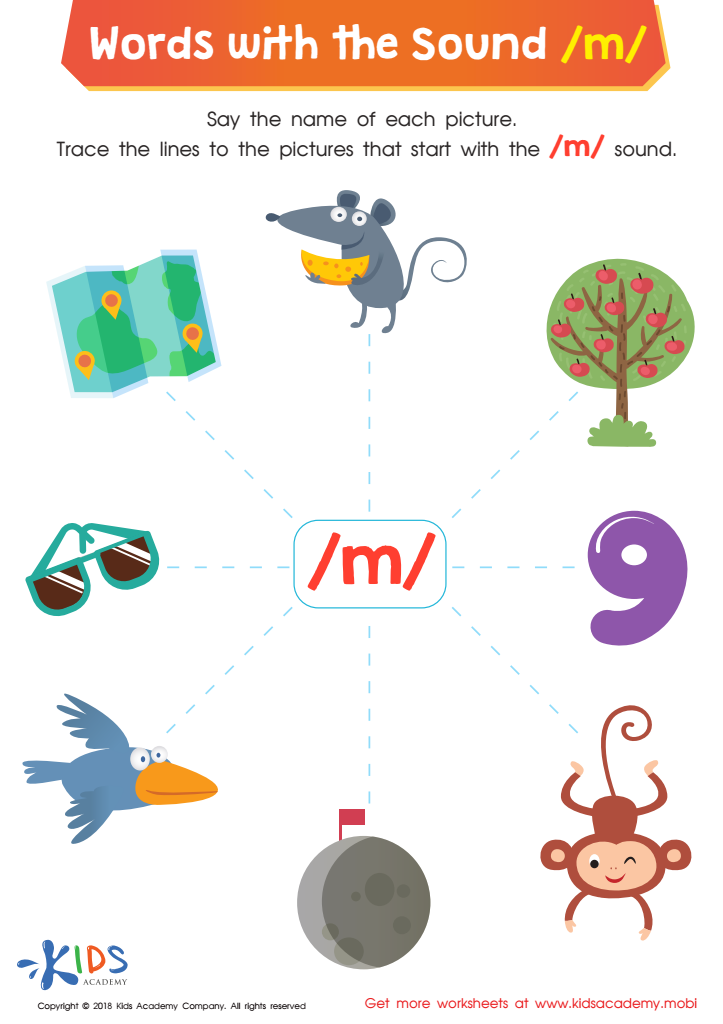
Words with Sound M Reading Worksheet
Emerging readers will use this traceable worksheet to name and trace pictures with the letter sound «m». Bright, engaging pictures make this fun and build confidence while strengthening fine motor skills. They won't even know they're also working on reading skills!
Words with Sound M Reading Worksheet
Worksheet
Join Kids Academy for Free
Who is primarily going to use this learning content?




Phonics practice, especially focusing on beginning sounds, is crucial for kindergarten students as it lays the groundwork for reading and literacy skills. Understanding phonics allows children to connect sounds with letters, promoting their ability to decode words, which is fundamental to reading development. When children learn to recognize beginning sounds, they develop phonemic awareness, which is the ability to hear and manipulate sounds in words—an essential skill that supports reading comprehension and spelling.
For parents and teachers, emphasizing phonics practice enhances children's learning experiences. Engaging children in activities that involve identifying and producing beginning sounds helps establish a strong literacy foundation, making the transition to more complex reading skills smoother and more successful. Furthermore, these practices can foster a love for reading by making it a more accessible and enjoyable process.
Additionally, early phonics training can identify learning challenges or areas where a child may need extra support. With early intervention, educators can tailor instruction to individual needs, setting children up for long-term academic success. Overall, prioritizing phonics practice promotes effective communication, boosts confidence, and cultivates enthusiasm for learning, ensuring that children are well-equipped for their educational journeys.