Rhyming skills development Normal Kindergarten Alphabet Worksheets
3 filtered results
Difficulty Level
Grade
Age
-
From - To
Subject
Activity
Standards
Enhance your child's rhyming skills with our expertly designed Normal Kindergarten Alphabet Worksheets. Each activity targets essential literacy skills, helping young learners recognize and create rhyming pairs. These engaging worksheets incorporate vibrant illustrations and easy-to-follow instructions to motivate children as they explore the world of words. By practicing these fun exercises, students will develop a solid foundation in phonemic awareness and improve their reading capabilities. Whether used in the classroom or at home, our Rhyming Skills Development worksheets are perfect for fostering a love for language and preparing your kindergartener for future language success.
Favorites
With answer key
Interactive

Rhyming Words Rhyming Worksheet
This worksheet is great for honing pre-reading skills. It helps kids make connections between pictures and written words, use problem-solving, and recognize sounds and words that rhyme. Have fun exploring rhyming words with your child, and they'll be rhyming in no time!
 Assign to My Students
Rhyming Words Rhyming Worksheet
Worksheet
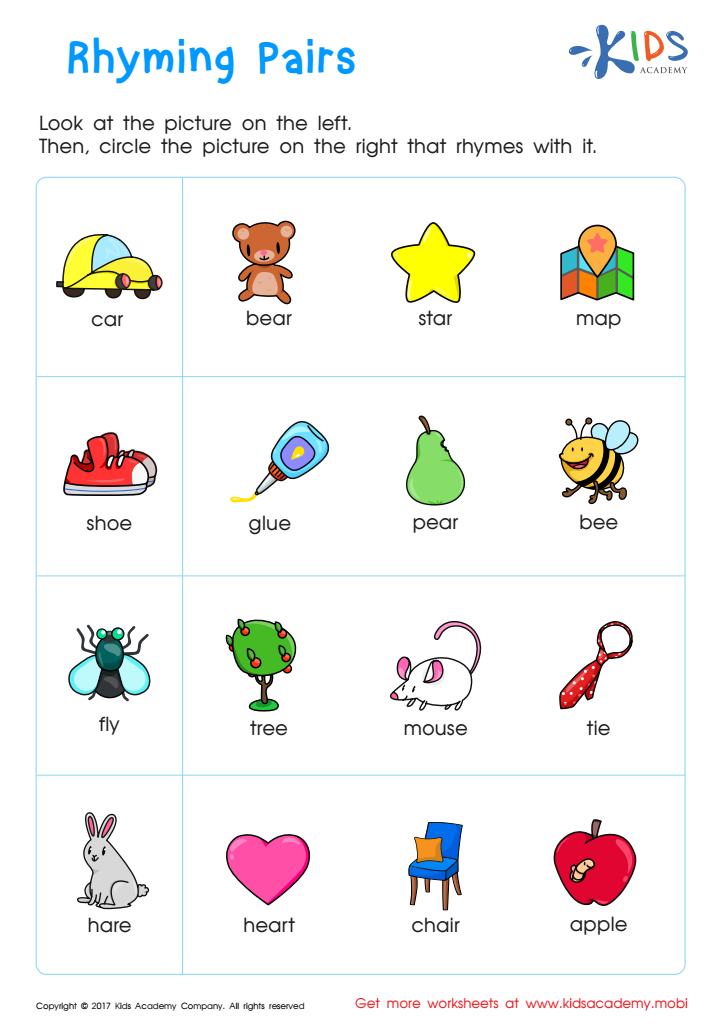

First Words: Picture Rhymes Worksheet
Rhyming helps kids understand language, read and write better. This printable worksheet boosts problem-solving and cognitive skills with vibrant pictures. It teaches kids to identify words, recognize rhymes, complete mental tasks and write words. An extra activity: show them how rhyming words share some of the same letters.
First Words: Picture Rhymes Worksheet
Worksheet
Join Kids Academy for Free
Who is primarily going to use this learning content?








Rhyming skills play a crucial role in early language development and literacy, making them essential for parents and teachers to focus on during a child's kindergarten years. Understanding and creating rhymes help children recognize sound patterns, an important precursor to reading. This skill enhances phonemic awareness—the ability to hear, identify, and manipulate individual sounds in words—which is foundational for decoding, spelling, and writing.
When children become adept at rhyming, they learn to predict words and sounds, boosting their vocabulary and comprehension. Rhyming activities, such as singing nursery rhymes or playing word games, make learning engaging and fun, fostering a positive attitude towards reading and language. This emotional connection to literacy can significantly impact a child's motivation to learn and succeed in higher grades.
Moreover, rhyming helps children learn about word families and phonics. Understanding that words can share common sounds allows them to read and spell new words with greater ease. Engaging with rhymes also supports memory retention and cognitive development, as repetitive patterns are easier to remember.
In sum, focusing on rhyming skills in kindergarten provides a strong foundation for confident, skilled readers, directly influencing a child’s future academic success. Both parents and teachers play vital roles in nurturing these early literacy skills through fun, rhythmic activities and supportive learning environments.