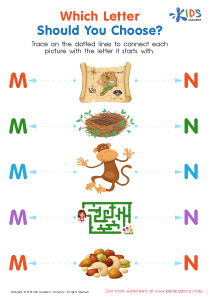
Uppercase identification Normal Kindergarten Alphabet Worksheets
5 filtered results
-
From - To
Discover our "Uppercase Identification Normal Kindergarten Alphabet Worksheets" designed to make learning uppercase letters engaging and fun for young learners. Each worksheet focuses on recognizing and identifying uppercase letters, fostering essential literacy skills. Our activities include tracing, matching, and coloring, crafted to enhance fine motor skills and reinforce letter recognition. These worksheets are perfect for classroom use or at-home practice, ensuring a strong foundation in alphabet knowledge. With vibrant illustrations and interactive tasks, children will enjoy a rewarding learning experience. Give your kindergartener the tools they need to master the alphabet confidently!
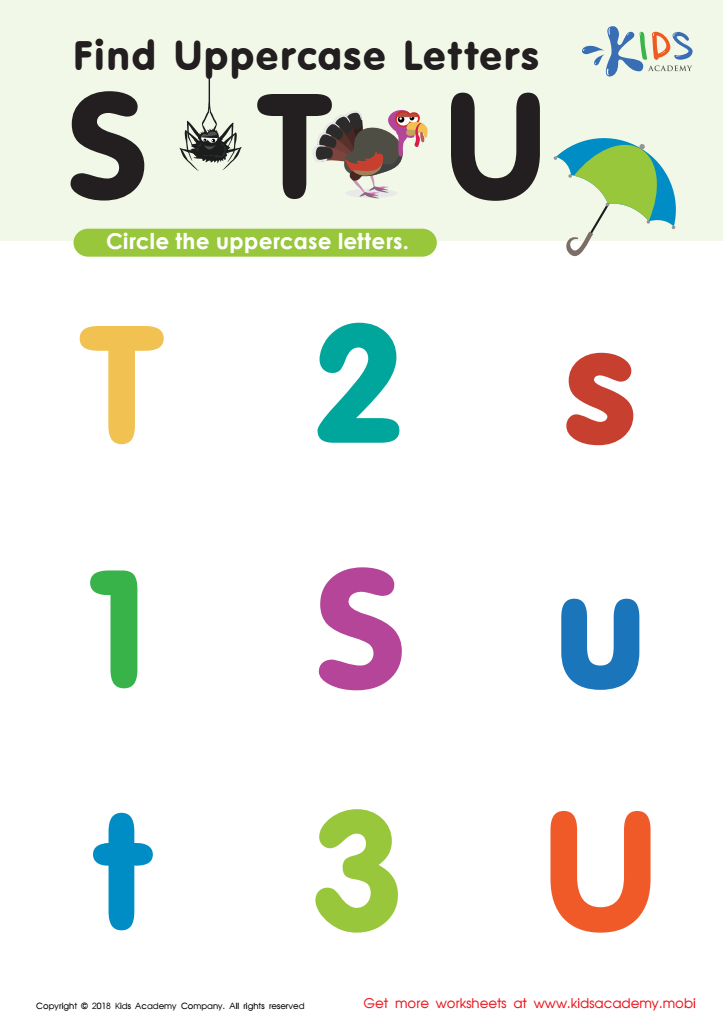
Find Uppercase Letters Worksheet
 Assign to My Students
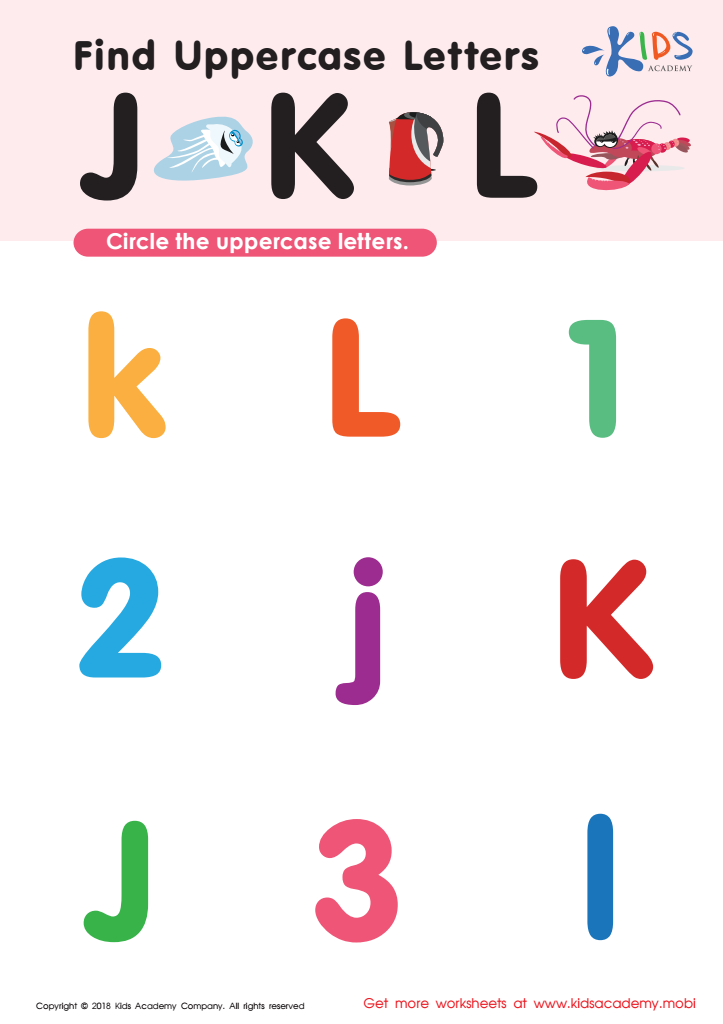
Find Uppercase Letters J, K, and L Worksheet
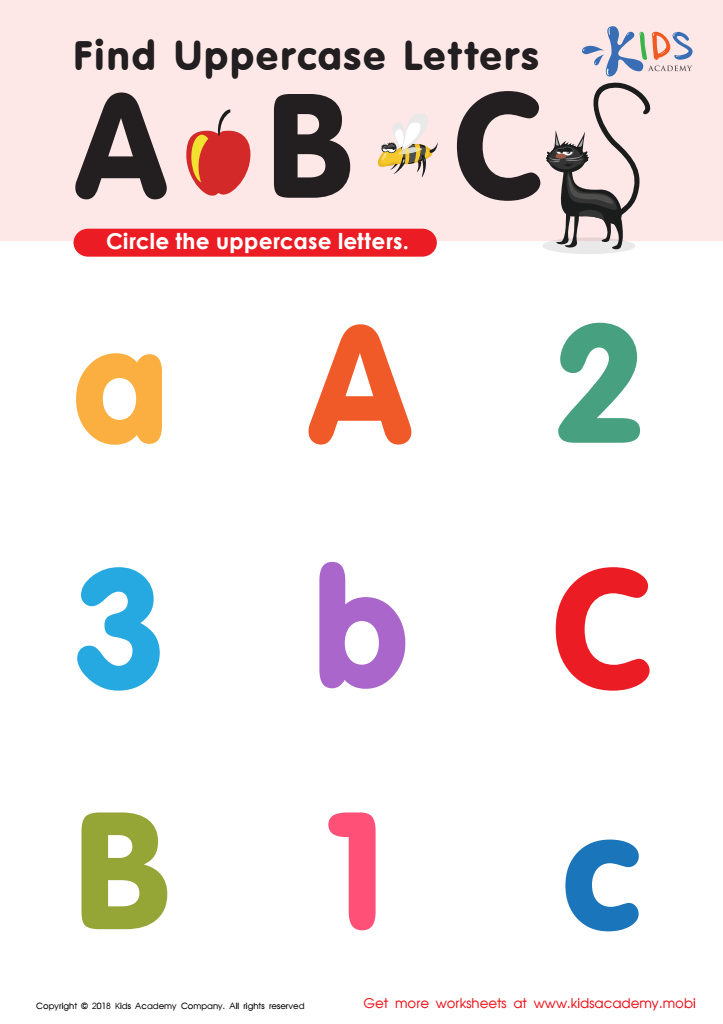
Find Uppercase Letters A, B, and C Worksheet
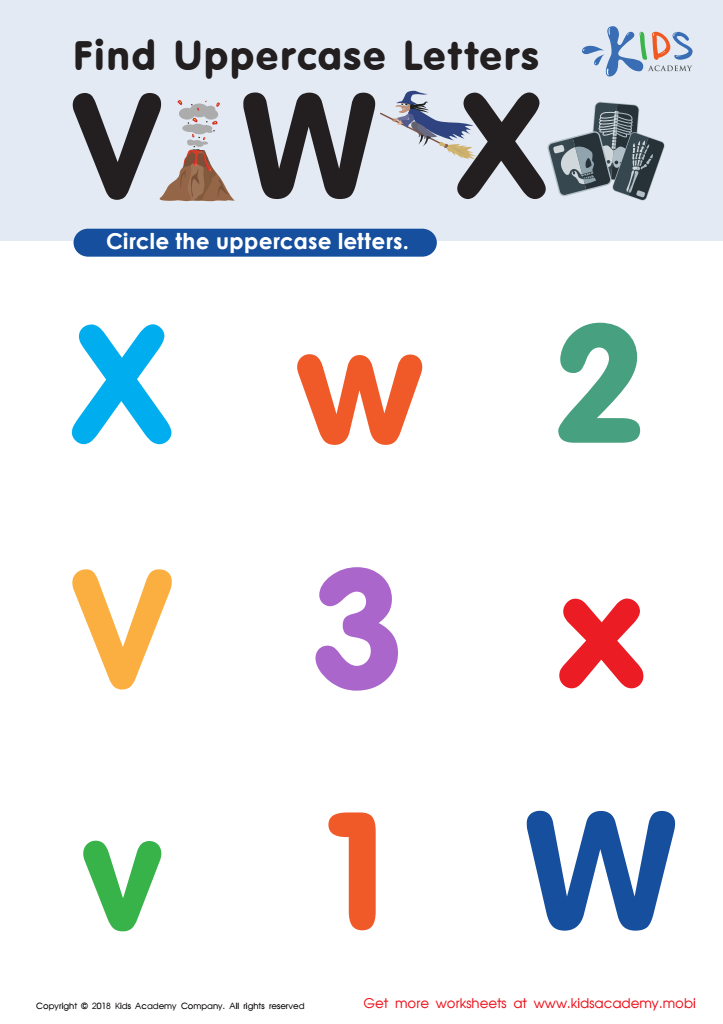
Find Uppercase Letters V, W, X Worksheet
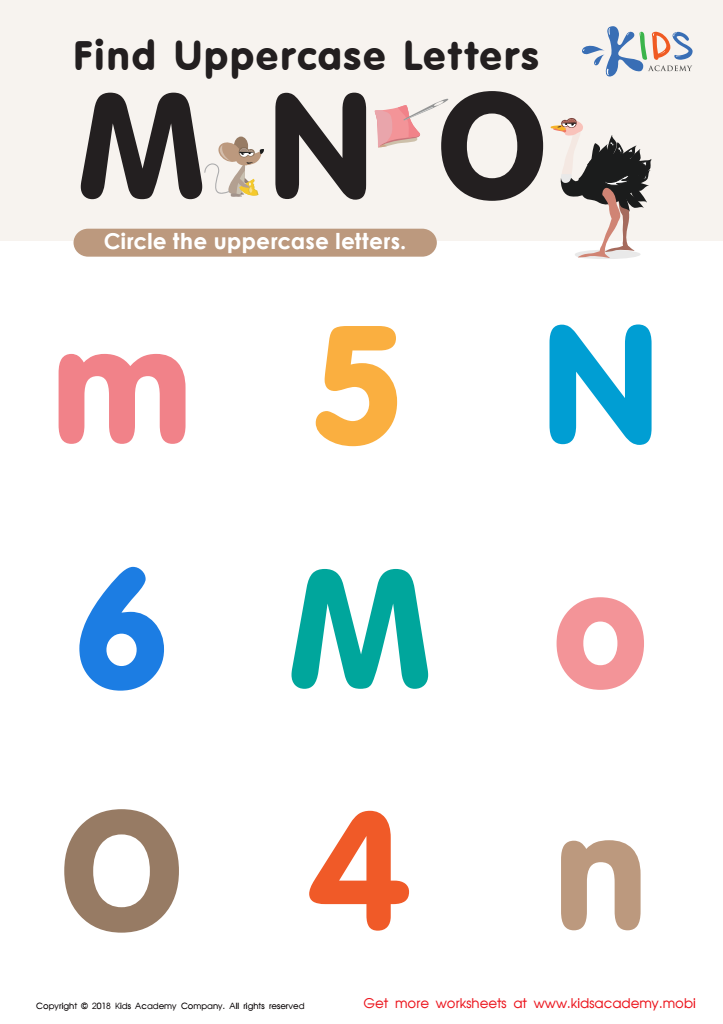
Find Uppercase Letters M, N, and O Worksheet








Parents and teachers should prioritize uppercase identification in kindergarten because it forms the foundation for early literacy skills essential for lifelong learning. Recognizing uppercase letters aids in developing reading and writing proficiency. Familiarity with these letters helps children decode words, fostering emergent reading abilities crucial in the early stages of education.
Moreover, uppercase letters are often the first introduced to children because they have simpler, more uniform shapes than lowercase letters, making them easier for young learners to identify and recall. Mastery of these shapes boosts confidence and sets a positive tone for further literacy endeavors. This ability also enhances fine motor skills through activities like tracing or crafting letters, laying groundwork for clear and legible handwriting.
Understanding uppercase letters also supports the recognition of students' names, which are typically written with initial uppercase letters, making personal interactions and classroom management smoother. Additionally, emphasizing uppercase letters helps children grasp important conventions of print, such as capitalization in sentence beginnings and proper nouns, reinforcing the structure and rules of written language.
In essence, focusing on uppercase identification at the kindergarten level builds a robust literacy foundation, empowering children with critical skills that will serve as the cornerstone of their academic journey and overall communication abilities.