Reading comprehension Normal Kindergarten Long Vowels Worksheets
4 filtered results
Difficulty Level
Grade
Age
-
From - To
Subject
Activity
Standards
Welcome to our collection of Reading Comprehension Normal Kindergarten Long Vowels Worksheets! Designed to make learning fun and engaging, these worksheets empower young learners by enhancing their reading skills and understanding of long vowels. Each worksheet offers a variety of activities that support vocabulary development and comprehension through creative storytelling and enjoyable exercises. Children will strengthen their ability to decode words, grasp meanings, and relate sounds to written text. Perfect for classroom use or home learning, these resources are tailored to meet kindergarten standards and promote foundational literacy skills. Help your child become a confident reader with our long vowel worksheets today!
Favorites
With answer key
Interactive
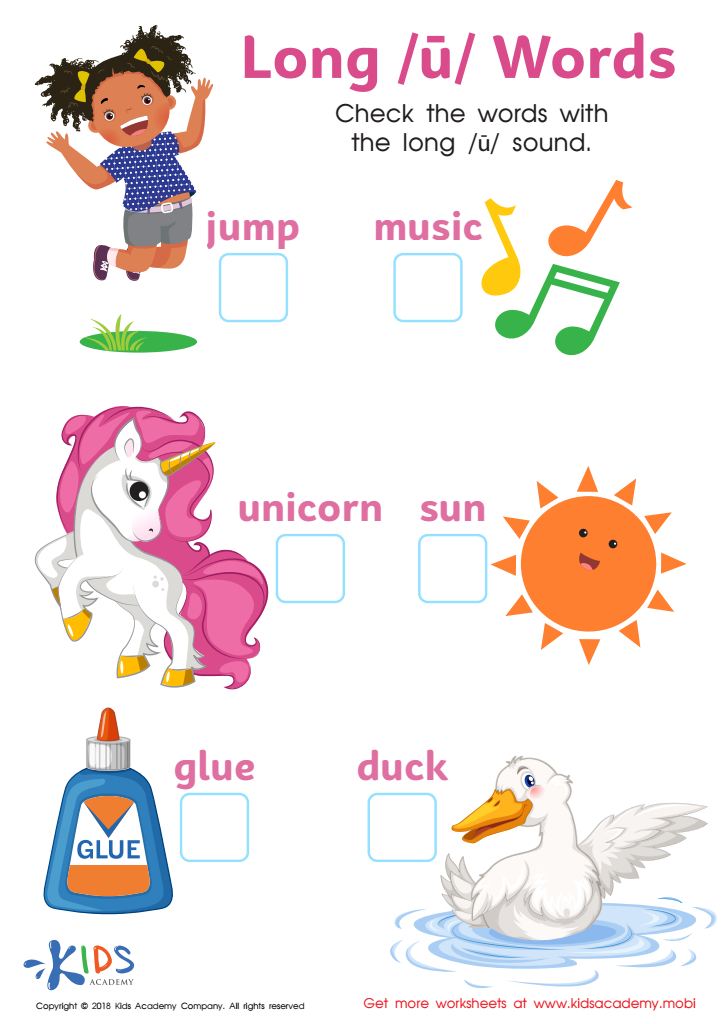
Long U Words Reading Worksheet
Emerging readers will love this free worksheet! It's a great way to practice distinguising between long and short vowel sounds, while identifying high-frequency words. They'll also get to develop fine motor skills and gain confidence in decoding and reading skills.
Long U Words Reading Worksheet
Worksheet
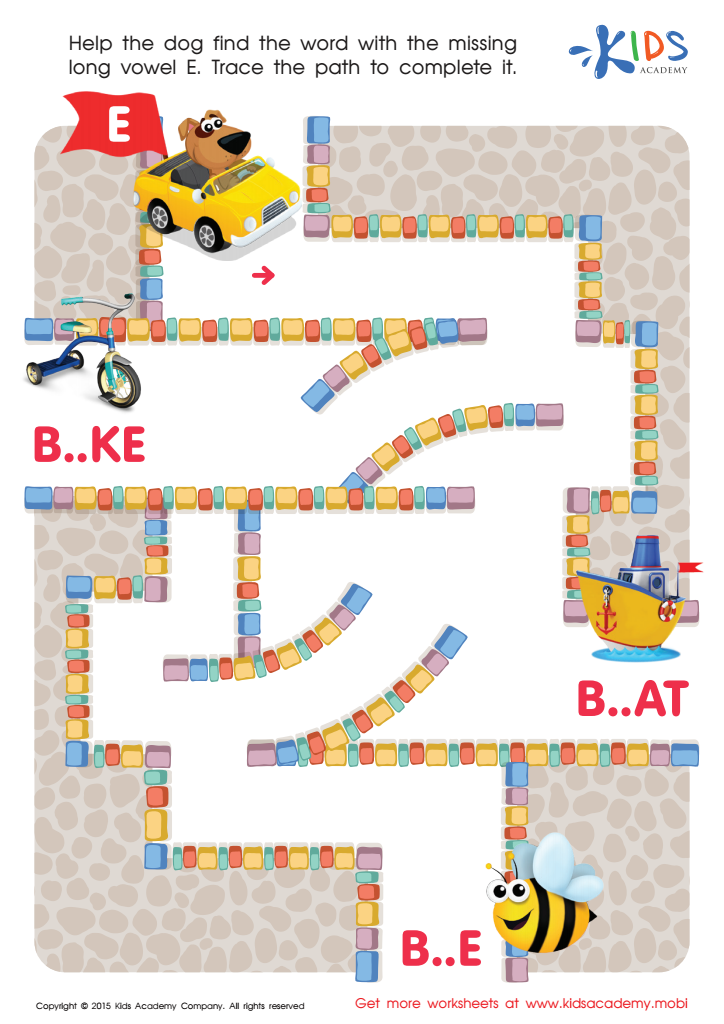
Long Vowel Sound E Worksheet
Practice distinguishing long and short vowel sound E with this free printable! Kids must complete the word “bee” by tracing the maze and adding the missing letter E. Remind them to say the word aloud to help sharpen their phonics ear. Get more phonics fun with the vowel sound E here.
Long Vowel Sound E Worksheet
Worksheet
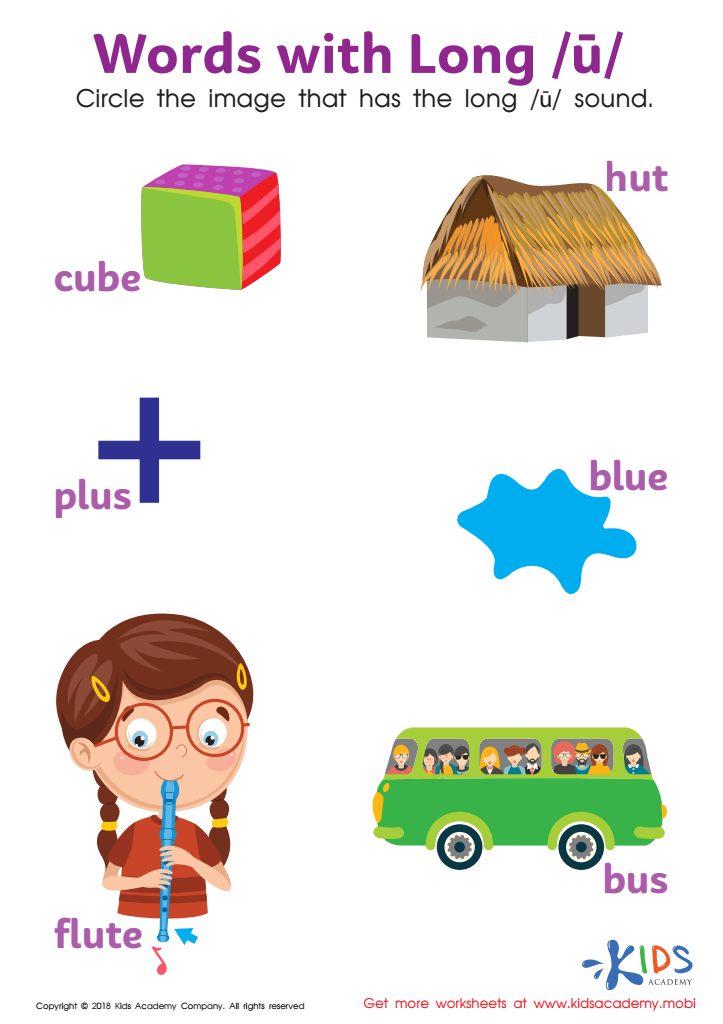
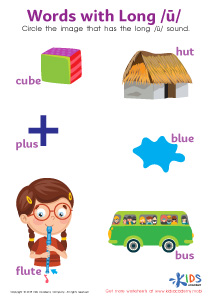
Words with Long U Reading Worksheet
Help your new reader master vowel recognition with this fun worksheet. By using picture clues and practicing fine motor skills, they'll learn to differentiate between words with the long and short «u» sound. Your learner will also get to practice vowel discrimination in high-frequency words. It's a great way to learn the importance of vowels in reading!
Words with Long U Reading Worksheet
Worksheet
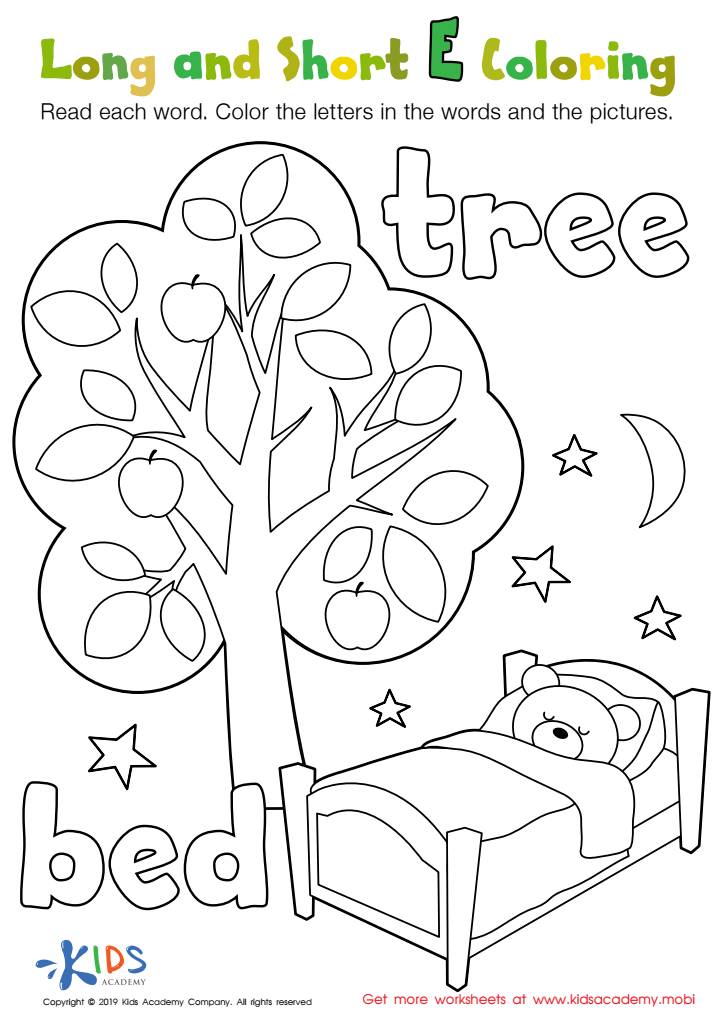
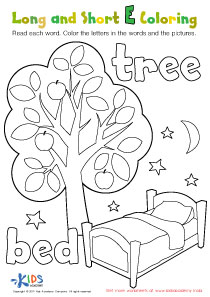
Long and Short E Worksheet
This fun printout makes learning phonics enjoyable for Grade 3 students. Get them to read the words “tree” and “bed” to recognize the different sounds of the letter “E”. After hearing the words they can color the words and the pictures to understand differences between long and short vowels.
Download (PDF)
 Assign to My Students
Assign to My Students
Long and Short E Worksheet
Worksheet
Join Kids Academy for Free
Who is primarily going to use this learning content?



Parents and teachers should prioritize reading comprehension and long vowel mastery in kindergarten because these foundational skills are crucial for a child’s overall literacy development. Strong reading comprehension enables children to understand and interpret texts, fostering their ability to engage with stories and information critically. By focusing on long vowels, educators help children recognize patterns in words, which enhances their decoding skills. This understanding is vital as it lays the groundwork for future reading success.
Long vowels, which often involve the pronunciation of the letter names while reading, can be found in many key words children encounter. When children grasp long vowel sounds, they're more equipped to read age-appropriate books independently, enhancing their confidence and motivation. Moreover, comprehension goes beyond just reading words; it includes being able to discuss and respond to what they read. Enhancing these skills supports not just literacy but also cognitive development, as children learn to express their thoughts and feelings.
Ultimately, attention to reading comprehension and the recognition of long vowels fosters a genuine love for reading, encourages lifelong learning, and supports academic success. Parents and teachers thus play an essential role in nurturing these critical abilities in young learners.