Letter Tracing Practice Normal Kindergarten Tracing Letters Worksheets
3 filtered results
Difficulty Level
Grade
Age
-
From - To
Subject
Activity
Standards
Discover our engaging "Letter Tracing Practice" worksheets designed specifically for kindergarteners! These printable resources aim to enhance early literacy skills by providing children with a fun and interactive way to learn the alphabet. Each worksheet features bold, easy-to-follow letters to promote fine motor skill development and improve handwriting. Kids will enjoy tracing both uppercase and lowercase letters, helping to reinforce letter recognition and phonetic knowledge. Perfect for at-home practice or classroom activities, our letter tracing worksheets foster independent learning while building confidence in young learners. Start your child on the path to reading and writing success with our educational and enjoyable resources!
Favorites
With answer key
Interactive
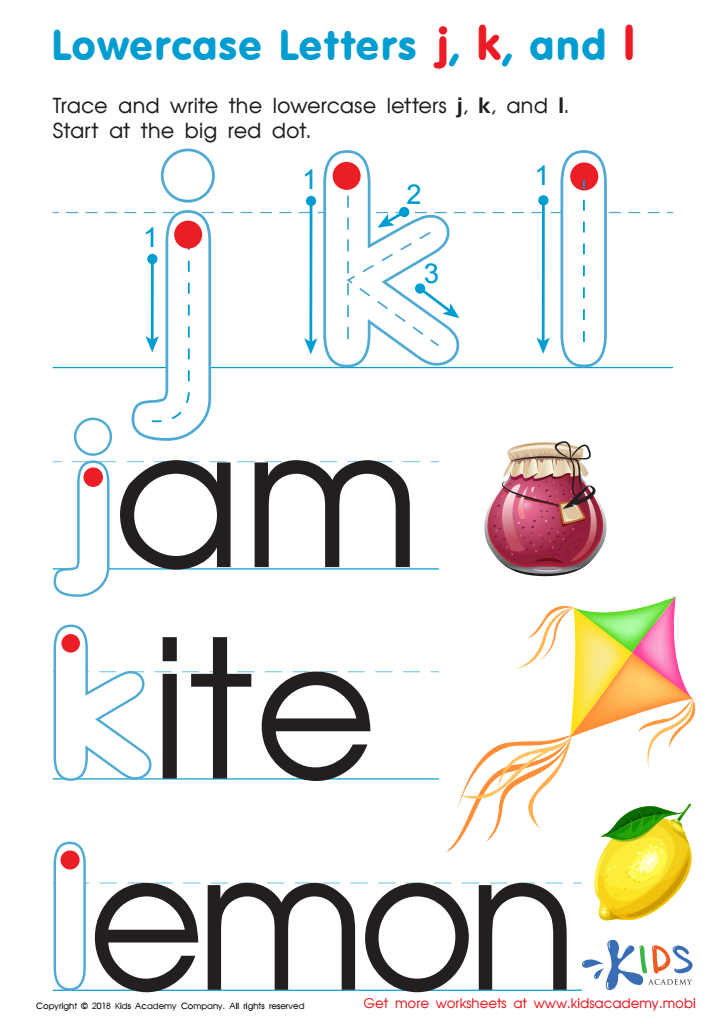
Lowercase Letters j k l Worksheet
Teach your child the difference between uppercase and lowercase letters. Have them trace and write the lowercase letters j, k, and l, starting at the red dot. Guide your child's hand to form the letters correctly.
 Assign to My Students
Lowercase Letters j k l Worksheet
Worksheet
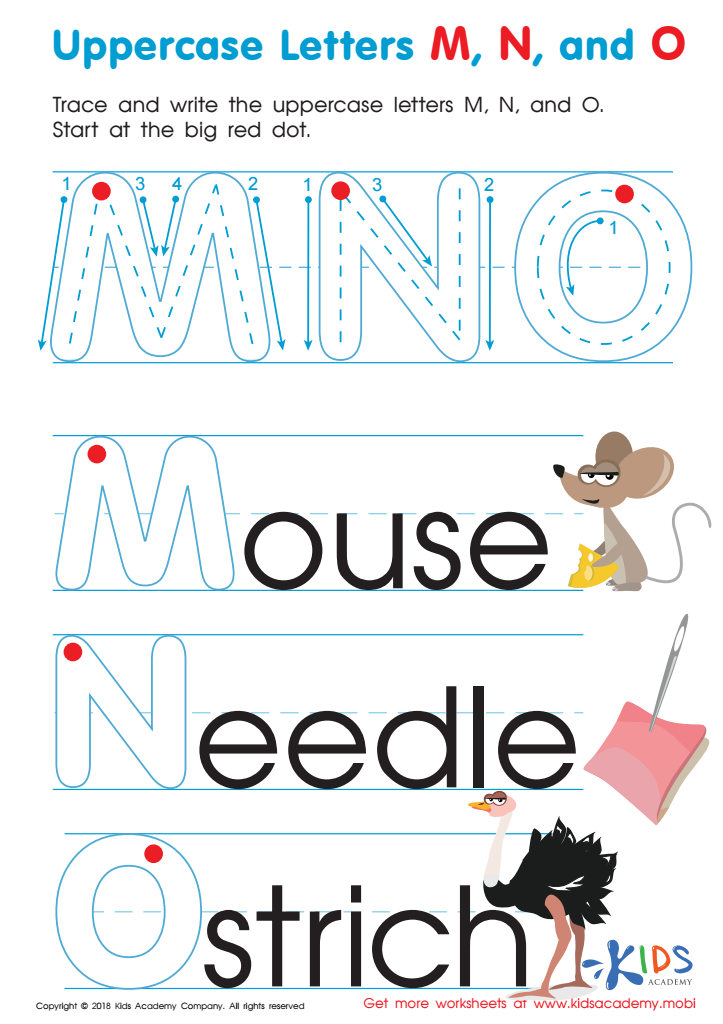
Uppercase Letters M, N, and O Worksheet
Download our easy-to-understand worksheet to help kids write M and N with ease! They'll trace dotted lines and follow arrows as they fill in the letters using a big red dot as a guide. The cute graphics will help them remember sounds too! Get your child writing quickly and confidently with this fun activity.
Uppercase Letters M, N, and O Worksheet
Worksheet
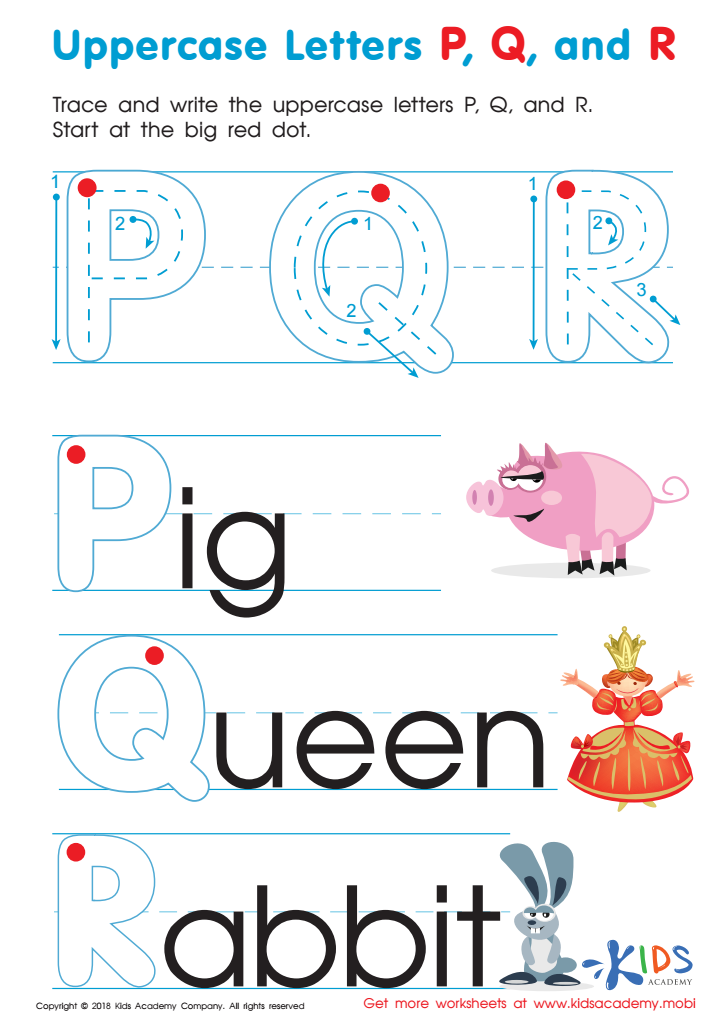
Uppercase Letters P, Q, and R Worksheet
Cute images of a pig, queen and rabbit make it fun to learn letter sounds. Follow the arrows to learn the strokes, then trace each letter from the big red dot. Perfect for kids to learn how to read and write P, Q, and R!
Uppercase Letters P, Q, and R Worksheet
Worksheet
Join Kids Academy for Free
Who is primarily going to use this learning content?





Letter tracing practice is a foundational activity in kindergarten that plays a critical role in early literacy development. Parents and teachers should prioritize this practice for several reasons.
First, tracing helps children develop fine motor skills essential for writing. As they follow the lines, they strengthen the small muscles in their hands and fingers, preparing them for future writing tasks. This physical aspect of writing is crucial for their overall coordination.
Additionally, letter tracing reinforces letter recognition and phonemic awareness. When children trace letters, they connect the visual shape to its sound, building a bridge between the written letter and the spoken language. This connection makes reading more accessible as they progress.
Tracing also fosters perseverance and concentration. As children practice, they learn to focus on completing tasks, building their confidence and encouraging a growth mindset.
Moreover, this activity supports a stimulating learning environment. When parents and teachers engage in tracing together, they create opportunities for conversation about letters and sounds, turning a simple exercise into an interactive learning experience.
In summary, letter tracing is more than just an exercise; it is an essential tool that fosters fine motor skills, literacy, confidence, and engagement in young learners. Prioritizing this practice lays a solid foundation for academic success.