Animal Classification Normal Kindergarten Worksheets
4 filtered results
-
From - To
Introduce young learners to the fascinating world of animals with our "Animal Classification Normal Kindergarten Worksheets." Designed specifically for kindergarteners, these engaging printables help children identify and categorize various animals based on their unique characteristics. Incorporating colorful illustrations and simple language, these worksheets make learning fun and interactive. By exploring different animal groups, children enhance their observational skills, critical thinking, and understanding of the natural world. Perfect for both classroom and at-home activities, our worksheets provide a strong foundation in early science education, paving the way for a lifelong love of learning and discovery.
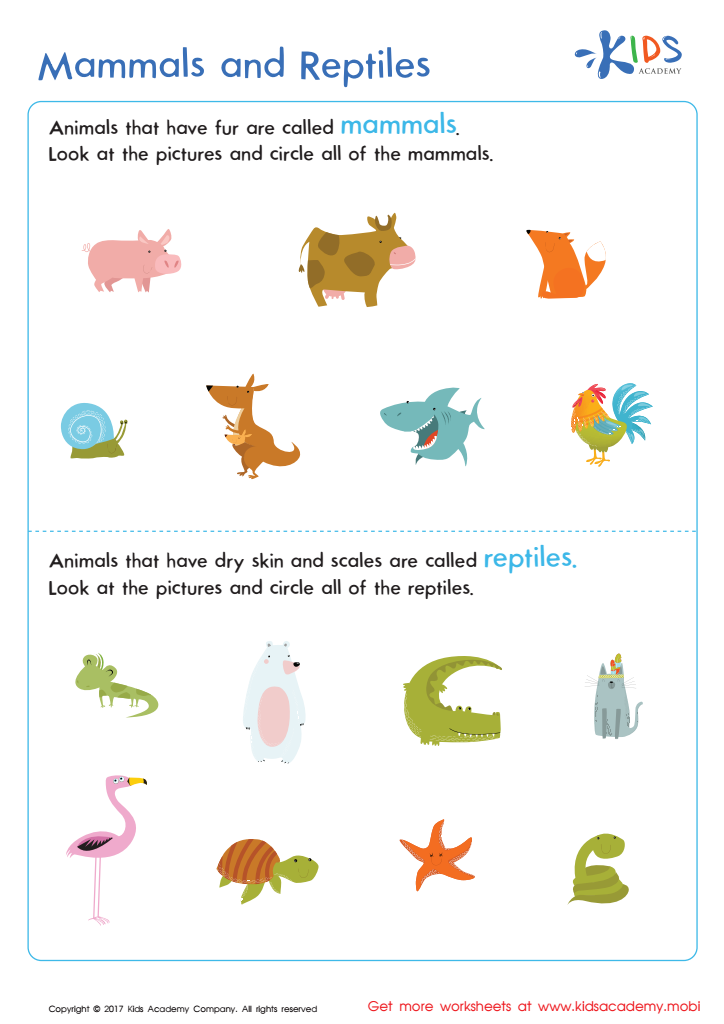
Mammals and Reptiles Worksheet
 Assign to My Students
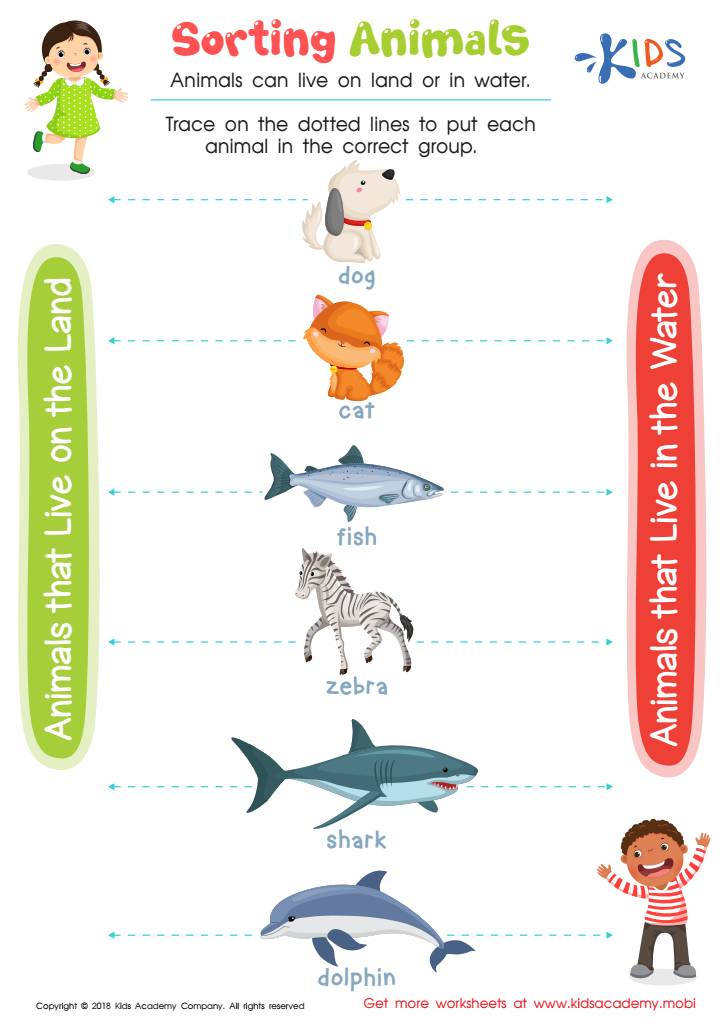
Sorting Animals Worksheet
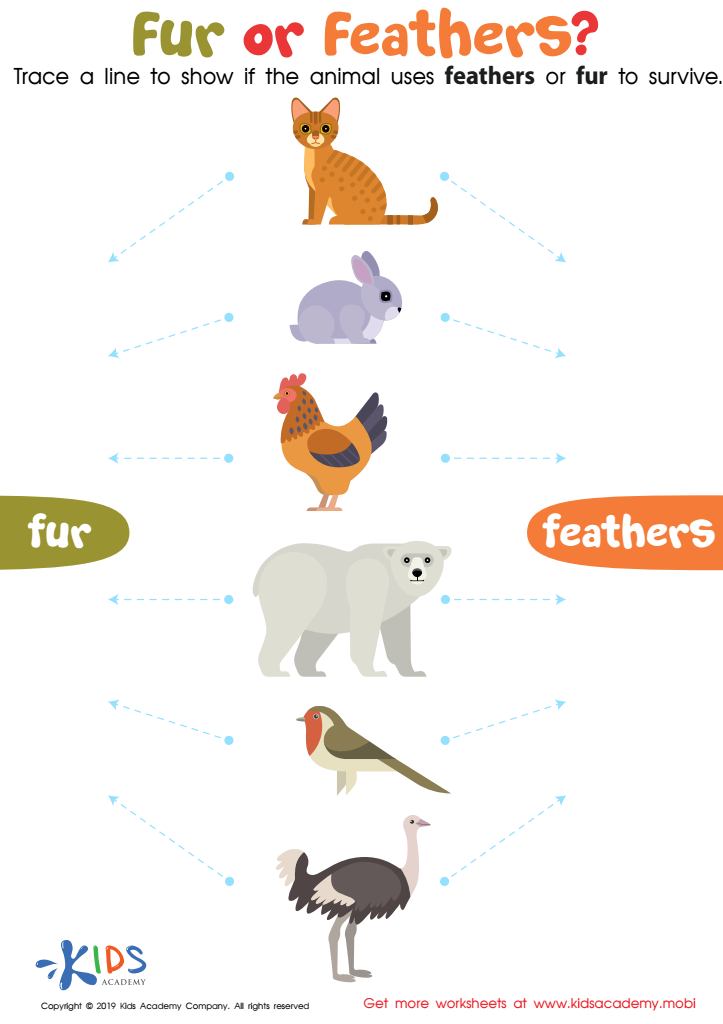
Fur or Feathers? Worksheet
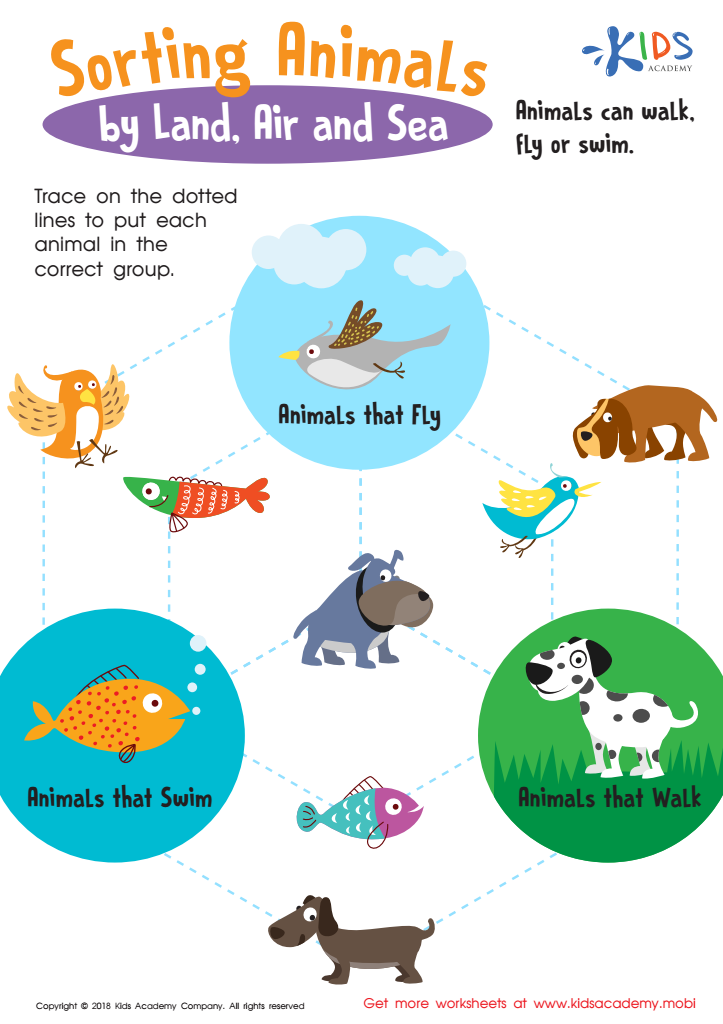
Sorting Animals by Land, Air and Sea Worksheet






Animal classification introduces foundational concepts to young learners that support their cognitive and scientific development. For kindergartners, understanding the basic idea that animals can be grouped based on common characteristics fosters their ability to observe, compare, and categorize—a critical skill in early education.
Parents and teachers should care because through animal classification, children learn essential vocabulary and concepts related to biology and the natural world. This helps to cultivate curiosity and a love of learning from an early age. By discovering similarities and differences among animals, children enhance their observational skills and learn to appreciate biodiversity.
Additionally, classification activities can be integrated with other learning areas such as language arts, math, and social skills. For example, sorting animals into categories can involve counting (math skills), discussing their choices with peers using descriptive language (language skills), and working cooperatively in groups (social skills).
Caring about animal classification equips kids with a foundational understanding of how scientists organize and understand life on Earth, alongside developing problem-solving abilities and critical thinking. Integrating it into their learning process can make education engaging and relevant, laying a groundwork for more advanced scientific studies in the future.