Mathematical reasoning Normal Kindergarten Addition & Subtraction Worksheets
6 filtered results
-
From - To
Explore our engaging Kindergarten Addition & Subtraction Worksheets designed to enhance mathematical reasoning skills in your little learners. Tailored for young minds, these worksheets provide a fun and interactive way for children to master basic addition and subtraction concepts. Through colorful illustrations and age-appropriate activities, kids will strengthen their problem-solving abilities while reinforcing foundational math skills. Perfect for classroom use or homeschooling, our printable worksheets promote a love for math and encourage critical thinking. Watch as your child gains confidence and clarity in mathematical concepts with each activity they complete. Start their mathematical journey today!
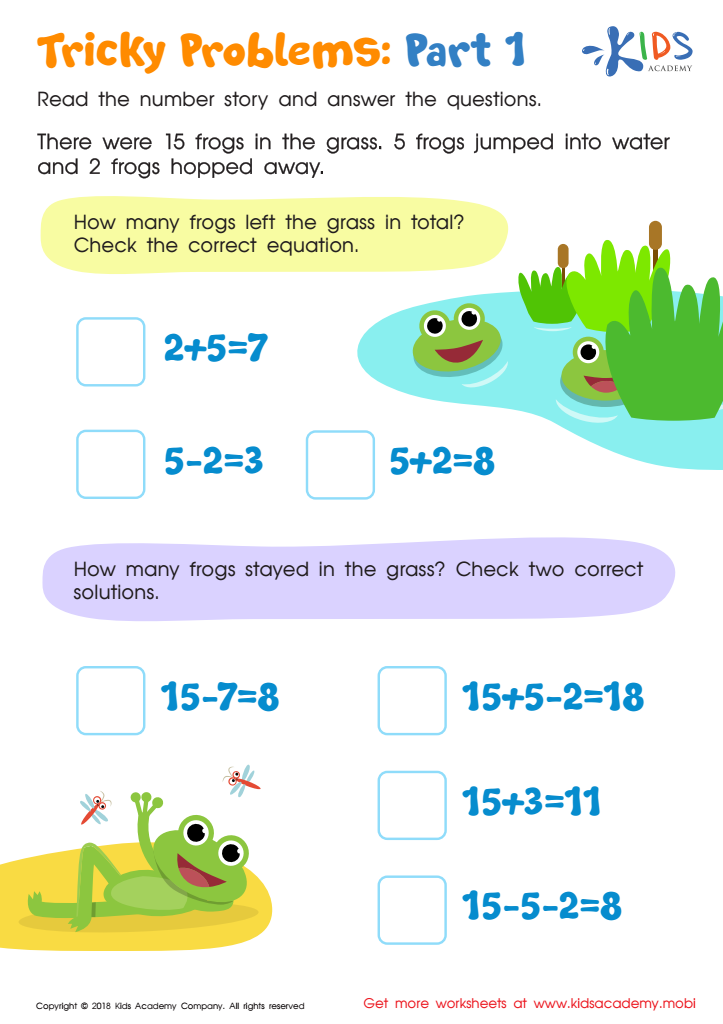
Tricky Problems Worksheet: Part 1
 Assign to My Students
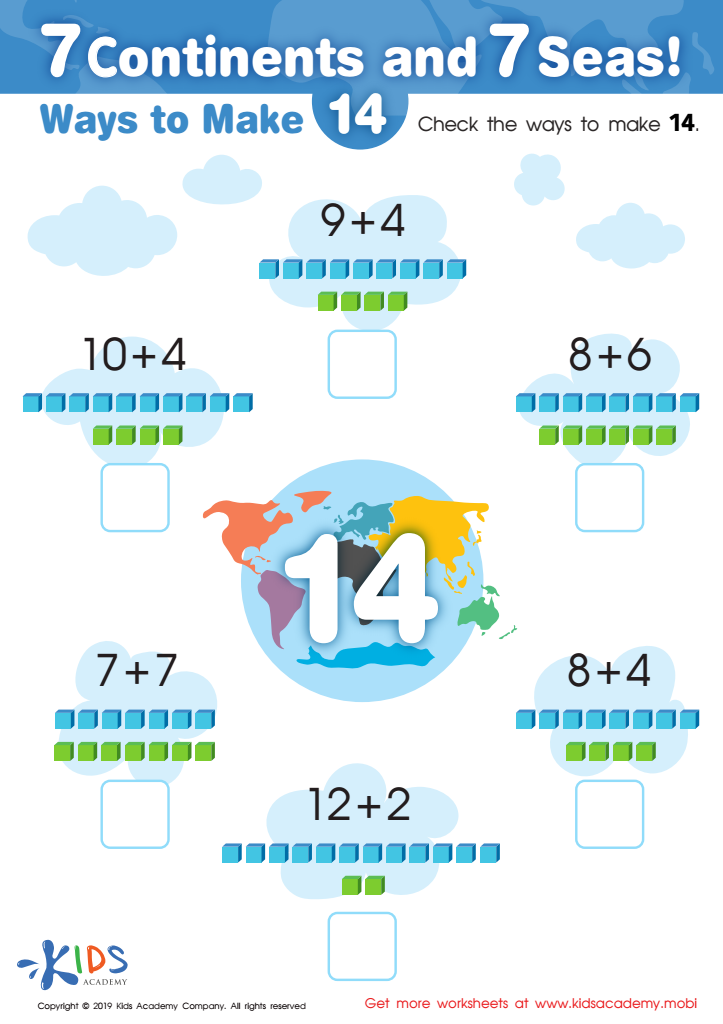
7 Continents and 7 Seas Worksheet
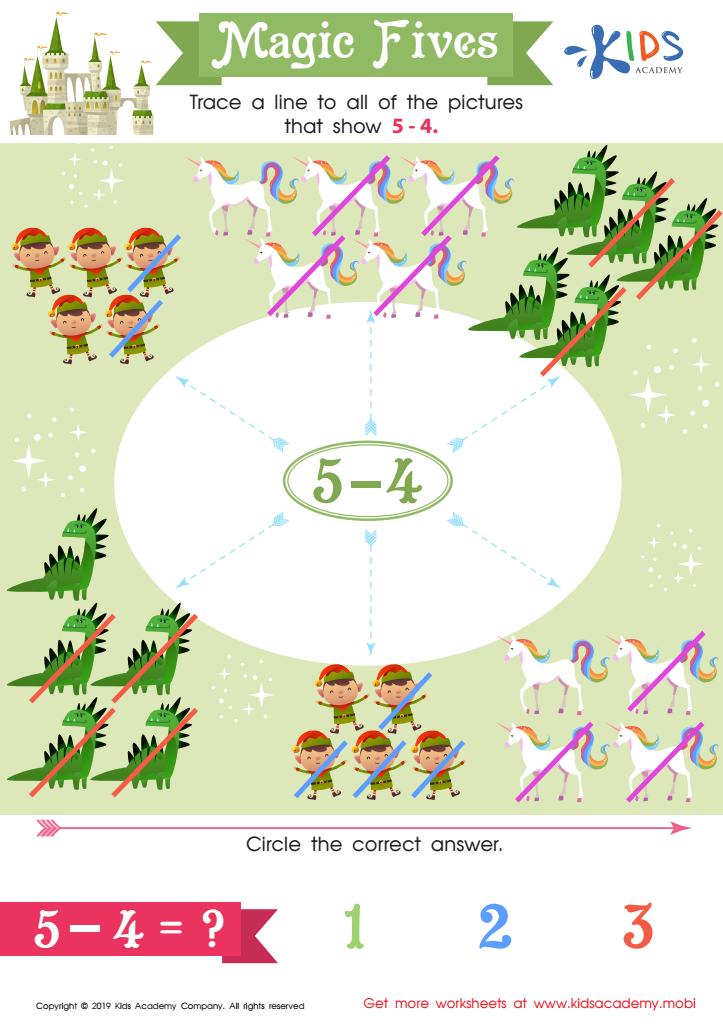
Magic Fives Worksheet
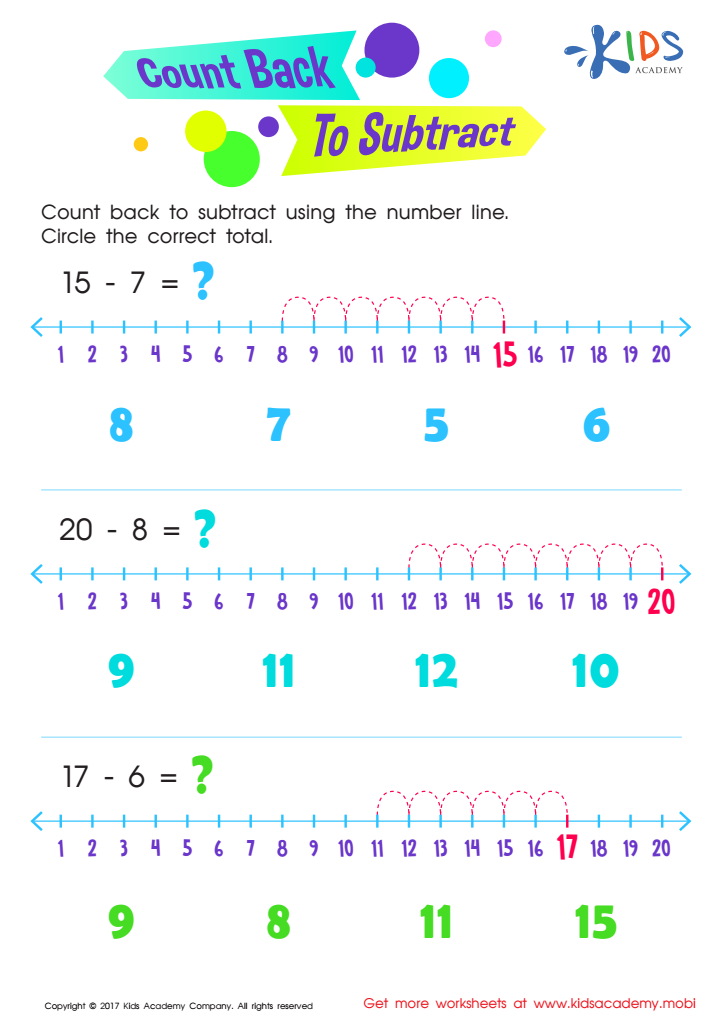
Count Back to Subtract Substraction Worksheet
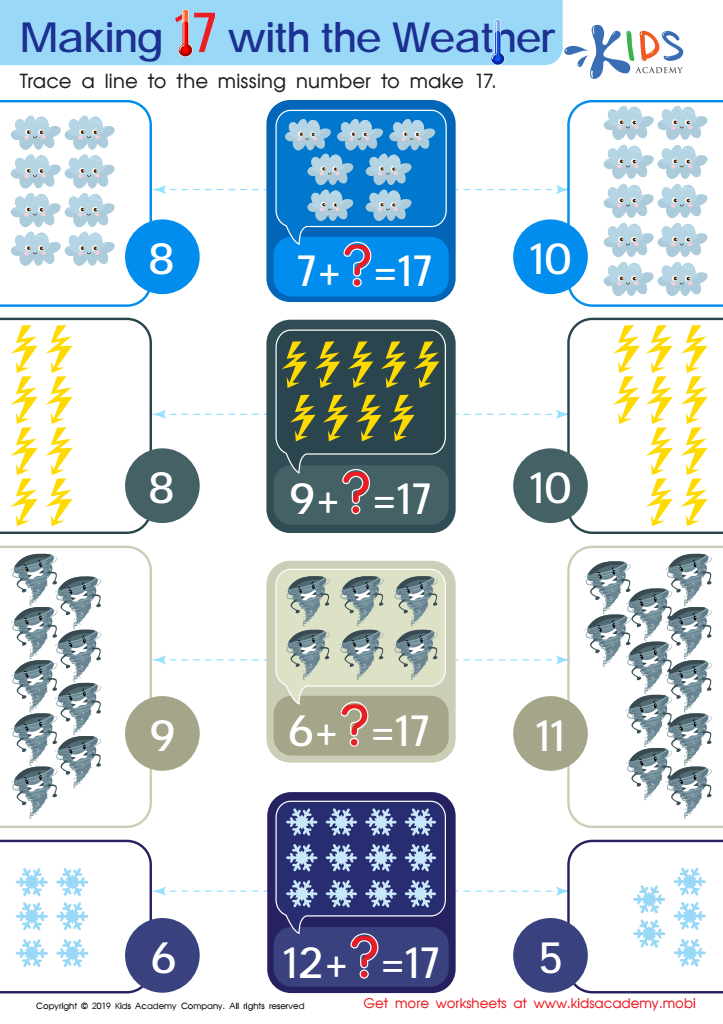
Making 17 with the Weather Worksheet
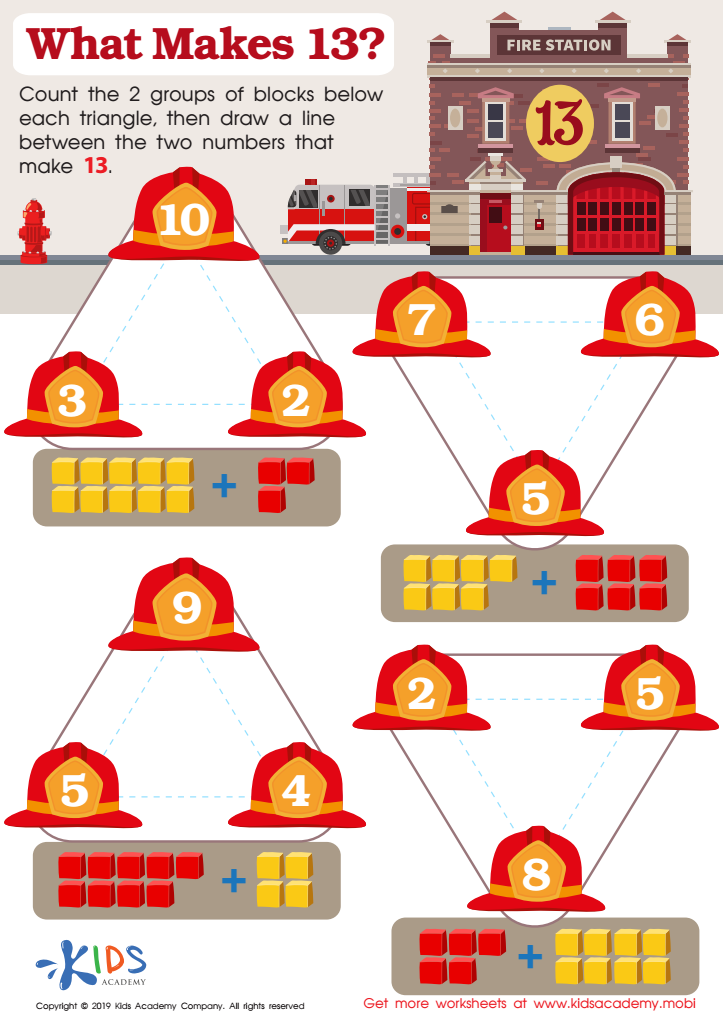
What Makes 13 Worksheet








Mathematical reasoning in early childhood, particularly in kindergarten, is crucial for laying a strong foundation in both addition and subtraction. When parents and teachers emphasize these skills, they help children develop critical thinking and problem-solving abilities that extend beyond math.
Firstly, understanding addition and subtraction fosters cognitive development, enhancing children's capacity to think logically. It encourages them to recognize patterns, understand quantities, and grasp the relationship between numbers—skills essential for higher-level mathematics and everyday problem-solving.
Moreover, when children can reason through mathematical concepts, they become more confident learners. This confidence leads to greater engagement in learning, as they become more willing to explore and tackle challenging problems independently. Early mastery of these skills can reduce math anxiety in later years.
Additionally, incorporating real-life situations into math lessons helps students see the relevance of math in their daily lives, making learning meaningful and enjoyable. By fostering a healthy mathematical mindset in kindergarten, parents and teachers can guide children towards becoming proficient in math as they progress through school.
Ultimately, nurturing mathematical reasoning during these formative years not only impacts academic success but also cultivates lifelong critical thinking skills, preparing children for a wide range of future challenges.








