Rhyming skills development Normal Preschool Rhyming Worksheets
3 filtered results
-
From - To
Develop your child's rhyming skills with our engaging Normal Preschool Rhyming Worksheets. Specifically designed for early learners, these worksheets help build a strong foundation in phonemic awareness through fun rhyming activities. Children will enjoy identifying and matching rhyming words, reinforcing their auditory and verbal abilities. Perfect for classroom or at-home learning, our worksheets support literacy development in an interactive and enjoyable way. Boost your preschooler’s early reading skills as they recognize patterns in sounds and improve their language proficiency. Download our printable worksheets today to make learning to rhyme an exciting adventure!
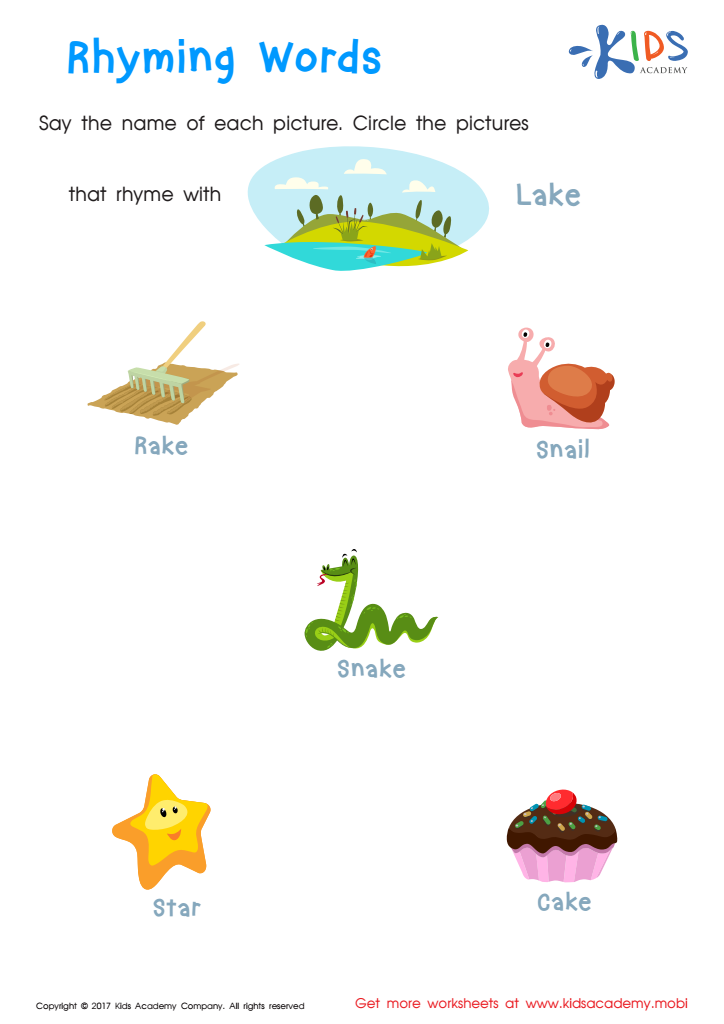
Rhyming Words Rhyming Worksheet
 Assign to My Students
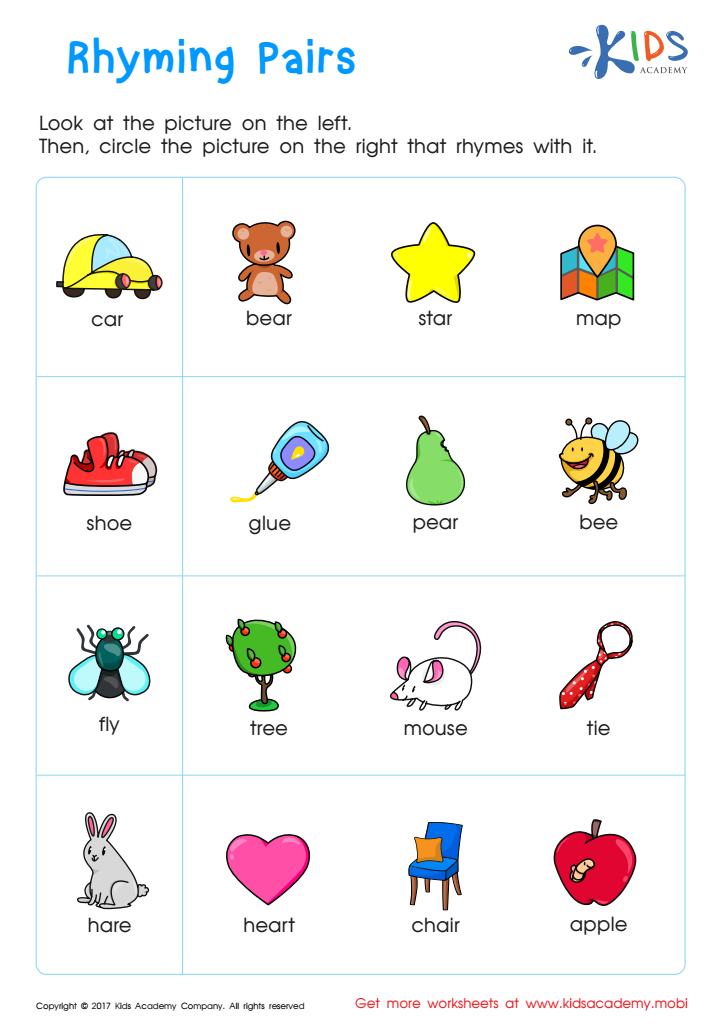
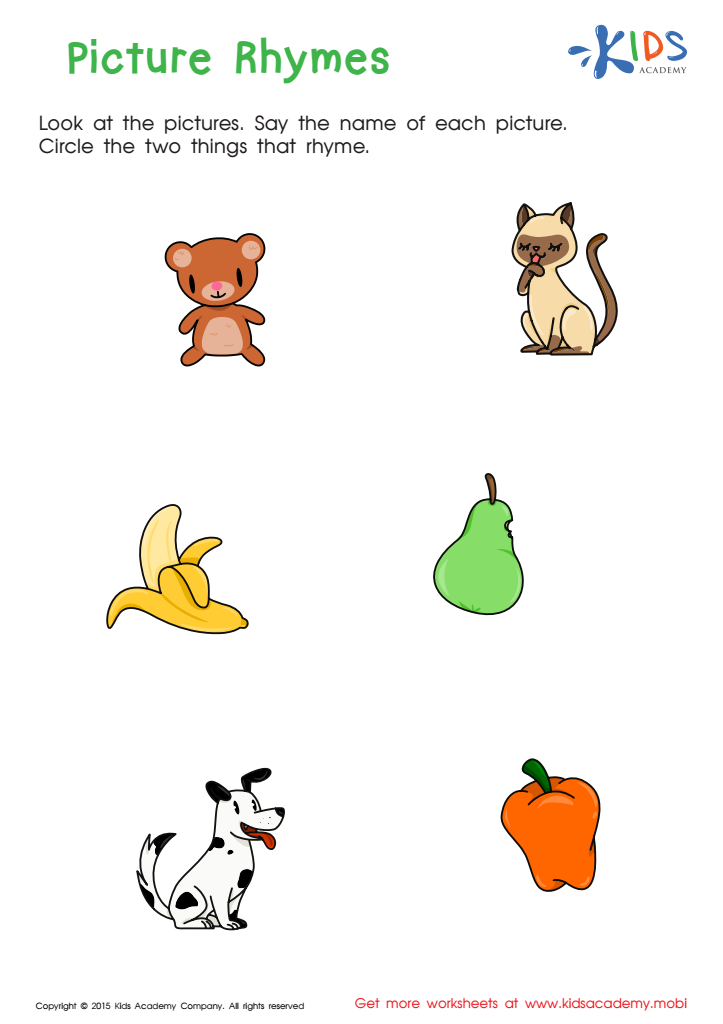
First Words: Picture Rhymes Worksheet


Developing rhyming skills in preschool children is crucial for several reasons, fostering literacy, language development, and cognitive skills. Early exposure to rhyming can significantly bolster a child's phonemic awareness, which is the ability to hear, identify, and play with individual sounds in words. Phonemic awareness is a foundational skill for reading and writing because it helps children understand that words are composed of smaller sound units.
Rhyming also enhances vocabulary by introducing children to new words and concepts through fun and engaging activities like songs, poems, and nursery rhymes. These activities make learning enjoyable and memorable, which helps in retaining new words and their meanings. Furthermore, rhyming improves listening skills, crucial for following directions and comprehending spoken language in classroom settings or at home.
Cognitive skills such as memory, attention, and creativity are also developed through rhyming. The pattern and predictability of rhymes make it easier for children to recall sequences and think imaginatively. Socially, engaging in rhyming games or songs provides an interactive and communicative platform for children to connect with peers and adults, promoting collaborative learning and emotional connection. Therefore, fostering rhyming skills early on equips children with essential tools for academic success and lifelong learning.





