Understanding prepositions Normal Preschool Worksheets
3 filtered results
-
From - To
Discover the best preschool tool with our "Understanding Prepositions" worksheets! Crafted for young learners, these fun and engaging printables help children grasp the basic concepts of prepositions through playful activities and colorful illustrations. By identifying and using words like "above," "below," "next to," and more, your child will build a strong foundation in early language skills. Perfect for both classroom use and at-home practice, these worksheets foster essential learning, prepare kids for future grammar lessons, and make mastering prepositions a breeze. Elevate your preschooler's learning journey now with our expertly designed resources!
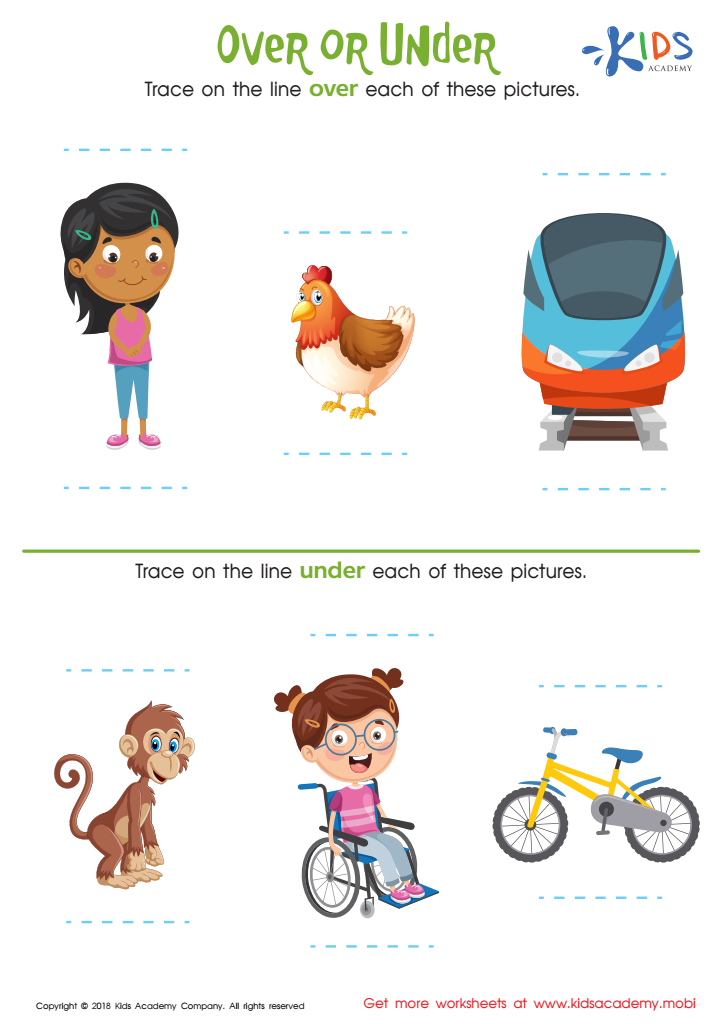
Over or Under Worksheet
 Assign to My Students
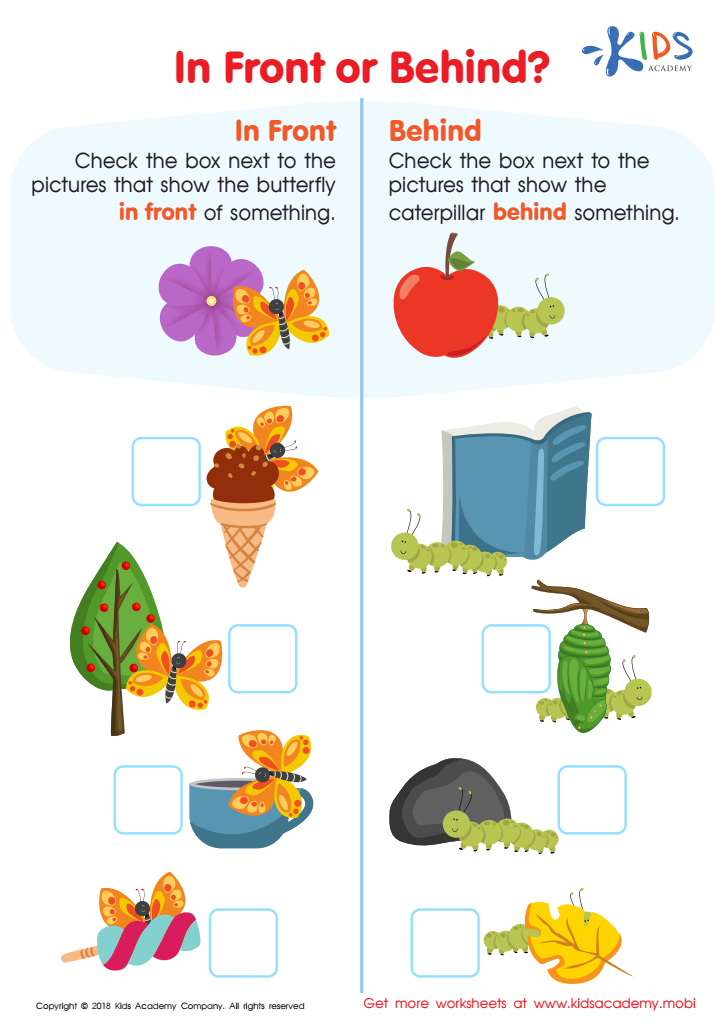
In Front or Behind Worksheet
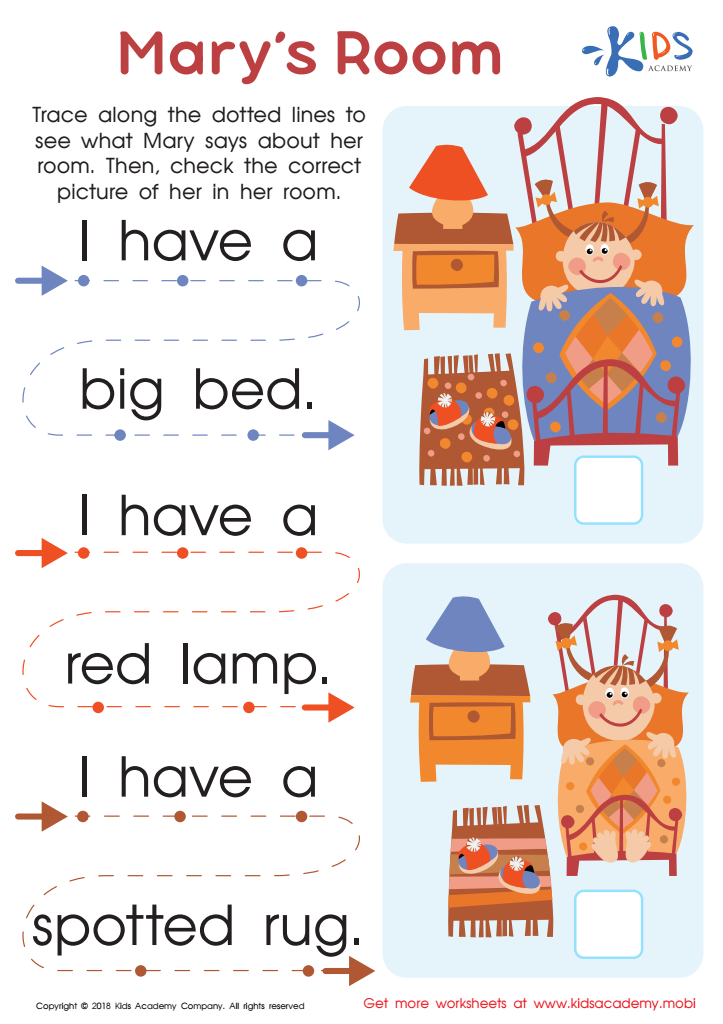
Mary's Room Worksheet




Understanding prepositions at an early age is crucial for a child’s language development and overall cognitive growth. Prepositions—words like "in," "on," "under," and "next to"—act as important building blocks for spatial awareness and comprehension. Introducing these words in preschool helps children make sense of the world around them by explaining how objects relate to each other in space.
Parents and teachers should care about teaching prepositions early because it directly impacts a child’s ability to follow instructions and engage in meaningful conversations. For instance, kids who can understand and use prepositions properly are better equipped to follow multi-step directions like "Put the ball in the box, then place the box on the shelf." This skill is particularly beneficial in formal educational settings and everyday interactions.
Additionally, mastering prepositions aids in developing critical thinking and problem-solving skills. When children comprehend these relational words, they can better analyze situations, describe their environment accurately, and articulate their thoughts more clearly. This linguistic foundation fosters more effective communication, not just in childhood, but throughout a person's life.
By focusing on prepositions in preschool, parents and teachers are investing in a child's ability to think logically, understand their surroundings, and communicate effectively, setting them up for long-term academic and social success.