Moral lesson understanding Normal Building Vocabulary Worksheets
3 filtered results
-
From - To
Discover the engaging "Moral Lesson Understanding Normal Building Vocabulary Worksheets" designed to enhance children's reading and comprehension skills. These worksheets provide students with valuable lessons about right and wrong, encouraging thoughtful discussions on ethics and values. As children explore vocabulary in the context of moral lessons, they not only build their language skills but also develop critical thinking and empathetic understanding. Ideal for early grade classrooms, these resources promote a love for reading while reinforcing important life lessons. Help your students grow both intellectually and morally by incorporating these thoughtful worksheets into your lesson plans today!
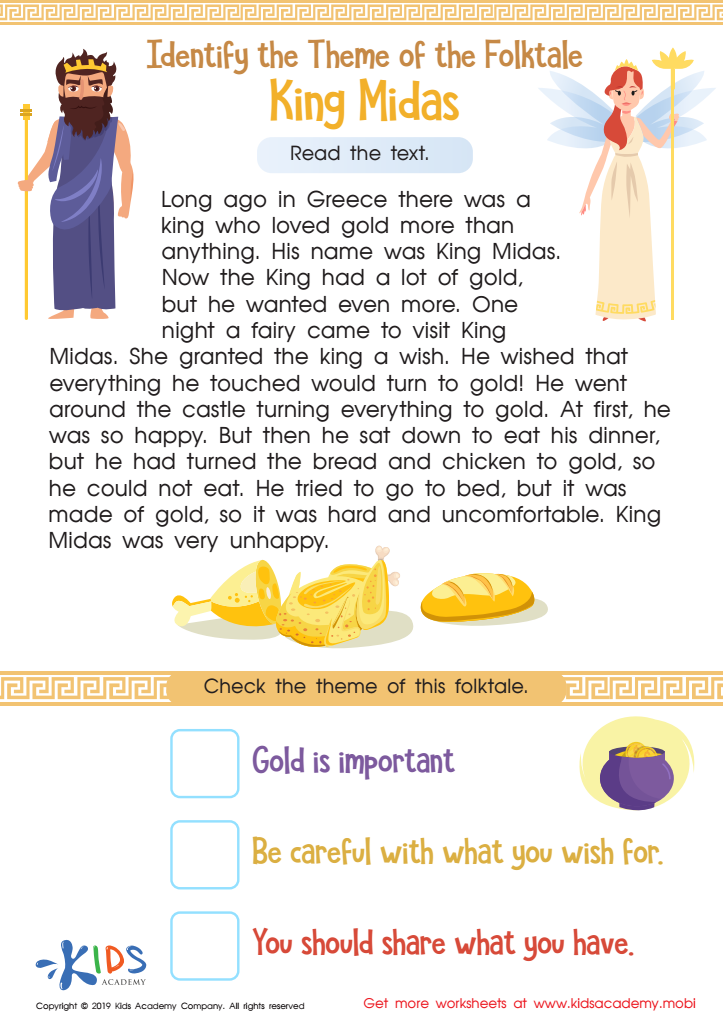
King Midas Worksheet
 Assign to My Students











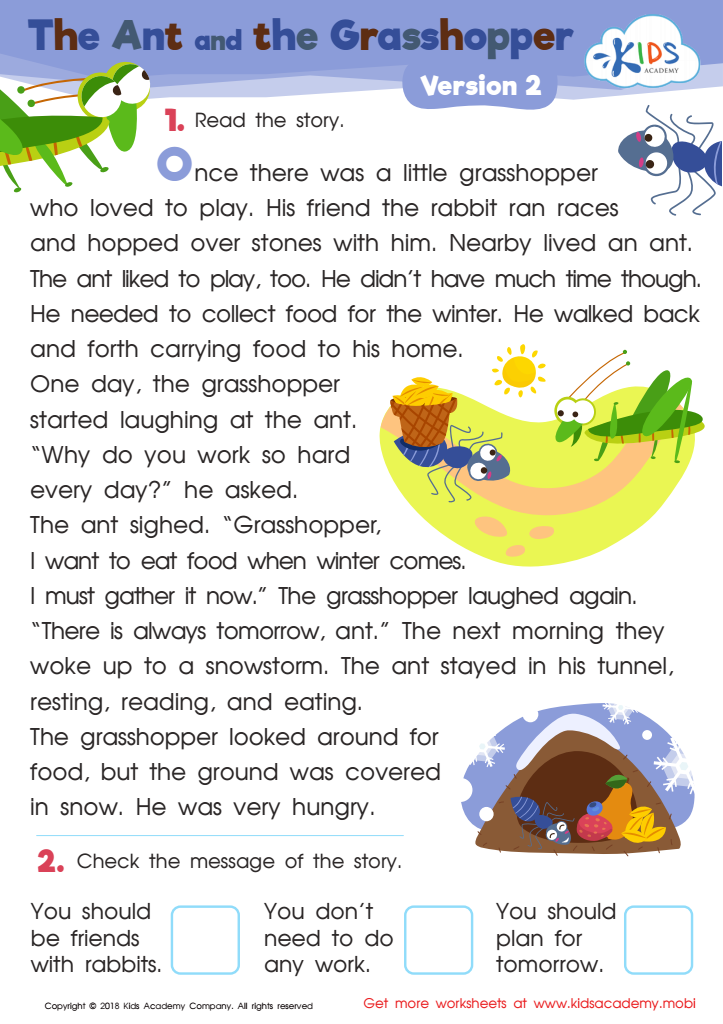
The Ant and The Grasshopper Version 2 Worksheet
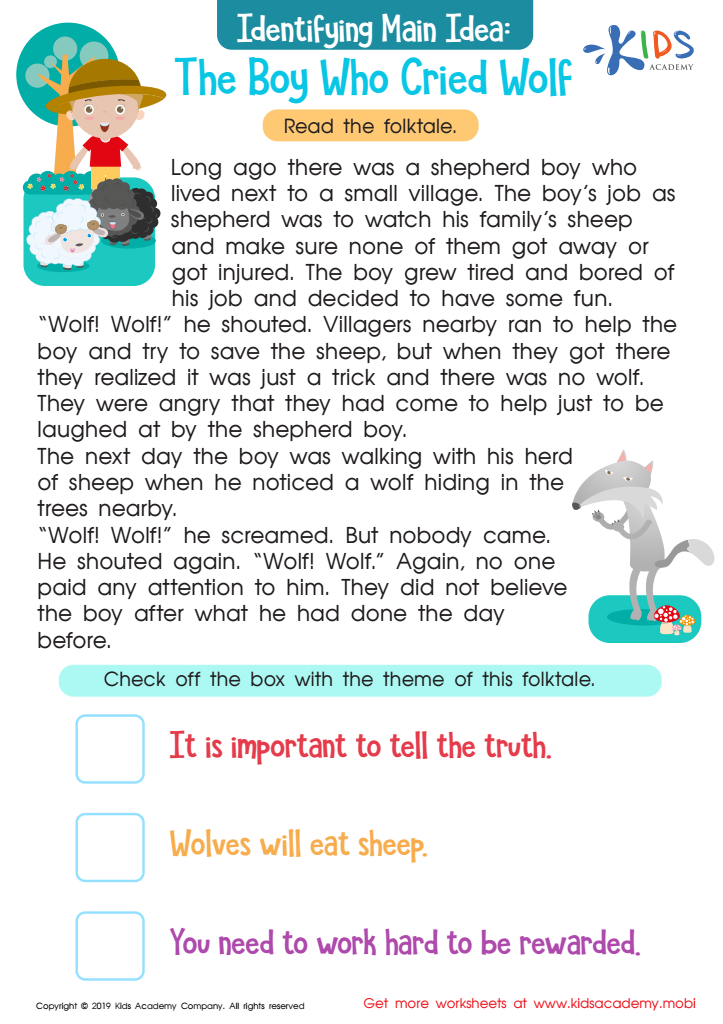
The Boy Who Cried Wolf Part 2 Worksheet







.jpg)
Understanding moral lessons while building vocabulary is crucial for both parents and teachers because it fosters comprehensive development in young learners. Moral lessons instill core values such as honesty, empathy, and respect, which are essential for social cohesion and interpersonal relationships. When children grasp these concepts, they become more emotionally intelligent, capable of navigating complex social situations.
Simultaneously, vocabulary development is vital for effective communication and literacy skills. A rich vocabulary allows children to express their thoughts, ideas, and emotions clearly and confidently. When moral lessons are integrated into vocabulary-building activities, children not only learn new words but also understand their context and importance in everyday interactions. This combination helps students articulate ethical dilemmas, leading them to make better choices in their lives.
Moreover, parents and teachers have the responsibility to prepare children for a complex world where they will face various moral challenges. By accentuating both moral understanding and vocabulary, educators and parents equip children with the tools they need to think critically, engage empathetically with others, and contribute positively to society. Ultimately, this dual focus fosters well-rounded individuals who can articulate their values and engage meaningfully with the world around them.








