Phonics Skills Normal Building Vocabulary Worksheets
5 filtered results
-
From - To
Enhance early reading skills with our "Phonics Skills Normal Building Vocabulary Worksheets." Perfect for young learners, these printable worksheets focus on key phonics principles such as letter-sound recognition, blending sounds, and word-building. Our carefully designed activities help children develop their vocabulary in a structured, enjoyable manner. By incorporating visual aids and engaging exercises, these worksheets make learning phonics both fun and effective. Prepare your students for reading success with these essential, kid-friendly resources that support the development of strong foundational literacy skills. Explore now and give your child the gift of confident, fluent reading.
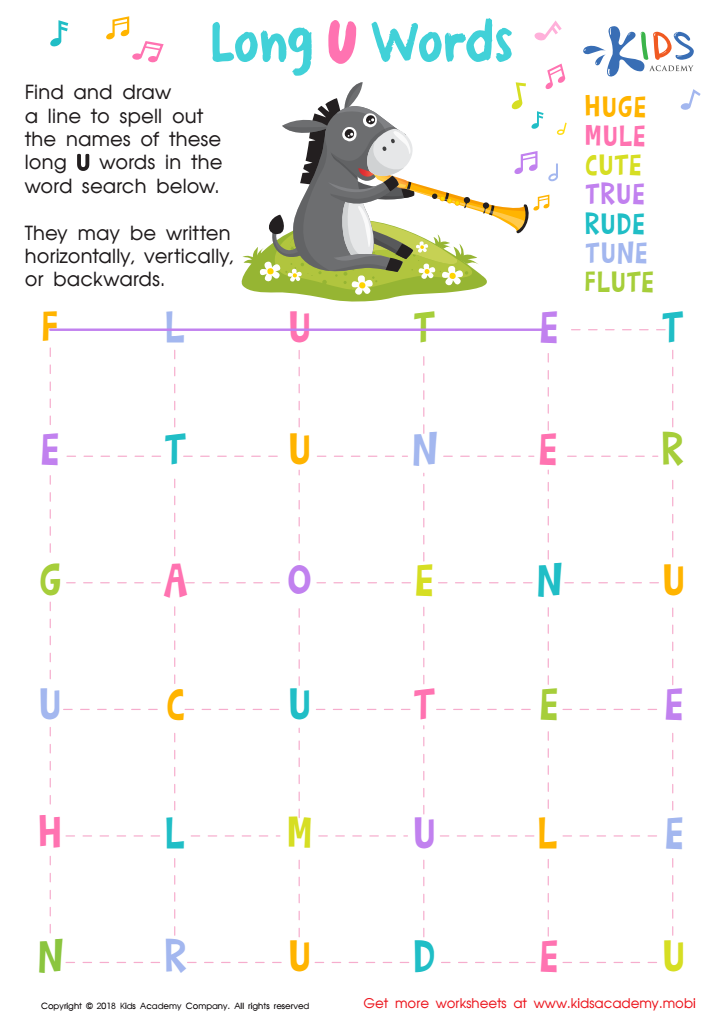
Long /u/ Words Worksheet
 Assign to My Students











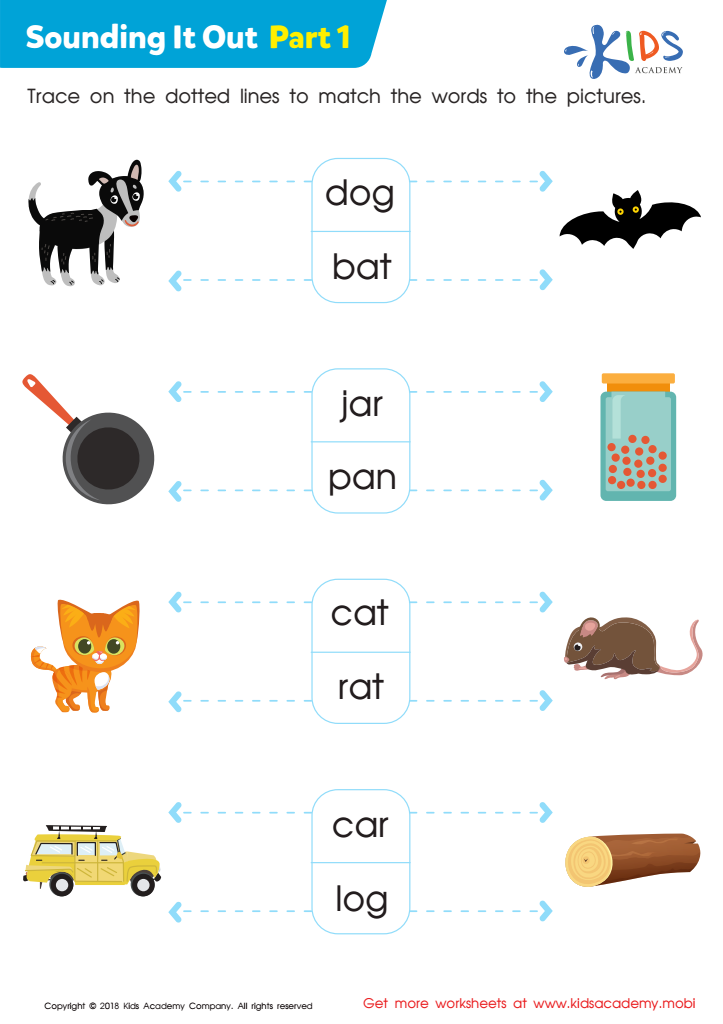
Sounding it Out: Part 1 Worksheet
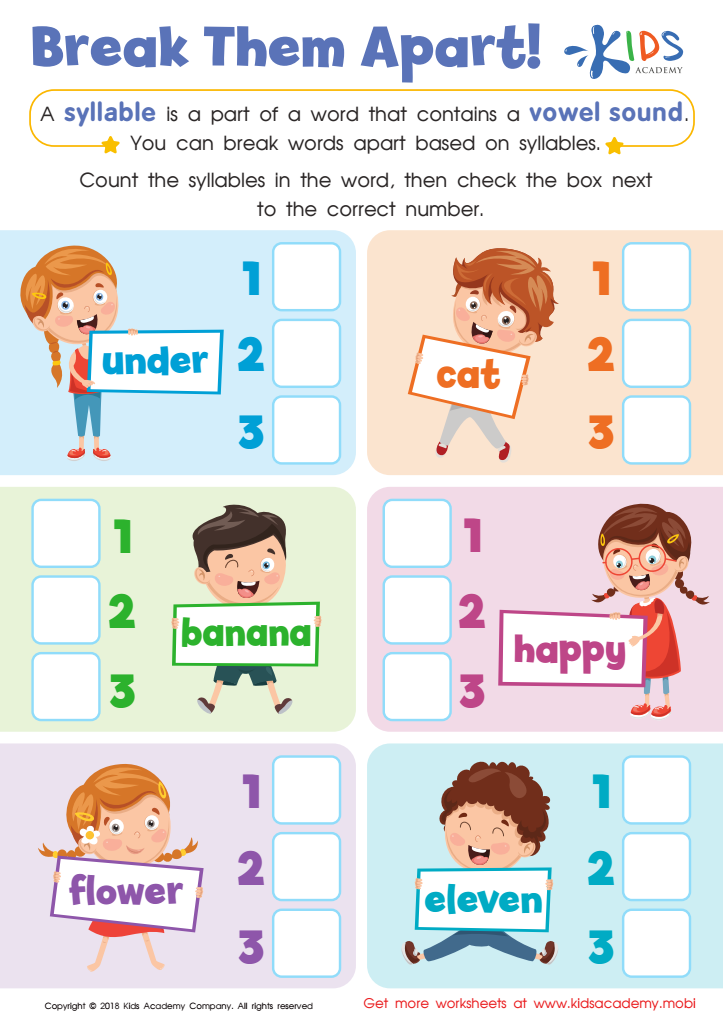
Reading: Break Them Apart Worksheet
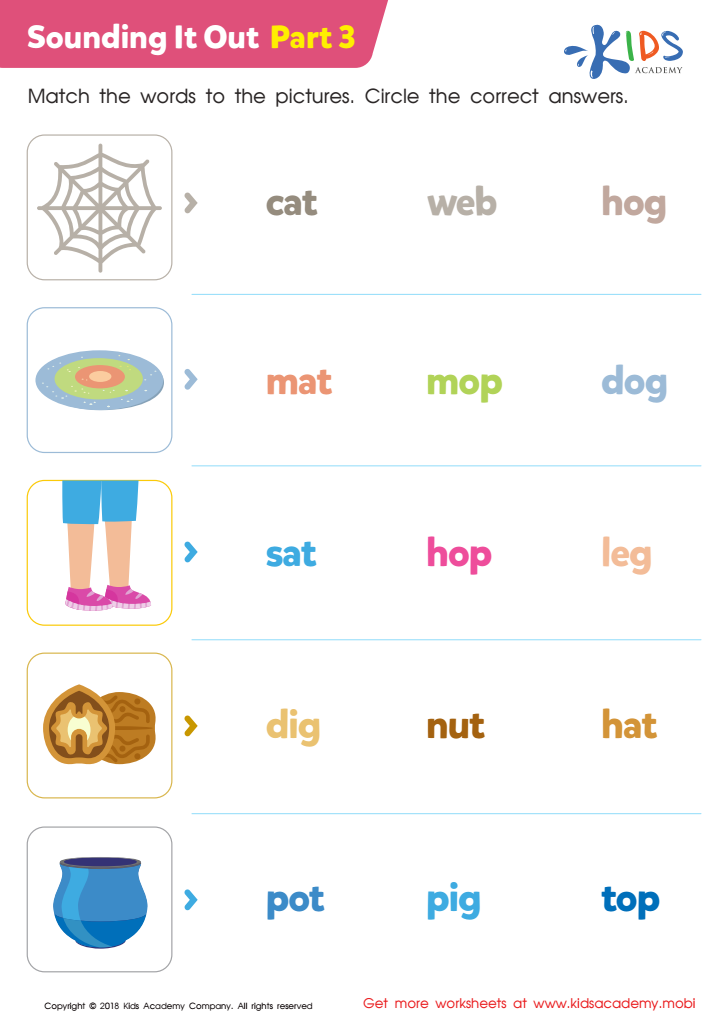
Sounding it Out: Part 3 Worksheet
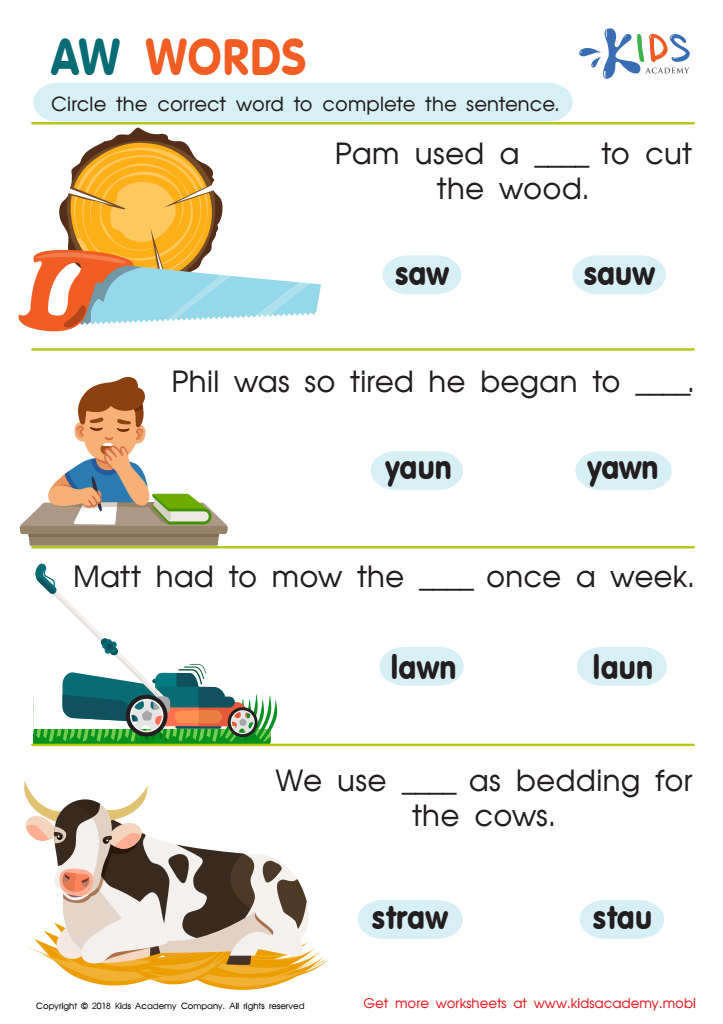
Reading: AW Words Worksheet




.jpg)


Phonics skills are crucial building blocks in a child's literacy development, forming the foundational framework that supports normal vocabulary growth. Phonics involves the relationship between sounds and their spelling, teaching children to decode words through an understanding of letter-sound correlations. This skill is essential for reading and clarification confidence as it enables children to break down unfamiliar words systematically, rather than resorting to memorization.
Effective phonics instruction supports vocabulary expansion by enhancing reading fluency and comprehension. When children can read independently, they encounter a broader range of vocabulary in context, leading to better retention and understanding. Moreover, a strong phonics foundation facilitates better spelling, writing, and articulation of new words.
Parents and teachers play a vital role in fostering these skills during early education. Encouraging phonics through interactive reading sessions, phonemic awareness games, and supporting practices at home helps reinforce what is learned in class. Research indicates that early phonics instructions result in higher literacy rates and more profound academic achievements.
In short, investing in phonics skills ensures that children are well-equipped to advance their vocabulary, promoting lifelong learning and effective communication, essential traits for academic success and beyond.








