Sound Association Normal Building Vocabulary Worksheets
3 filtered results
-
From - To
Enhance your child's vocabulary with our "Sound Association Normal Building Vocabulary Worksheets." These engaging resources are designed to help early learners connect sounds with words through fun activities. Each worksheet focuses on phonetic awareness, enabling kids to recognize patterns and associations in language. As they explore various images and words, students will develop essential reading skills in a playful manner. Our worksheets cater to a variety of learning styles, ensuring that every child can thrive. Perfect for classroom use or at-home learning, these sound association worksheets will make vocabulary building an enjoyable adventure for your young learners!
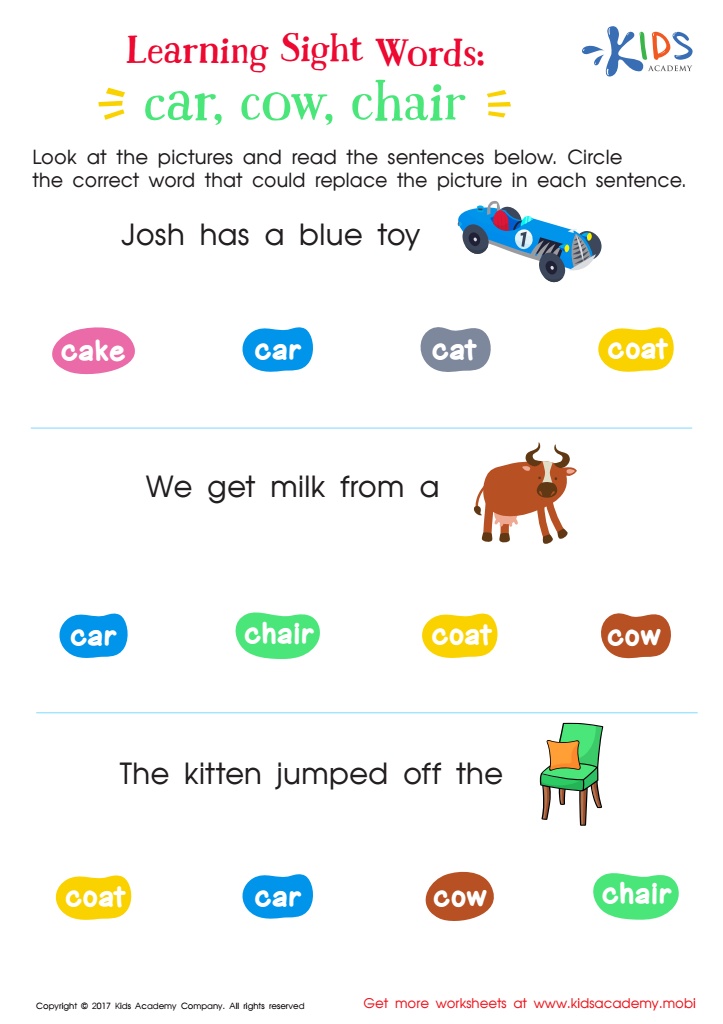
Car, Cow, Chair Worksheet Sight Words Worksheet
 Assign to My Students











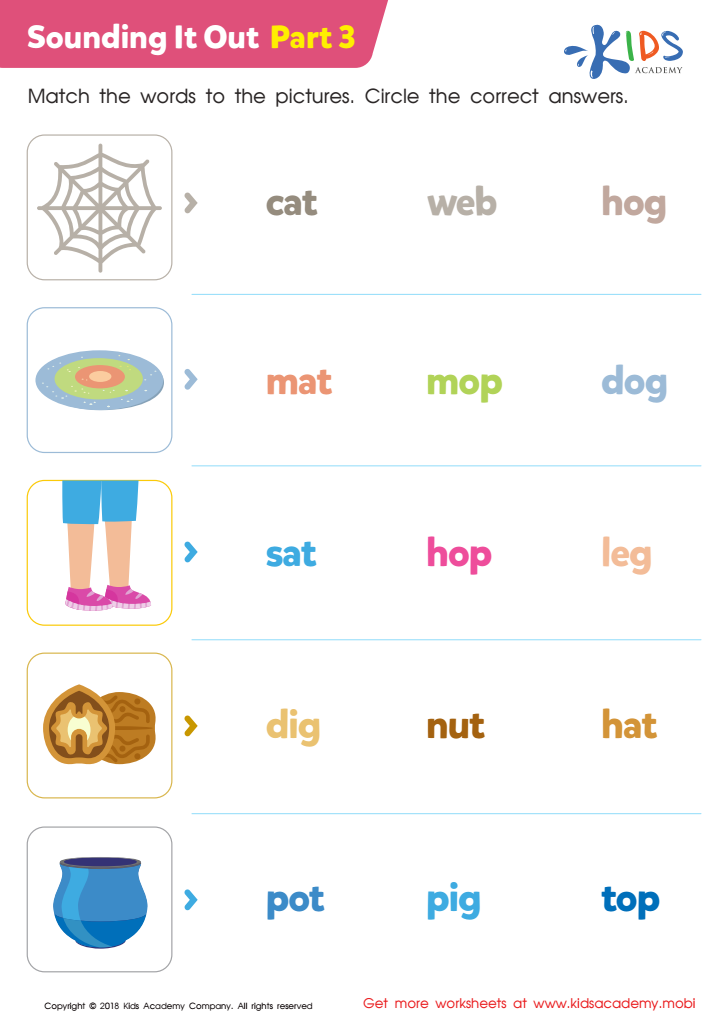
Sounding it Out: Part 3 Worksheet
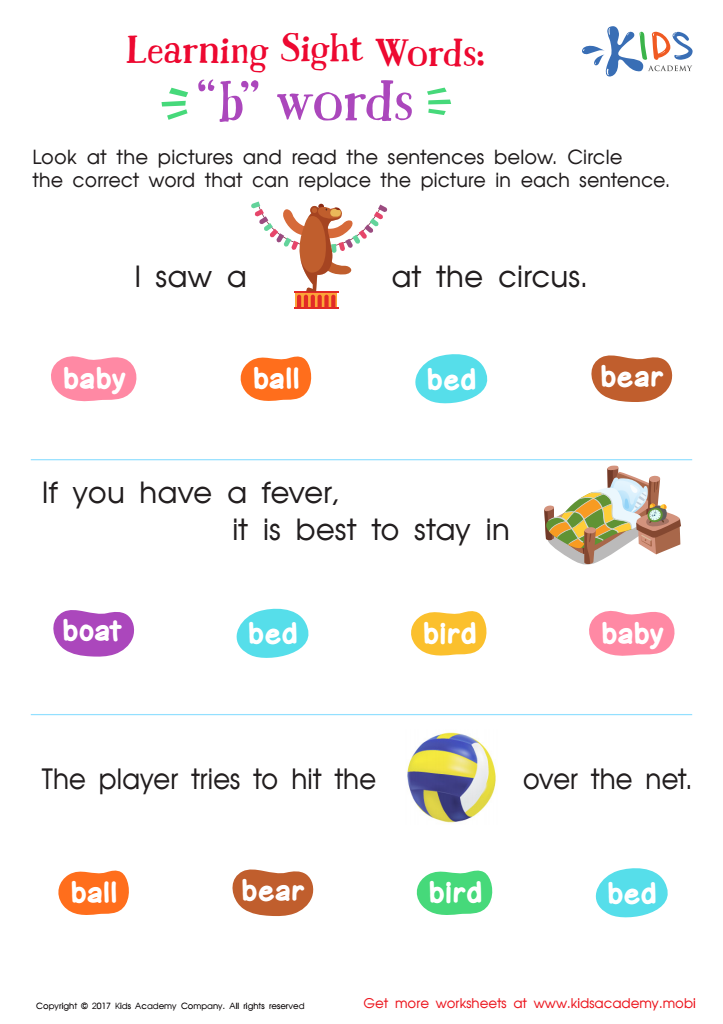
"B" Words Printable Sight Words Worksheet








Sound association is pivotal in early literacy development, making it essential for parents and teachers to prioritize this skill. Sound association focuses on the connection between sounds and the letters or groups of letters that represent them. When children develop strong sound association skills, they enhance their phonemic awareness, which is crucial for reading and writing fluency.
Creating connections between sounds and words deepens vocabulary comprehension. This foundation empowers children to decode new words independently, boosting their confidence and fostering a love for reading. Moreover, building vocabulary through sound association helps students express their thoughts and feelings more articulately, enhancing their communication skills.
Additionally, sound association is linked to better academic performance across subjects. By nurturing this skill, parents and teachers equip children with tools necessary for success in school and beyond. Engaging with children in activities that focus on sounds, such as rhyming games, phonics exercises, or reading aloud, not only aids sound association but also nurtures a child's curiosity and eagerness to learn.
Ultimately, fostering sound association in young learners supports their cognitive, social, and academic growth, reinforcing the importance of proactive involvement from both parents and educators in this vital developmental process.








