Understanding moon phases Normal Science Worksheets
3 filtered results
-
From - To
Discover the fascinating world of moon phases with our "Understanding Moon Phases" Normal Science Worksheets! Designed for young learners, these engaging worksheets offer a fun and interactive way to explore the eight distinct moon phases. Your children will enhance their observational skills, develop a deeper understanding of the lunar cycle, and learn key science concepts related to our nearest celestial neighbor. With educational activities that combine creativity and critical thinking, these worksheets ignite curiosity while aligning with early grade science standards. Perfect for classroom use or at-home learning, foster a love for astronomy and science in young minds today!
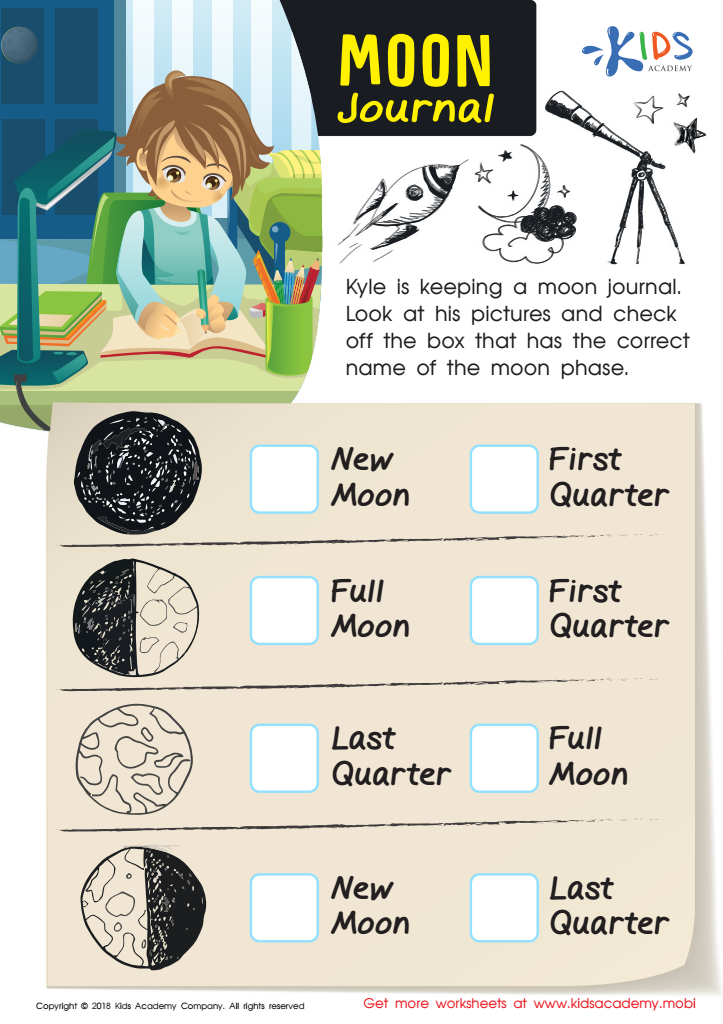
Moon Journal Worksheet
 Assign to My Students
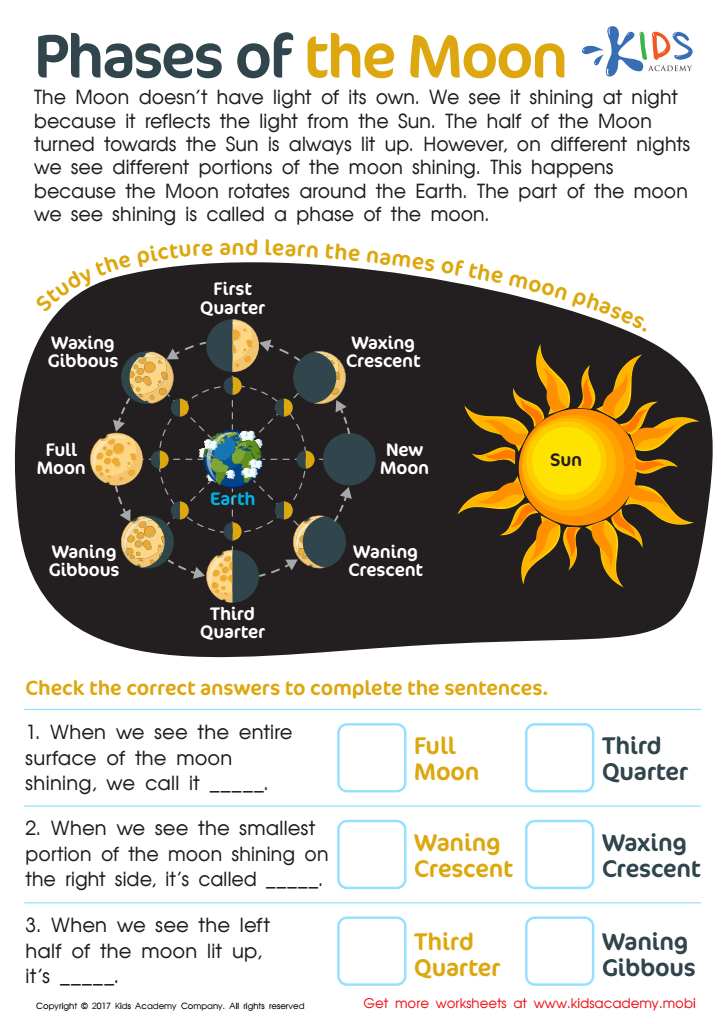
Phases of The Moon Worksheet
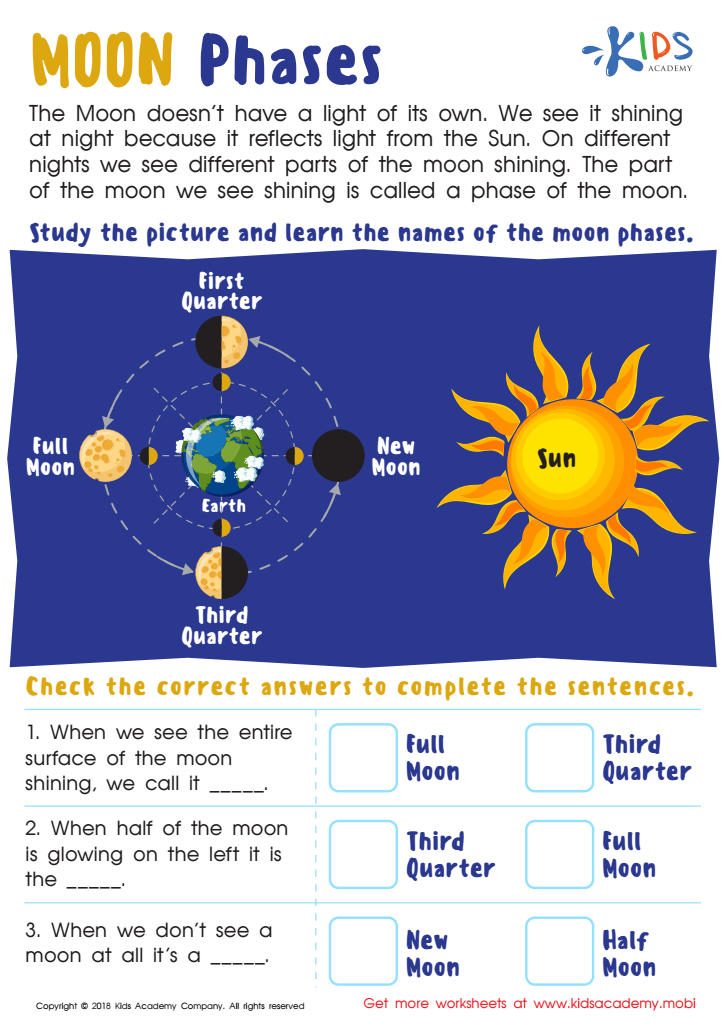
Moon Phases Worksheet





%20(1).jpg)
Understanding moon phases is essential for both parents and teachers because it connects children to the natural world and fosters scientific curiosity. Knowledge of moon phases stimulates engagement with fundamental scientific concepts like astronomy, gravity, and the natural cycles of life. By recognizing the rhythmic pattern of the moon's appearance and its impact on Earth, children learn about the passage of time, calendars, and the influence of celestial bodies on our environment.
Moreover, exploring moon phases provides opportunities for hands-on activities, encouraging inquiry-based learning. For example, parents and teachers can organize night-sky observations or art projects, effectively integrating science with physical activity and creativity. This kind of experiential learning enhances retention and makes abstract concepts more relatable.
Additionally, discussions about the moon can expand into cultural significance, mythology, and the history of human exploration, promoting interdisciplinary understanding. By encouraging familiarity with moon phases, parents and teachers also help develop critical thinking and observation skills in students, allowing them to ask questions and seek answers. This engagement inspires a lifelong interest in science and empowers young learners to explore further, making the understanding of moon phases a valuable educational focus.







