Weather Vocabulary Normal Science Worksheets
3 filtered results
-
From - To
Discover our engaging "Weather Vocabulary Normal Science Worksheets" designed specifically for young learners! These worksheets provide an interactive way for students to explore essential weather terms, enhancing their understanding of meteorological concepts. Each worksheet features vibrant illustrations and easy-to-follow activities that make learning enjoyable and effective. From identifying different weather conditions to understanding associated vocabulary, our resources support early grade education while fostering a love for science. Perfect for classroom use or at-home learning, these worksheets encourage curiosity and reinforce knowledge through fun exercises. Download your set today and help your students become weather experts!
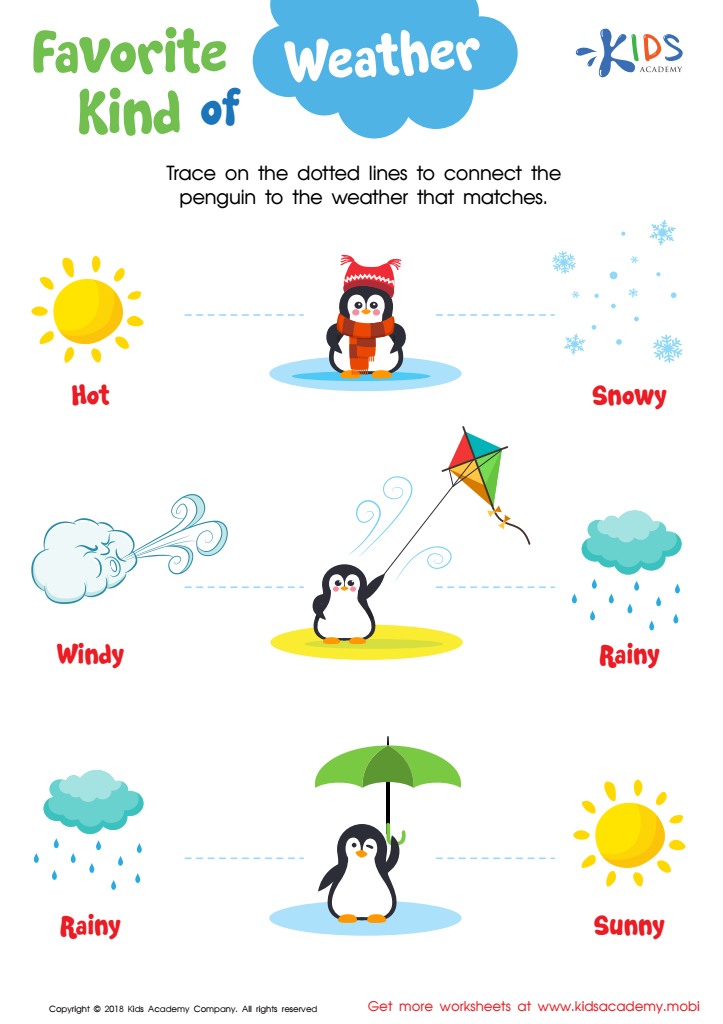
Favorite Kind of Weather Worksheet
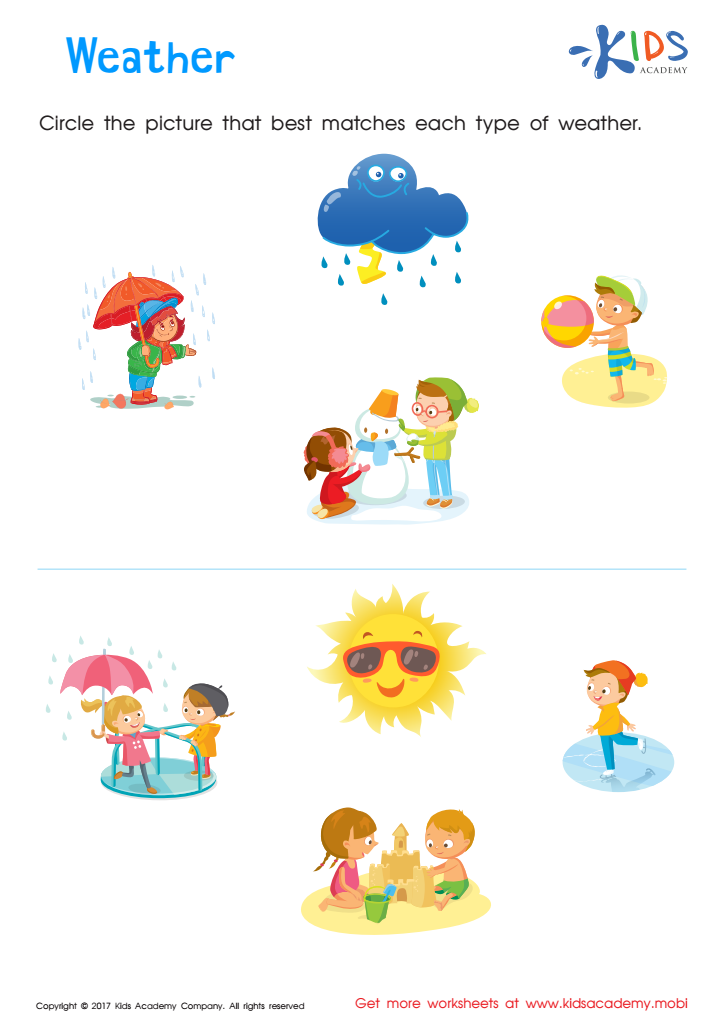
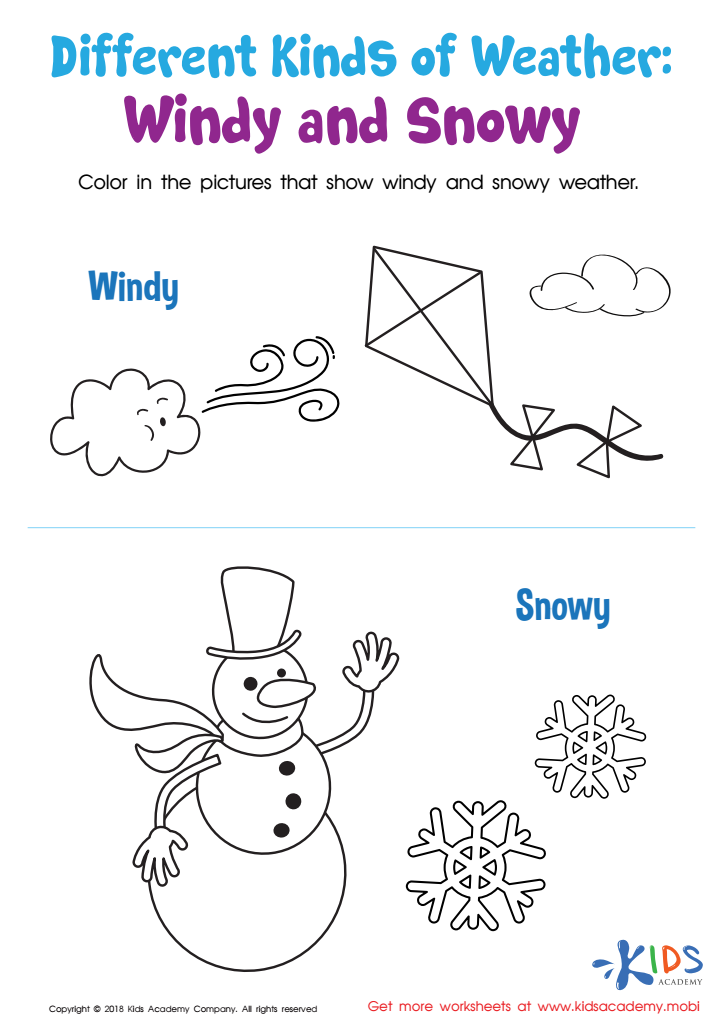
Different Kinds of Weather: Windy and Snowy Worksheet
 Assign to My Students








Parents and teachers should prioritize weather vocabulary in early education because it plays a crucial role in children's understanding of the world around them. Learning about weather not only enhances language skills but also fosters critical thinking and reasoning. As children develop weather-related vocabulary—terms like "precipitation," "humidity," "forecast," and "climate"—they gain the tools to describe and understand their environment.
Understanding weather vocabulary helps children make connections between language and real-life phenomena, encouraging curiosity about science and nature. It supports interdisciplinary learning by combining science, geography, and mathematics, especially when discussing concepts like temperature change and atmospheric pressure.
Moreover, basic knowledge of weather vocabulary empowers children to be informed and proactive about safety during weather events. When kids can understand official weather warnings or forecasts, they can make better decisions in potentially dangerous situations.
Encouraging discussions about weather helps parents and teachers reinforce cognitive skills, improve observational skills, and cultivate a lifelong interest in scientific inquiry. In sum, fostering an understanding of weather vocabulary equips children with essential skills to navigate their lives safely and knowledgeably, making it an invaluable aspect of early education.







