Understanding forces Normal Physical Science Worksheets
6 filtered results
-
From - To
Introducing our "Understanding Forces" Physical Science Worksheets – the perfect educational resource for young learners! These worksheets are expertly designed to make the complex concept of forces accessible and engaging for kids. Through a variety of interactive and hands-on activities, students will explore different types of forces, including gravity, friction, and magnetic forces. Our materials help develop critical thinking and problem-solving skills as children learn to identify and describe forces in everyday situations. Suitable for classroom or home use, these worksheets align with educational standards and are a valuable addition to any science curriculum. Let's make learning about forces fun and intuitive!
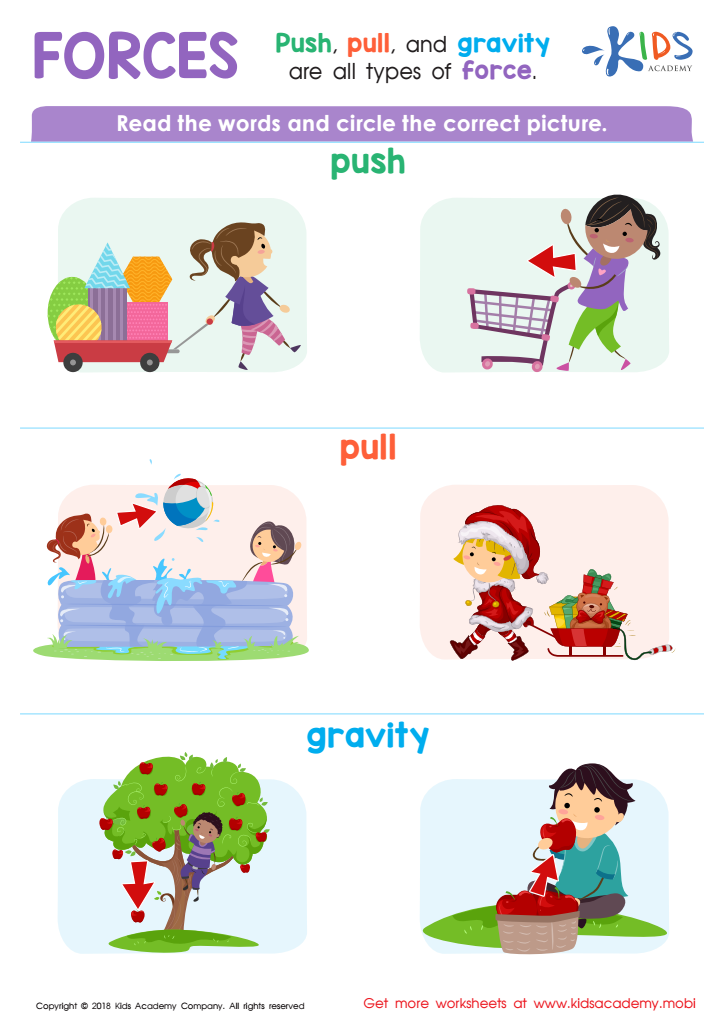
Forces Worksheet
 Assign to My Students
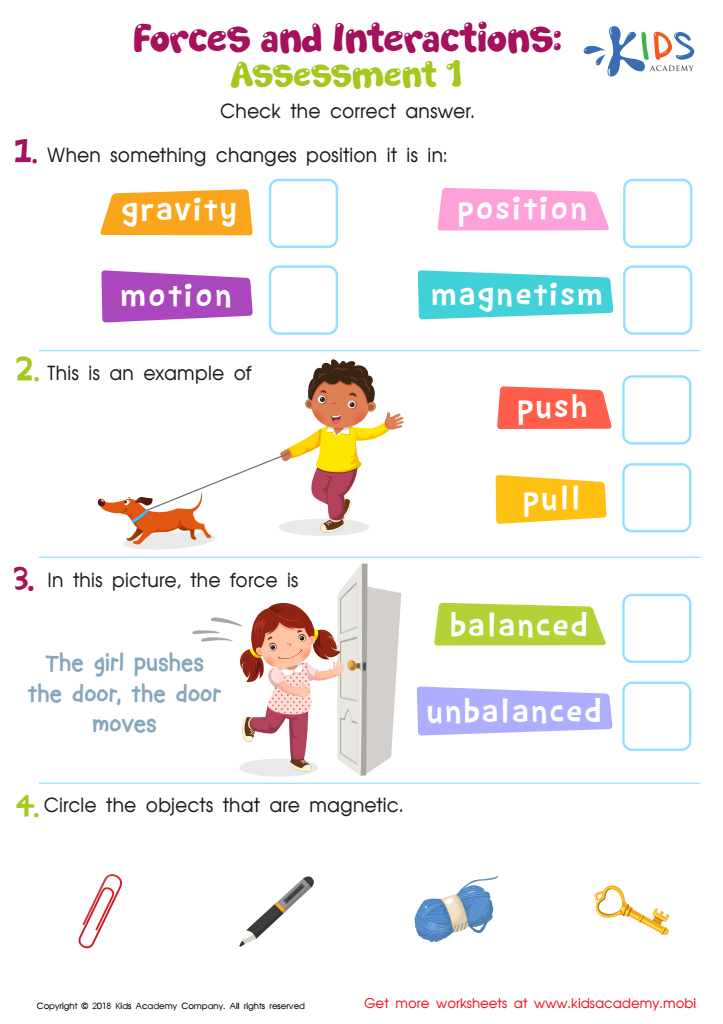
Forces and Interactions Printable
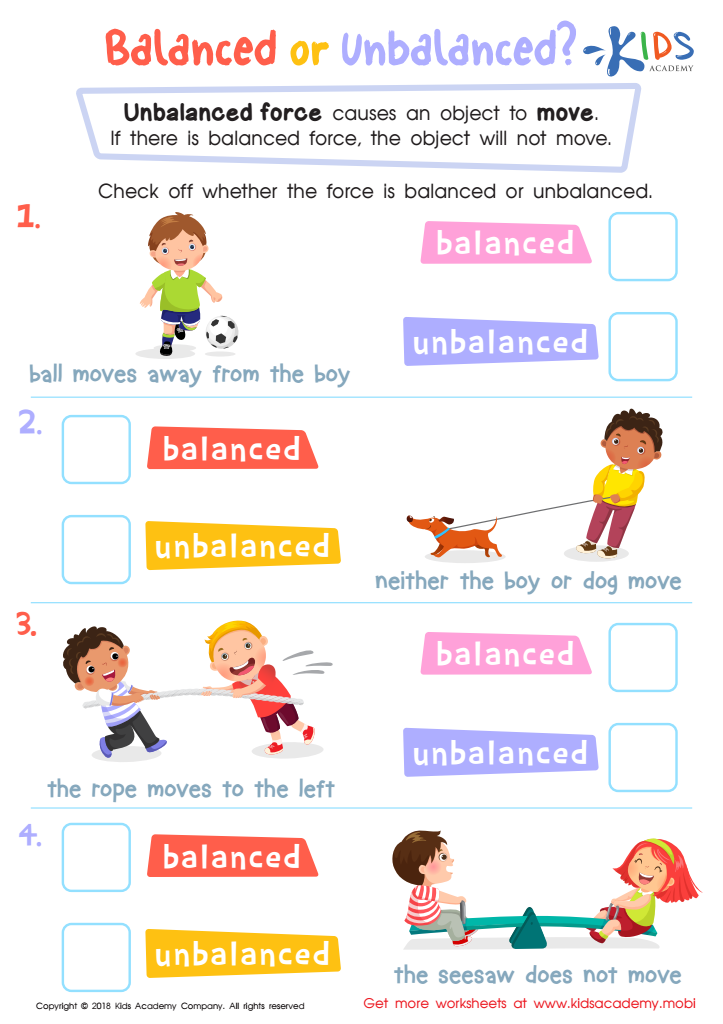
Balanced or Unbalanced Science Worksheet
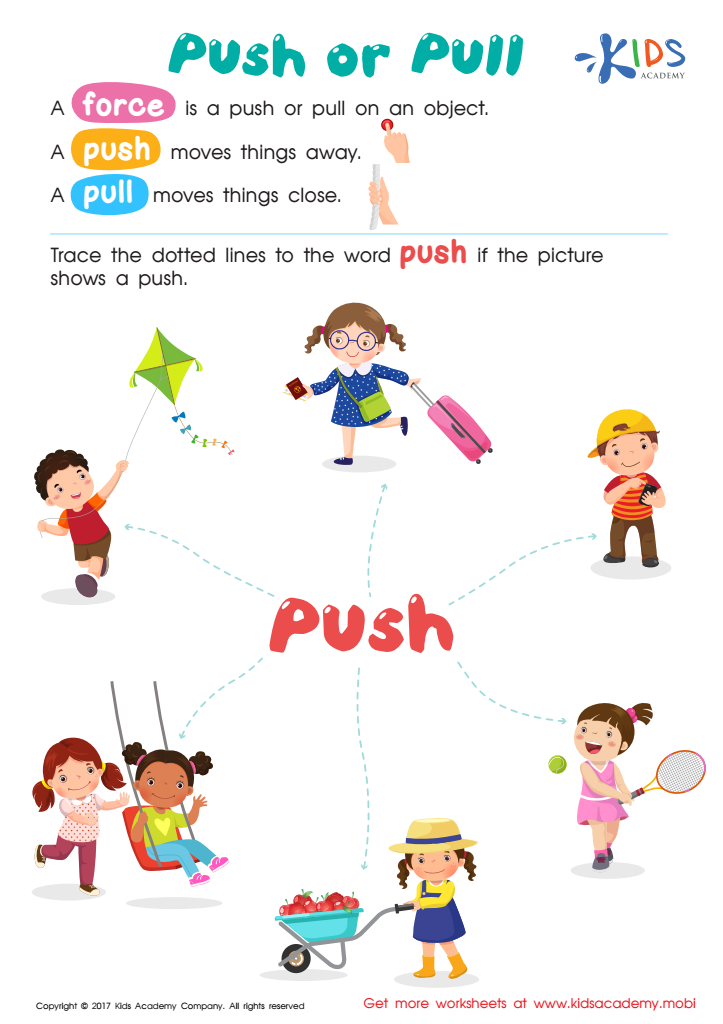
Push or Pull Worksheet
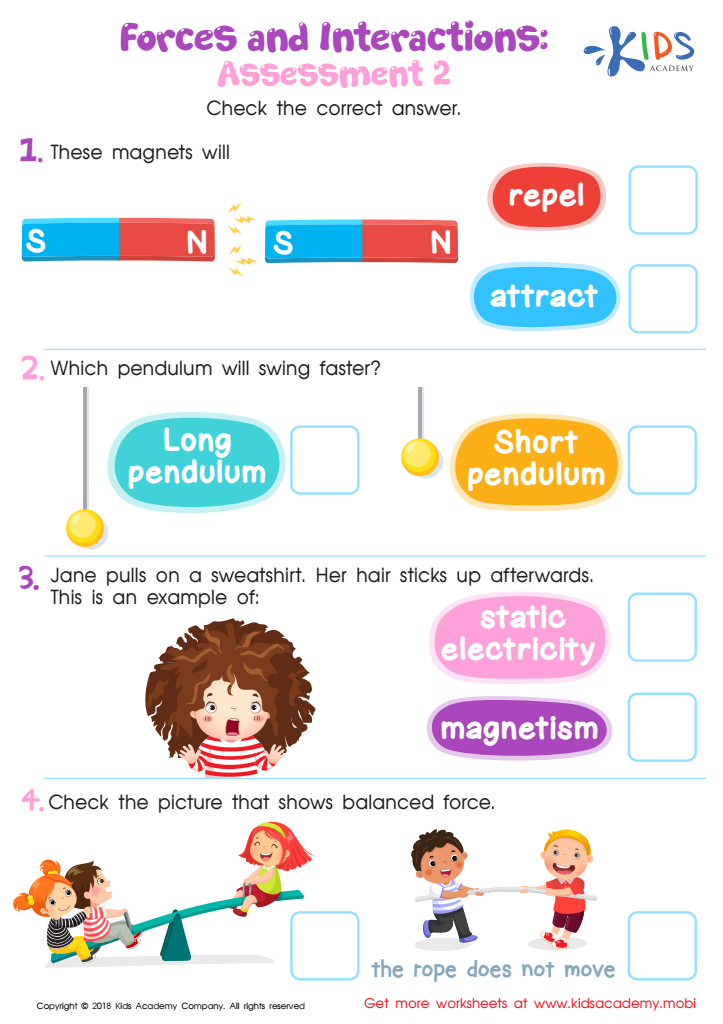
Forces and Interactions Worksheet For 3rd Grade
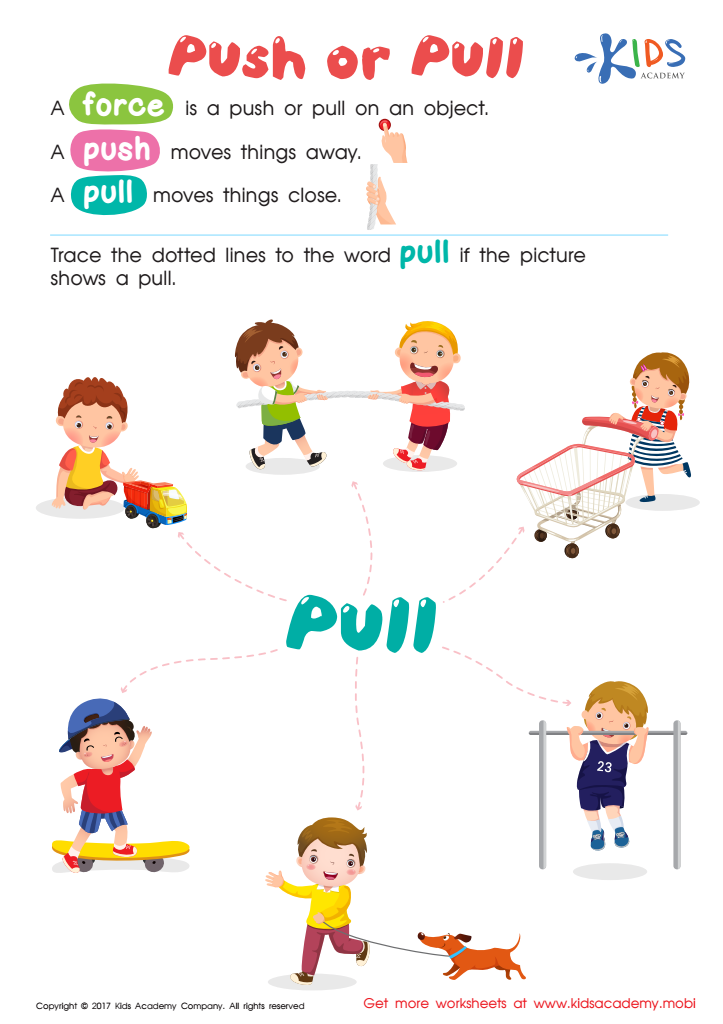
Pull or Push Worksheet








Understanding forces in physical science is crucial for both parents and teachers because it directly impacts children's comprehension of the physical world and enhances their critical thinking skills. Forces, such as gravity, friction, and tension, are fundamental concepts that govern the natural universe and play a vital role in everyday activities. When children learn about these forces, they can better understand why objects move or stay still and how energy is transferred.
For teachers, imparting this knowledge helps build a robust foundation for future scientific learning. It encourages inquiry-based learning, where students ask questions, experiment, and observe outcomes. Engaging in activities such as experimenting with toy cars on ramps or exploring magnetic attraction can make learning tangible and exciting, promoting a deeper interest in science.
Parents who understand these principles can support their children's learning at home by relating everyday phenomena to the concepts of forces. For example, they can explain how air resistance slows down a thrown ball or why it's harder to push a heavy object on a rough surface compared to a smooth one. This contextual understanding helps children to see the relevance of science in daily life, making them more curious and eager to learn.
Overall, fostering an early appreciation for physical science principles, like forces, equips children with critical analytical tools and promotes curiosity, paving the way for lifelong learning and problem-solving abilities.







