Fine Motor Skills Normal Grade 3 Letter Recognition Worksheets - Page 2
25 filtered results
-
From - To
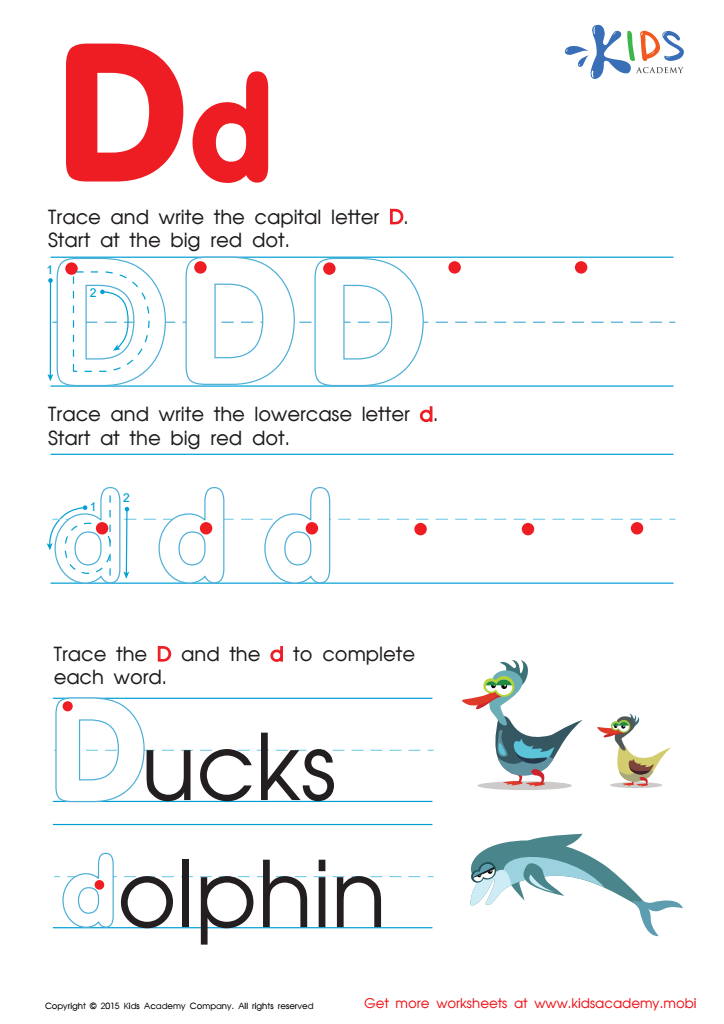
Letter D Tracing Page
 Assign to My Students





Fine motor skills, which involve the coordination of small muscles in movements such as writing, buttoning, and cutting with scissors, are crucial for children's academic success and overall development. By Grade 3, children are transitioning from learning to read to reading to learn. This shift means they engage more deeply with written material, both in terms of speed and comprehension. As such, normal development of fine motor skills, especially in relation to letter recognition and writing, is essential.
When fine motor skills are well-developed, children can more easily write legibly and quickly, allowing them to complete assignments efficiently and express their thoughts clearly. This competency serves as a foundation for complex tasks like writing essays and solving problems in subjects such as math and science. Poor fine motor skills can lead to frustration, lower academic performance, and a reluctance to engage in writing activities, hindering overall progress.
Additionally, proficiency in fine motor skills boosts self-esteem and confidence. Children who struggle may feel inferior or become discouraged. Hence, parents and teachers should closely monitor and support the development of these skills through targeted activities like drawing, cutting shapes, and practicing letter formations. This proactive approach ensures that children have the physical readiness to maximize their academic potential.