Understanding times tables Normal Grade 3 Advanced Times Tables up to 12 Worksheets
3 filtered results
-
From - To
Welcome to our "Understanding Times Tables" page, designed for Grade 3 students! Our advanced times tables worksheets, covering multiplication facts up to 12, provide a fun and engaging way to enhance your child’s math skills. These easy-to-follow worksheets support students in mastering the concept of multiplication through visual aids and practice exercises. By using these resources, your child will develop confidence and fluency in handling multiplication problems, laying a strong foundation for future math learning. Perfect for classroom use or at-home practice, our worksheets are tailored to make learning times tables an enjoyable experience! Explore the materials today!
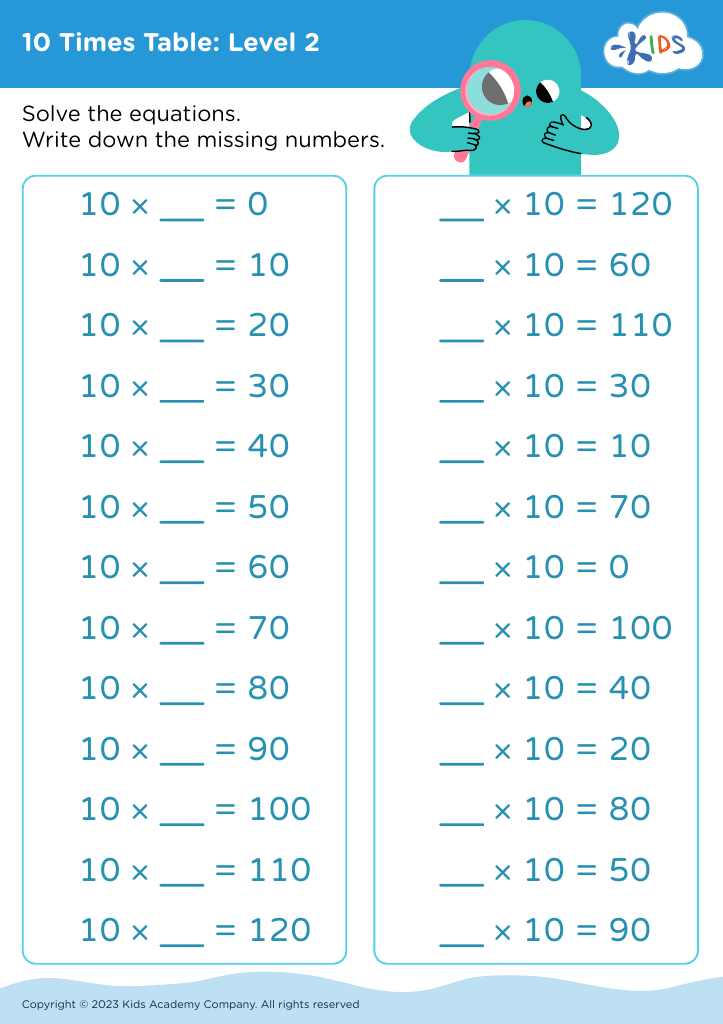
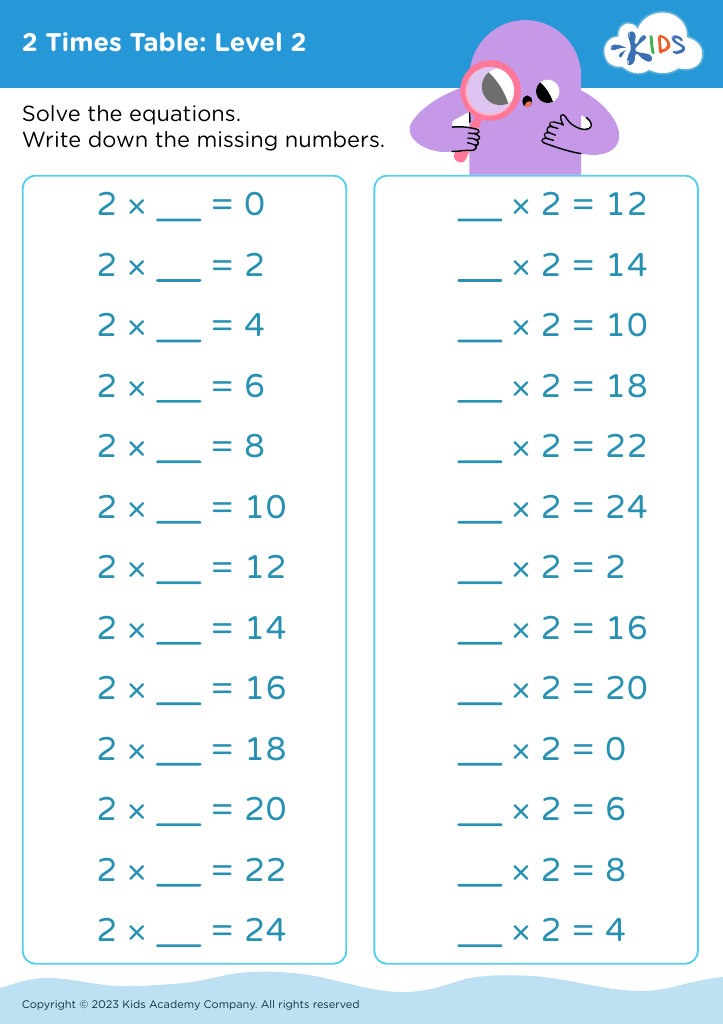
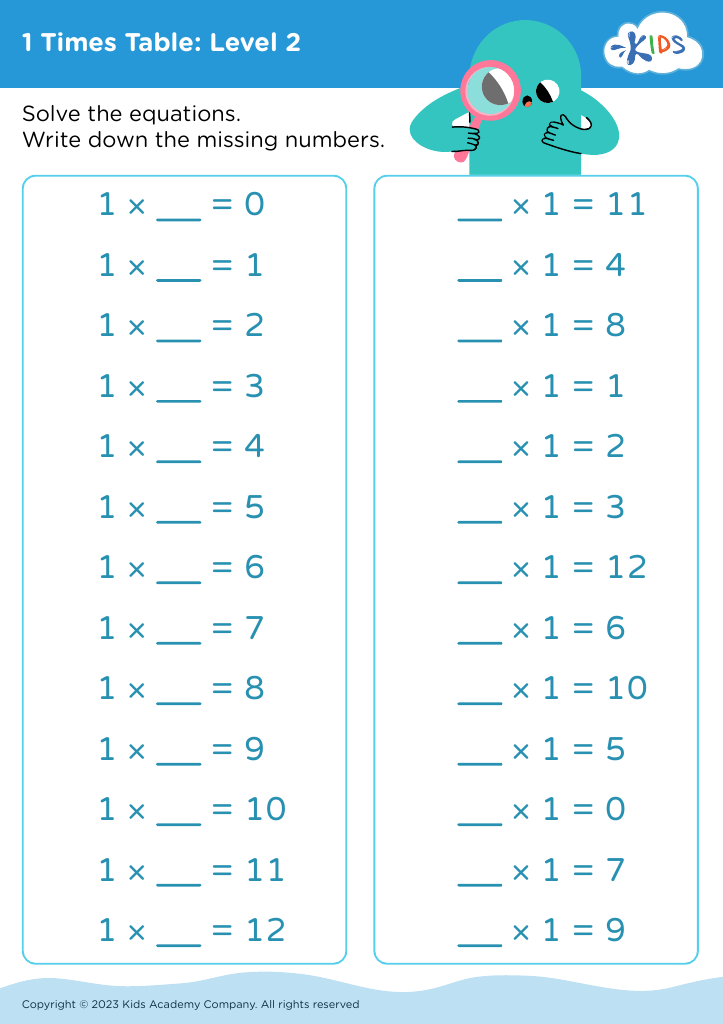



Understanding times tables is crucial for third graders, particularly as they build a foundation for more advanced math concepts. Mastering multiplication, especially up to 12, enhances students' ability to solve problems efficiently and accurately. For parents and teachers, a solid grasp of these tables fosters confidence in children, enabling them to tackle higher-level math in subsequent grades.
Times tables are not merely rote memorization; they are essential for developing critical thinking and problem-solving skills. When students understand multiplication, it reinforces their grasp of related concepts such as division, fractions, and even algebra later on.
Moreover, a strong command of times tables supports everyday functioning. From shopping to cooking, multiplication is an integral part of daily life. Parents can assist their children in practical scenarios that require application of these skills, further reinforcing their understanding.
Among peers, proficiency in multiplication often translates to academic success and positive self-esteem. When children feel comfortable with their math abilities, they are more likely to engage in class, participate in group activities, and embrace challenges. By prioritizing times table understanding, both parents and teachers foster a positive math culture that encourages ongoing learning and interest in the subject.