Critical Thinking Normal Grade 3 Governance and Civics Worksheets
3 filtered results
-
From - To
Explore our Critical Thinking Normal Grade 3 Governance and Civics Worksheets, designed to engage young learners in the essential concepts of governance and civic responsibility. These worksheets encourage students to think critically about their roles as citizens, the importance of rules and laws, and the workings of their government. By completing these activities, students will enhance their analytical skills, foster a sense of community, and gain a deeper understanding of democratic principles. Our resources are thoughtfully crafted to make learning interactive and enjoyable, ensuring that children develop the cognitive skills necessary for informed and active participation in society. Ideal for both classroom and home use!
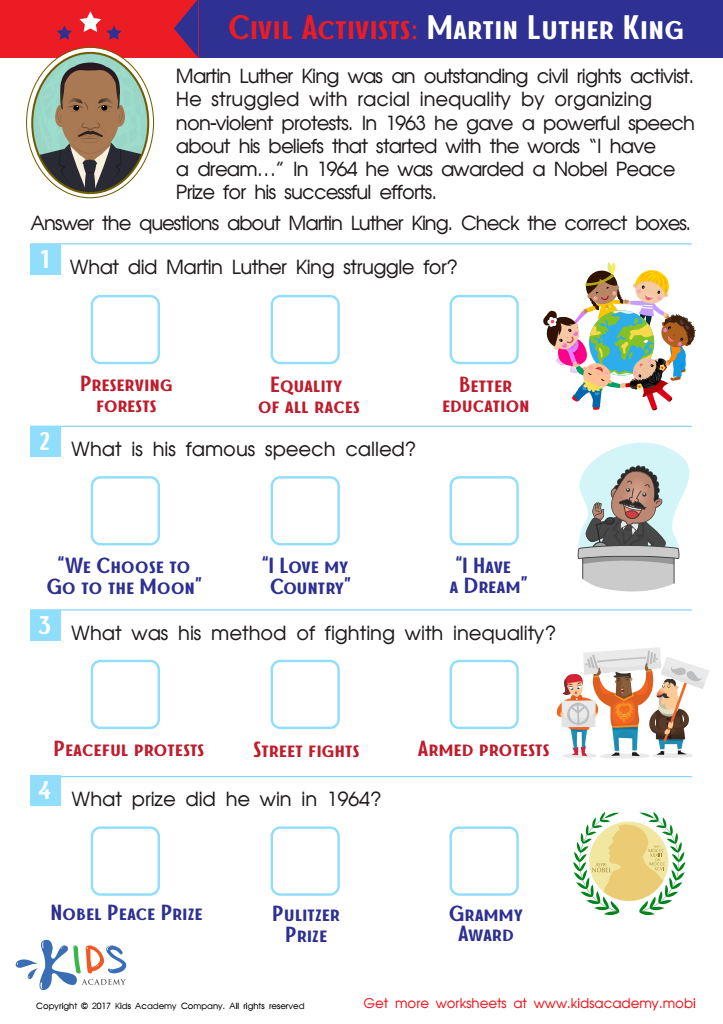
Martin Luther King Worksheet
 Assign to My Students
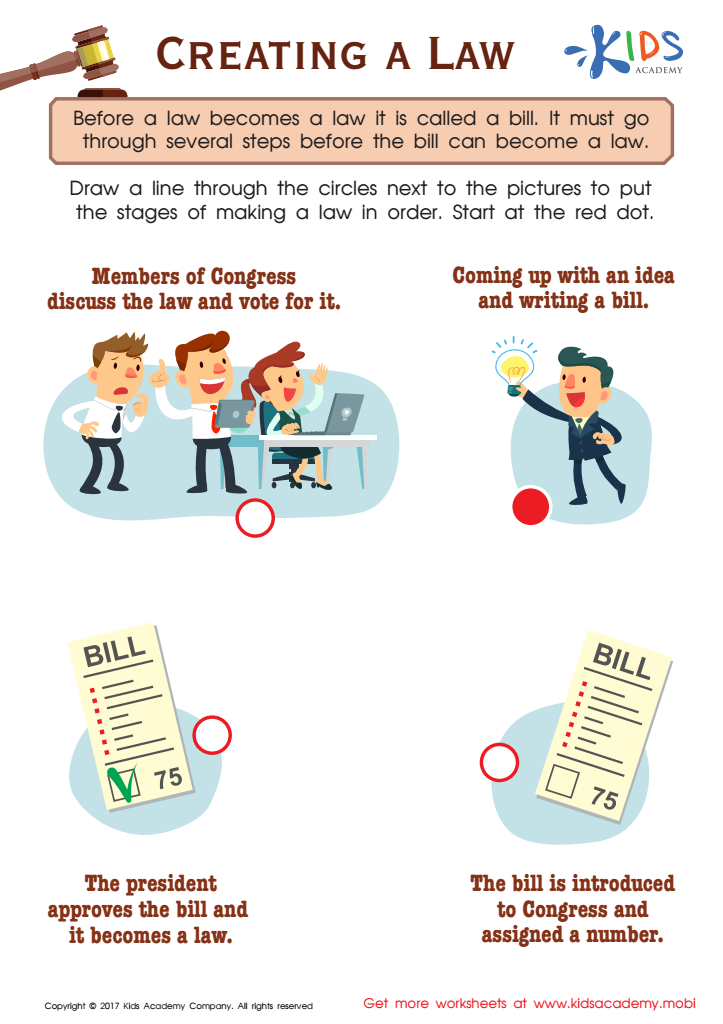
Creating a Law Worksheet
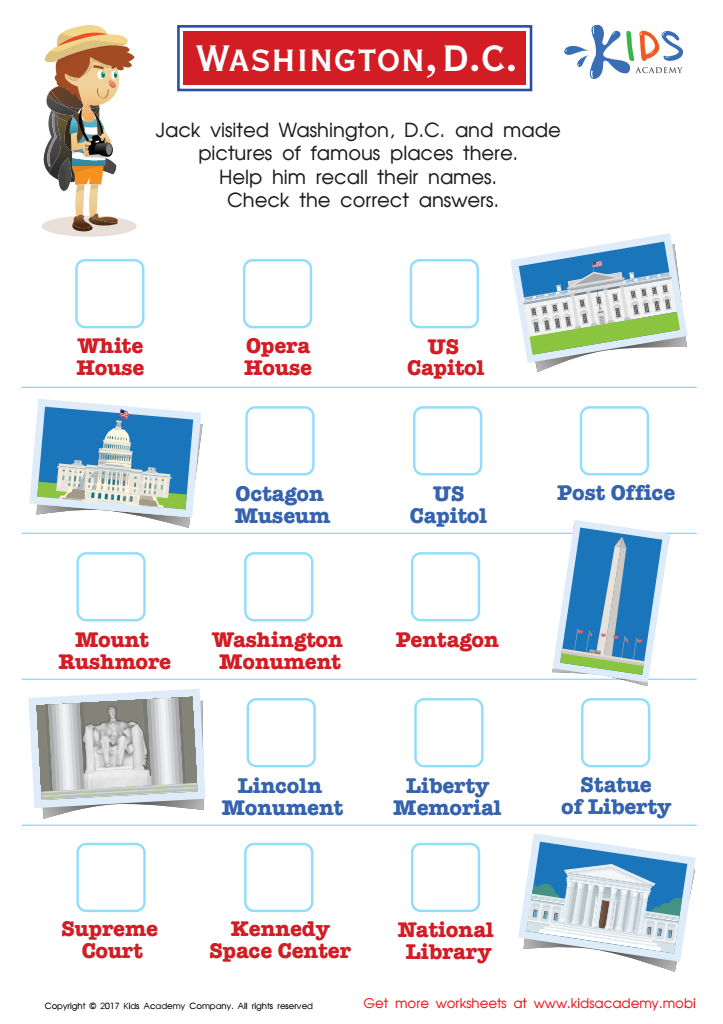
Washington D.C. Printable Worksheet


Critical thinking is essential for students in Grade 3, particularly within the realms of governance and civics. At this developmental stage, children are starting to understand their role in the community and society at large. Encouraging critical thinking about governance helps them comprehend how decisions affect their lives and those of others, fostering responsible citizenship.
Parents and teachers should care about this topic because it equips children with essential skills that transcend basic knowledge. By engaging in critical thinking about civic issues, children learn to analyze information, weigh multiple perspectives, and make informed decisions. This active engagement not only nurtures curiosity about the world but also prepares them for future challenges as they encounter complex societal issues.
Furthermore, cultivating critical thinking in civics encourages empathy and social awareness. It shifts their focus from individual needs to understanding community dynamics, prompting a sense of responsibility toward peers and environment. As young learners practice these skills, they develop the foundation for lifelong participation in civic duties, making them more informed and active members of society. Ultimately, promoting critical thinking in governance and civics at a young age helps shape future leaders who value inclusivity, justice, and active community involvement.