Poems worksheets activities for Ages 4-5
7 filtered results
-
From - To
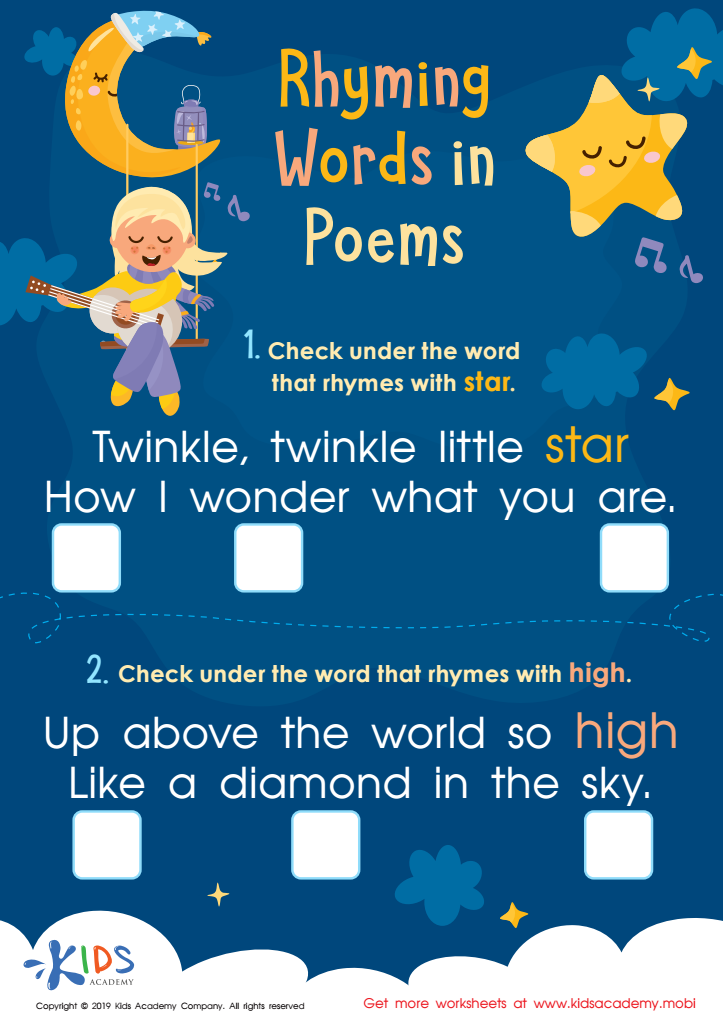
Rhyming Words in Poems Worksheet
 Assign to My Students
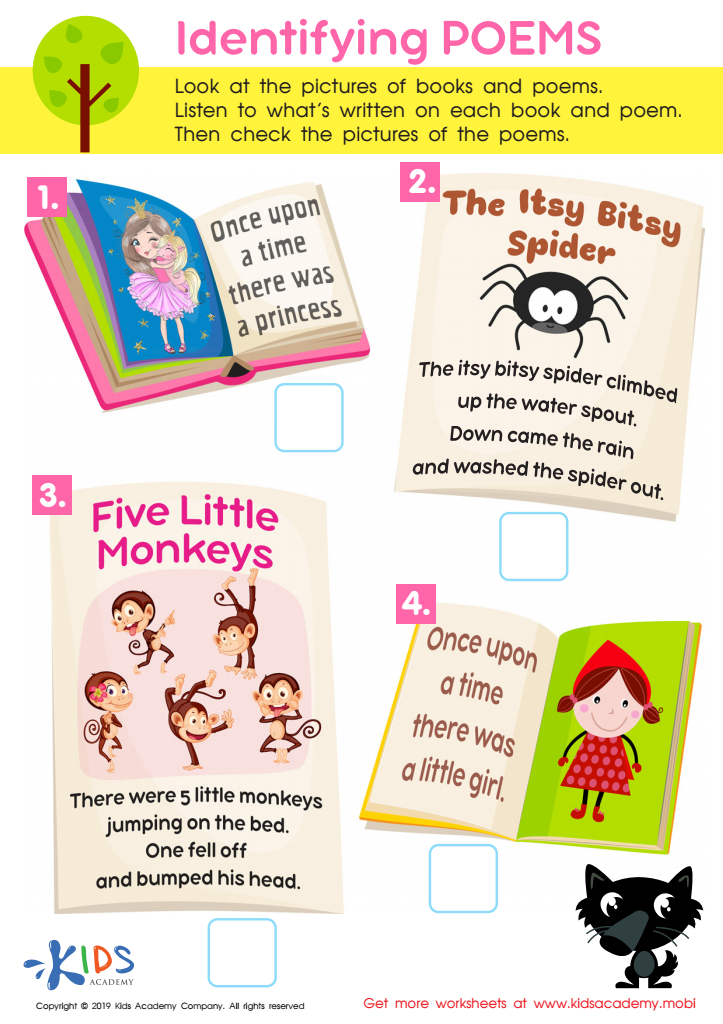
Identifying Poems Worksheet
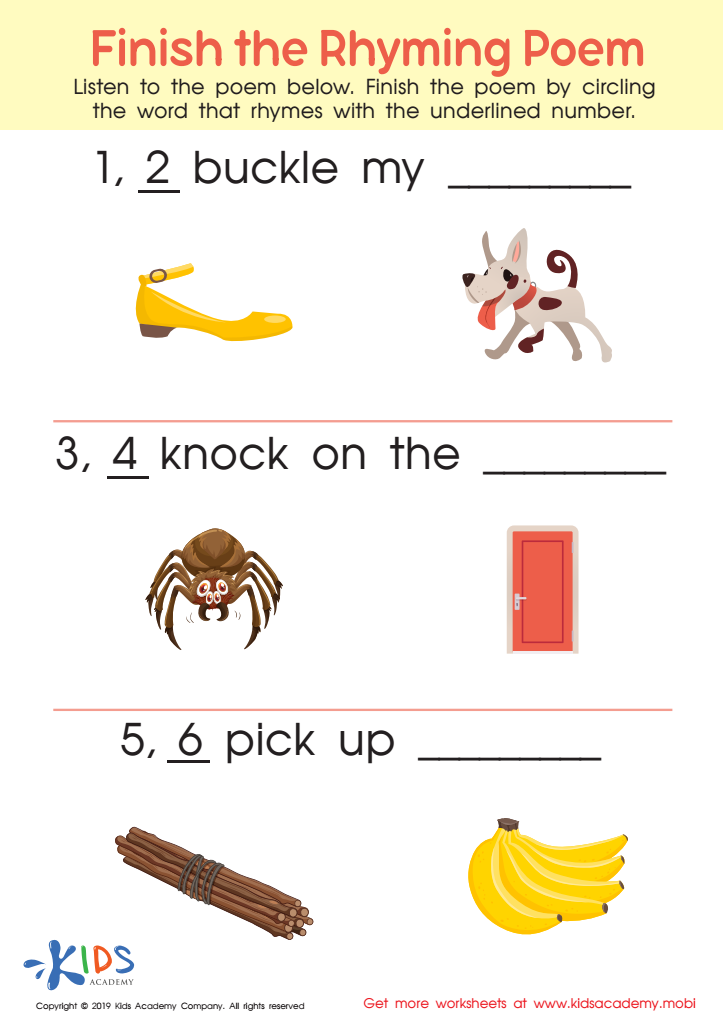
Finish Rhyming Poem Worksheet
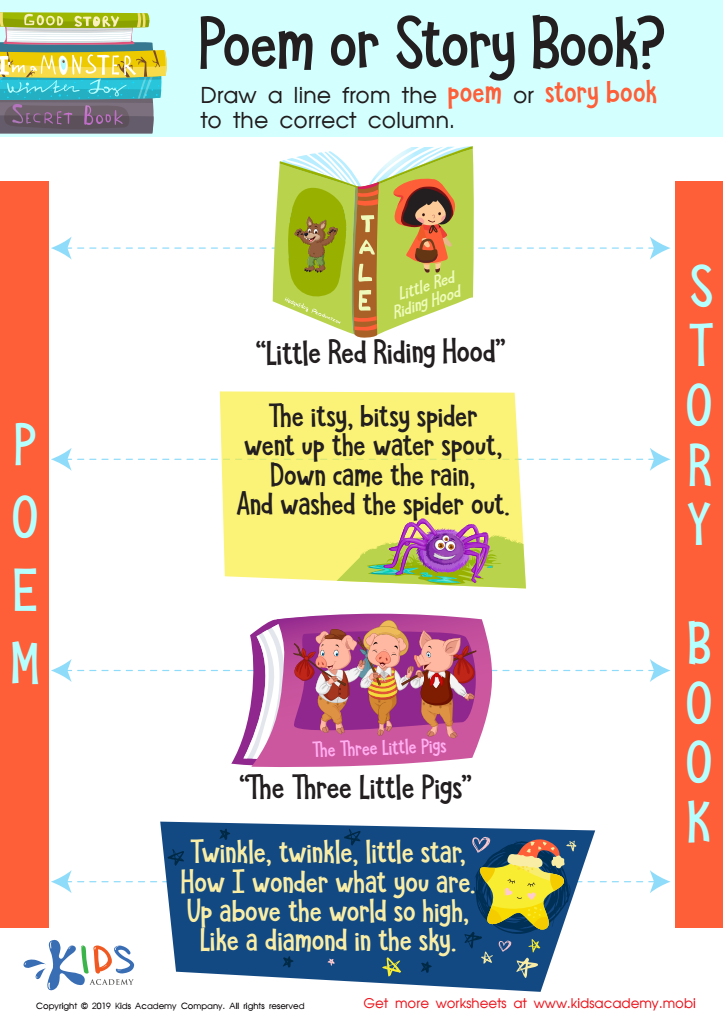
Poem or Story Book? Worksheet
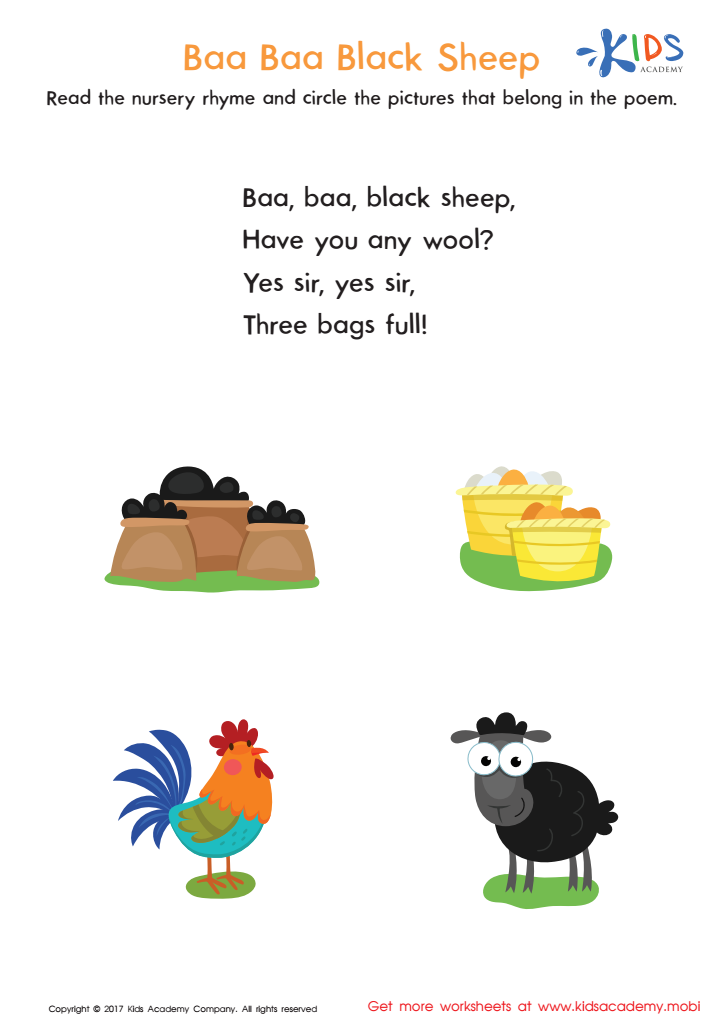
Baa Baa Black Sheep Printable
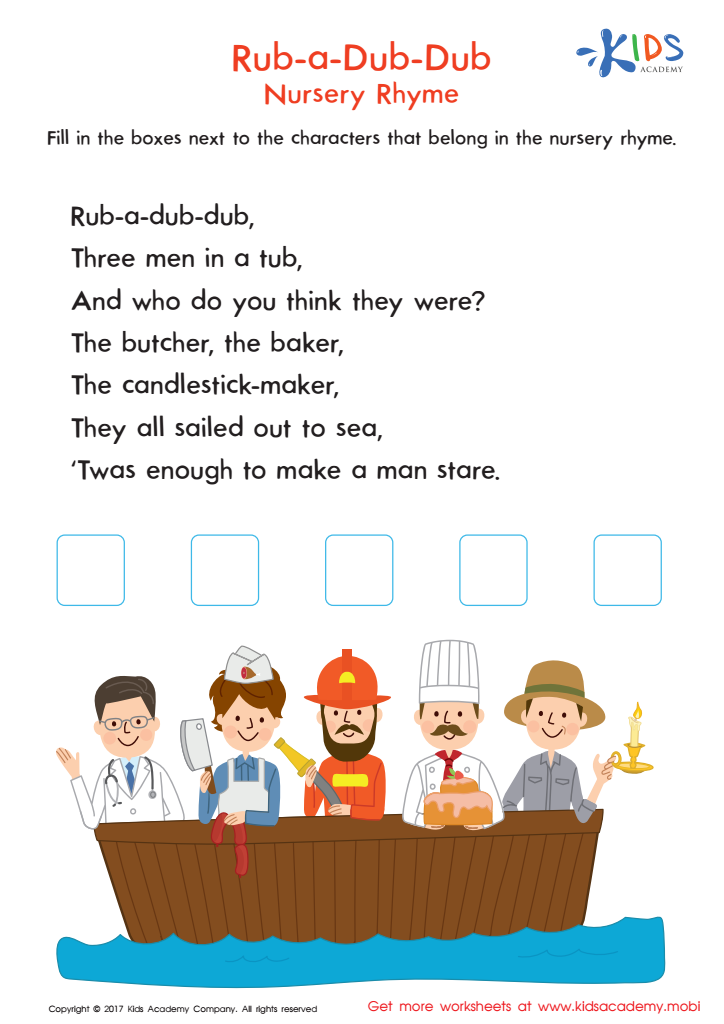
Rub a Dub Dub Printable
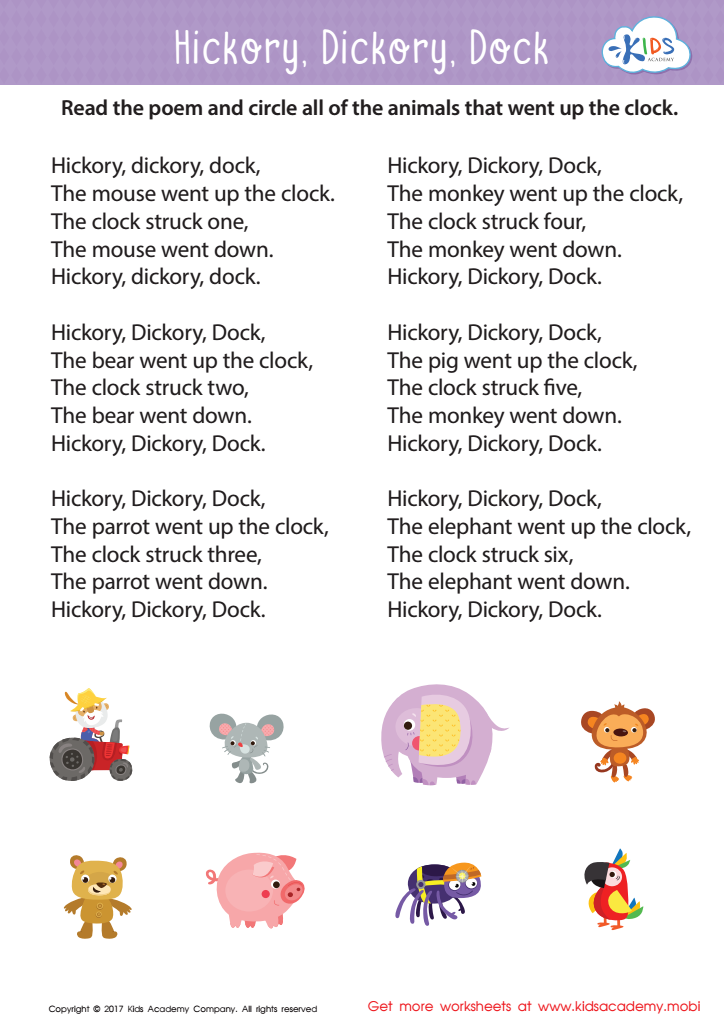
Hickory Dickory Dock Sequencing Worksheet








Unlocking the Magic of Poetry Through Worksheets Activities
Poetry, with its rich imagery and emotive power, opens up a world of expression and understanding. However, for many students, delving into this world can seem daunting. This is where poems worksheets activities become invaluable. These structured exercises are designed not just to dissect poems mechanically but to engage learners in the beauty and depth of poetic expression.
Poems worksheets activities serve as bridges between the abstract elements of poetry and the tangible experience of the reader. For starters, they help demystify the complex language and structures that poems often employ. By breaking down these elements, students can appreciate the craft behind the verses, recognizing the significance of rhythm, meter, and rhyme. This analytical approach transforms what could be an overwhelming experience into manageable and enjoyable learning segments.
Moreover, these activities foster a deeper connection with the text. Through guided questions and prompts, students are encouraged to reflect on the themes and emotions conveyed, making personal connections that enrich their understanding. This personal engagement is crucial in developing empathy and emotional intelligence, as students learn to see the world through various lenses.
Critical thinking is another significant benefit. Poems worksheets activities often challenge students to interpret meanings, discern the poet’s intent, and appreciate the subtleties of language. This not only enhances their analytical skills but also encourages a deeper appreciation for the nuances of communication.
Furthermore, creativity is sparked as students are sometimes asked to write their verses, inspired by the techniques and themes they’ve studied. This creative expression allows students to experiment with their voice and style, fostering a sense of achievement and confidence.
In conclusion, poems worksheets activities are not mere academic tasks; they are gateways to a richer, more profound engagement with language and emotion. Through these structured exercises, students learn to appreciate the complex beauty of poetry, developing analytical, emotional, and creative skills that will serve them well beyond the classroom.








