
Interpretation skills Worksheets for Ages 3-5
3 filtered results
Difficulty Level
Grade
Age
-
From - To
Subject
Activity
Standards
Boost your child's cognitive development with our Interpretation Skills Worksheets for Ages 3-5! Designed to enhance critical thinking and problem-solving abilities, these fun and engaging worksheets will help your little ones improve their capacity to understand, analyze, and interpret information. From identifying patterns to linking concepts, our expertly crafted activities cater to young learners' curiosity and creativity. Each worksheet is packed with colorful illustrations and exciting exercises to keep your child engaged and motivated. Give your preschooler a head start in learning with our comprehensive interpretation skills resources!
Favorites
With answer key
Interactive
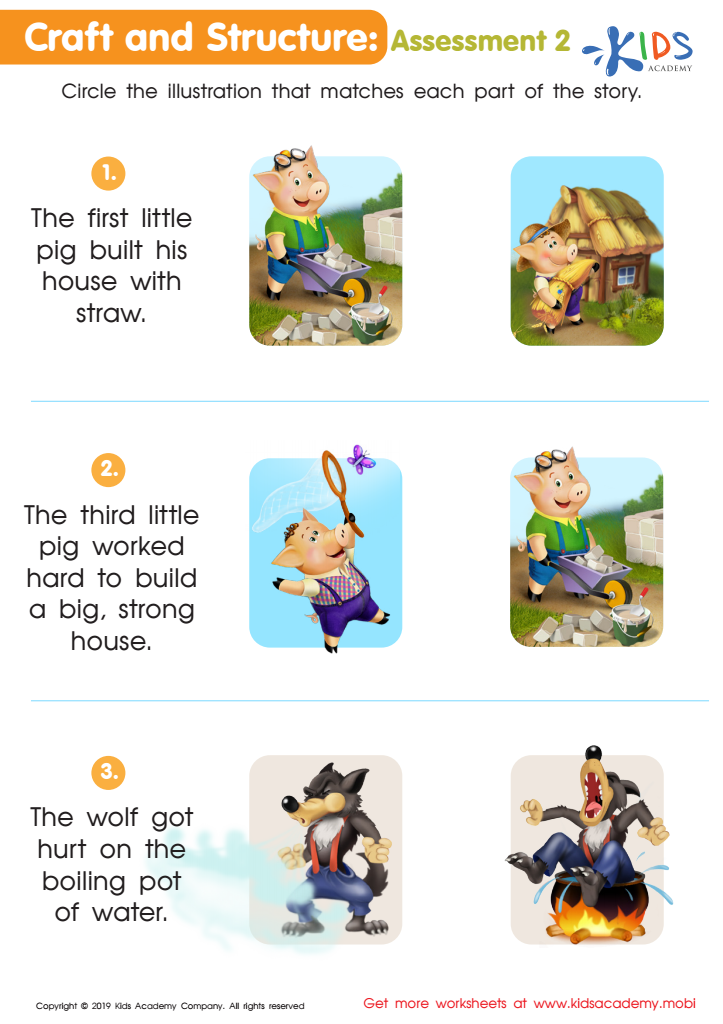
Craft and Structure: Assessment 2 Worksheet 2
This fun printout with colorful illustrations will assess how much your kids pay attention to story time. Go through the pictures and help them circle the ones that match each part of the story. Stimulate their brains and have fun in the process!
 Assign to My Students
Craft and Structure: Assessment 2 Worksheet 2
Worksheet
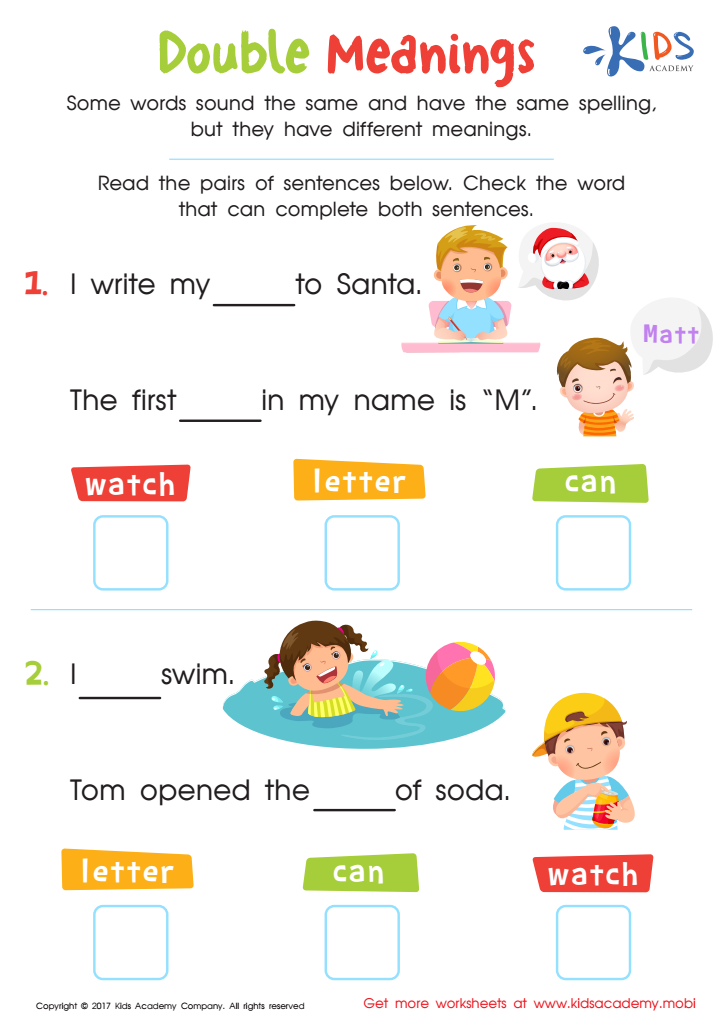
Double Meanings Worksheet
Homographs are words that look and sound the same, but have different meanings. This worksheet uses pictures to help young authors learn to use them correctly. Context and exposure to the words' meanings help them understand the difference.
Total: 80 words
Double Meanings Worksheet
Worksheet
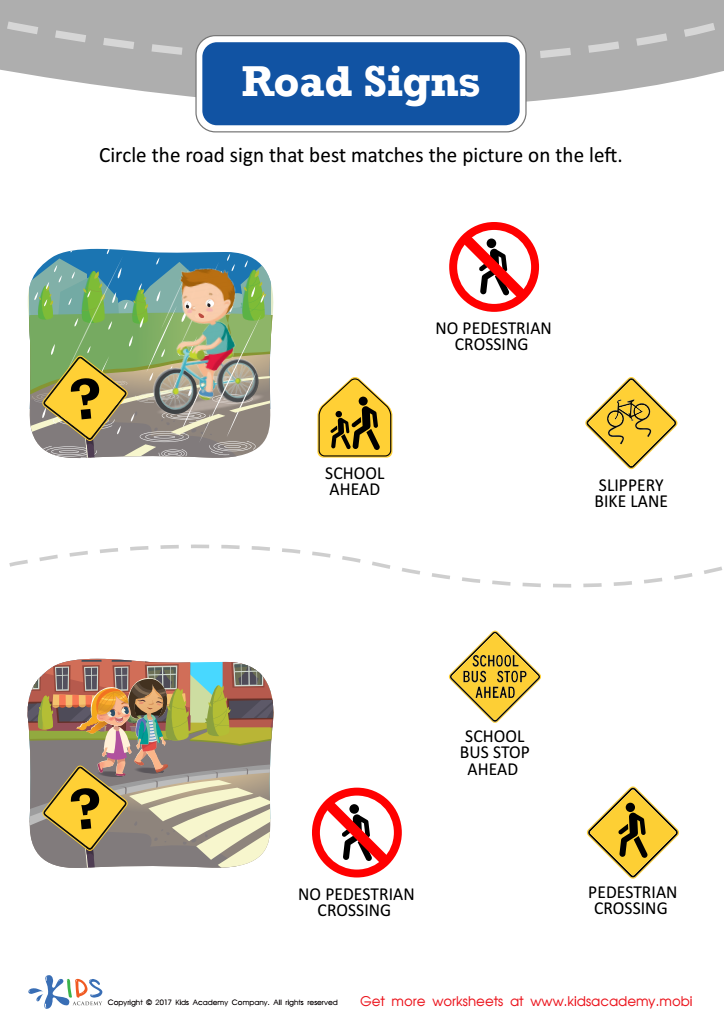
Road Signs (Part 2) Printable
Help your child stay safe with road sign worksheets! These worksheets help kids recognize common traffic signs, boost comprehension and symbol recognition, and know when to stay safe near or on roads. Use the sheets to start a conversation, and take your child out to spot signs near home or school.
Road Signs (Part 2) Printable
Worksheet
Join Kids Academy for Free
Who is primarily going to use this learning content?







Developing interpretation skills in children ages 3-5 is crucial for their cognitive and social-emotional development. At this age, kids are rapidly absorbing information and trying to make sense of the world around them. Interpretation skills help children understand people, events, texts, and experiences, which are foundational for effective communication and learning.
Firstly, interpretation skills allow young children to make connections between their own experiences and new information. This ability to relate and contextualize is key in fostering critical thinking and problem-solving abilities. As they grow, these skills enable children to understand stories, instructions, and academic concepts, building a strong foundation for future learning.
Secondly, these skills are essential for social interactions. When children interpret emotions, body language, and social cues accurately, they interact more effectively with peers and adults. This leads to better cooperation, empathy, and conflict resolution, which are critical for forming healthy relationships.
Lastly, fostering interpretation skills improves language development. When children interpret words, sentences, and contexts, they expand their vocabulary and comprehension. This sets the stage for becoming proficient readers and communicators.
Parents and teachers play a fundamental role in nurturing these skills through conversations, reading, and guided play. By doing so, they equip children with the tools necessary for both academic success and social well-being.








