Fine Motor Skills Tracing Lines and Curves Worksheets for Ages 3-7
5 filtered results
-
From - To
Enhance your child's fine motor skills with our engaging "Tracing Lines and Curves Worksheets" designed for ages 3-7. These printable activities from Kids Academy are perfect for developing essential pre-writing skills in a fun and interactive way. With a variety of shapes and patterns to trace, children will improve their hand-eye coordination, pencil control, and focus. These worksheets provide an excellent foundation for learning to write letters and numbers, making early education enjoyable and effective. Support your young learner’s development today with our expertly crafted tracing worksheets and watch their confidence and abilities grow!
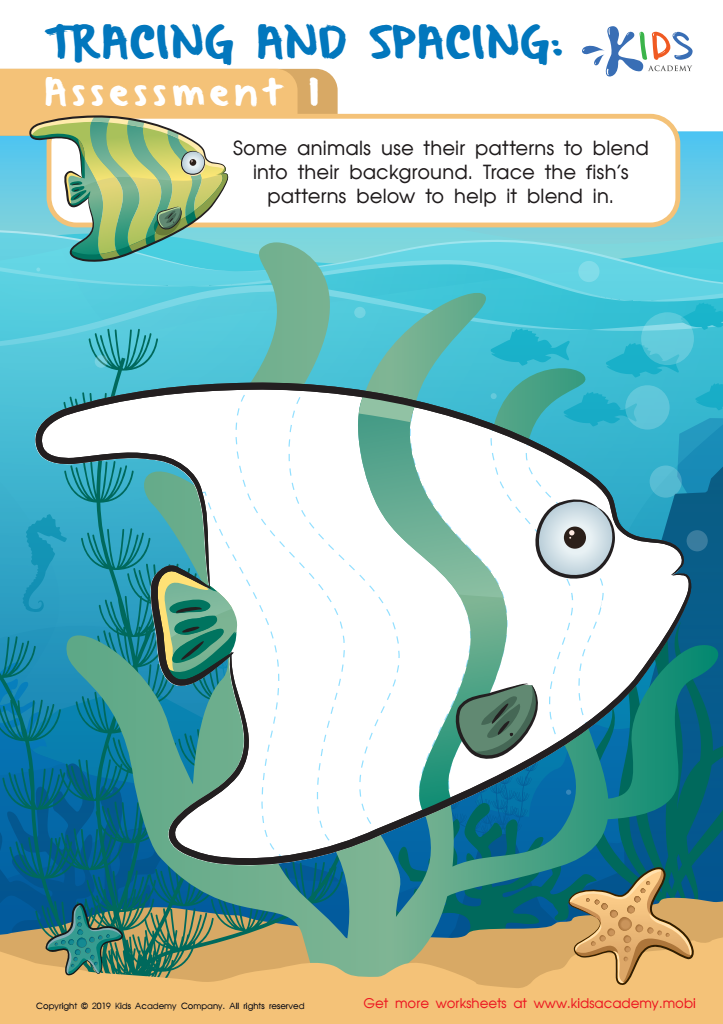
Tracing and Spacing: Assessment 1 Worksheet
 Assign to My Students
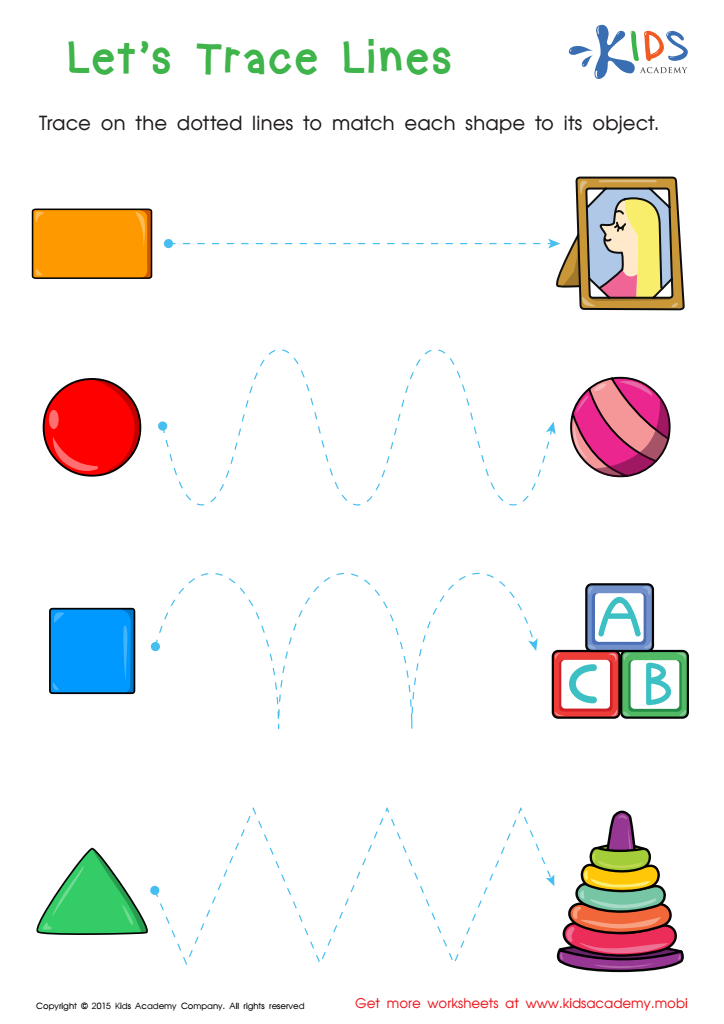
First Words: Let's Trace Lines Worksheet

Tracing Lines Worksheet
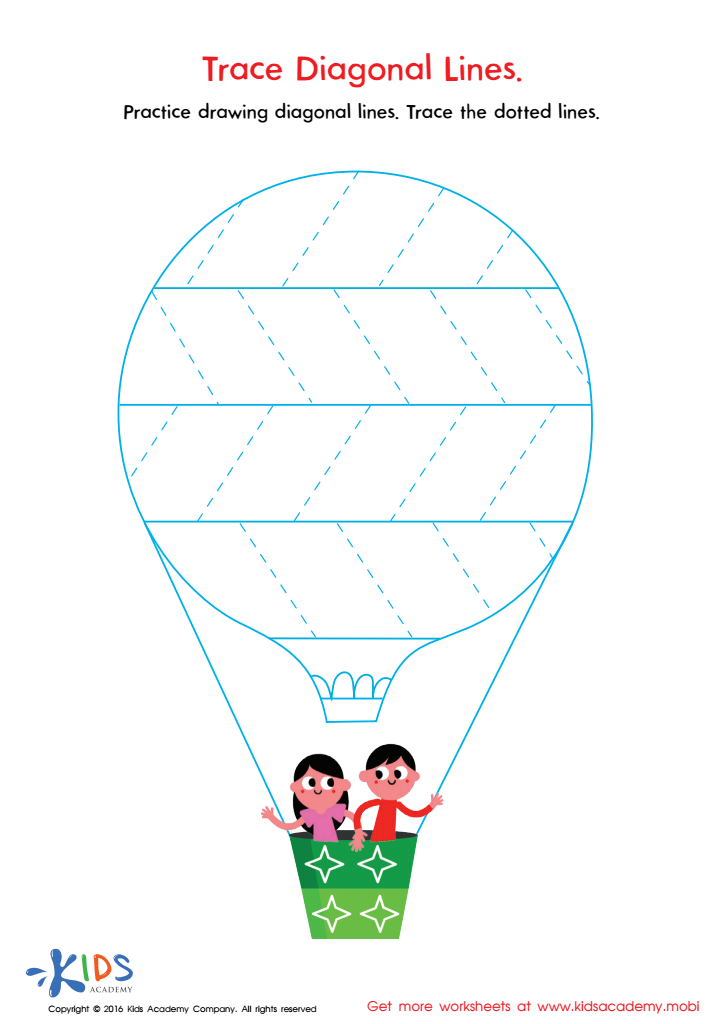
Trace Diagonal Lines Worksheet
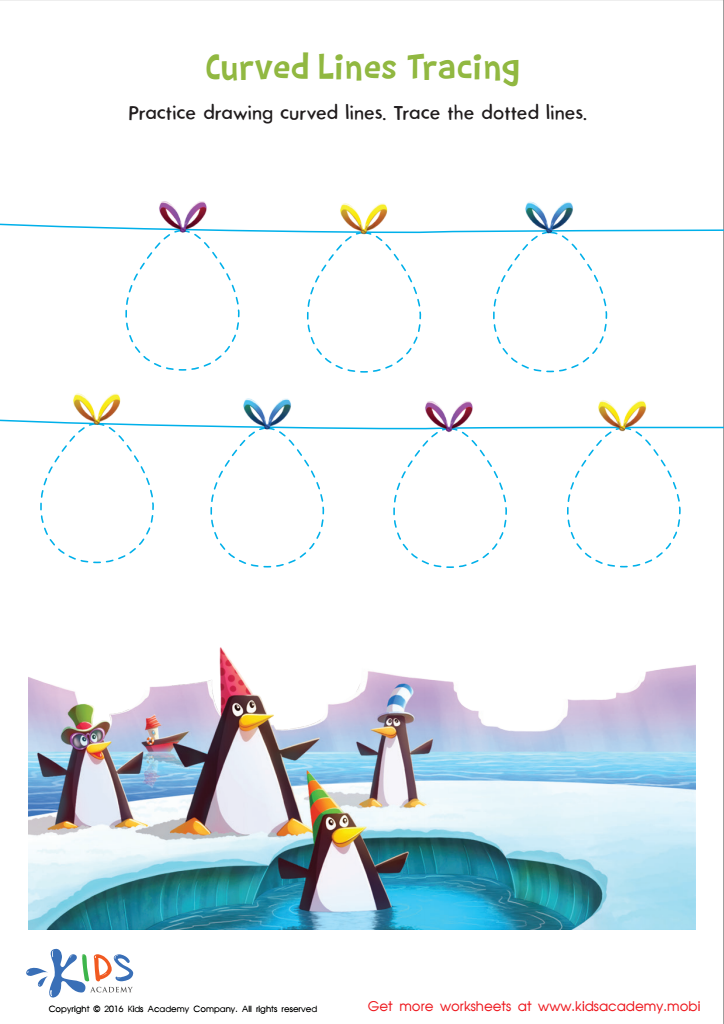
Curved Lines Tracing Worksheet




Fine motor skills are crucial in the early developmental stages of children aged 3-7. These skills involve the small muscle movements of the hands and fingers, which are essential for everyday tasks such as writing, buttoning a shirt, and using utensils. Tracing lines and curves is a fun and effective way to refine these skills. When children engage in tracing activities, they enhance hand-eye coordination, control, and precision. These foundational abilities are pivotal for later academic success, particularly in writing, drawing, and other school-related tasks.
Additionally, fine motor skills contribute to a child’s independence and confidence. Successfully completing tasks like tying shoelaces or fastening buttons gives children a sense of accomplishment. This boosts their self-esteem and encourages them to take on more challenging activities.
Moreover, early intervention in developing these skills can prevent potential learning difficulties down the line. Teachers and parents should incorporate tracing and other fine motor activities into daily routines to ensure children's hands develop strength, dexterity, and coordination. By prioritizing these skills, adults are laying a firm foundation for lifelong learning and self-sufficiency in the children under their care. Investing time and effort in these seemingly simple activities can have a profound impact on a child's holistic development.








