Middle Sounds Worksheets for Ages 4-6
3 filtered results
-
From - To
Introducing our "Middle Sounds Worksheets for Ages 4-6," designed to help young learners enhance phonemic awareness by identifying and experimenting with vowel sounds located in the middle of words. Perfect for children ages 4-6, these engaging and educational printable worksheets support early reading and spelling skills. Through fun exercises, colorful illustrations, and clear instructions, kids can practice recognizing and producing middle sounds, laying a solid foundation for future literacy development. Download our worksheets and watch your child's phonics skills soar while having fun. Boost their confidence in reading and writing with these invaluable resources!
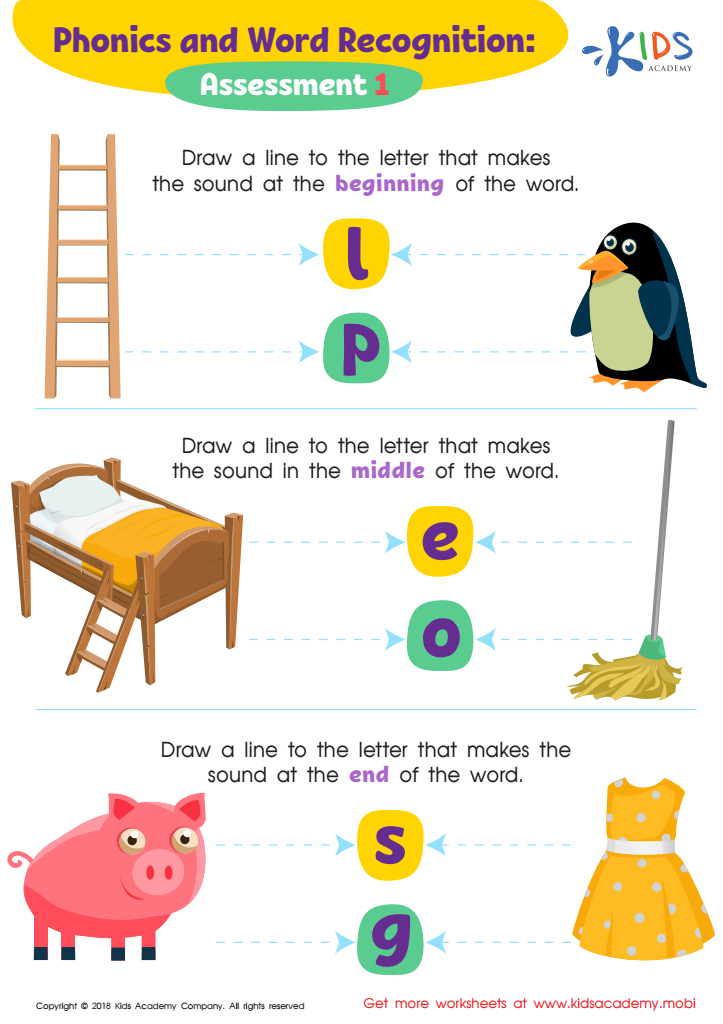
Phonics and Word Recognition: Assessment 1 ELA Worksheet
 Assign to My Students
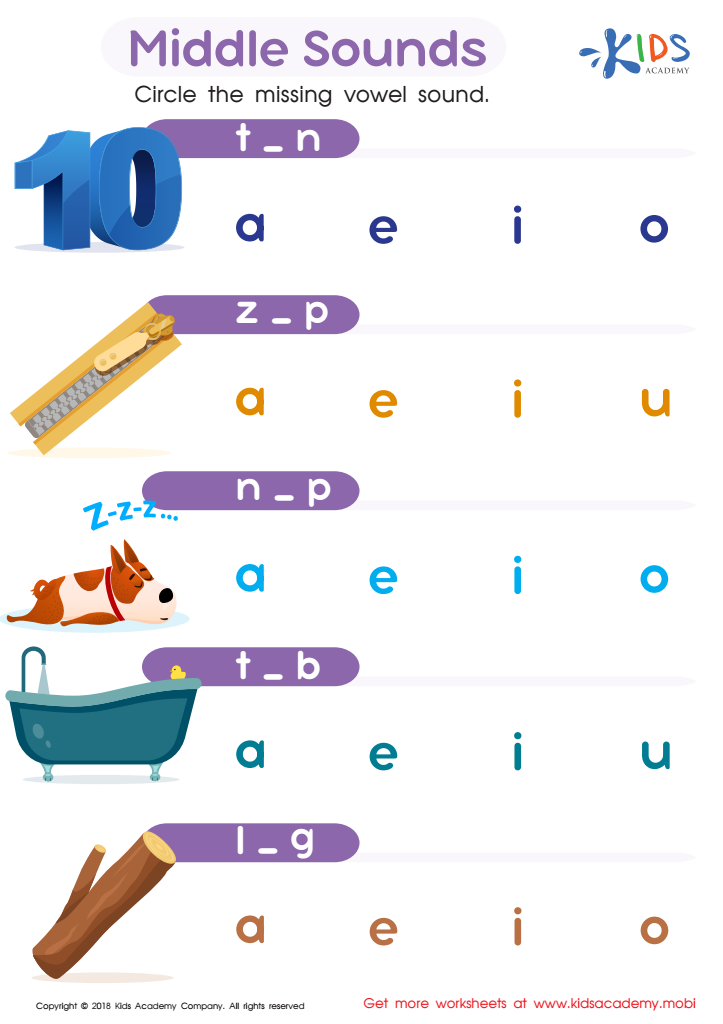
Middle Sounds Worksheet
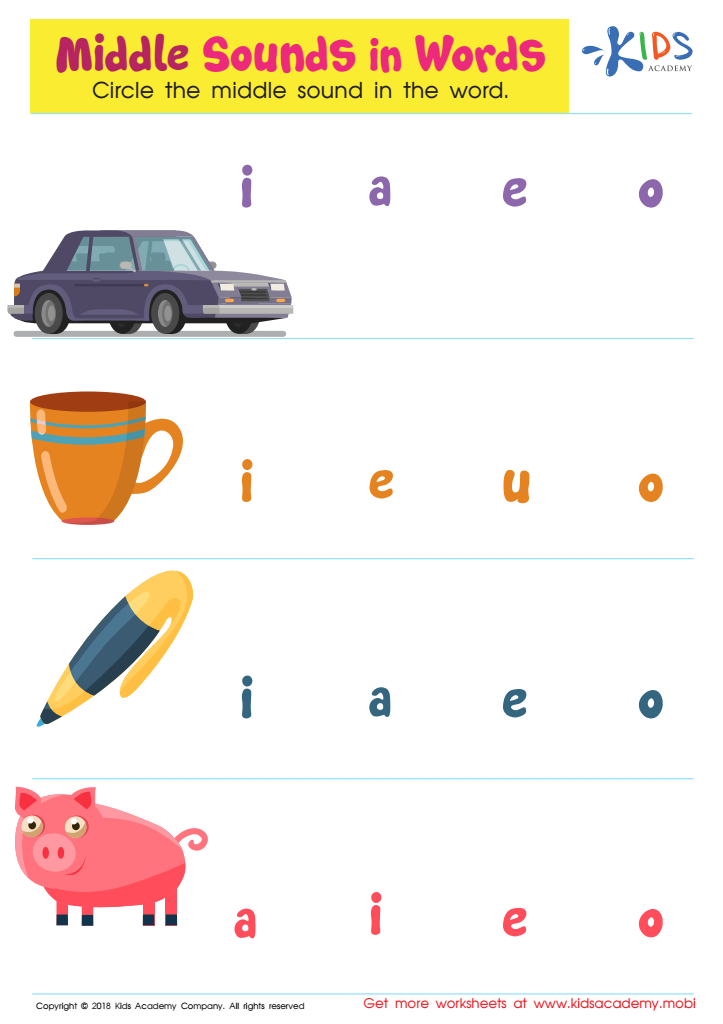
Middle Sounds in Words Worksheet





Parents and teachers should care about middle sounds—also known as medial phonemes—when engaging with children ages 4-6 because mastering these sounds is crucial for the development of essential literacy skills. During this critical period, children are in the pre-reading or beginning reading stages, where phonological awareness—the ability to recognize and manipulate sounds in spoken language—plays a pivotal role.
Understanding and identifying middle sounds in words supports a child's ability to decode new words, which is a foundational skill for reading fluency. For instance, recognizing the /a/ sound in the middle of "cat" allows a child to break the word into individual sounds: /c/-/a/-/t/. This segmentation is essential for both reading and spelling, as it equips young learners with the tools needed to both recognize written words and encode spoken ones into written form.
Moreover, proficiency in middle sounds also enhances a child's understanding of rhyme and rhythm, which are important components of language development. This knowledge aids in vocabulary expansion and comprehension skills over time.
Teachers and parents who actively engage children in exercises focusing on middle sounds foster a supportive learning environment. Activities like phoneme matching, silent "look and write" games, and using picture cards can make learning interactive and enjoyable, laying a strong foundation for future academic success. Investing time in these critical early literacy skills can yield significant long-term benefits for a child’s educational journey.








