Extra Challenge Rhyming Worksheets for Ages 6-8
3 filtered results
-
From - To
Enhance your child's poetic mastery with our Extra Challenge Rhyming Worksheets for ages 6-8! Designed for young learners eager to explore the delightful world of rhymes, these engaging worksheets encourage creativity, language development, and critical thinking skills. Packed with fun activities, children will embark on exciting tasks like matching words, completing rhymes, and crafting their own poetic lines. Each worksheet fosters a love for language while honing phonemic awareness and vocabulary skills. Perfect for at-home learning or classroom use, our worksheets support early literacy in a playful, interactive format. Download now and watch your child's imagination soar!
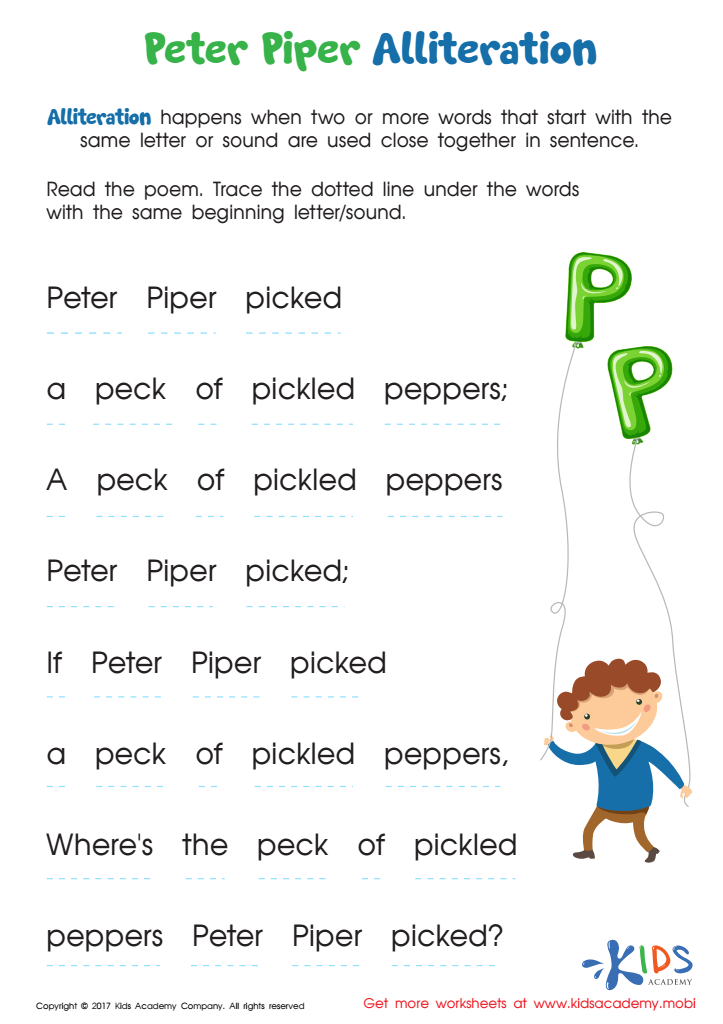
Peter Piper Alliteration Worksheet
 Assign to My Students
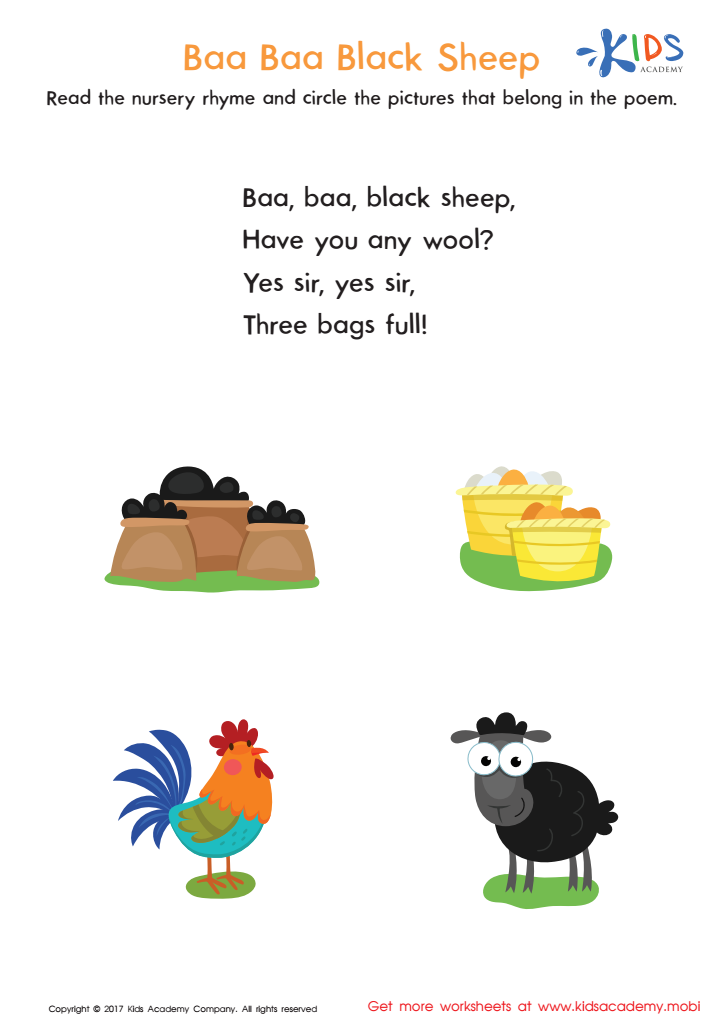
Baa Baa Black Sheep Printable
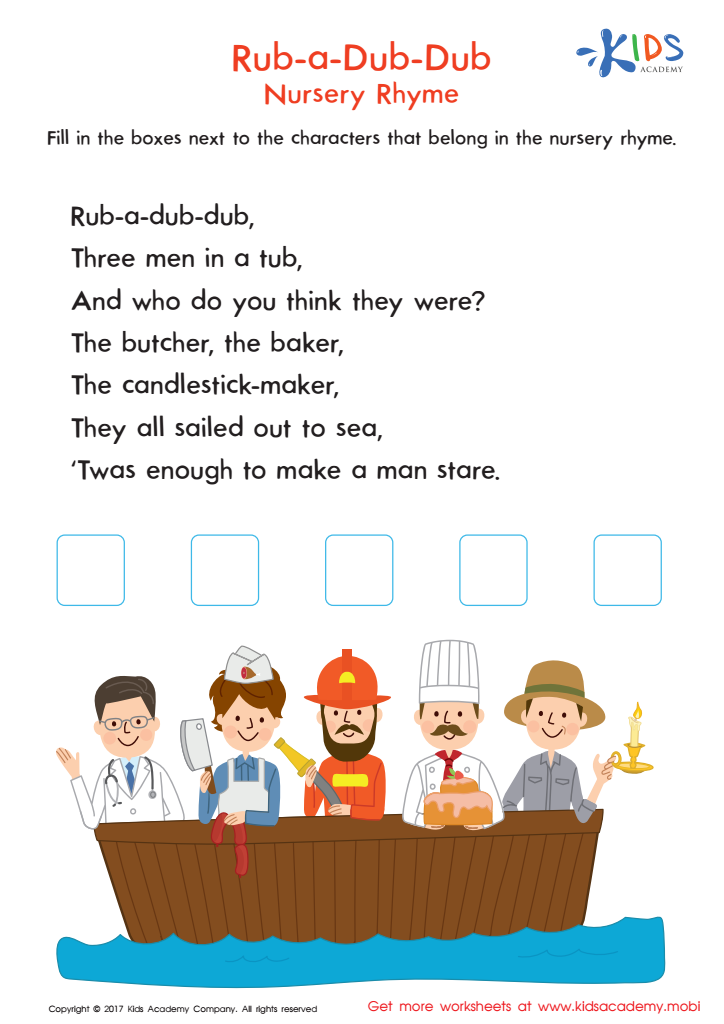
Rub a Dub Dub Printable







Parents and teachers should pay special attention to Extra Challenge Rhyming activities for children aged 6-8 because these exercises greatly enhance literacy skills and cognitive development. At this age, children are laying the foundational blocks for reading, writing, and language comprehension. Rhyming not only makes learning fun but also helps children recognize and manipulate sounds within words, fostering phonemic awareness – a crucial skill for developing strong readers.
Engaging in extra rhyming challenges stimulates creativity and encourages a love for language. These activities promote vocabulary expansion, improve memory retention, and enhance critical thinking as children learn to create and recognize patterns. Moreover, rhyming helps with spelling, as many words share common phonetic endings.
Additionally, the interactive nature of rhyming games fosters social skills. Children often engage in these activities in groups, allowing them to collaborate, share ideas, and develop communication skills. Understanding and creating rhymes can also contribute to emotional expression, as poetry and song lyrics often convey feelings and narratives.
By prioritizing Extra Challenge Rhyming, parents and teachers are investing in a multifaceted developmental approach that nurtures not only literacy but also social, emotional, and cognitive growth. This holistic focus paves the way for lifelong learning and a love for literature.