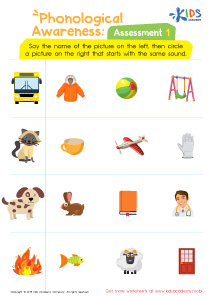
Normal Rhyming Worksheets for Ages 3-4
5 filtered results
-
From - To
Dive into the melodious world of words with our Normal Rhyming Worksheets, perfectly tailored for children aged 3-4. Crafted to captivate the creative minds of young learners, these worksheets are an engaging gateway to exploring sounds and rhythms. Through a series of fun-filled activities, children will embark on a journey to discover the joy of words that sound alike, enhancing their phonemic awareness and language skills. Our carefully designed Normal Rhyming worksheets for Ages 3-4 encourage early literacy development in a playful and enjoyable manner, setting a solid foundation for future reading and writing achievements. Join us and let the rhyming adventure begin!
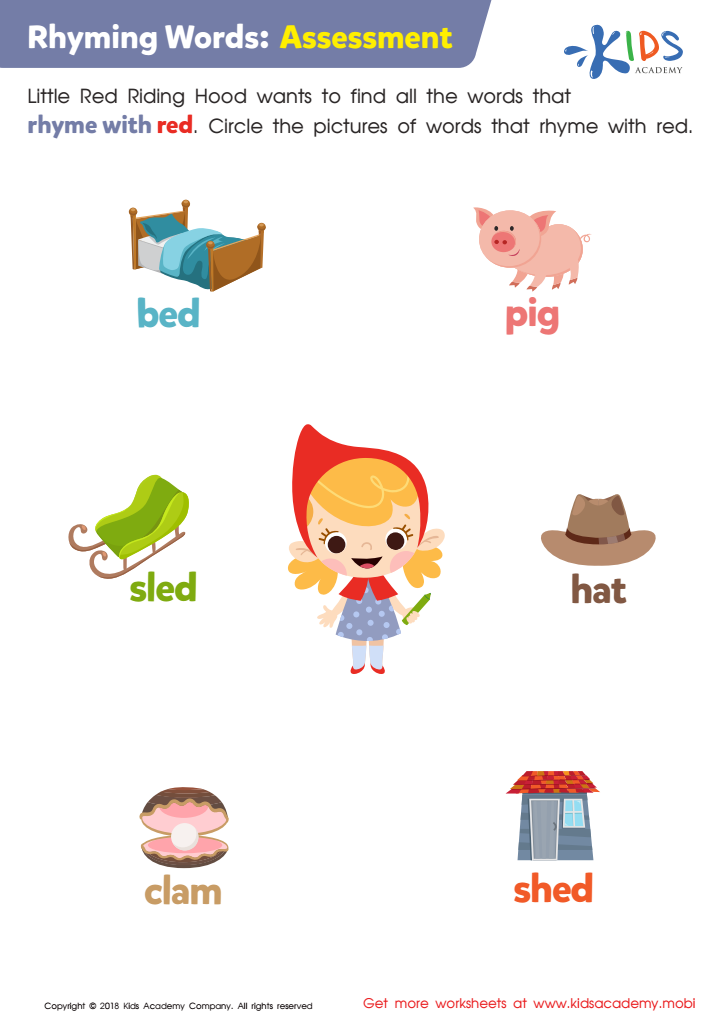
Rhyming Words: Assessment Worksheet
 Assign to My Students
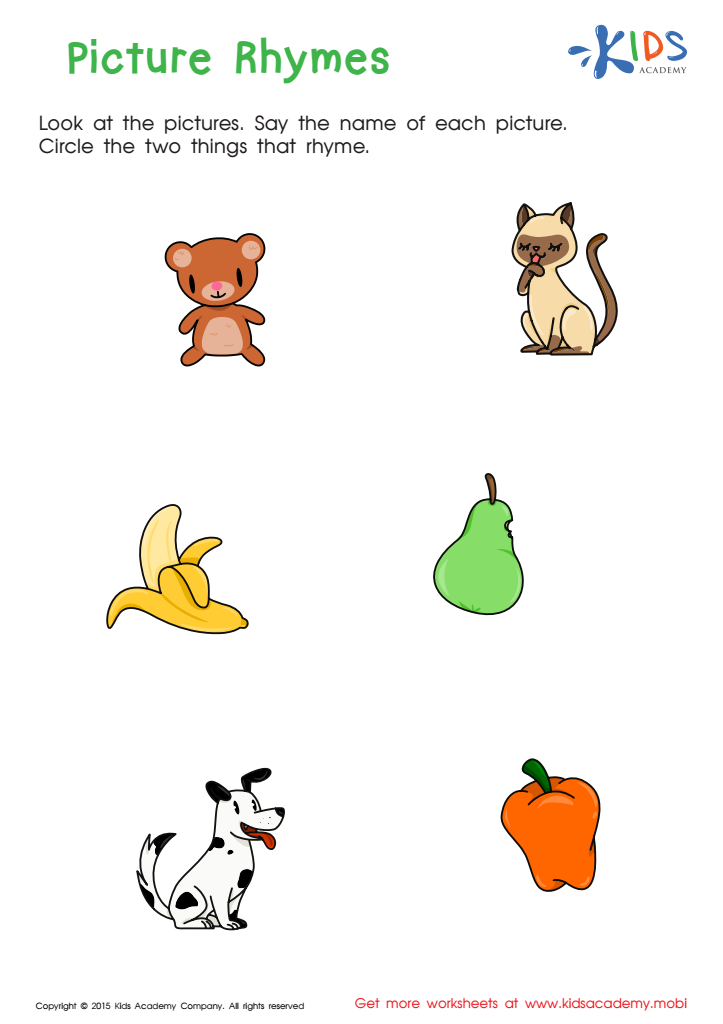
First Words: Picture Rhymes Worksheet
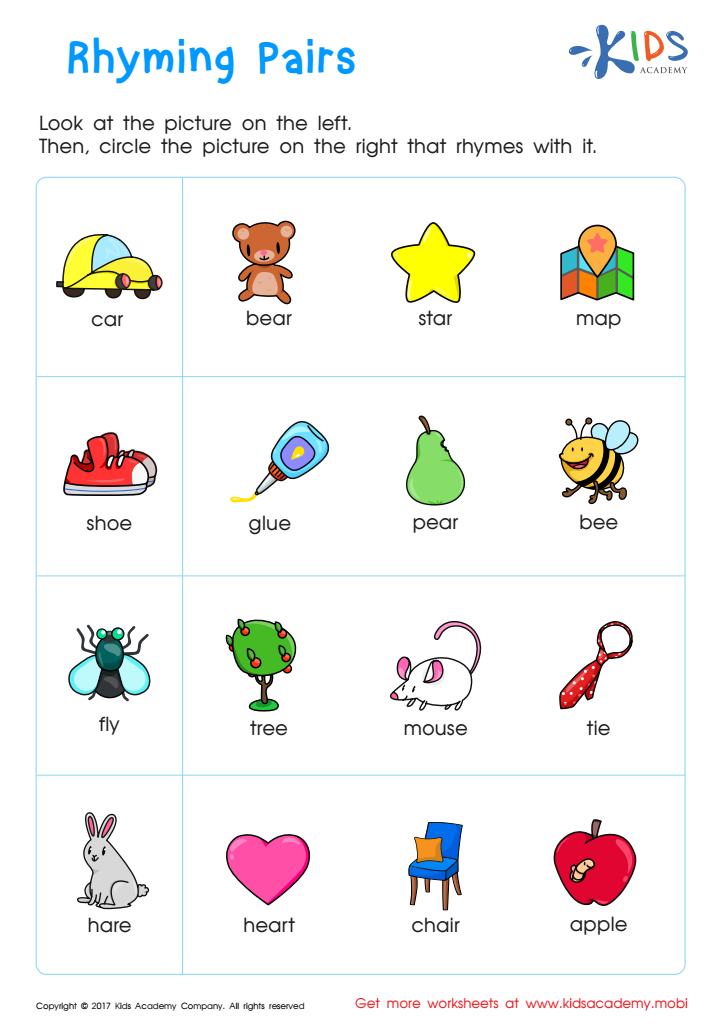
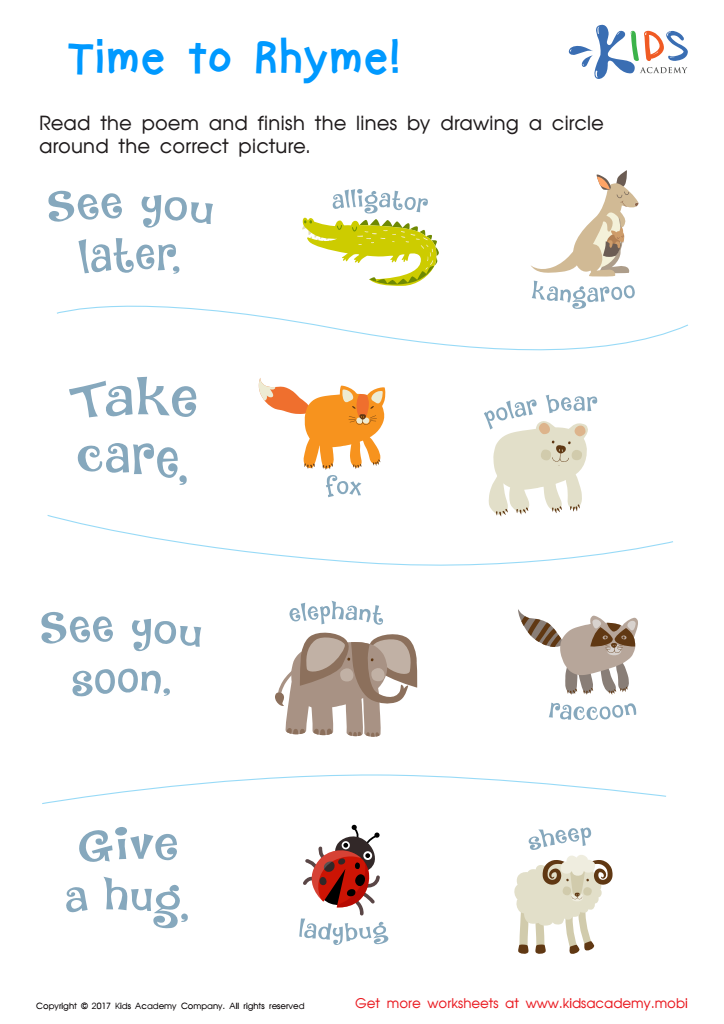
Time to Rhyme Rhyming Worksheet
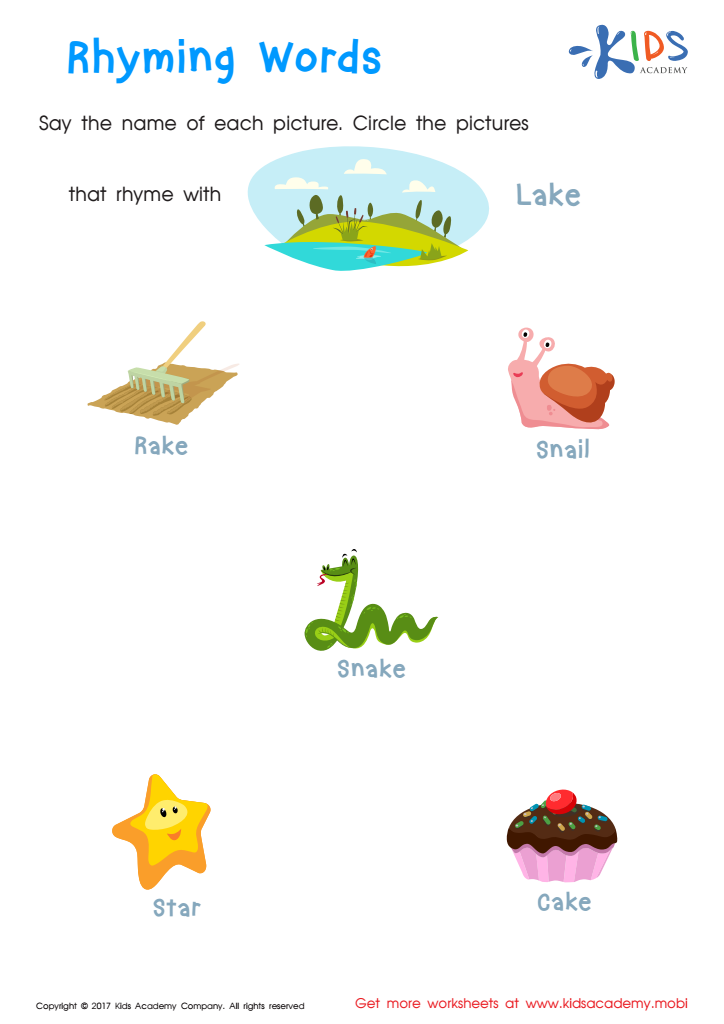
Rhyming Words Rhyming Worksheet







Normal Rhyming for Ages 3-4 worksheets are an essential tool in early childhood education, offering a plethora of benefits for young learners. At this critical developmental stage, children are swiftly expanding their vocabulary and beginning to understand the structure and sounds of language. The use of rhyming worksheets tailored for ages 3 to 4 serves as a foundational building block in this learning journey.
Firstly, these worksheets are designed to enhance phonemic awareness – the ability to hear, identify, and manipulate individual sounds (phonemes) in spoken words. By engaging with rhymes, children learn to recognize sound patterns, an essential skill for reading readiness. Normal Rhyming for Ages 3-4 encourages children to listen closely to the sounds within words, preparing them for decoding and spelling tasks in the future.
Moreover, rhyming worksheets make learning playful and enjoyable. Through fun activities and games, children are more likely to stay engaged and motivated. This positive association with learning helps to foster a lifelong love for reading and literacy.
Lastly, these worksheets support cognitive development, including memory and concentration. Rhymes are easier to remember than non-rhyming text, aiding in the retention of new vocabulary and concepts. This not only boosts language skills but also confidence, as children experience the joy of mastering new words and sounds.
In conclusion, Normal Rhyming for Ages 3-4 worksheets are valuable educational resources. They lay the groundwork for reading success while making learning a delightful and rewarding experience for young minds.