Letter-sound correlation Preschool Alphabet Worksheets
4 filtered results
Difficulty Level
Grade
Age
-
From - To
Subject
Activity
Standards
Our Letter-Sound Correlation Preschool Alphabet Worksheets are designed to give young learners a strong foundation in phonics. Each worksheet is filled with engaging activities that help children recognize letters and associate them with their corresponding sounds. Perfect for preschoolers, these printables offer fun and interactive exercises that enhance early reading skills. By matching letters to sounds, children develop essential literacy skills that support their journey to becoming confident readers. Ideal for classroom use or at-home practice, these worksheets are a valuable tool for parents and teachers looking to give their students a head start in learning.
Favorites
With answer key
Interactive
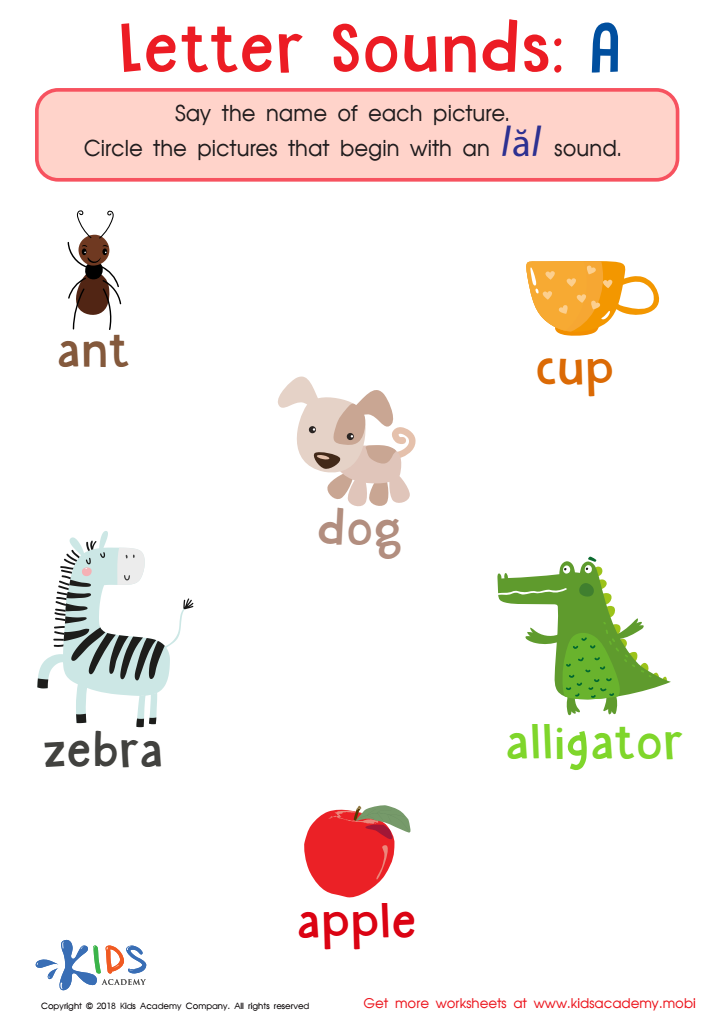
Letter A Sounds Worksheet
Encourage your new reader to practice the «ă» sound with this fun, free PDF worksheet. With the help of picture clues, they'll say the name of each word and trace circles around the items that start with «ă». This worksheet is an effective way to boost beginning sound skills while having fun!
 Assign to My Students
Letter A Sounds Worksheet
Worksheet
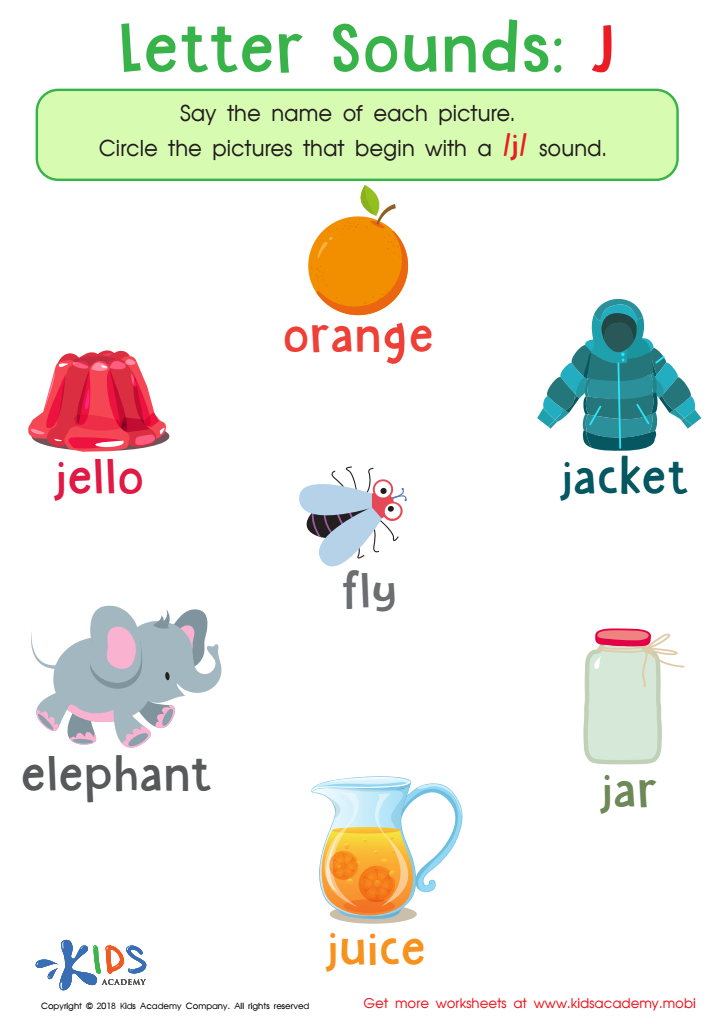
Letter Sounds: J Printable Worksheet
Preschoolers can learn to identify letter sounds by focusing on beginning sounds. This cute and colorful worksheet reviews the hard “j” sound. Kids can point it out by naming the words and circling only those starting with the “j” sound. Read the text out loud and listen closely!
Letter Sounds: J Printable Worksheet
Worksheet
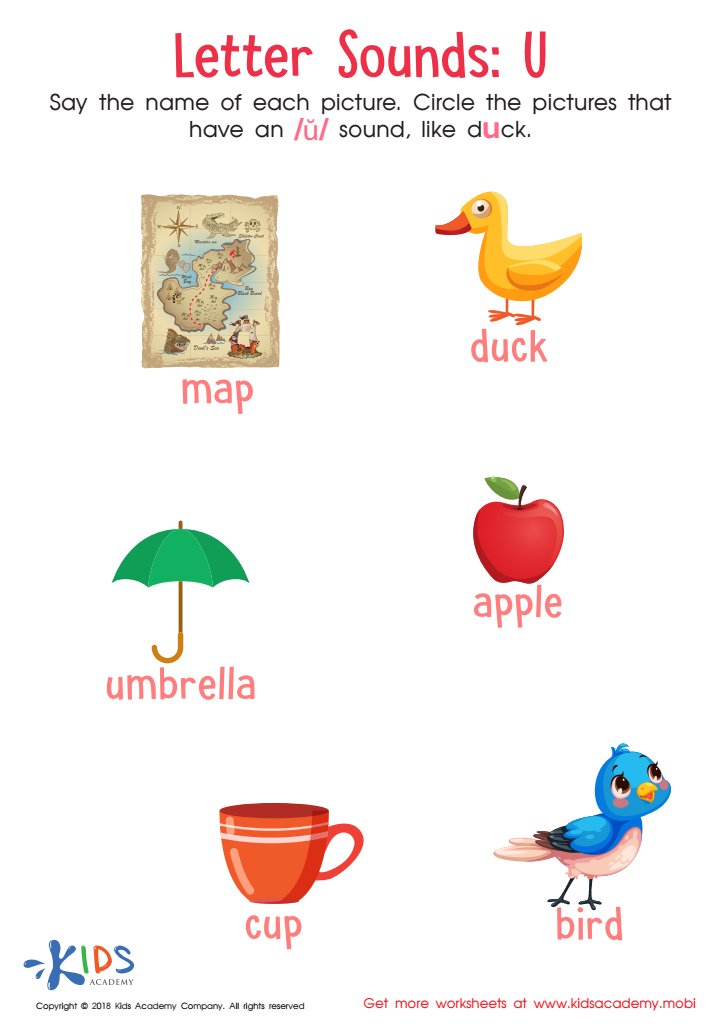
Letter U Sounds Worksheet
The letter U is special with multiple pronunciations. This worksheet helps kids identify the short «u» in words like duck and cup. Read the words aloud and listen closely to the sounds. Circle only words with the correct sound to complete the sheet. Kids will quickly know that words like "map" don't contain a U.
Letter U Sounds Worksheet
Worksheet
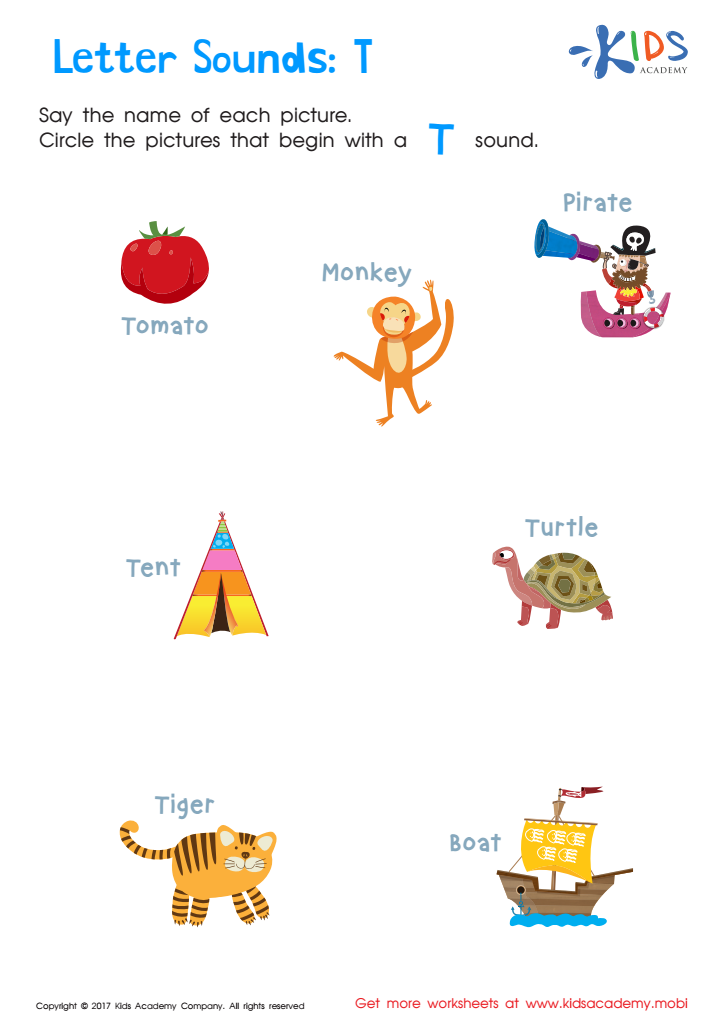
Letter T Sounds Worksheet
This worksheet is a fun way to help kids learn the t sound. It has familiar pictures and an easy-to-follow format, so kids can quickly recognize and learn the letter t.
Letter T Sounds Worksheet
Worksheet
Join Kids Academy for Free
Who is primarily going to use this learning content?




.jpg)



Parents and teachers should care about letter-sound correlation in preschool because it is a crucial foundation for literacy development. This relationship, also known as phonics, enables children to understand that letters represent sounds and those sounds combine to form words. Mastering this skill early makes reading and writing less challenging later on, as it equips children with the tools to decode new words and improve their spelling.
Engaging in activities that promote letter-sound recognition supports vocabulary growth and fosters phonemic awareness. This early phonics foundation leads to better reading fluency, comprehension, and overall academic success. When children can confidently associate letters with their corresponding sounds, they encounter fewer barriers to learning new words and absorbing information.
Furthermore, mastering letter-sound correlation enhances cognitive development. Activities such as singing alphabet songs, playing with letter blocks, or reading aloud stimulate memory, attention, and auditory skills. It also boosts self-confidence and curiosity, motivating children to explore reading on their own.
For teachers and parents, fostering this skill provides insights into a child's learning progress and potential challenges in decoding words, enabling early intervention if needed. Prioritizing letter-sound knowledge ultimately supports a smooth transition to kindergarten and sets the stage for lifelong learning and success.