Phonetics understanding Preschool Alphabet Worksheets
3 filtered results
-
From - To
Unlock the world of reading with our "Phonetics Understanding Preschool Alphabet Worksheets." Designed specifically for young learners, these worksheets introduce the basics of phonetics by associating letters with their corresponding sounds. Each carefully crafted activity promotes early literacy and helps children recognize, pronounce, and write all letters of the alphabet. Engaging and interactive, our worksheets make learning phonetics fun and easy, improving kids' reading and speaking skills while laying a strong educational foundation. Perfect for use at home or in the classroom, these printable worksheets ensure a smooth and enjoyable start to your child's reading journey.
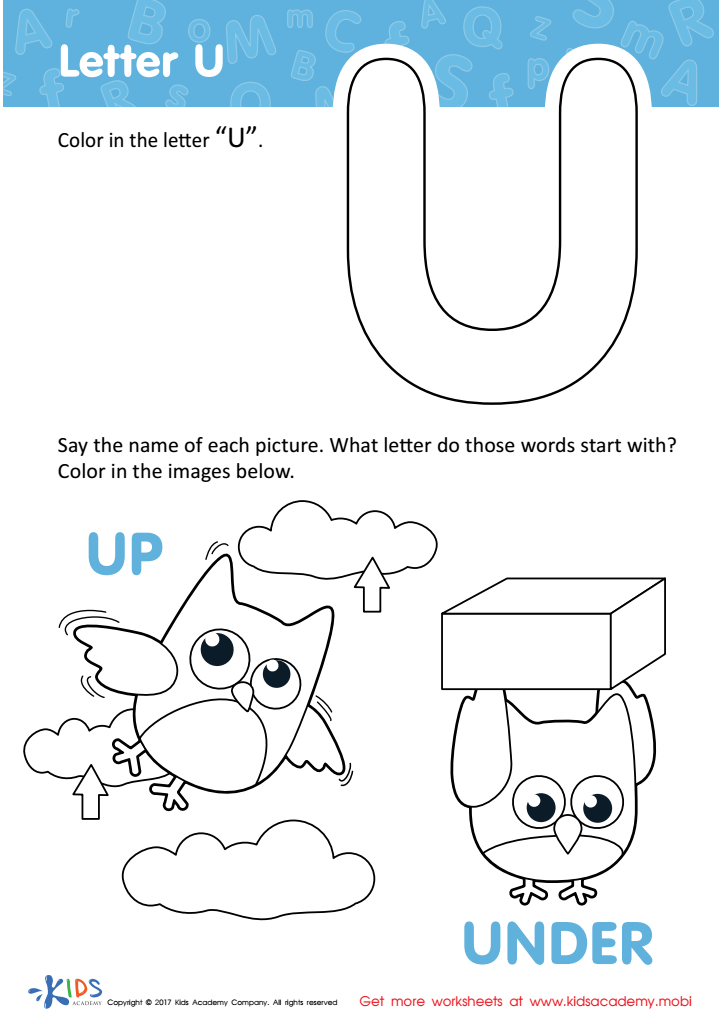
Letter U Coloring Sheet
 Assign to My Students
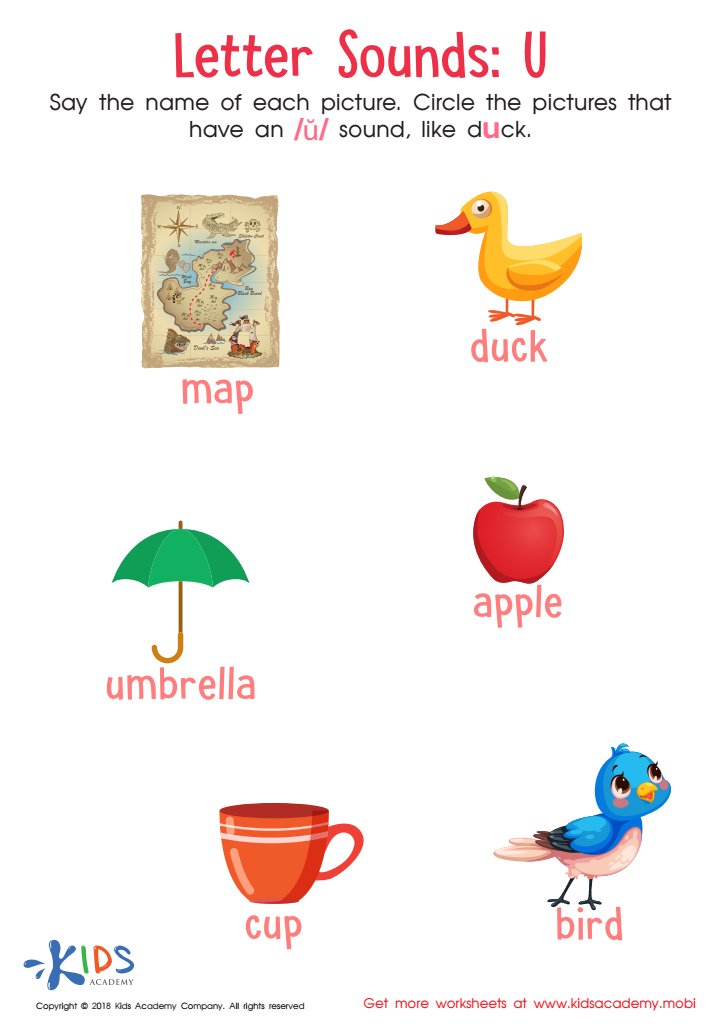
Letter U Sounds Worksheet
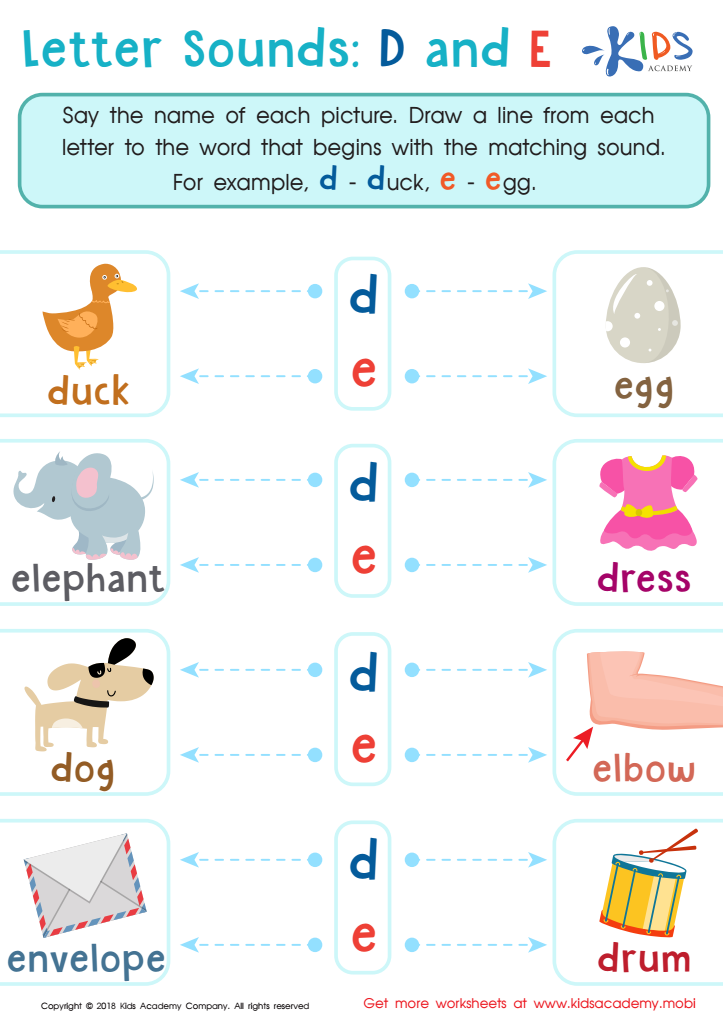
Letter D and E Sounds Worksheet





.jpg)


Parents and teachers should prioritize phonetic understanding in preschool alphabet instruction because it lays the essential groundwork for literacy development. Phonetics refers to the sounds of spoken language, and understanding how these sounds correspond to letters is crucial for children learning to read and write. By grasping phonetic principles, children can decode new words more effectively, leading to better reading comprehension and fluency.
Early exposure to phonetics also helps children with pronunciation, ensuring they can clearly speak new words. This understanding builds their confidence and allows for smoother communication. Additionally, phonetic skills support spelling by helping children discern the correct sequences of sounds within words.
Furthermore, the preschool period is a critical window for language development. At this stage, children's brains are particularly receptive to learning new sounds and symbols. Engaging them in phonetic activities, like singing alphabet songs or playing sound-matching games, can capitalize on their natural curiosity and enhance their auditory discrimination skills.
In a broader sense, a strong phonetic foundation can foster a lifelong love of reading and learning. As academic progress often hinges on literacy skills, giving children a robust start in phonetics will support their success across all subjects. Essentially, early phonetic education sets the stage for confident, capable, and enthusiastic learners.