Handwriting practice Preschool Phonics Worksheets
5 filtered results
-
From - To
Boost your child's reading and writing skills with our Handwriting Practice Preschool Phonics Worksheets! Specially designed for young learners, these engaging worksheets combine fun activities with educational benefits, helping your preschooler master phonics. Each printable focuses on letter recognition, phonemic awareness, and proper letter formation to enhance early literacy. Ideal for hands-on practice at home or in the classroom, our worksheets make learning enjoyable. Fostering confidence and skill development, they're perfect for preparing children for future reading and writing success. Discover a world of phonics fun and handwriting mastery with Kids Academy today!
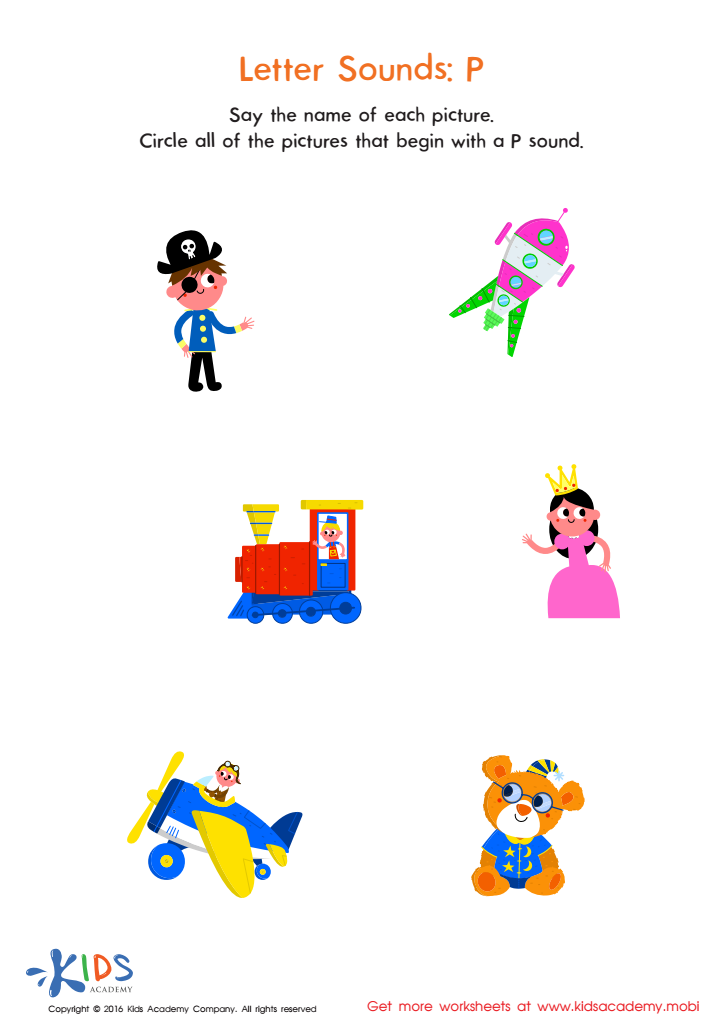
Letter P Sound Worksheet
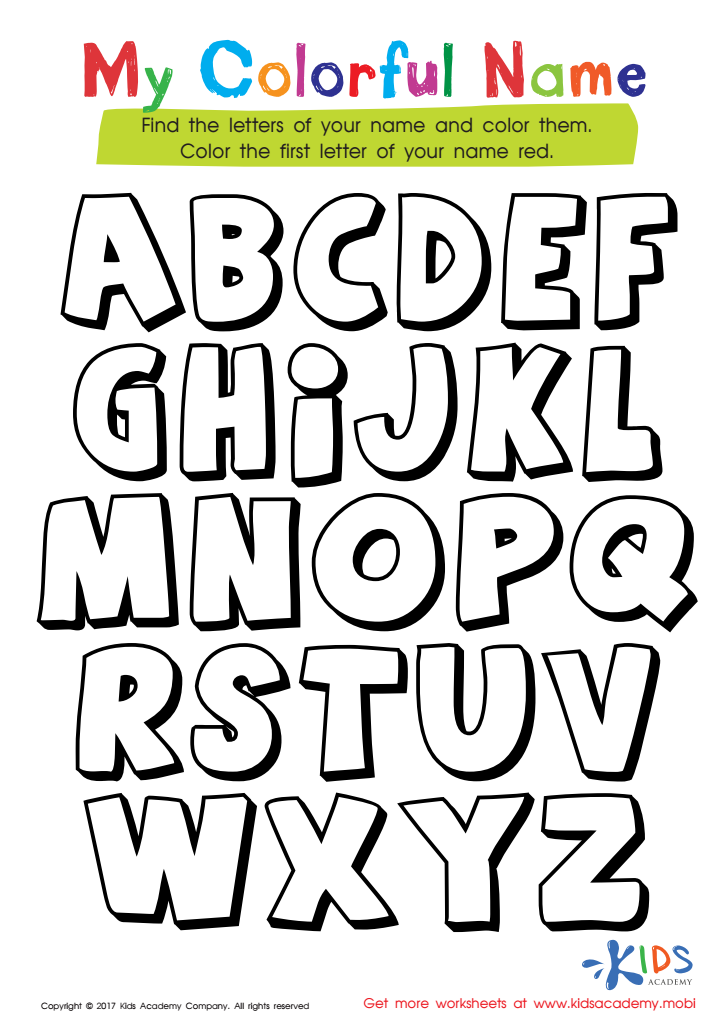
My Colorful Name Worksheet
 Assign to My Students
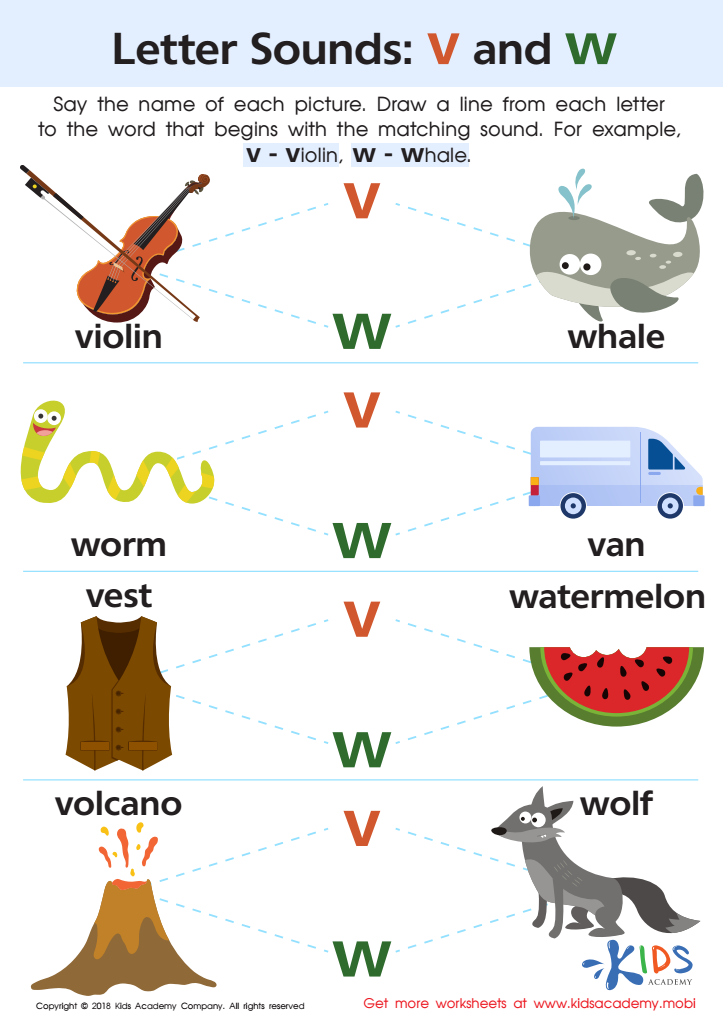
Letter V and W Sounds Worksheet
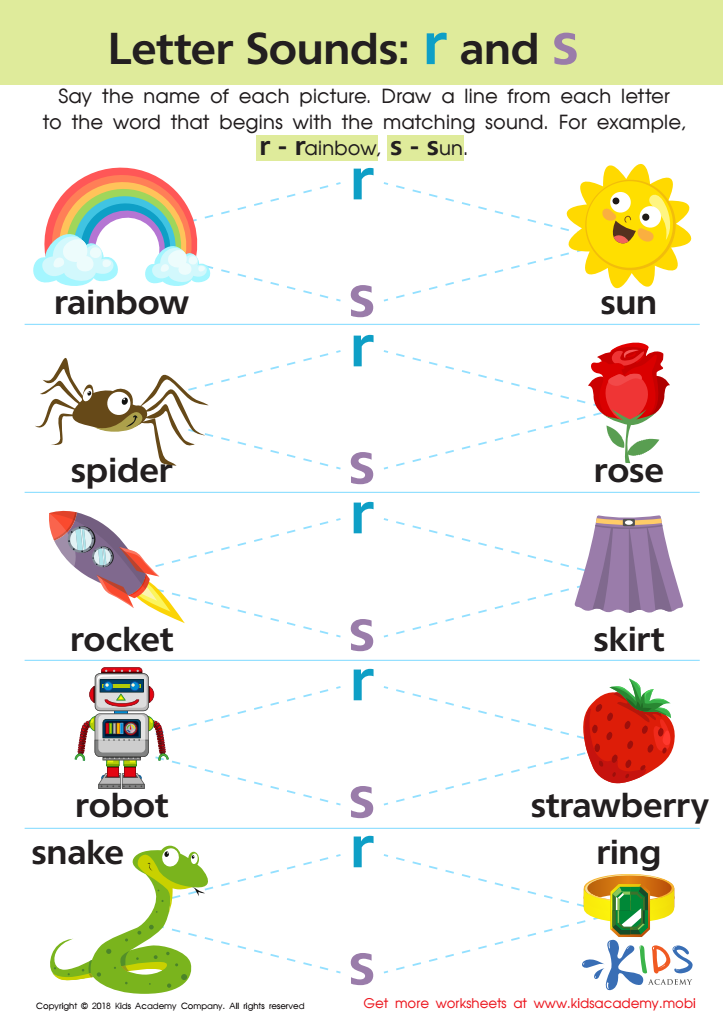
Letter R and S Sounds Worksheet
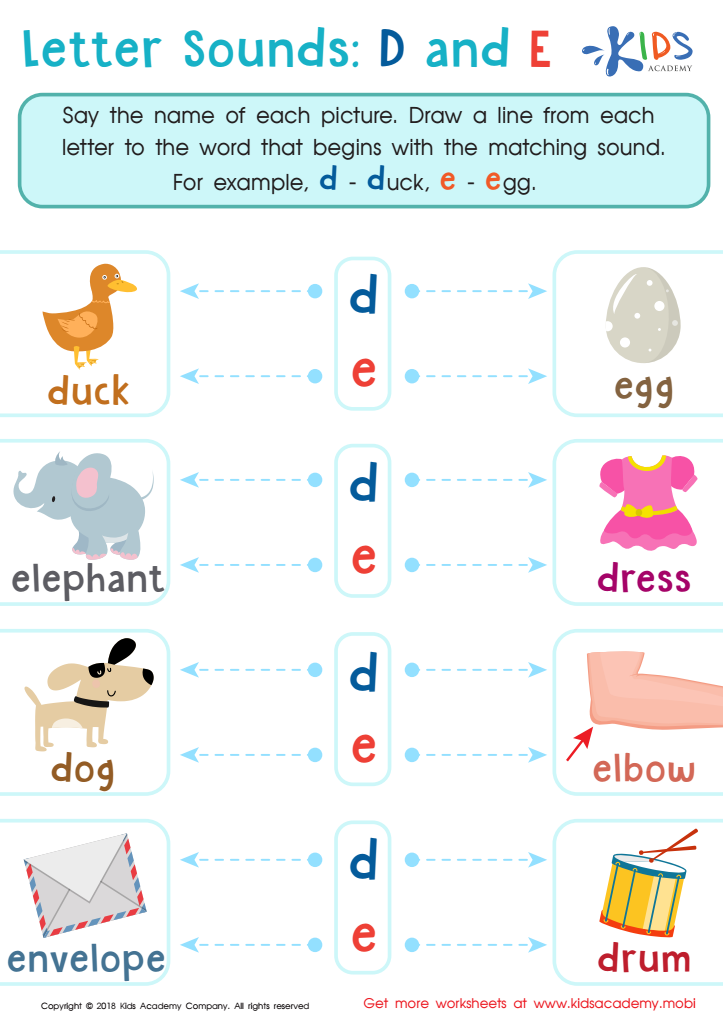
Letter D and E Sounds Worksheet





Handwriting practice in preschool phonics is crucial for several reasons, making it imperative for both parents and teachers to prioritize this aspect of early education. Firstly, practicing handwriting at a young age significantly enhances fine motor skills, which are vital for various daily activities and future learning tasks. By guiding children to form letters correctly, we lay the foundation for legible and efficient handwriting, which will benefit them throughout their academic careers.
Moreover, combining handwriting practice with phonics bridges the gap between spoken and written language. Phonics instruction helps children understand the relationship between sounds and letters, building essential decoding skills for reading. When children write letters and words as they learn their sounds, they reinforce their phonemic awareness, leading to better retention and comprehension.
Additionally, the process of writing by hand has been shown to improve cognitive development. It encourages concentration, encourages sequential memory, and aids in the internalization of new information. Thus, handwriting tied to phonics lessons equips children with a dual approach to literacy: they learn to read by sounding out letters and to write by linking sounds to symbols.
In conclusion, handwriting practice in the context of preschool phonics is an integrated approach that supports motor skills, literacy, and cognitive development, making it a critical educational practice for young learners. Parents and teachers should champion this practice to ensure well-rounded, foundational learning outcomes.