Phonics recognition Preschool Phonics Worksheets
4 filtered results
-
From - To
Discover engaging and effective learning with our preschool phonics recognition worksheets. Perfectly designed for young learners, these worksheets enhance foundational reading skills through fun activities focusing on letter sounds and word formation. Whether it’s identifying phonetic sounds, matching letters with their corresponding pictures, or early word practice, each worksheet aims to make phonics enjoyable. Ideal for both classroom use and at-home reinforcement, our printable resources support children in recognizing sounds and improving their reading readiness. Boost your child’s confidence and literacy skills with our diverse collection of engaging phonics worksheets from Kids Academy.
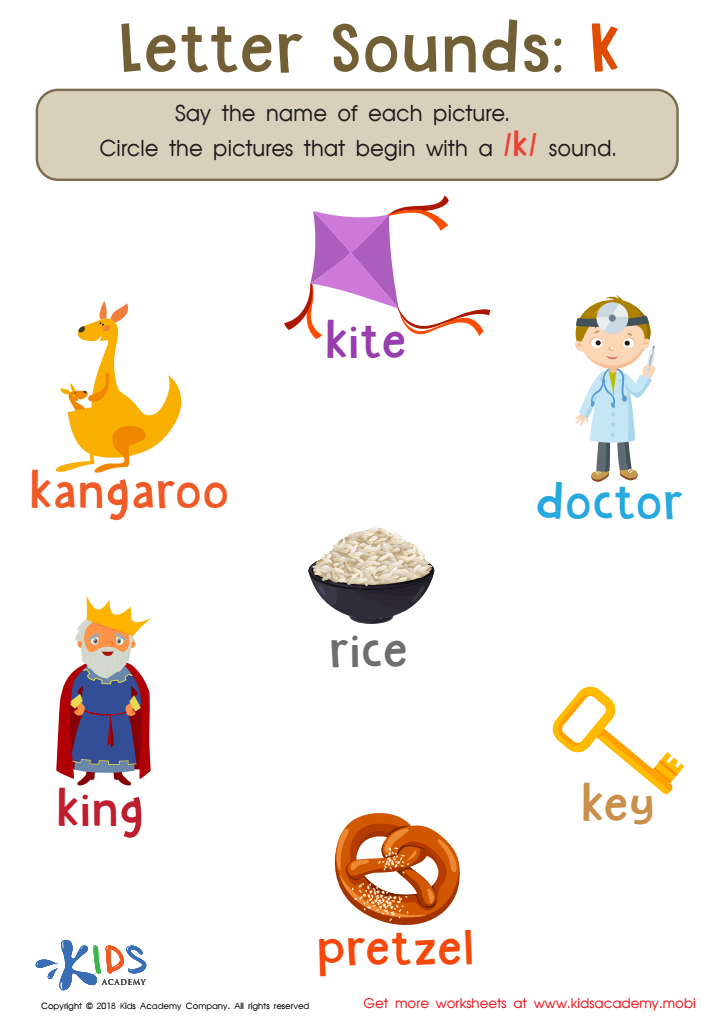
Letter K Sounds Worksheet
 Assign to My Students
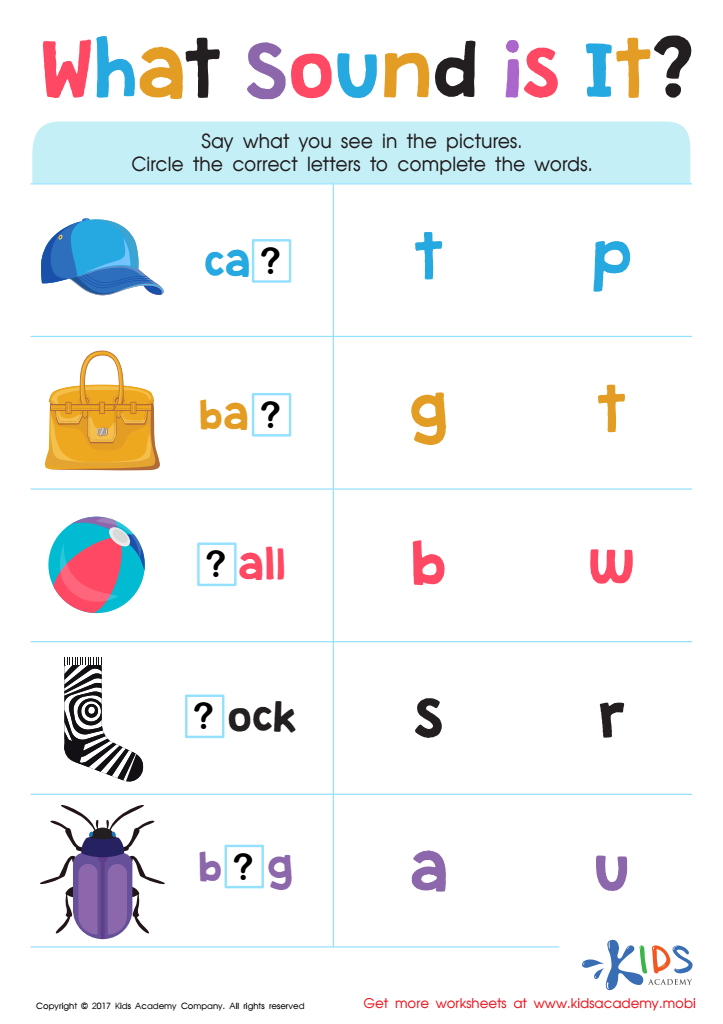
What Sound Is it? Worksheet
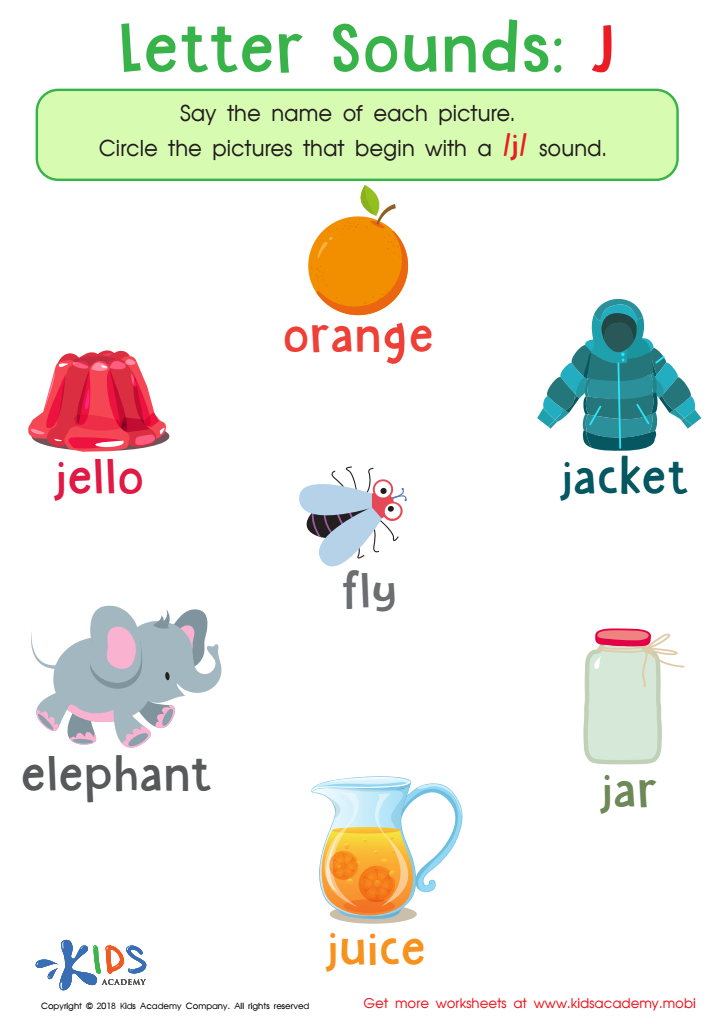
Letter Sounds: J Printable Worksheet
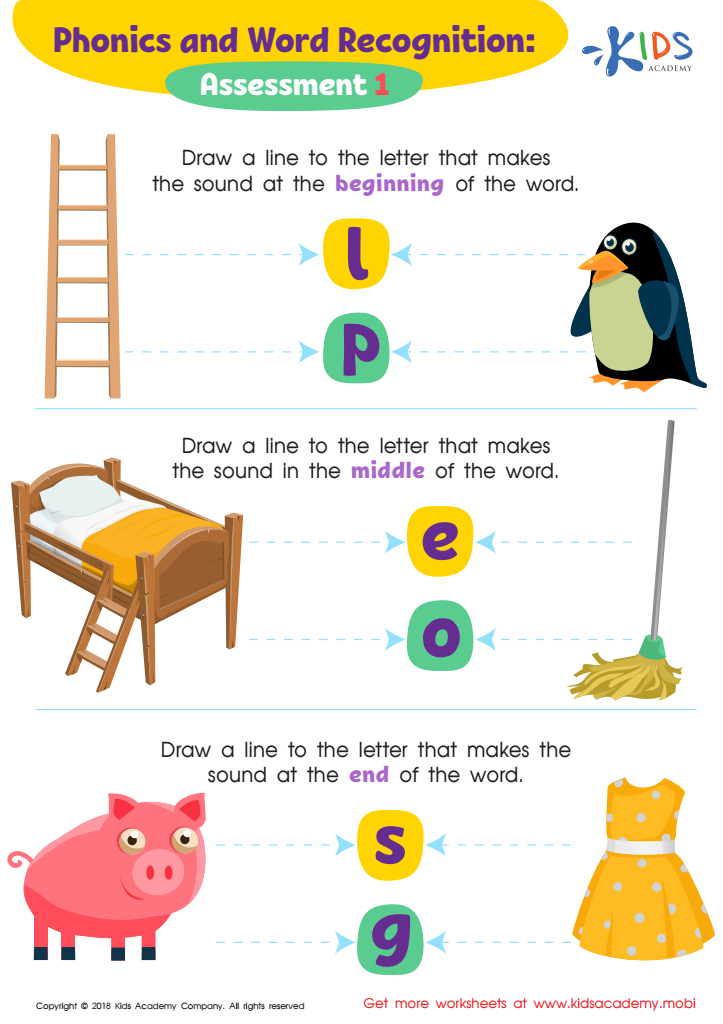
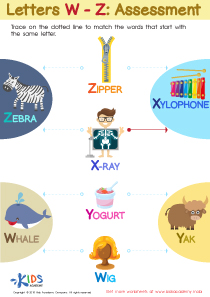
Phonics and Word Recognition: Assessment 1 ELA Worksheet





Phonics recognition is a foundational element of early literacy, crucial for preschoolers' reading development. Parents and teachers should remarkably care about phonics at this stage because it equips children with essential skills to decode written language. Understanding phonics means recognizing the relationship between letters and their corresponding sounds, paving the way for proficient reading and writing abilities.
Phonics education helps children familiarize themselves with the alphabetic principle—understanding that letters represent sounds in words. This comprehension is vital for word recognition, spelling, and pronunciation, which are critical for more advanced linguistic tasks. Early positive experiences with phonics can increase a child's confidence and interest in reading, fostering a lifelong appreciation for books and learning.
Moreover, research indicates that a strong grasp of phonics is directly linked to academic success. Children who struggle with reading early on often face challenges in other academic areas such as math and science. By prioritizing phonics education in preschool, parents and teachers provide children with the tools they need to succeed not just in future reading endeavors but across the curriculum.
Ultimately, caring about phonics recognition in preschool means committing to foundational literacy, setting the stage for a child's overall educational journey, fostering cognitive development, and promoting a lifelong passion for learning.