Reading comprehension Preschool Rhyming Worksheets
5 filtered results
-
From - To
Discover an engaging way to boost your child's reading comprehension skills with our Preschool Rhyming Worksheets! Designed for young learners, these interactive worksheets help reinforce key concepts of rhyming while enhancing vocabulary, phonemic awareness, and listening skills. Each worksheet combines fun illustrations with age-appropriate texts to captivate toddlers and preschoolers, making learning enjoyable. Children will practice identifying rhyming words through delightful activities, fostering a love for reading early on. Perfect for home or preschool use, these printable resources are ideal for nurturing essential literacy skills. Start your child on the path to reading success with our preschool rhyming worksheets today!
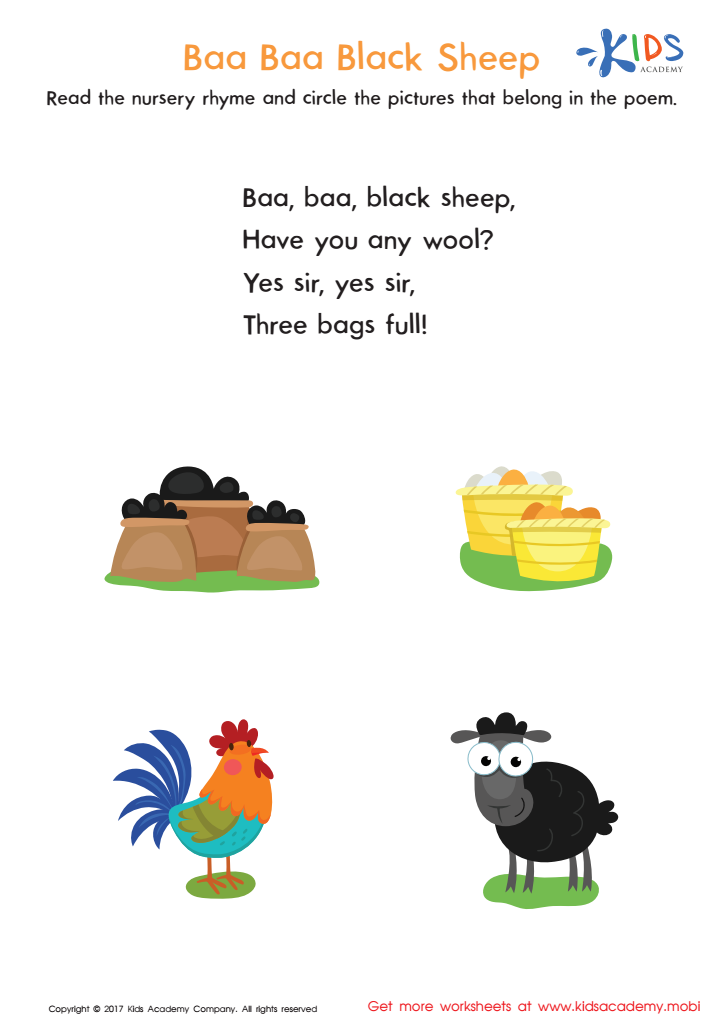
Baa Baa Black Sheep Printable
 Assign to My Students
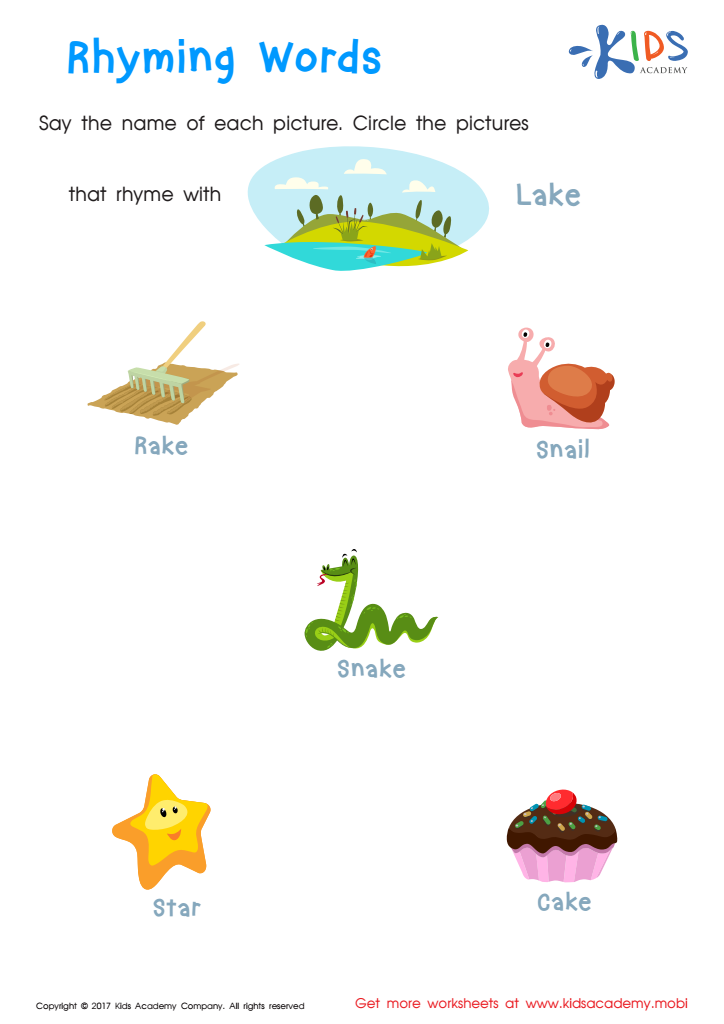
Rhyming Words Rhyming Worksheet
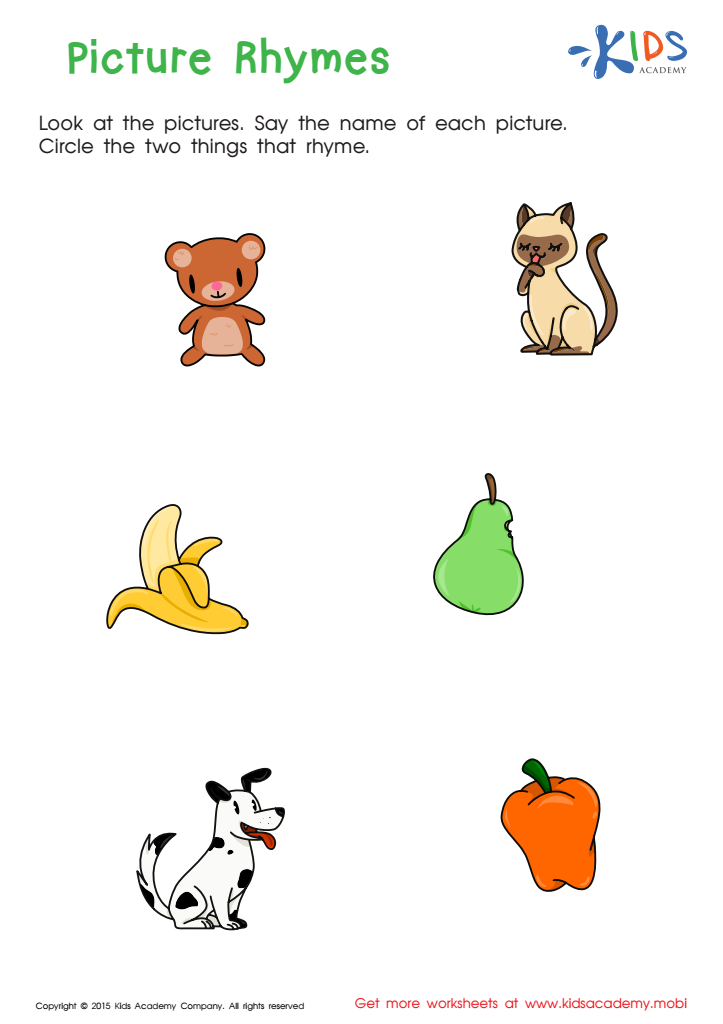
First Words: Picture Rhymes Worksheet
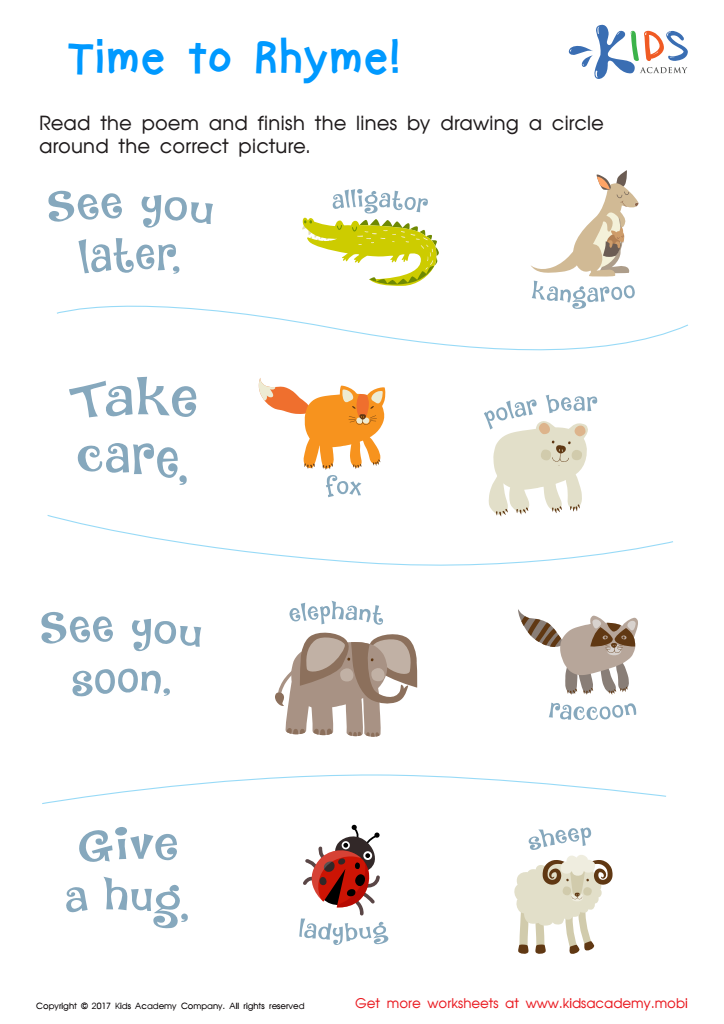
Time to Rhyme Rhyming Worksheet
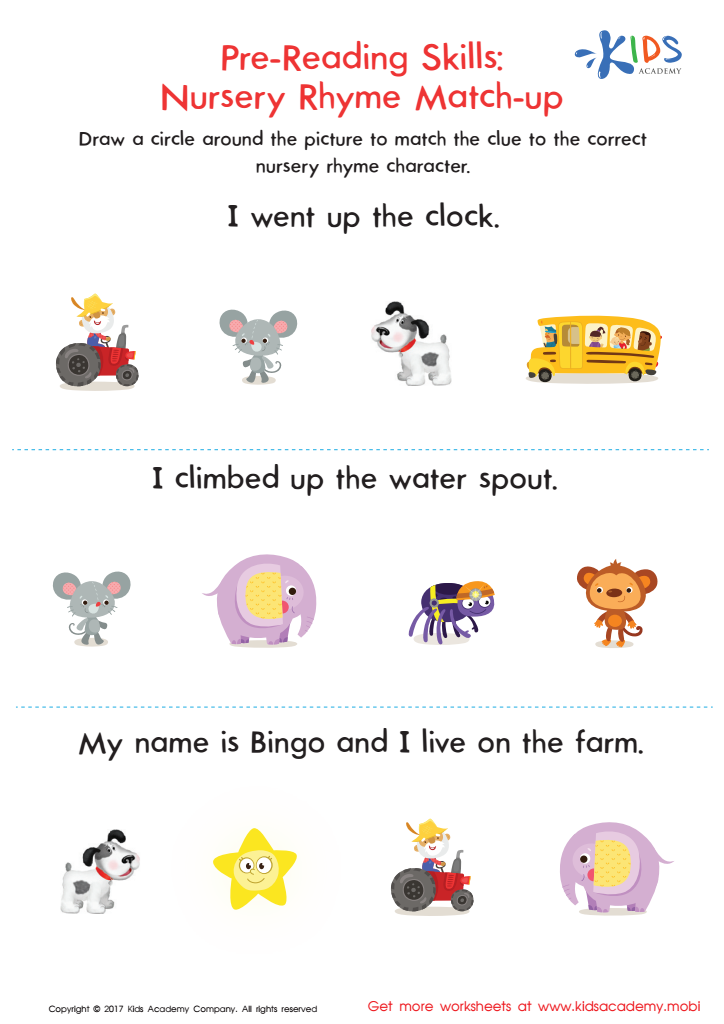
Nursery Rhyme Match–Up Worksheet


Reading comprehension in preschool, particularly through rhyming, is crucial for a child’s early literacy development. Rhyming engages young learners by making language fun and relatable. It helps develop phonemic awareness, a foundational skill for reading, as children learn to recognize and manipulate sounds in words. By listening to and participating in rhymes, children strengthen their ability to decode as they become more aware of the sounds that make up language.
Moreover, rhymes often accompany rhythmic patterns and playful phrases, which enhance memory and recall, crucial components of comprehension. When children can predict what comes next in a rhyme, they practice making inferences, a skill vital for understanding more complex texts as they progress.
Teachers and parents should care about this because fostering a love for reading and language early on can lead to a lifetime of literacy appreciation. Engaging in rhyming helps build strong cognitive foundations, promoting not only vocabulary growth but also critical thinking skills. This playful exposure to language sets the stage for future reading success, ultimately contributing to overall academic achievement and confidence in their learning journey. Encouraging rhyming activities helps create a strong, literate base for young learners.






