
Rhyming skills development Preschool Rhyming Worksheets
3 filtered results
Difficulty Level
Grade
Age
-
From - To
Subject
Activity
Standards
Boost your child's early literacy skills with our Preschool Rhyming Worksheets! Designed to make learning fun and engaging, these worksheets help preschoolers develop crucial rhyming skills, enhancing their phonemic awareness and foundation for reading. Each colorful sheet features entertaining activities that challenge kids to identify and create rhyming pairs, foster vocabulary expansion, and improve listening skills. Ideal for home or classroom use, these printable resources not only support educational growth but also provide a playful way for young learners to explore sounds and language patterns. Invest in your child's future with our expertly crafted rhyming worksheets!
Favorites
With answer key
Interactive
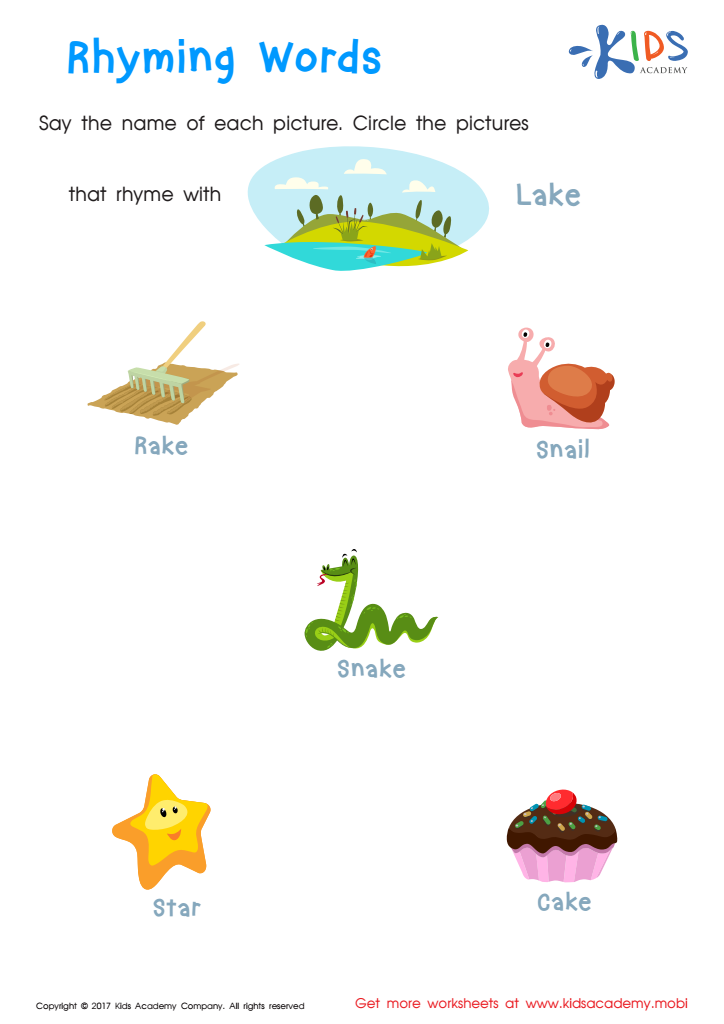
Rhyming Words Rhyming Worksheet
This worksheet is great for honing pre-reading skills. It helps kids make connections between pictures and written words, use problem-solving, and recognize sounds and words that rhyme. Have fun exploring rhyming words with your child, and they'll be rhyming in no time!
 Assign to My Students
Rhyming Words Rhyming Worksheet
Worksheet
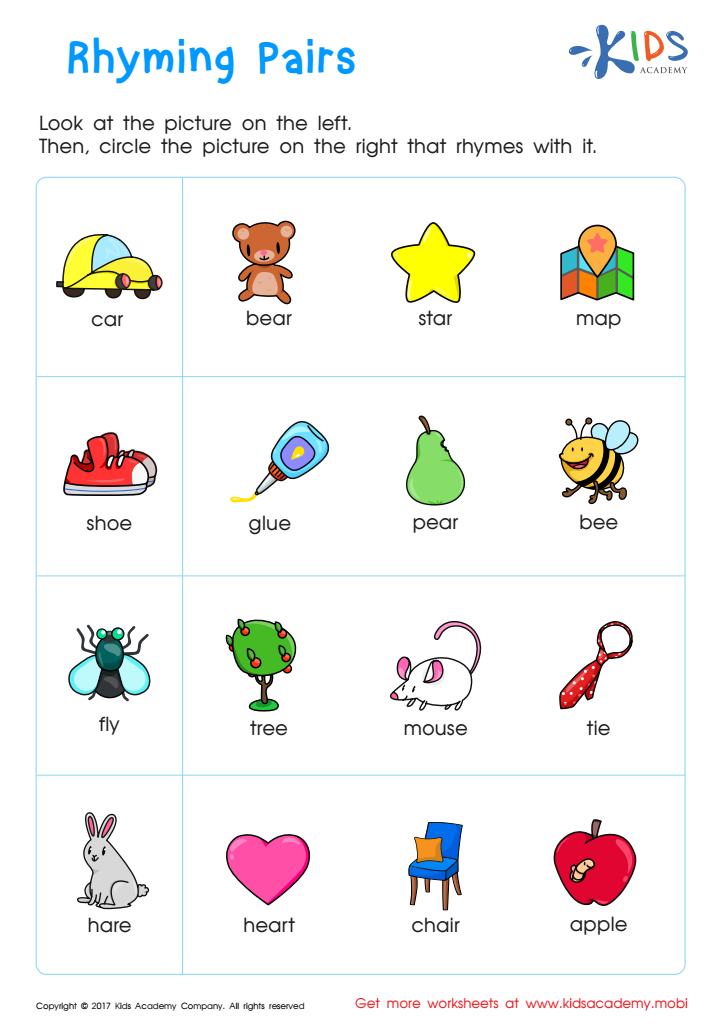
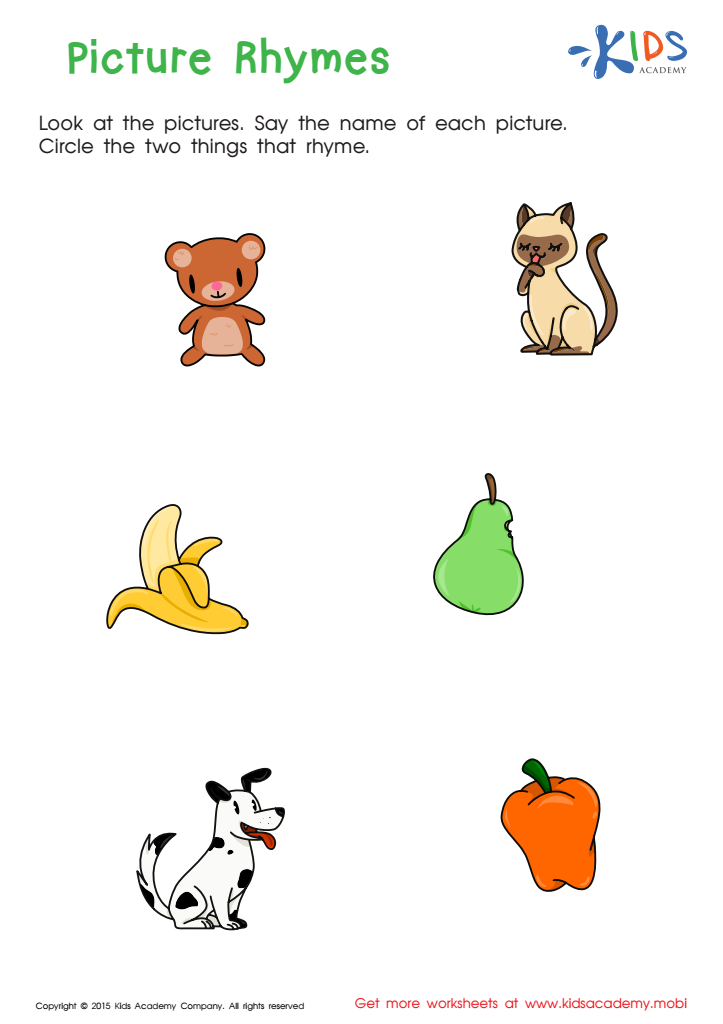
First Words: Picture Rhymes Worksheet
Rhyming helps kids understand language, read and write better. This printable worksheet boosts problem-solving and cognitive skills with vibrant pictures. It teaches kids to identify words, recognize rhymes, complete mental tasks and write words. An extra activity: show them how rhyming words share some of the same letters.
First Words: Picture Rhymes Worksheet
Worksheet
Join Kids Academy for Free
Who is primarily going to use this learning content?


Rhyming skills are a fundamental part of early childhood development and play a crucial role in literacy education during preschool years. Parents and teachers should prioritize rhyming because it helps to enhance phonological awareness, which is essential for the development of reading skills. When children recognize and produce rhymes, they are learning to discern sounds and patterns in words, which is a foundational skill for decoding words in reading.
Moreover, rhyming activities contribute to language development. They expand a child's vocabulary and improve their ability to articulate sounds clearly. Engaging in rhyming games and songs also fosters listening skills and auditory discrimination, both of which are vital for effective communication.
Rhyming also supports memory and cognitive development. The repetitive and rhythmic patterns in rhymes make them easier to remember, thereby improving a child's memory skills. Additionally, rhyming can make learning fun and engaging, nurturing a love for language and reading from an early age.
For teachers, incorporating rhyming into the curriculum can create a rich, stimulating learning environment. For parents, it offers an opportunity to bond with their children through playful interaction. In summary, rhyming is a powerful tool in early childhood education, promoting literacy, language growth, cognitive development, and a positive attitude towards learning.






