Cognitive Development Preschool Adding at the Zoo Worksheets
18 filtered results
-
From - To
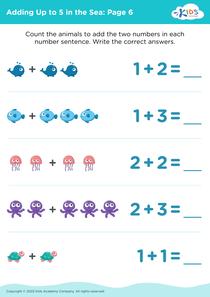
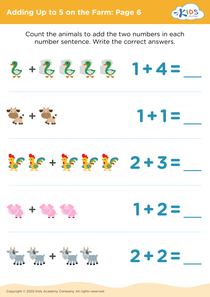
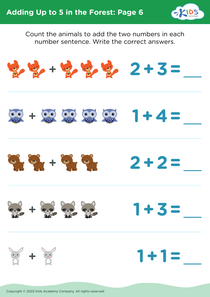
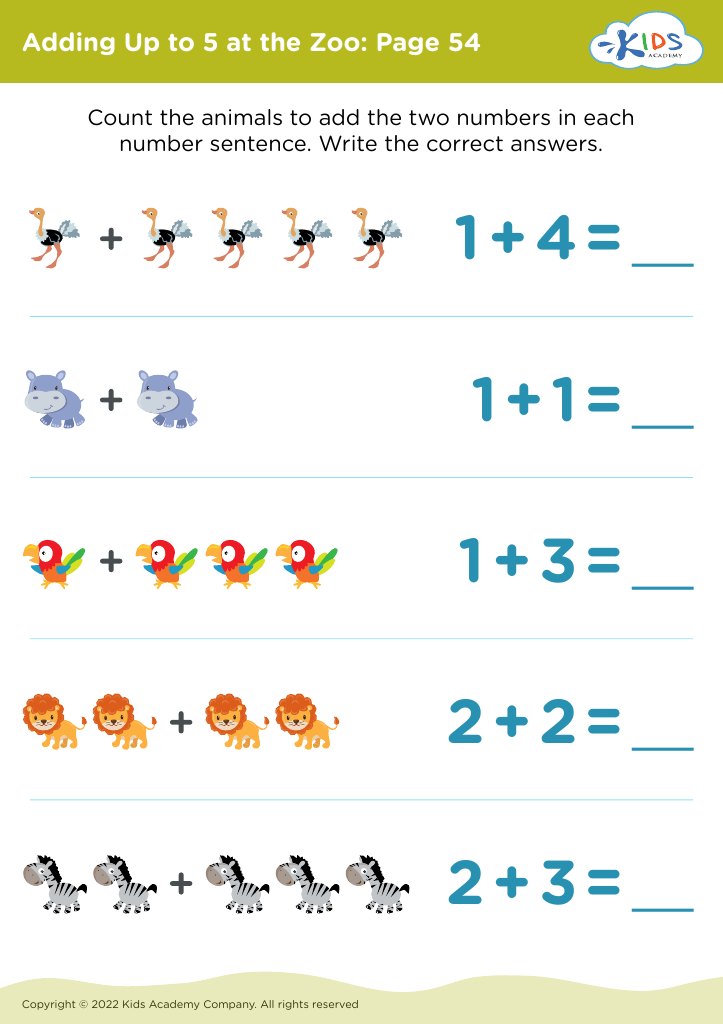
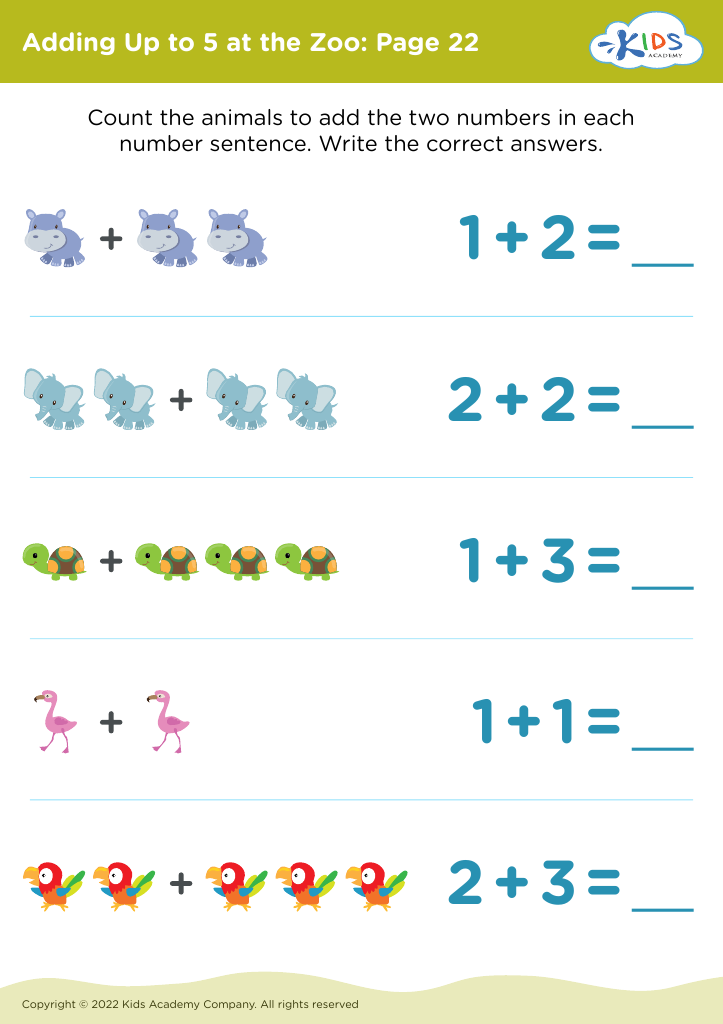
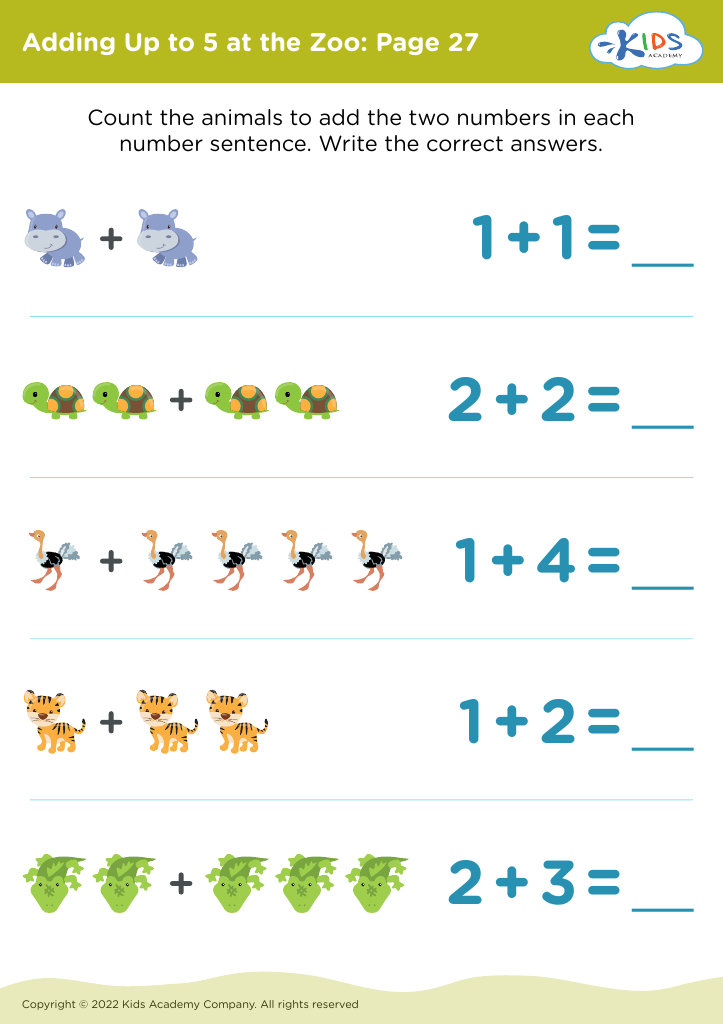
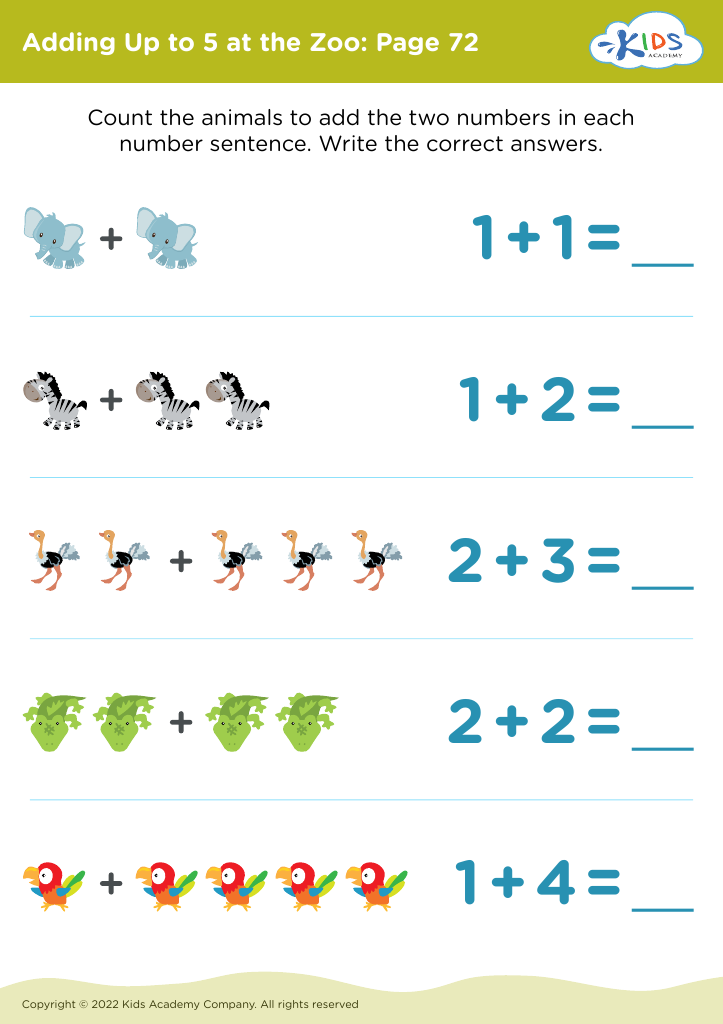
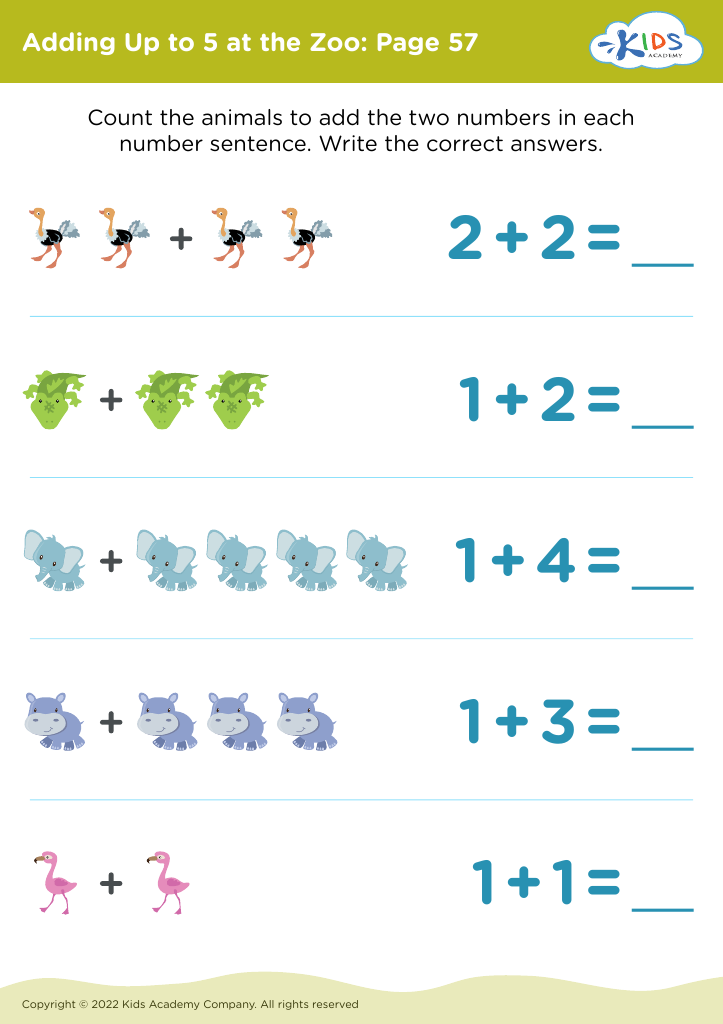
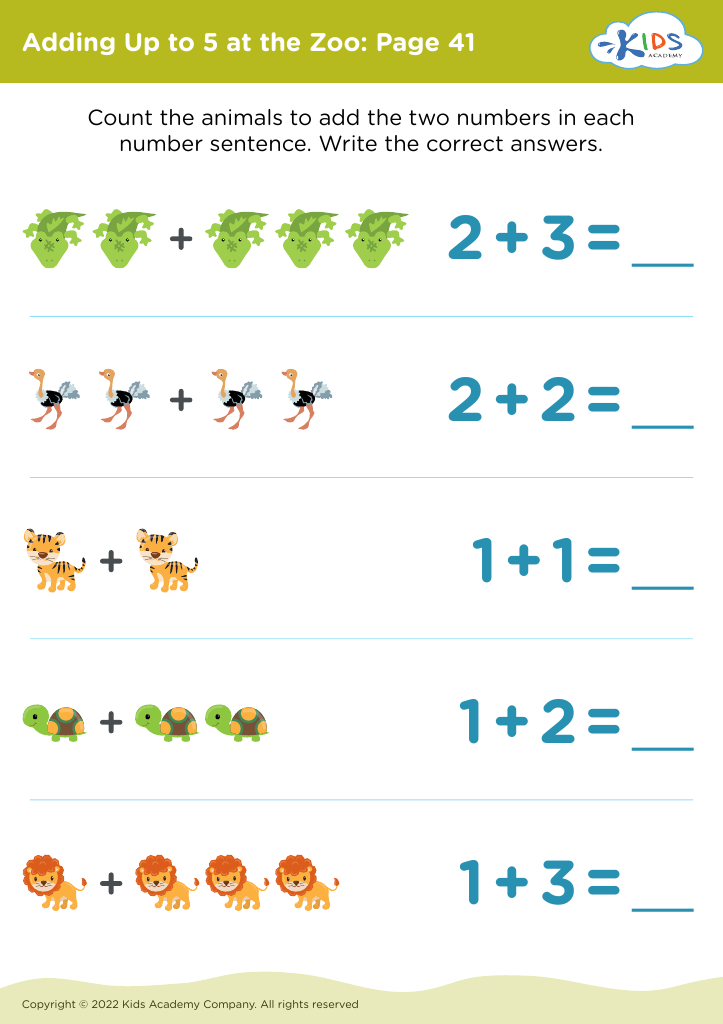
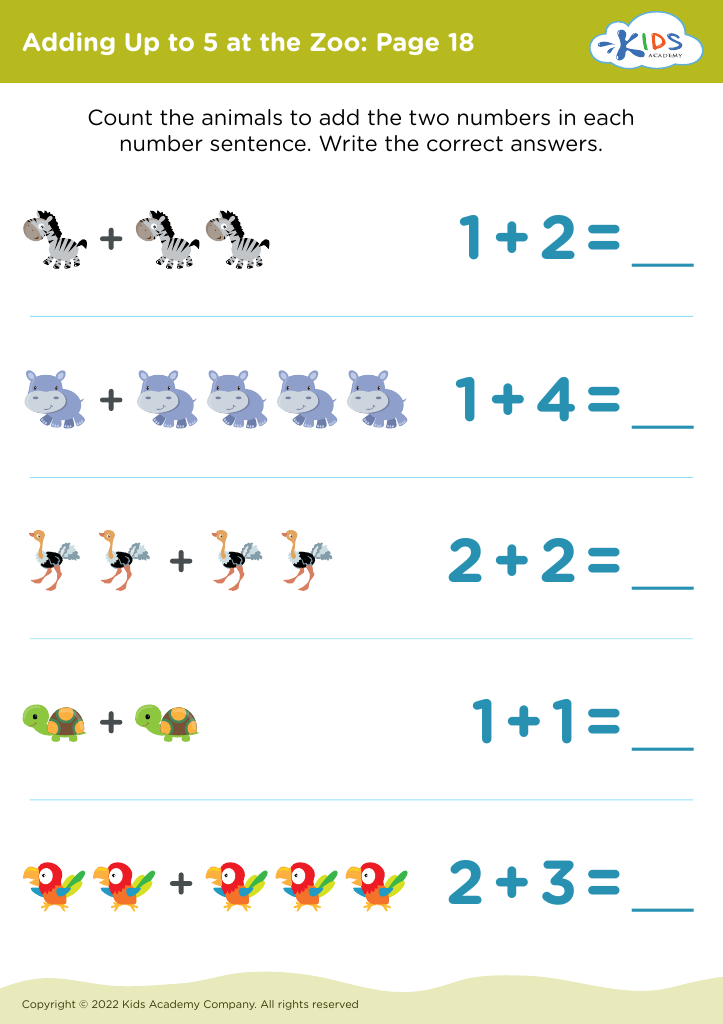
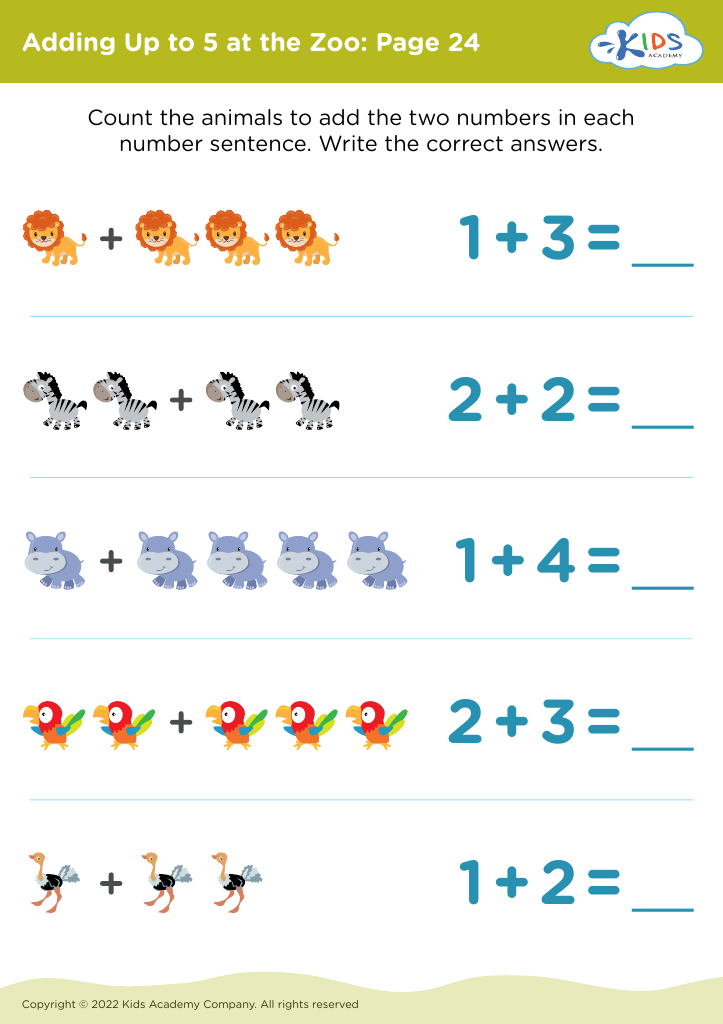
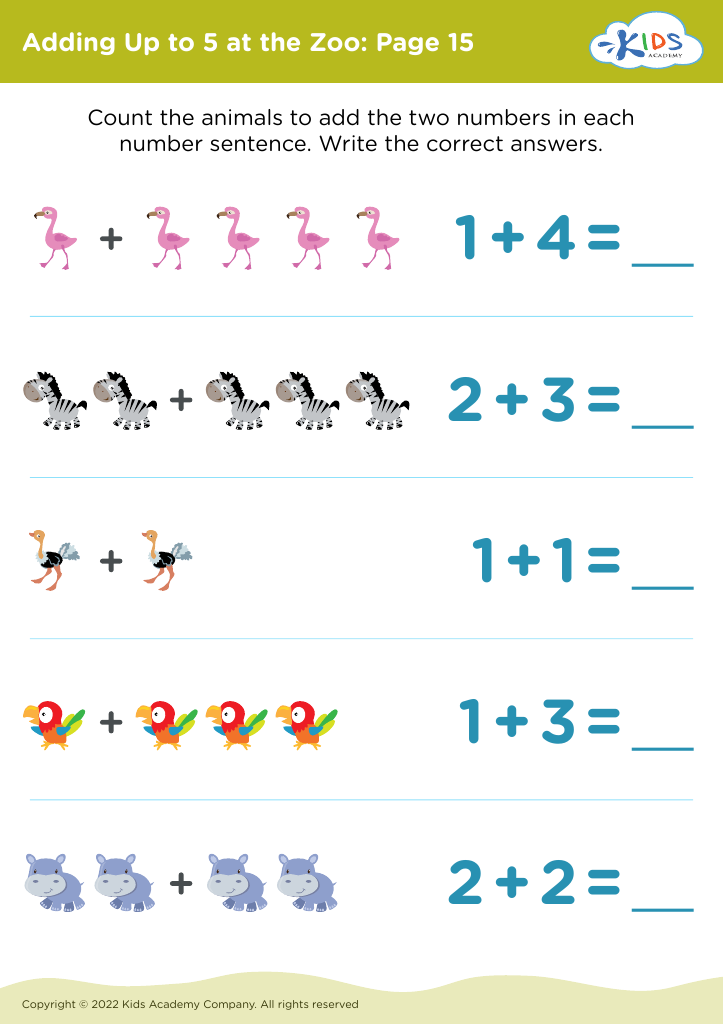
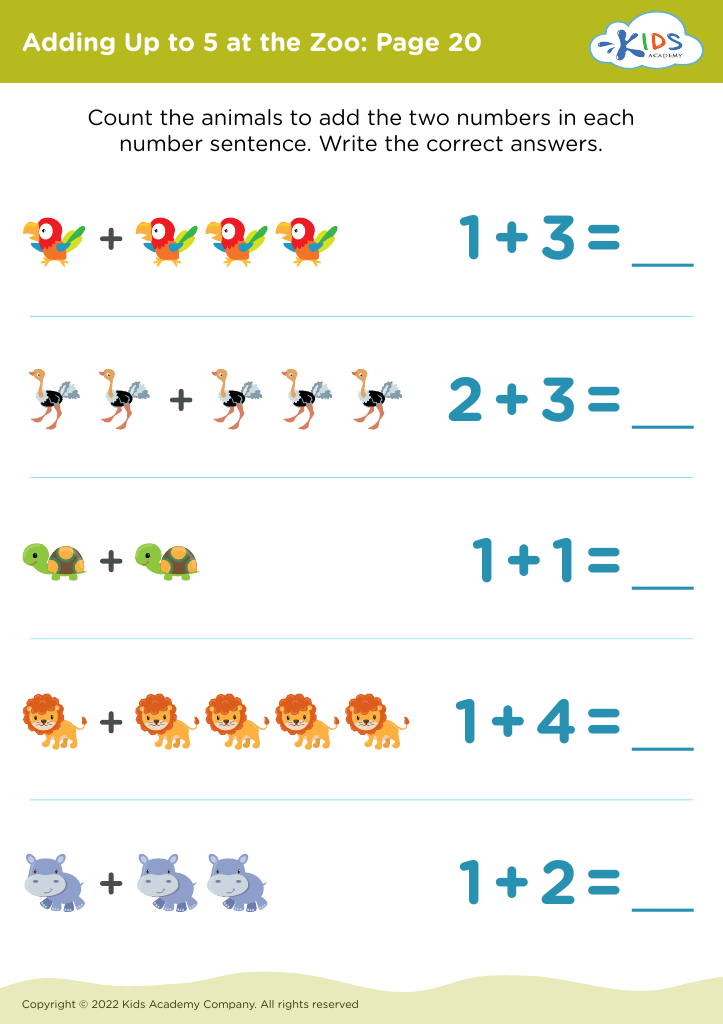
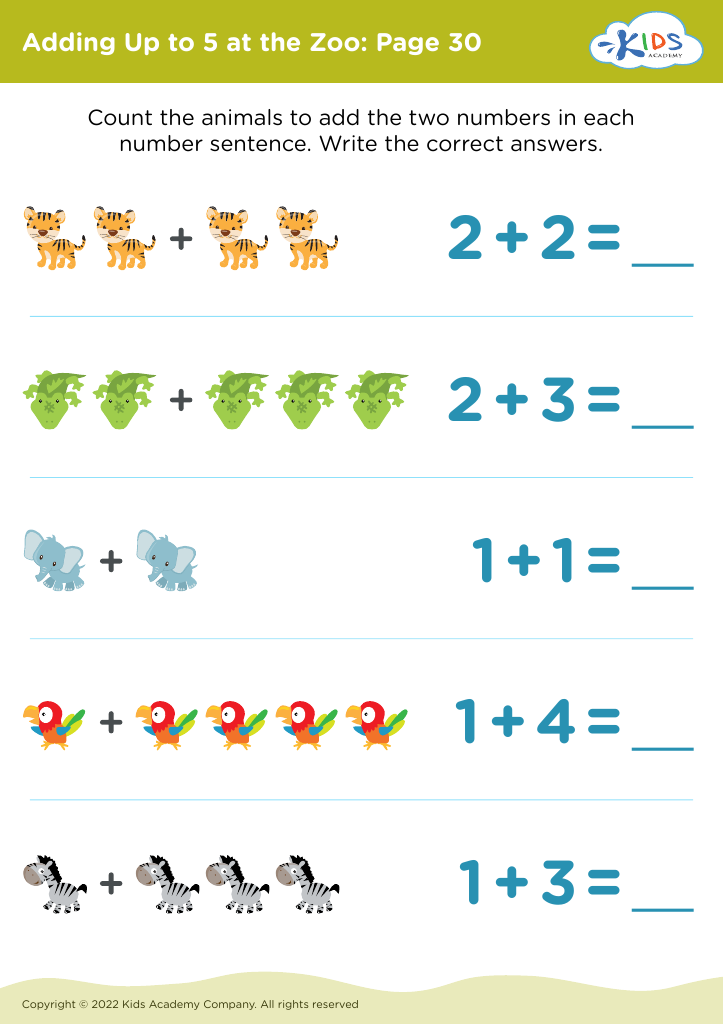
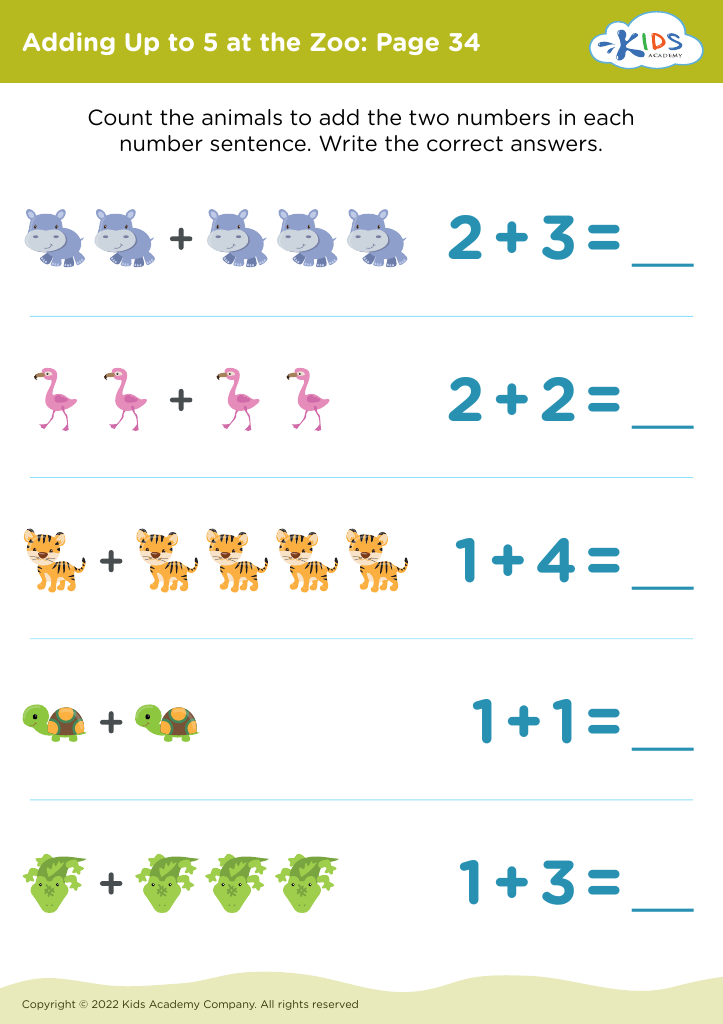
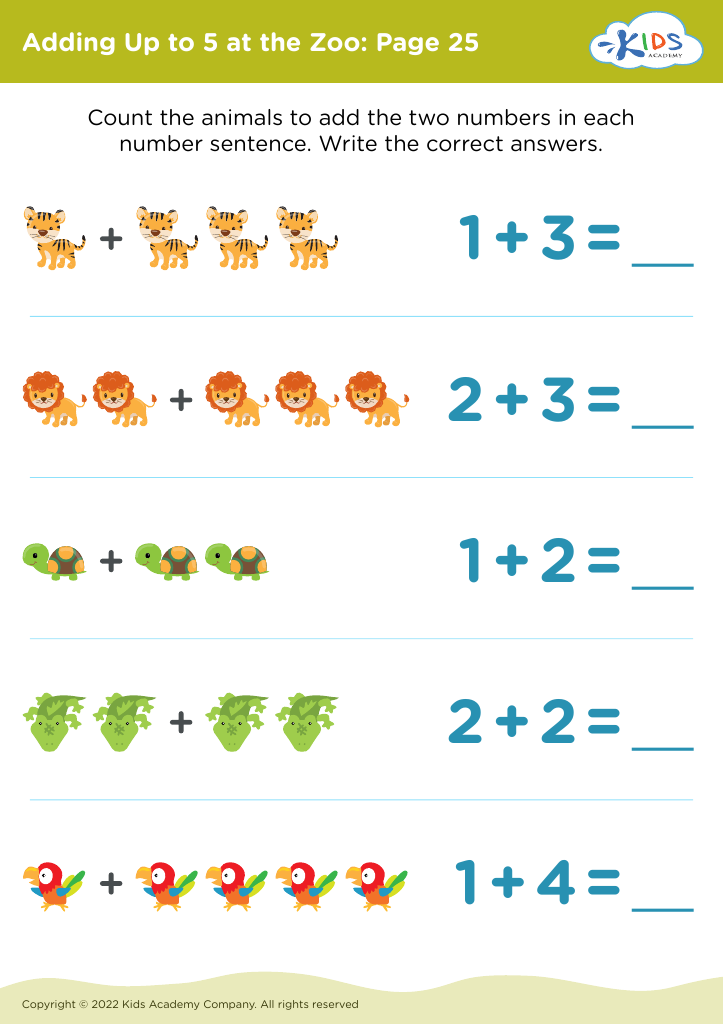
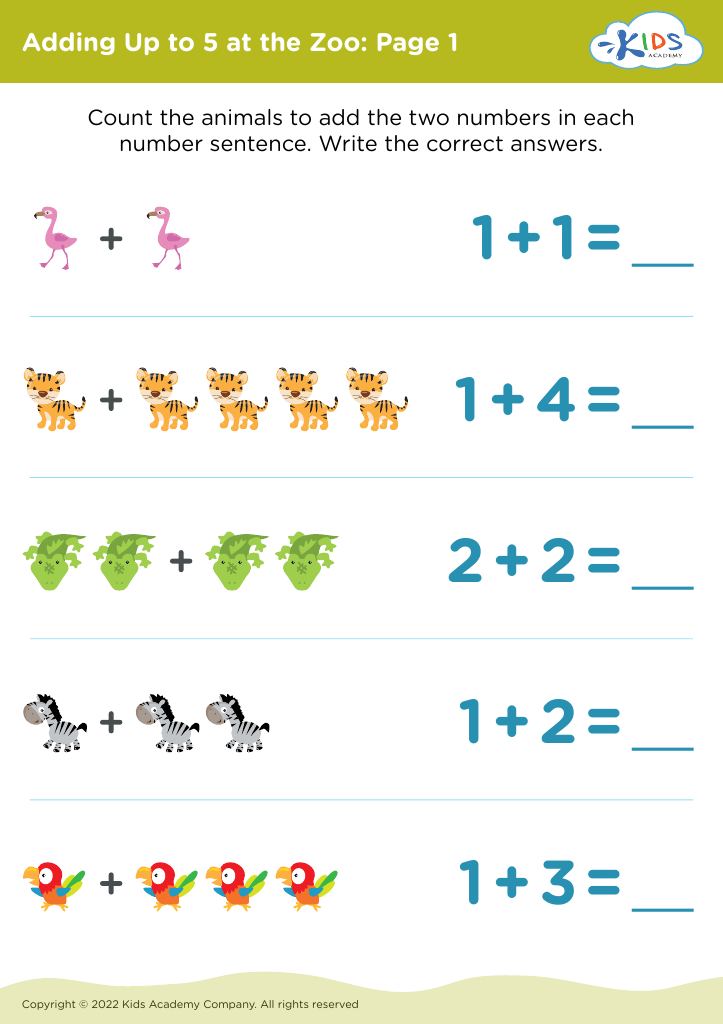
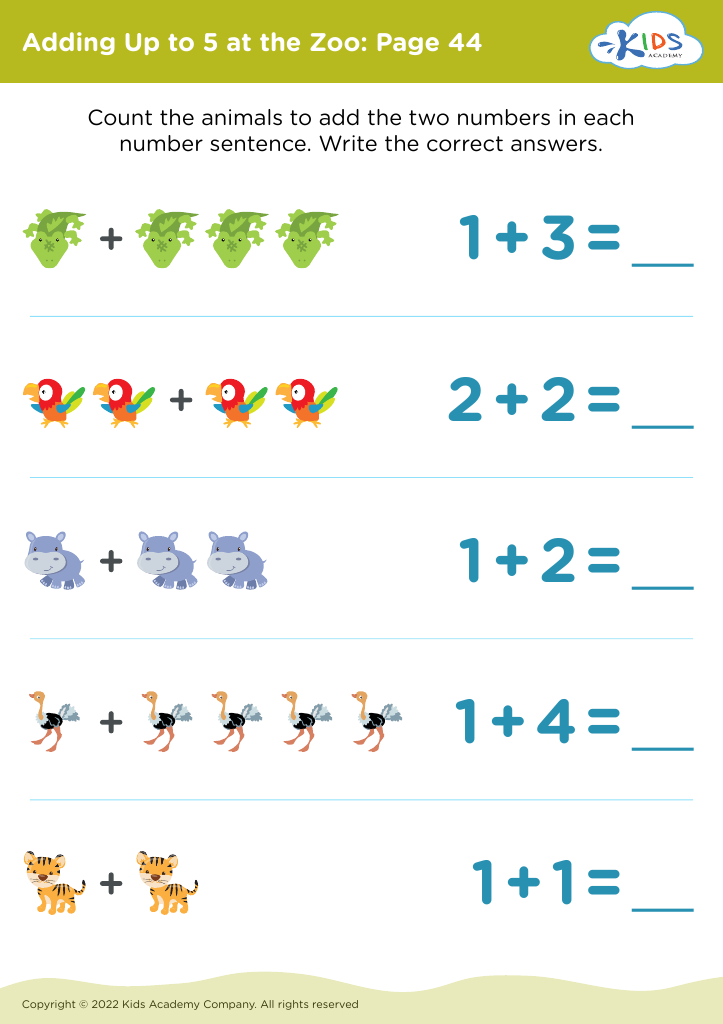
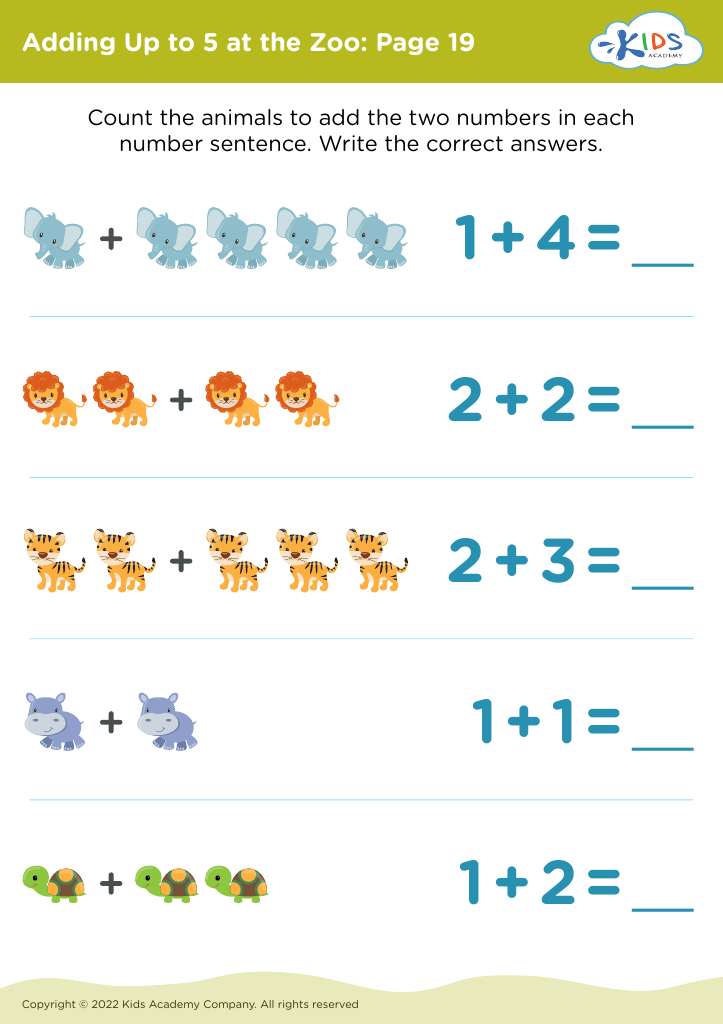
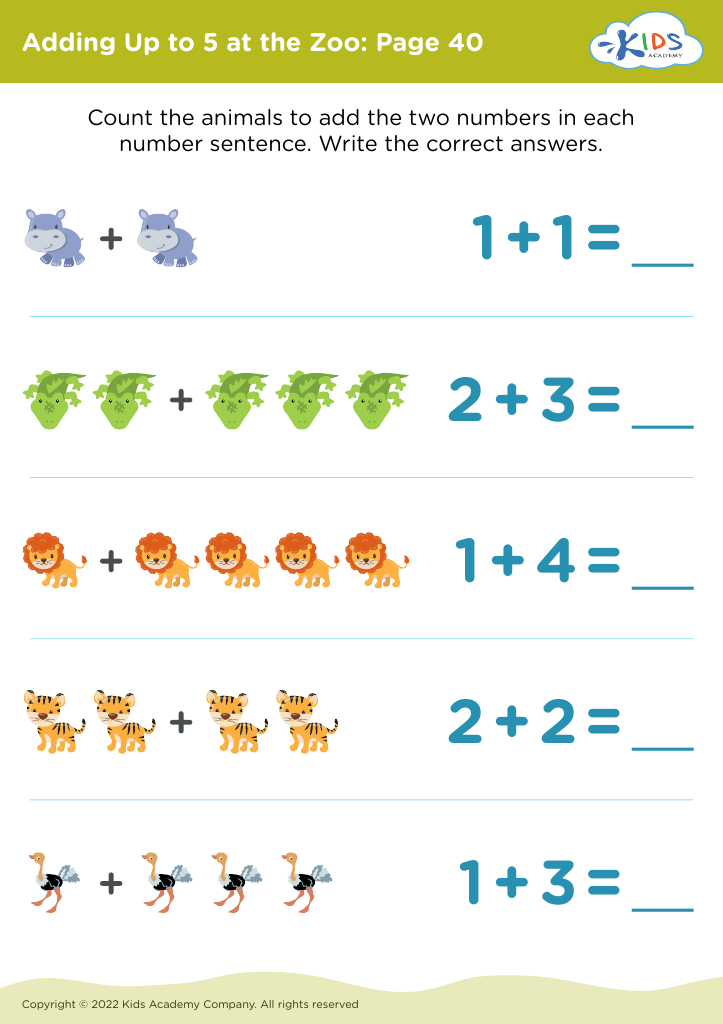
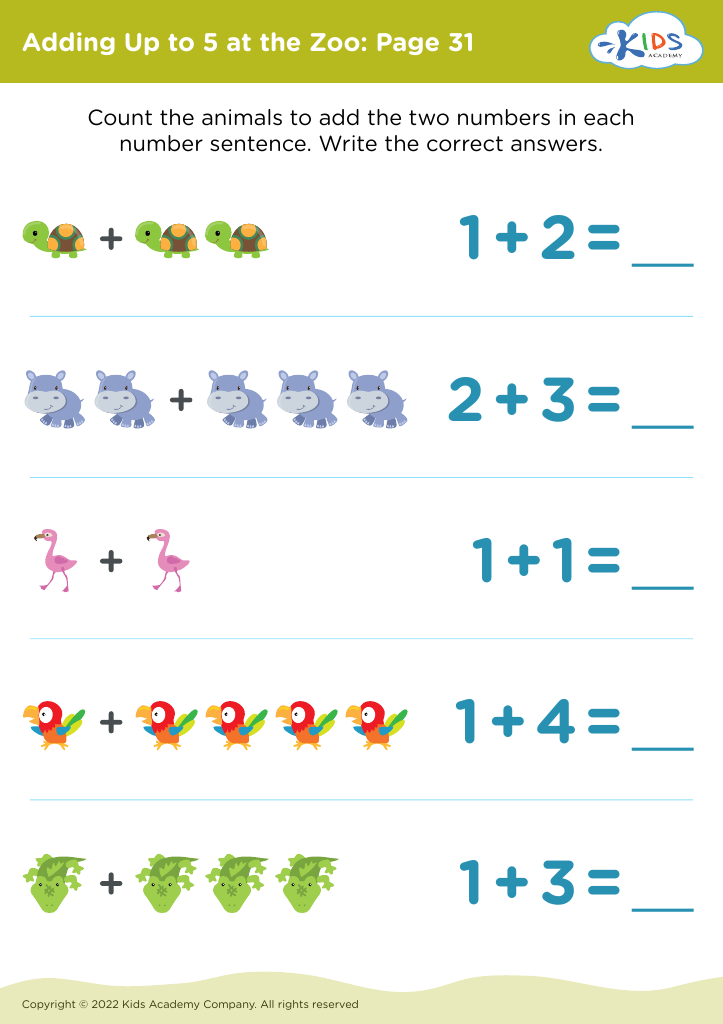
Enhance your preschooler’s cognitive development with our engaging "Adding at the Zoo" worksheets! Tailored specifically for young math enthusiasts, these worksheets combine the excitement of a zoo visit with fundamental addition skills. By navigating through fun, zoo-themed activities, children will improve their counting, number recognition, and simple arithmetic abilities. Our creatively designed worksheets support early learning by fostering problem-solving skills while keeping kids entertained and motivated. Perfect for parents and educators seeking to build a strong mathematical foundation, "Adding at the Zoo" makes learning addition a fun adventure filled with animals and numbers!


Certainly!
Preschool cognitive development is pivotal in laying the foundation for a child's future learning and thinking skills. Activities like "Adding at the Zoo" are instrumental for several reasons. Firstly, they engage young children with practical, hands-on learning experiences which are crucial for their mathematical development. By incorporating animals and a familiar, fun setting like a zoo, children are more likely to be interested and motivated to participate, creating positive associations with learning.
Secondly, such activities enhance number sense, an essential component of early math skills. Cognitive tasks like counting and adding introduce concepts such as quantities, patterns, and simple problem-solving, which form the basis of more complex mathematical concepts in later years.
Moreover, these activities foster other critical cognitive skills, such as attention to detail, memory, and logical thinking. When children count and add animals, they must focus, remember counts, and often apply strategic thinking to solve problems.
Lastly, cognitive development activities contribute to language skills and social interaction. Discussing their findings with teachers or peers helps children articulate thoughts and learn new vocabulary. Overall, integrating cognitive development activities in engaging contexts prepares children not just for school but for a lifelong journey of learning and curiosity.
This foundation ensures that they can approach more complex educational challenges confidently and successfully.