Fine motor skills (writing numbers) Preschool Adding at the Zoo Worksheets
3 filtered results
-
From - To
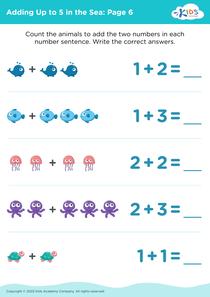
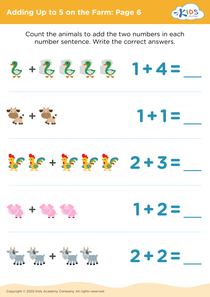
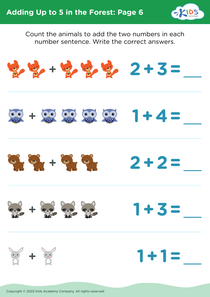
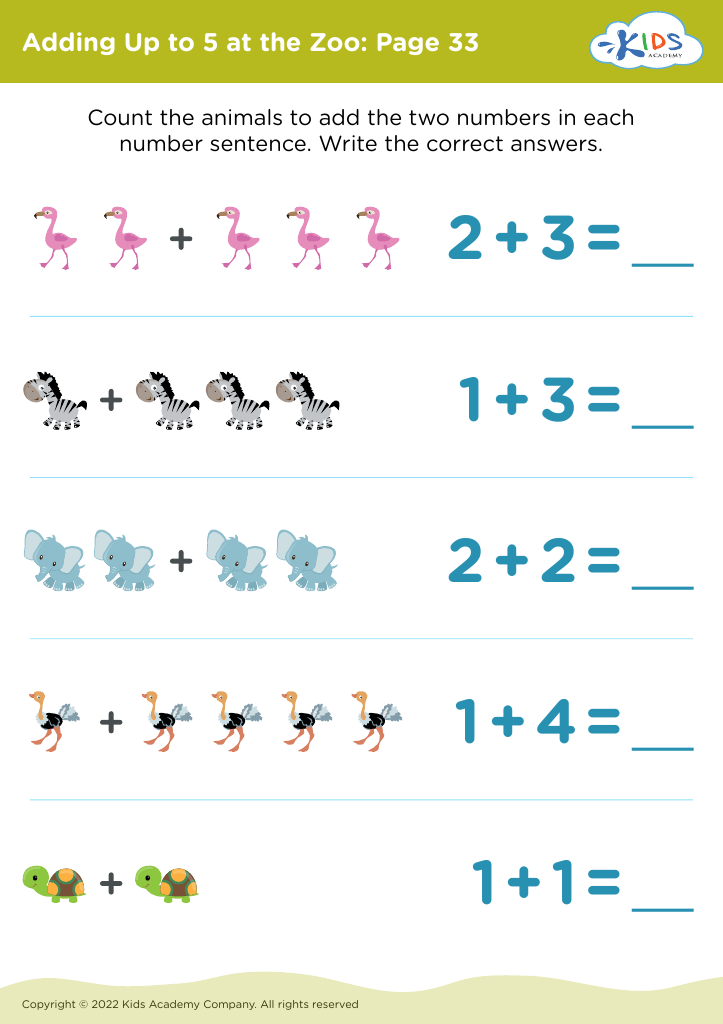
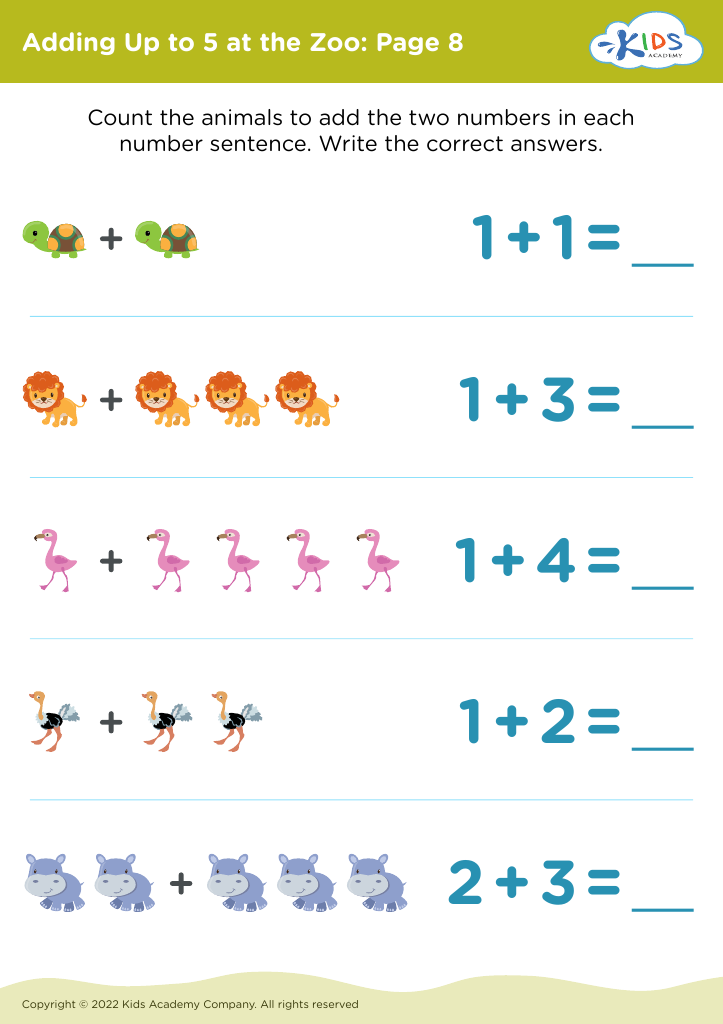
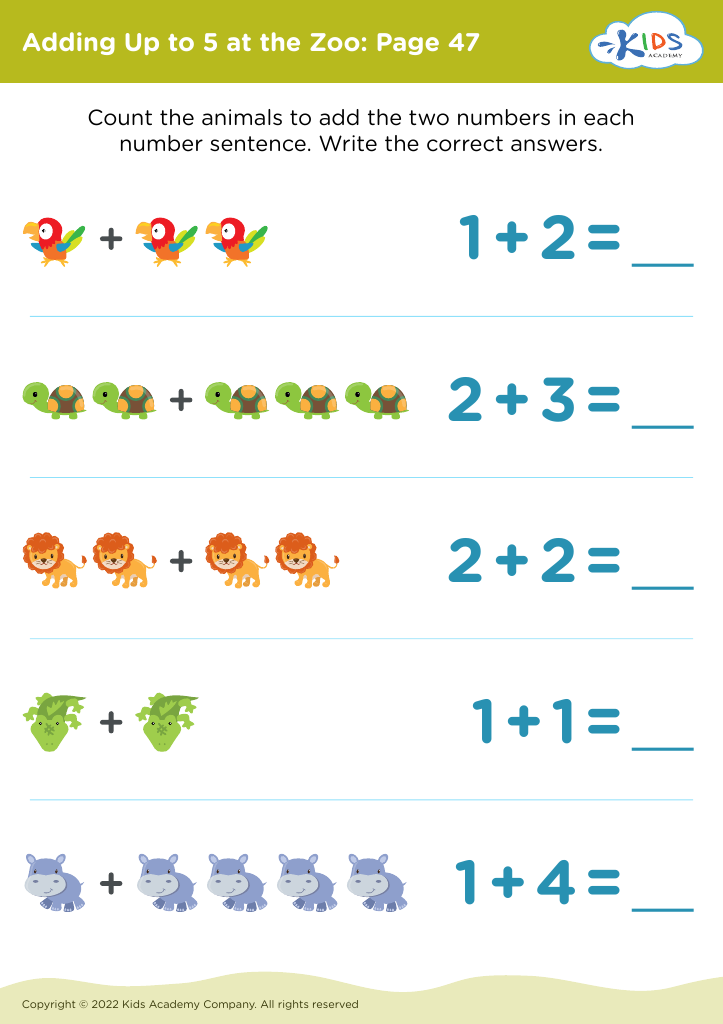
Our "Fine Motor Skills (Writing Numbers) - Preschool Adding at the Zoo Worksheets" are designed to develop early mathematics and fine motor skills in young children. These engaging and educational worksheets feature fun zoo-themed activities that help preschoolers practice writing numbers while reinforcing their numeracy skills. By adding numbers and solving exciting puzzles, children will strengthen their hand-eye coordination and dexterity, critical for their future writing and daily tasks. Perfect for classroom or at-home learning, these worksheets make learning to add an adventure in the wild world of the zoo!


Parents and teachers should prioritize developing fine motor skills and early math skills, such as writing numbers and basic addition, for several compelling reasons. Fine motor skills are foundational for a child's ability to perform essential tasks like writing, dressing, and using utensils. These skills involve the coordination of small muscles in the hands and fingers, critical for academic success and daily life activities. Strengthening these muscles enables children to write numbers clearly and accurately, which is fundamental for their ability to communicate and succeed in school.
Introducing preschool children to math concepts through engaging activities like "Adding at the Zoo" nurtures critical thinking and problem-solving skills. When children play and learn simultaneously, they build a positive attitude towards learning. Utilizing a familiar and exciting context, such as zoo animals, captures their interest and makes abstract concepts more tangible.
Moreover, early exposure to math through playful activities helps lay the groundwork for later, more complex mathematical thinking. Developing these skills in a nurturing environment also boosts children's confidence and self-esteem, ensuring they feel capable and competent. By investing in these early skills, parents and teachers help set a strong academic and developmental foundation that supports children’s growth in all areas during their formative years.