Problem Solving Preschool Adding at the Zoo Worksheets
3 filtered results
-
From - To
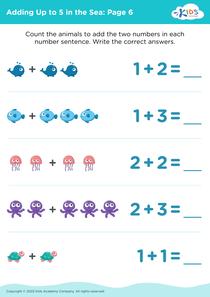
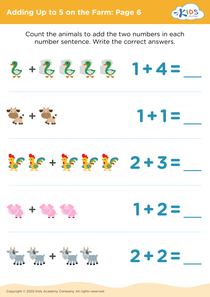
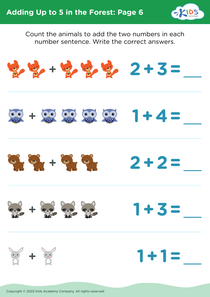
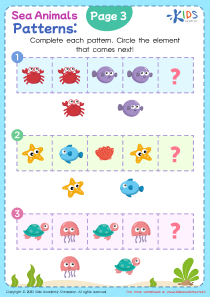
Discover our engaging "Problem Solving Preschool Adding at the Zoo Worksheets," designed to make learning math fun for little ones! These interactive worksheets introduce preschoolers to basic addition skills through a delightful zoo theme. As children solve relatable problems, they practice counting, adding, and critical thinking in a playful environment. Each worksheet features vibrant illustrations, encouraging kids to explore different animals and situations while honing their math abilities. Ideal for home or classroom use, these resources promote cognitive development and enhance early literacy and numeracy skills. Unleash your child's inner mathematician while visiting the zoo – all from the comfort of your home!
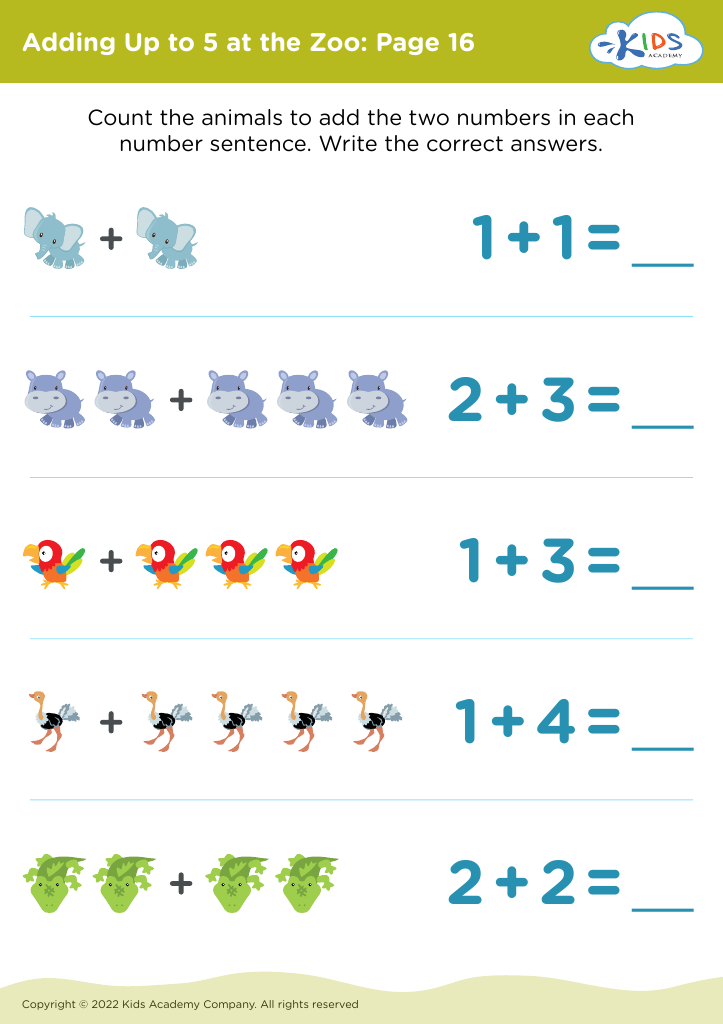
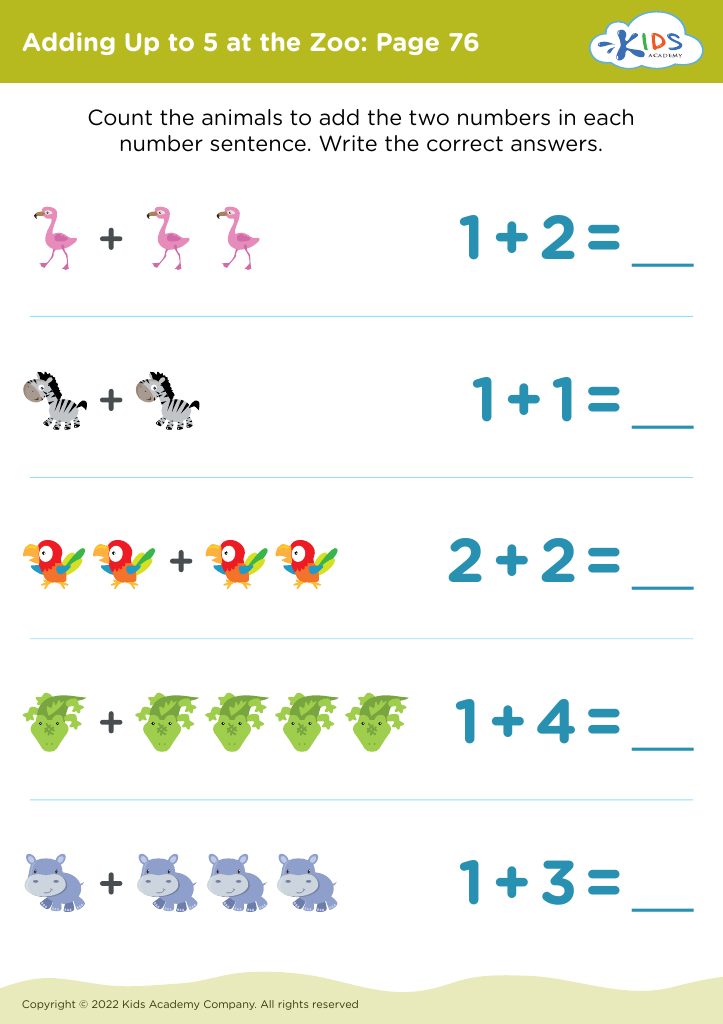
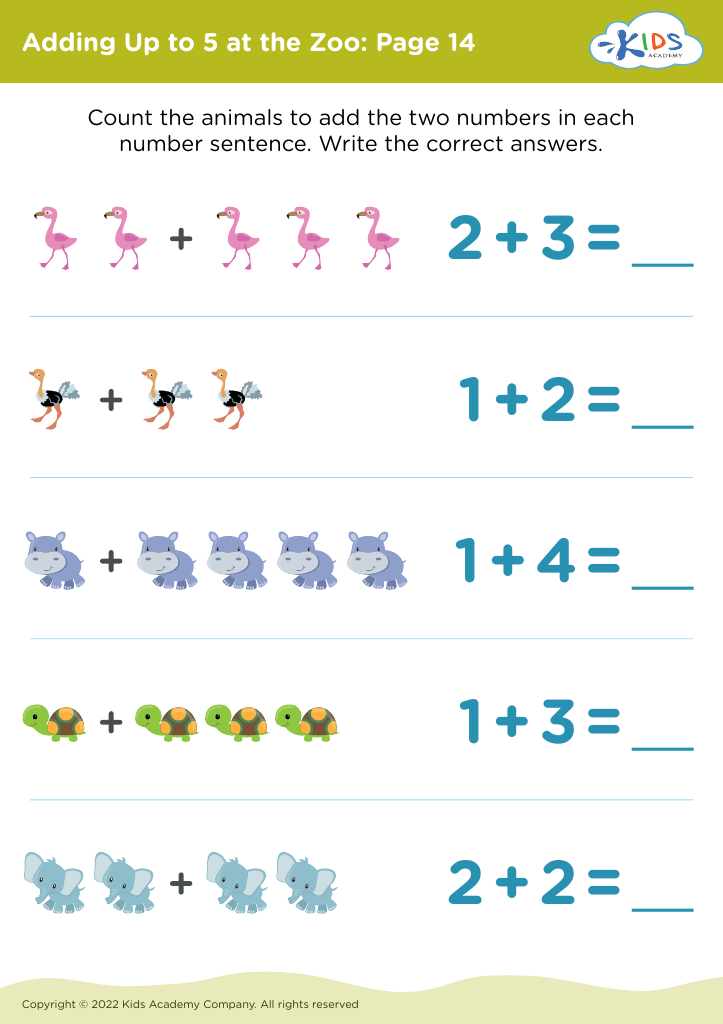


Parents and teachers should care about Problem Solving Preschool Adding at the Zoo because it offers a dynamic and engaging way to introduce young children to foundational math concepts. This activity fosters critical thinking and problem-solving skills in a relatable setting—an imaginative trip to the zoo, where children can relate to animals they love.
By incorporating real-world scenarios, such as counting animals or managing a zoo's population, children enhance their understanding of addition in a playful context. This interactive approach not only makes learning fun but also promotes cognitive development, as kids learn to analyze situations, make decisions, and work through challenges.
Additionally, Problem Solving Preschool Adding at the Zoo encourages collaboration among children, as they often work in pairs or small groups. This cooperative learning environment nurtures social skills and the ability to articulate thoughts while reinforcing numerical concepts.
Ultimately, activities like this contribute to a holistic learning experience, laying the groundwork for future mathematical understanding, building confidence, and fostering a love for learning. Engaging in themed educational activities ensures that children remain curious and excited about numbers, making math a positive part of their early education.