Animal recognition Preschool Adding in the Forest Worksheets
15 filtered results
-
From - To
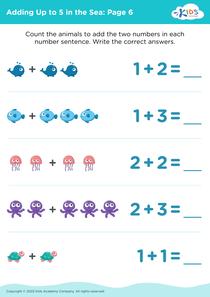
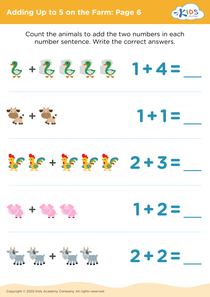
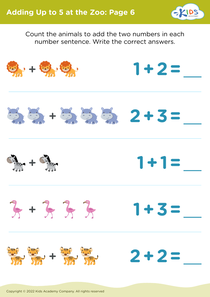
Ignite your preschooler's imagination with "Animal Recognition Preschool Adding in the Forest Worksheets." These engaging resources combine animal recognition and basic math to create a fun learning experience. Children will delight in identifying various forest animals while practicing addition, enhancing their observational and mathematical skills. These printable worksheets are designed to stimulate cognitive development, improve hand-eye coordination, and foster a love for nature and numeracy in young learners. Perfect for home or classroom use, they make learning an adventurous journey through the enchanting world of forest creatures. Unleash your child's potential with these captivating, educational activities.
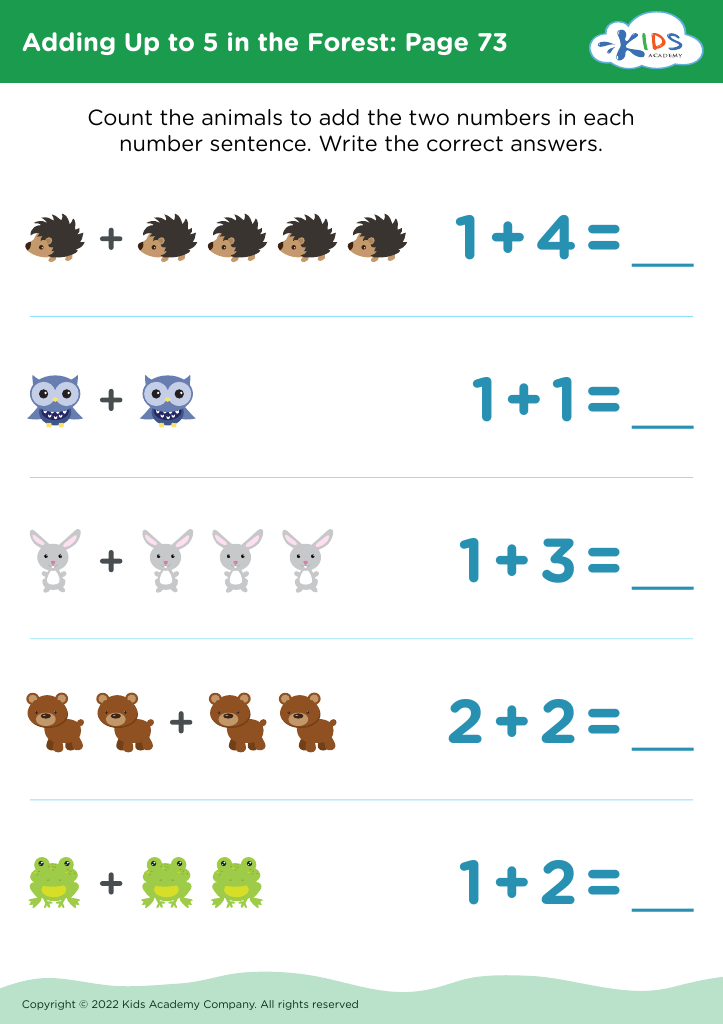
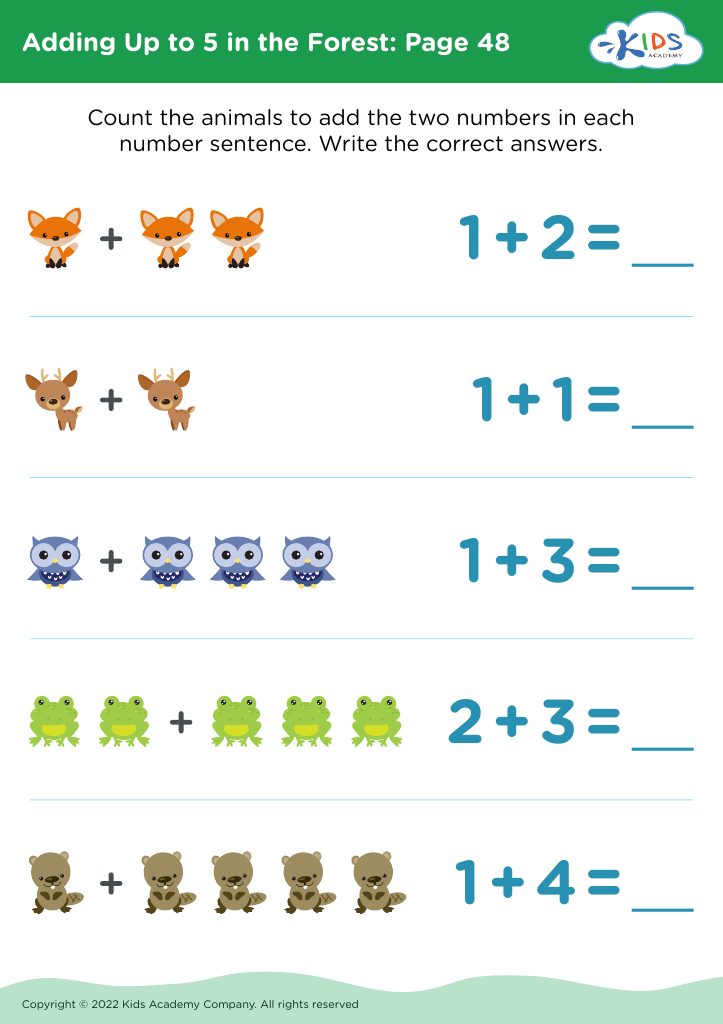
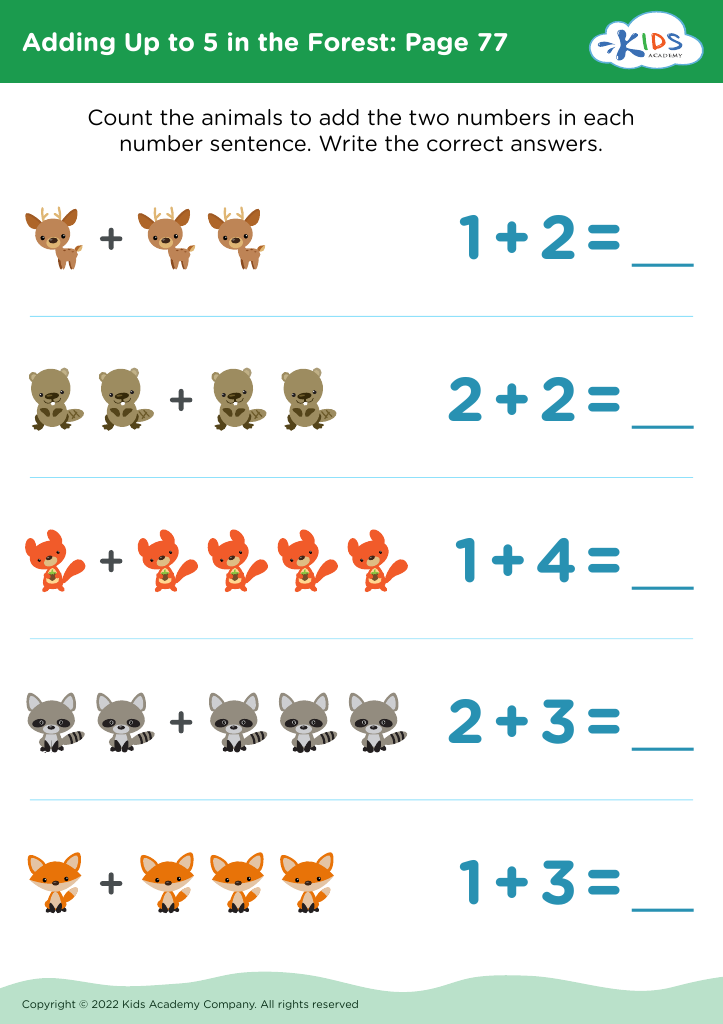
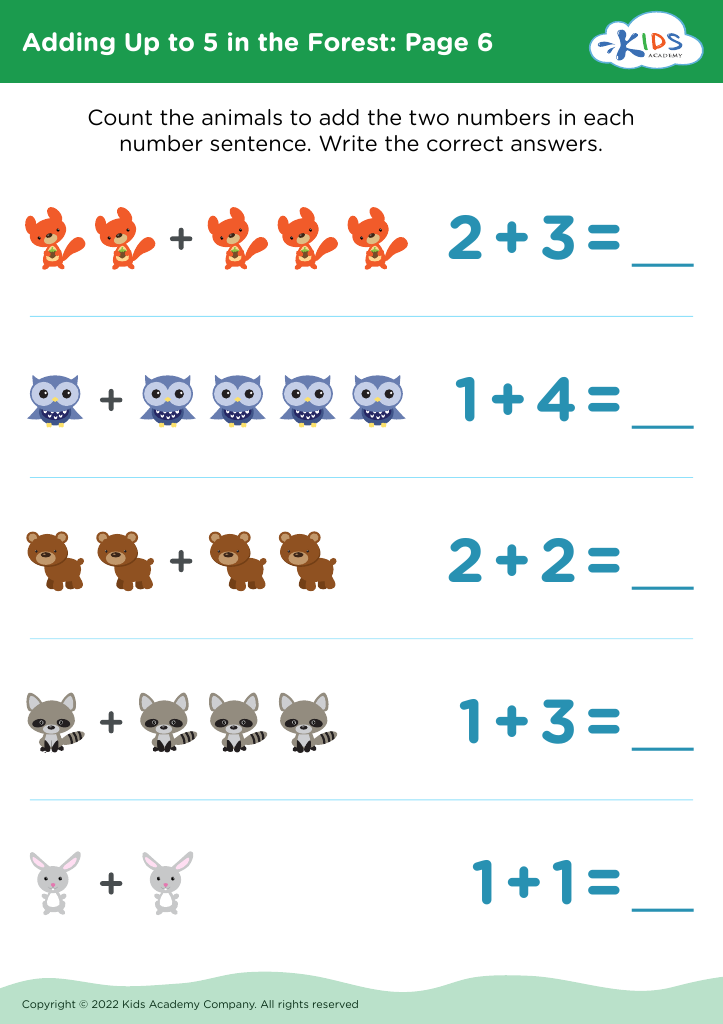
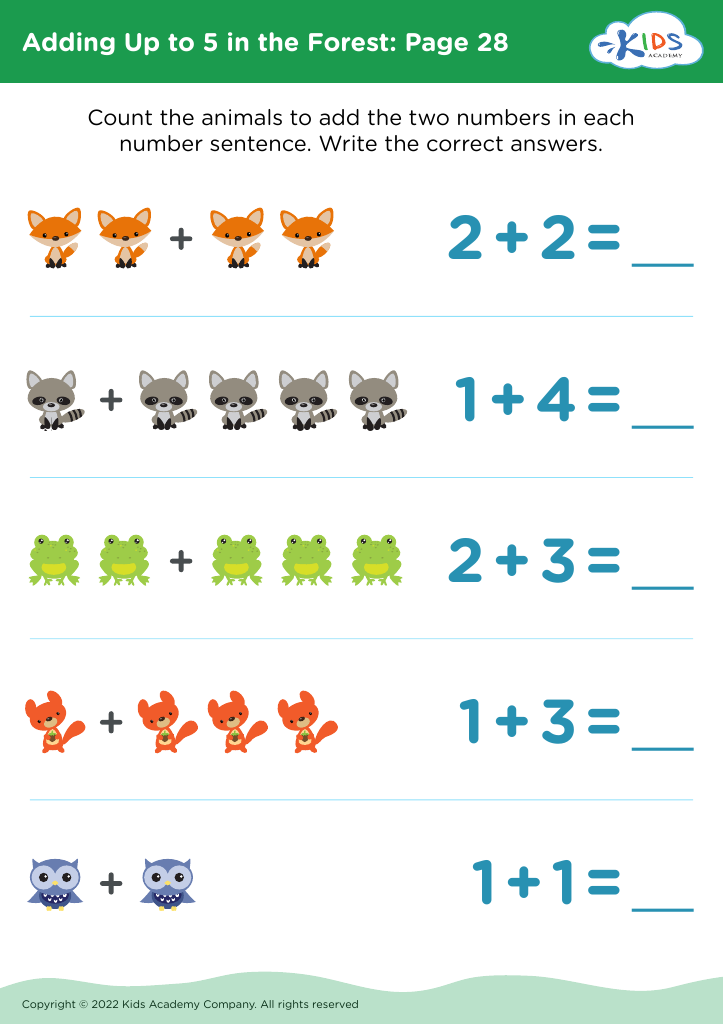
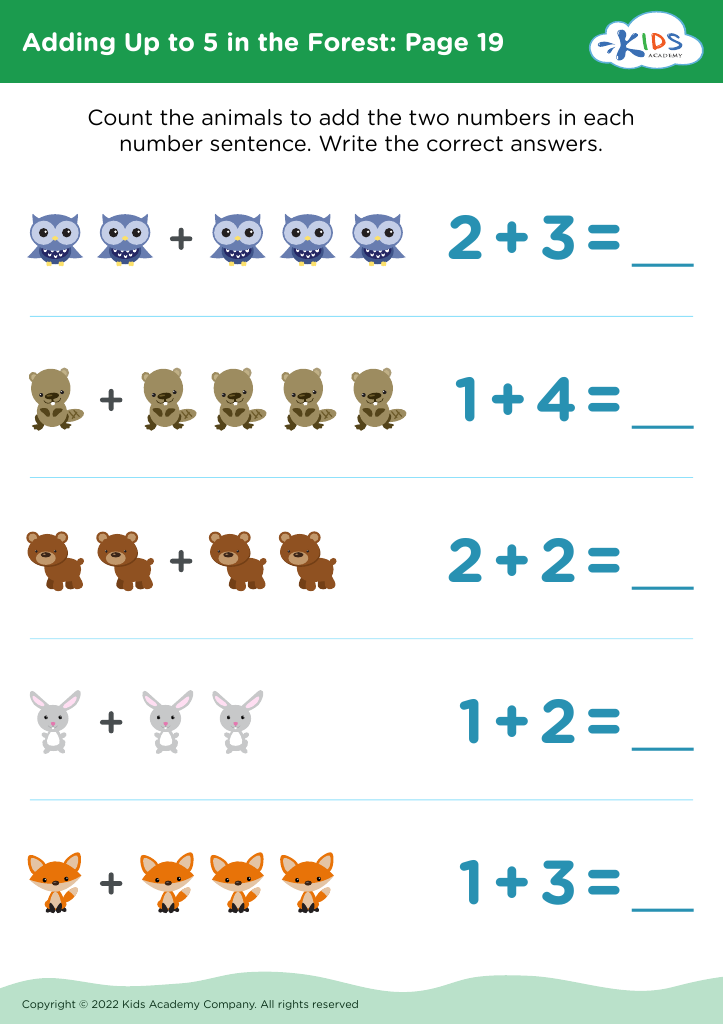
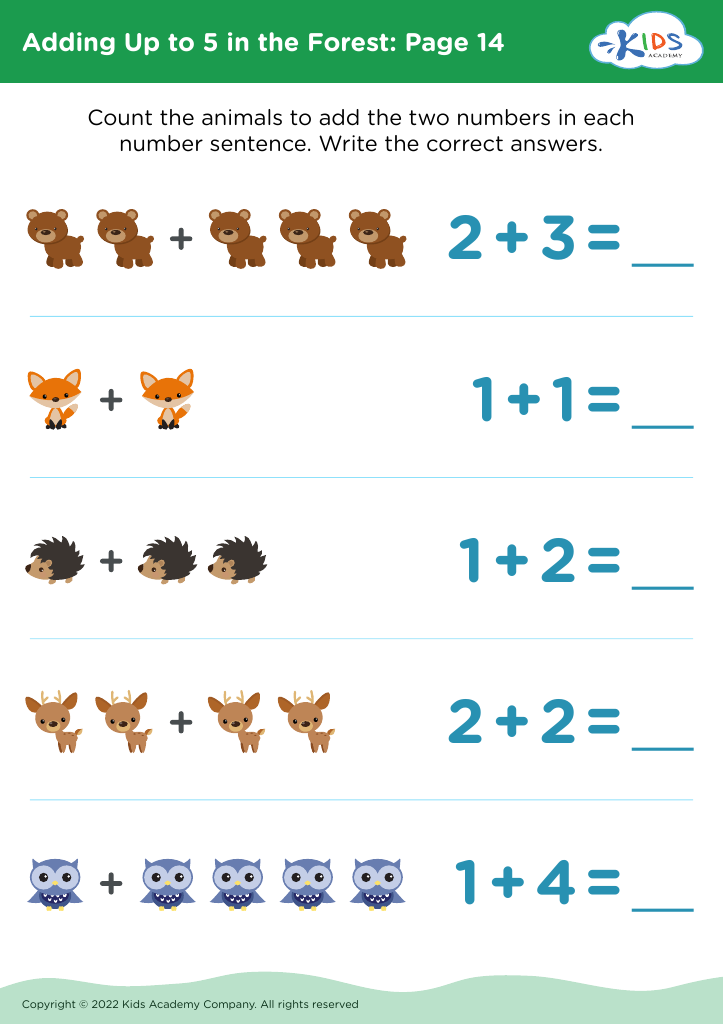
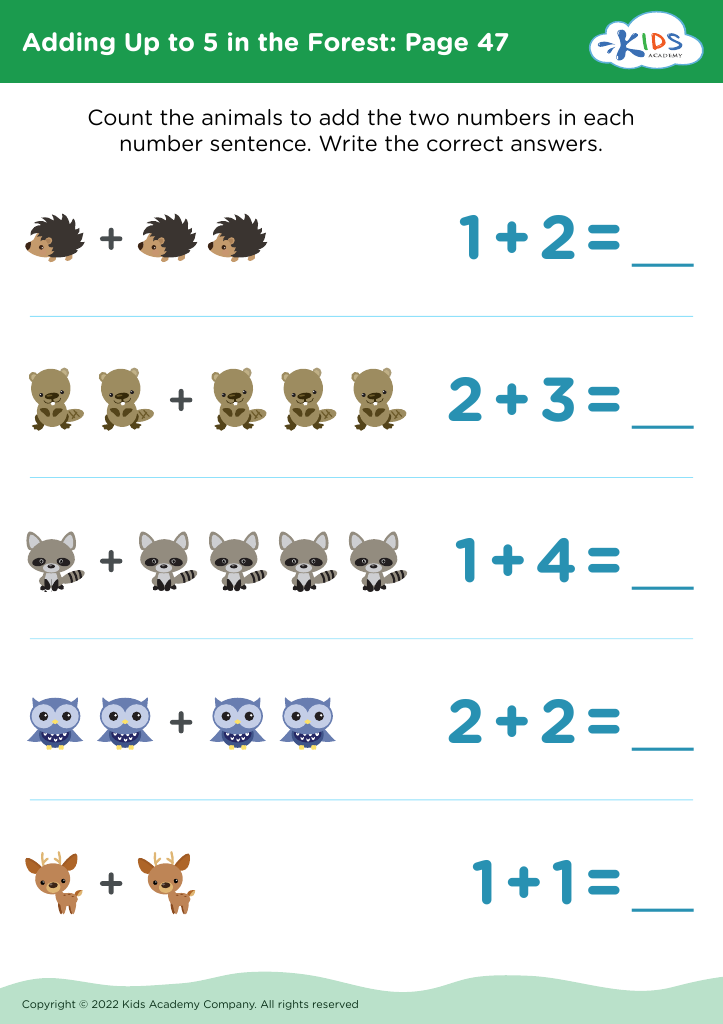
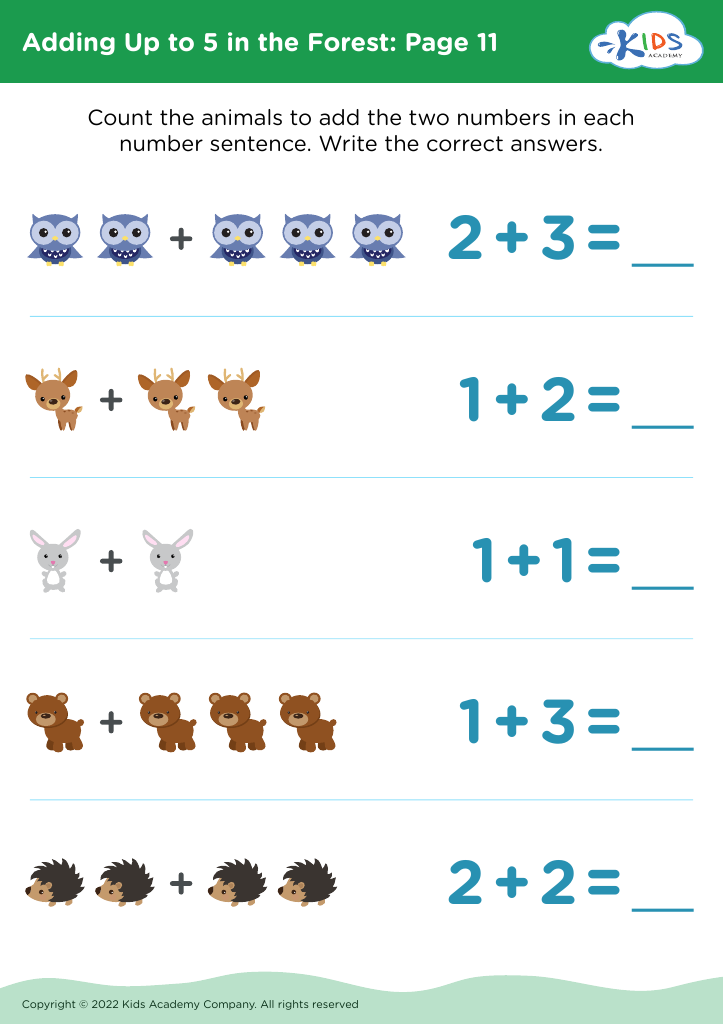
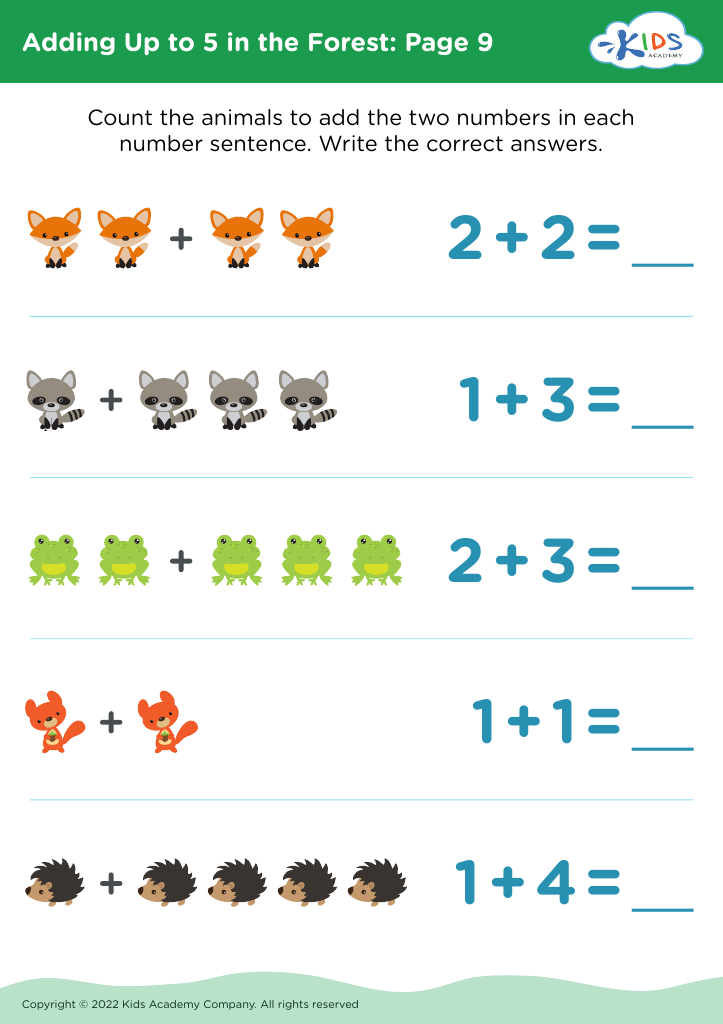
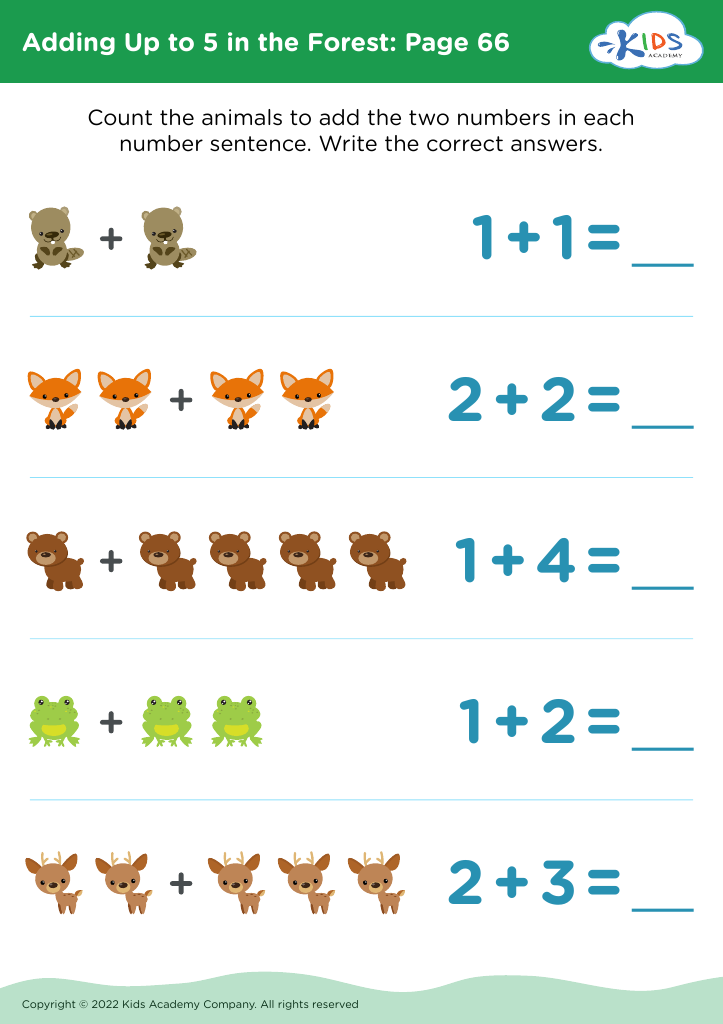
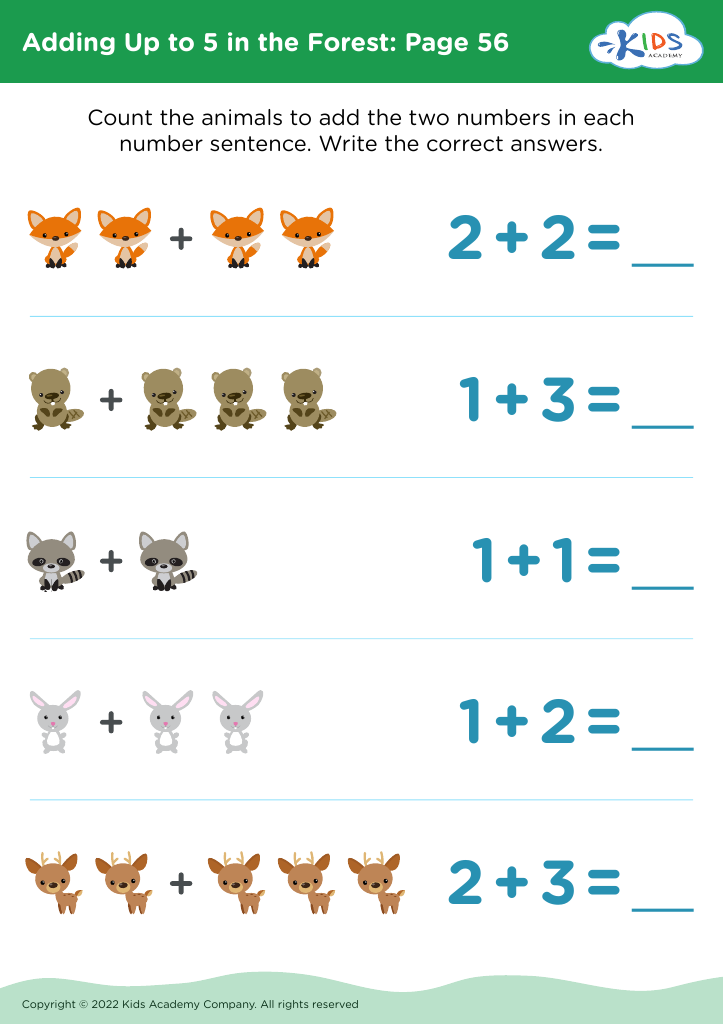
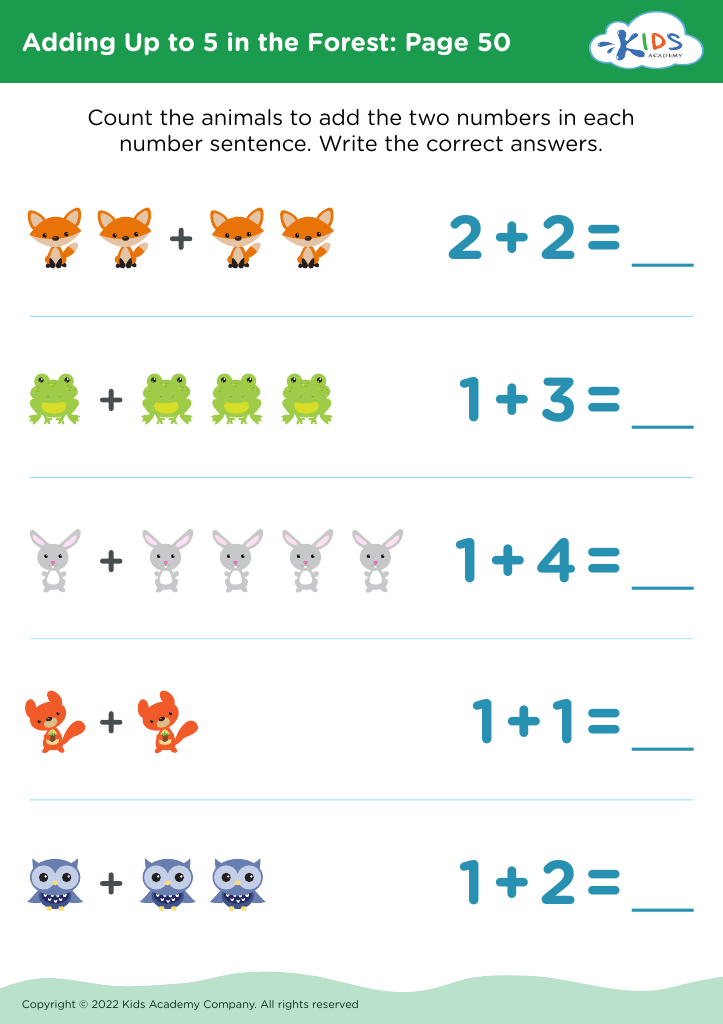
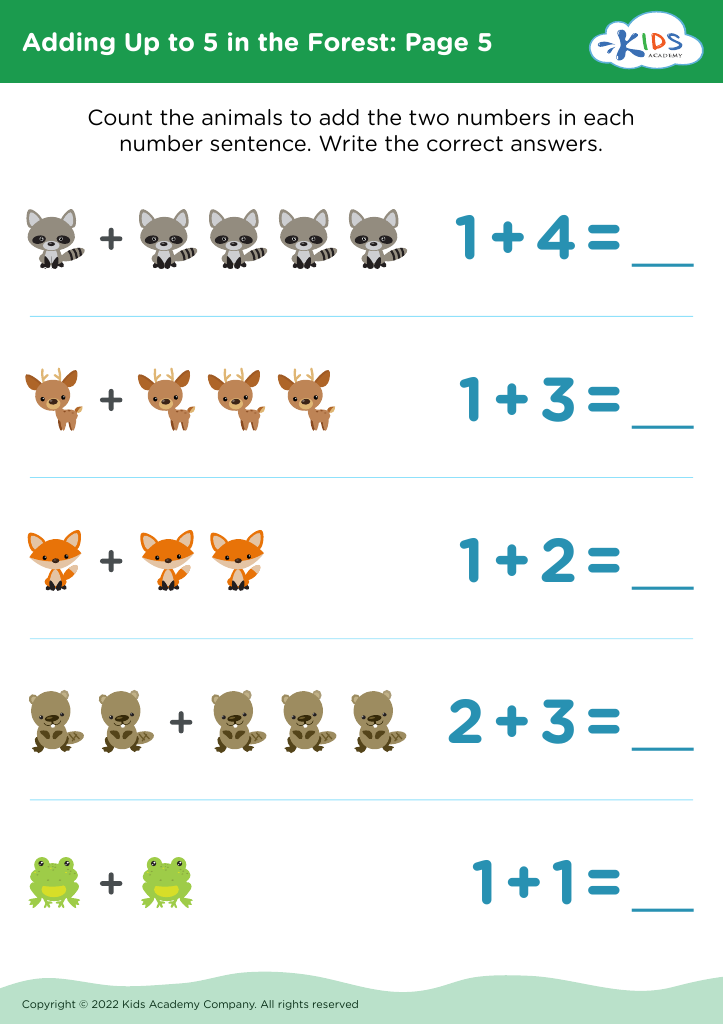
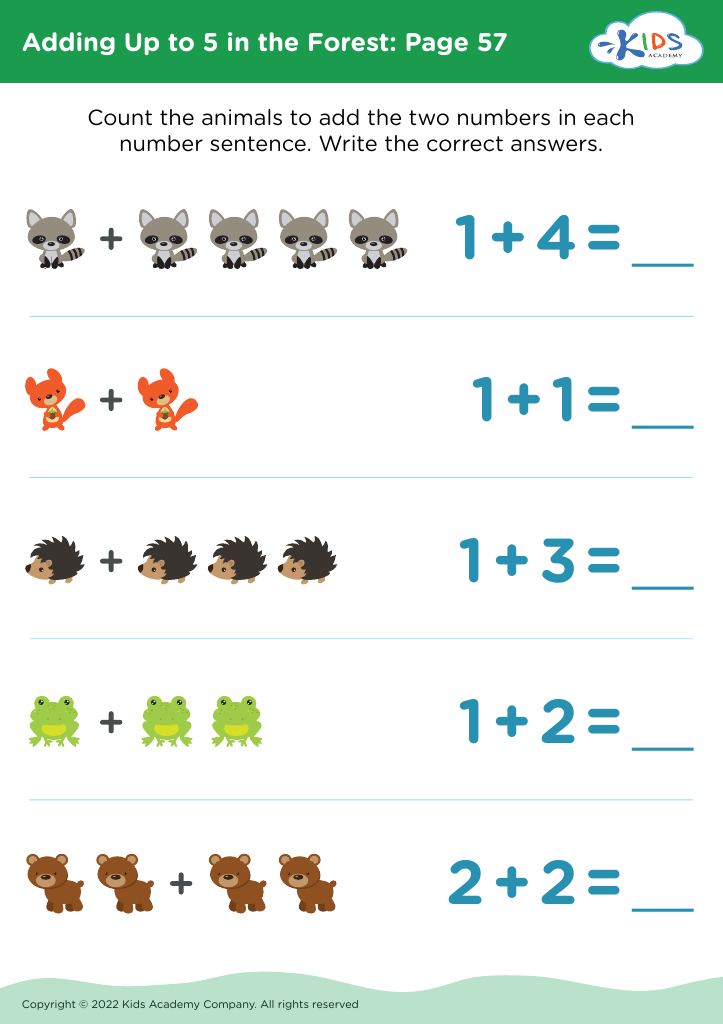


Parents and teachers should care about the concept of animal recognition and preschool math activities in the forest due to their immense educational and developmental benefits for young children. Animal recognition helps to nurture curiosity, observational skills, and affinity towards the natural world. When children identify and learn about different animals, they build crucial cognitive skills such as categorization, memory, and application of knowledge. It promotes linguistic development as they acquire new names and characteristics of animals. Furthermore, it sows seeds of sensitivity and empathy towards living creatures, fostering environmental stewardship from a young age.
Combining this with preschool math activities, like simple addition within the engaging forest theme, amplifies the educational value by integrating multidisciplinary learning. For instance, counting animals or calculating the total number of specific types of animals observed helps children practice fundamental arithmetic skills in a tangible and exciting way. This hands-on and contextual learning ensures that abstract concepts like numbers and operations become more concrete and relatable.
Moreover, spending time in a natural setting like a forest enhances physical health, stimulates the imagination, and reduces stress for children. Integrating environmental elements with traditional curricular goals ensures holistic development, laying a robust foundation for lifelong learning and a well-rounded personality.