Fine motor skills (writing) Preschool Adding in the Forest Worksheets
3 filtered results
-
From - To
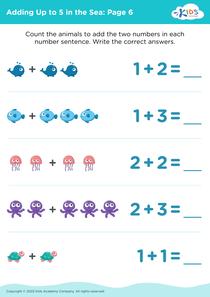
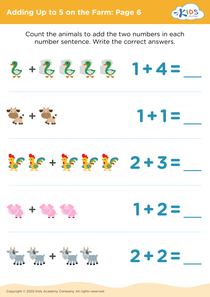
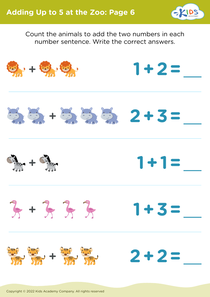
Welcome to our "Fine Motor Skills (writing) Preschool Adding in the Forest Worksheets" page! Designed for young learners, these engaging and educational worksheets bring math to life through charming forest-themed activities. Your preschooler will practice adding numbers while developing essential fine motor skills. Each worksheet encourages little ones to trace, count, and write, seamlessly combining fun and learning. Perfect for both classroom and at-home use, our activities not only support mathematical understanding but also enhance handwriting precision and control. Prepare your child for academic success with our expertly crafted worksheets!
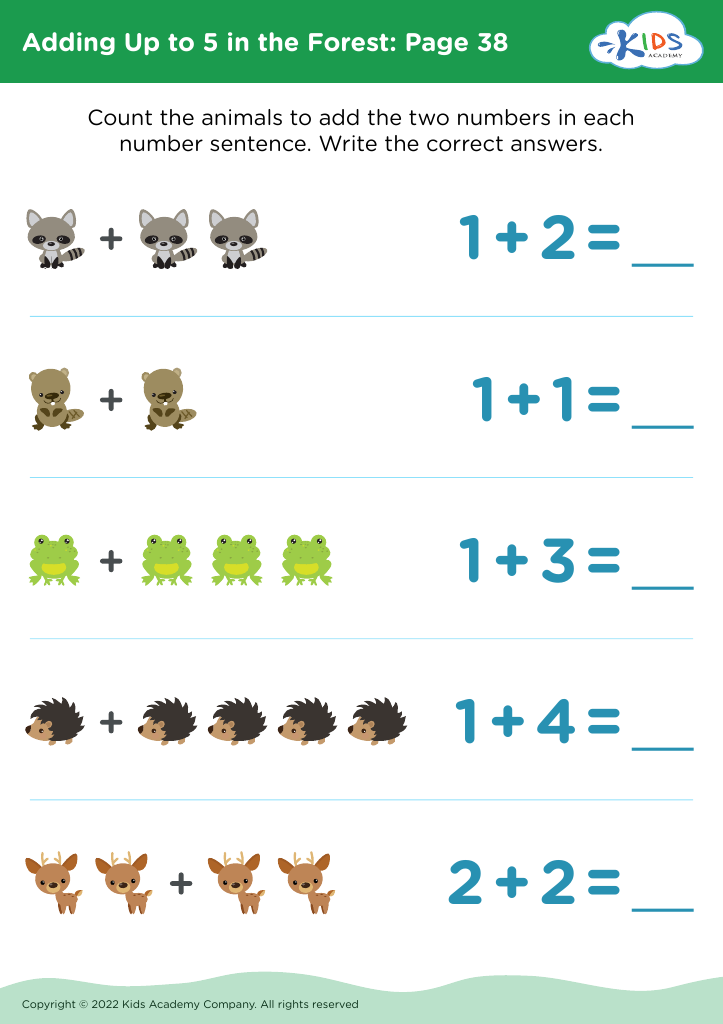
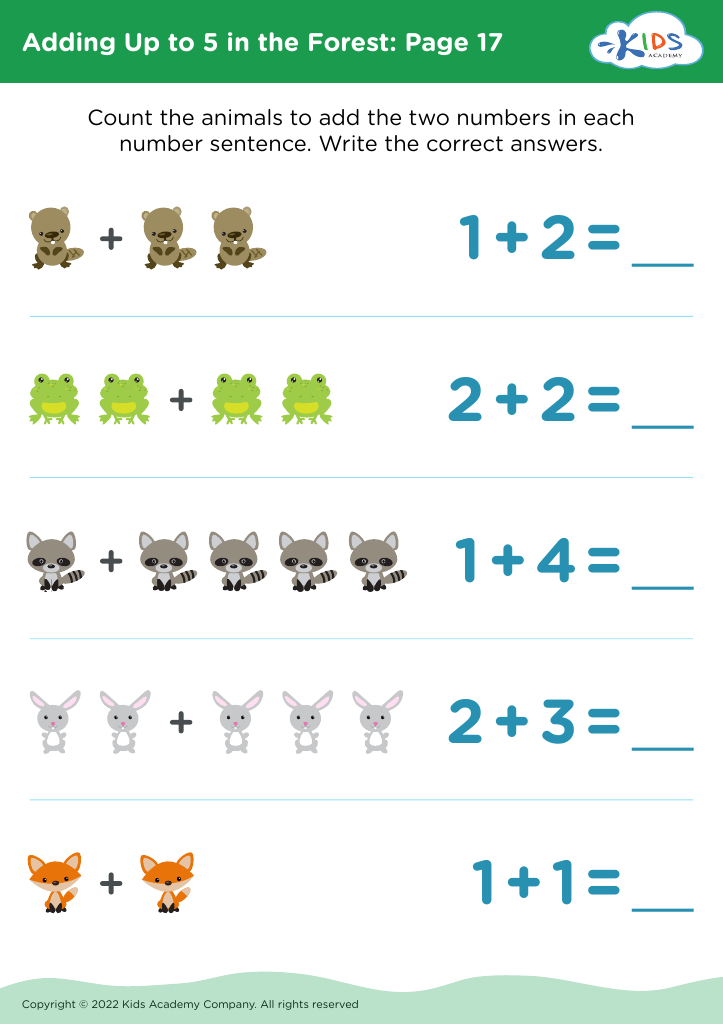
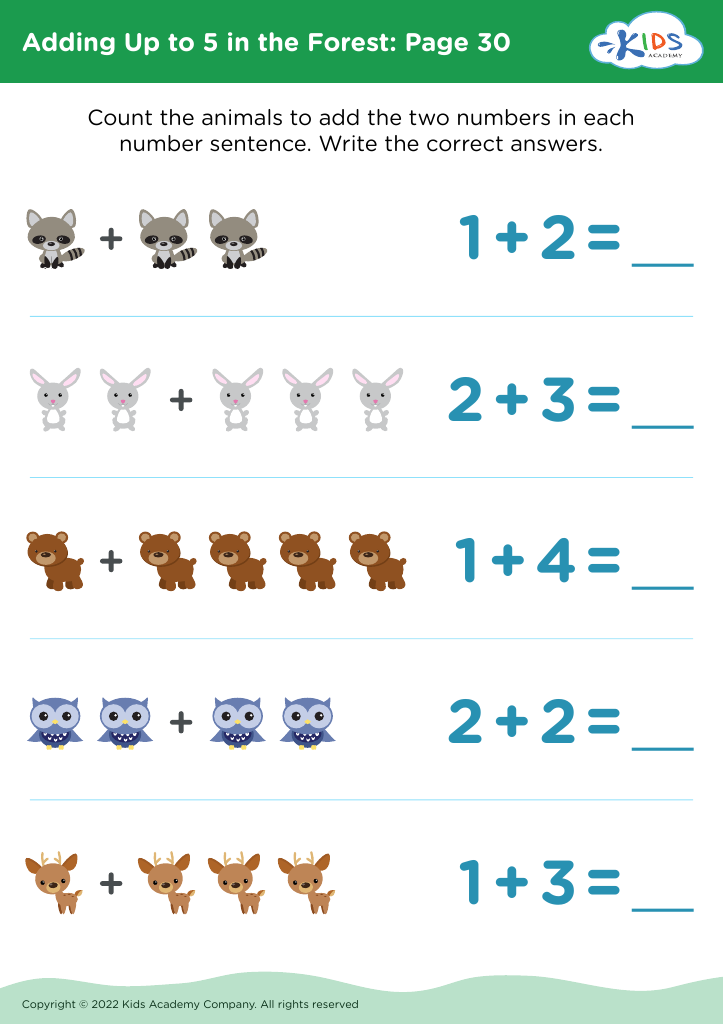


Fine motor skills are essential for young children's overall development, particularly in tasks like writing, which often start in preschool. These skills involve the use of small muscles in the hands, fingers, and wrists and are crucial for handling objects, using tools, and performing precise movements. When parents and teachers focus on developing fine motor skills during preschool years, they lay a foundation for a child's success in school and daily life. Writing activities not only enhance dexterity but also improve hand-eye coordination, concentration, and cognitive skills such as following sequences and understanding patterns.
"Adding in the Forest," or incorporating nature-themed activities into preschool learning, is a creative way to promote fine motor skills. Children can gather leaves, pinecones, or small stones, counting and arranging them as part of their fine motor exercise. This hands-on learning is engaging, making abstract concepts like numbers and addition tangible and relatable. Activities like drawing or tracing leaves also stimulate a child's creative and critical thinking while refining their ability to control writing instruments.
When parents and teachers prioritize these skills, they support a child’s ability to perform vital academic tasks and navigate the world more independently. Encouraging fine motor development through fun, interactive methods sets children on the path to long-term educational and personal success.