Fine motor skills (writing numbers) Preschool Adding in the Sea Worksheets
4 filtered results
-
From - To
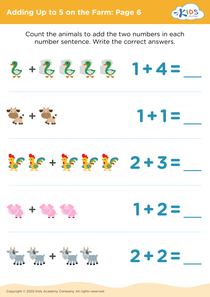
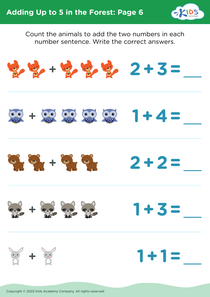
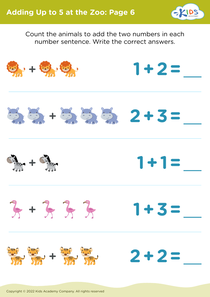
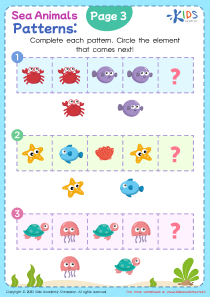
Enhance your preschooler's fine motor skills with our "Adding in the Sea" worksheets! Designed specifically for early learners, these engaging activities focus on writing numbers while exploring fun underwater themes. Each worksheet features vibrant ocean images that captivate children's attention and make learning enjoyable. Children will practice number writing as they solve simple addition problems, improving their coordination and confidence. Ideal for home or classroom use, these worksheets support the development of essential fine motor skills needed for handwriting. Dive into learning with our interactive materials that blend education with creativity, setting the foundation for a successful math journey!
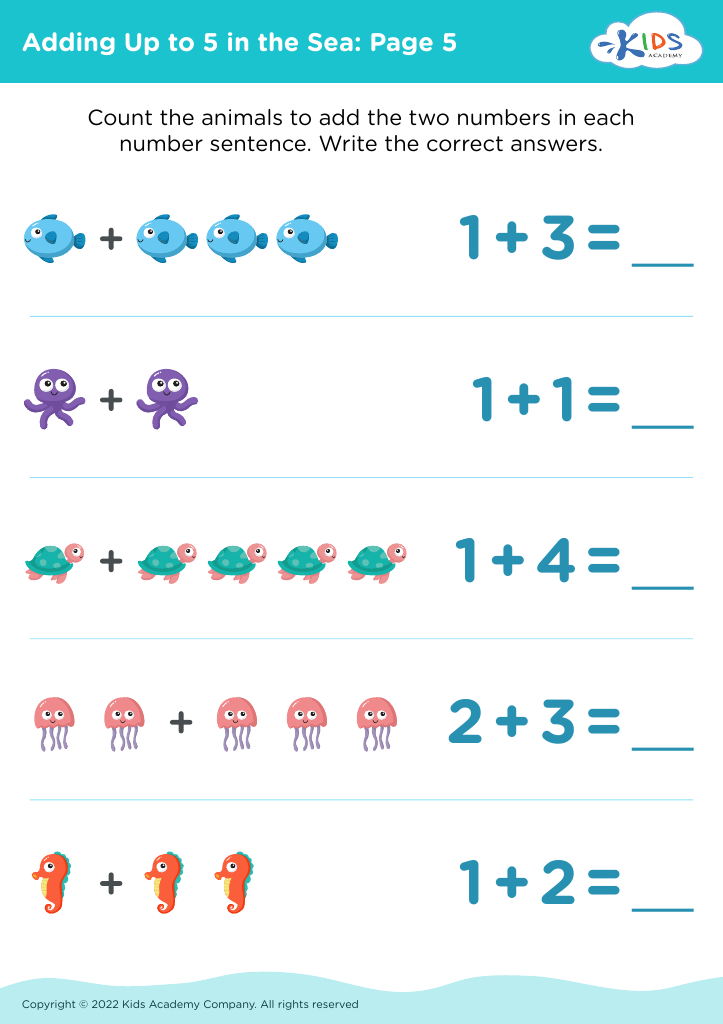
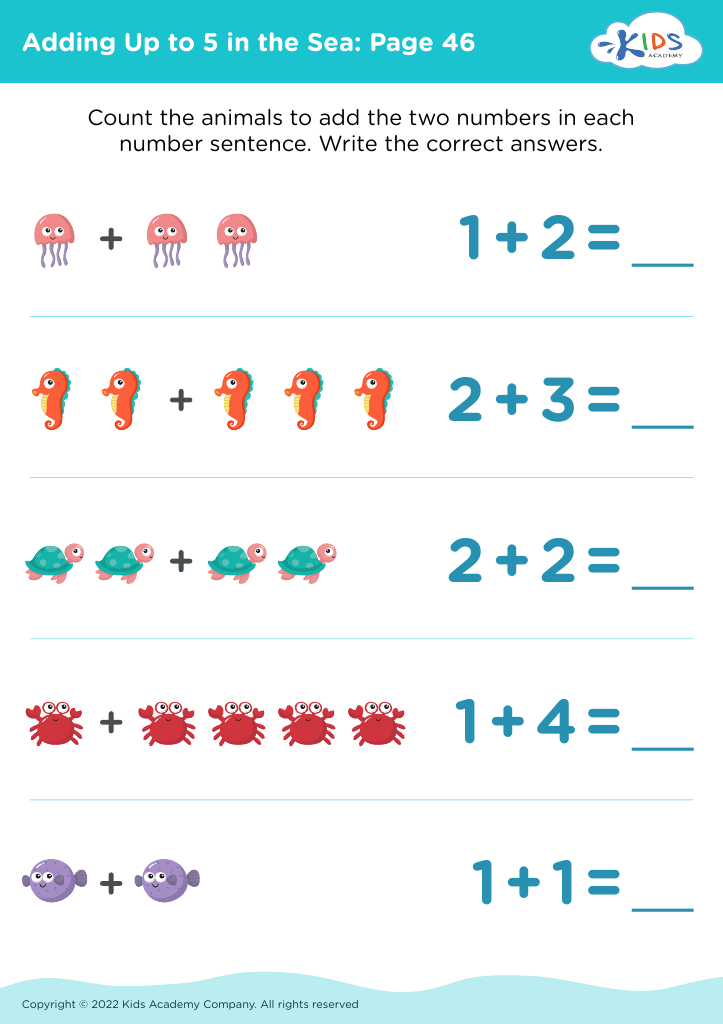
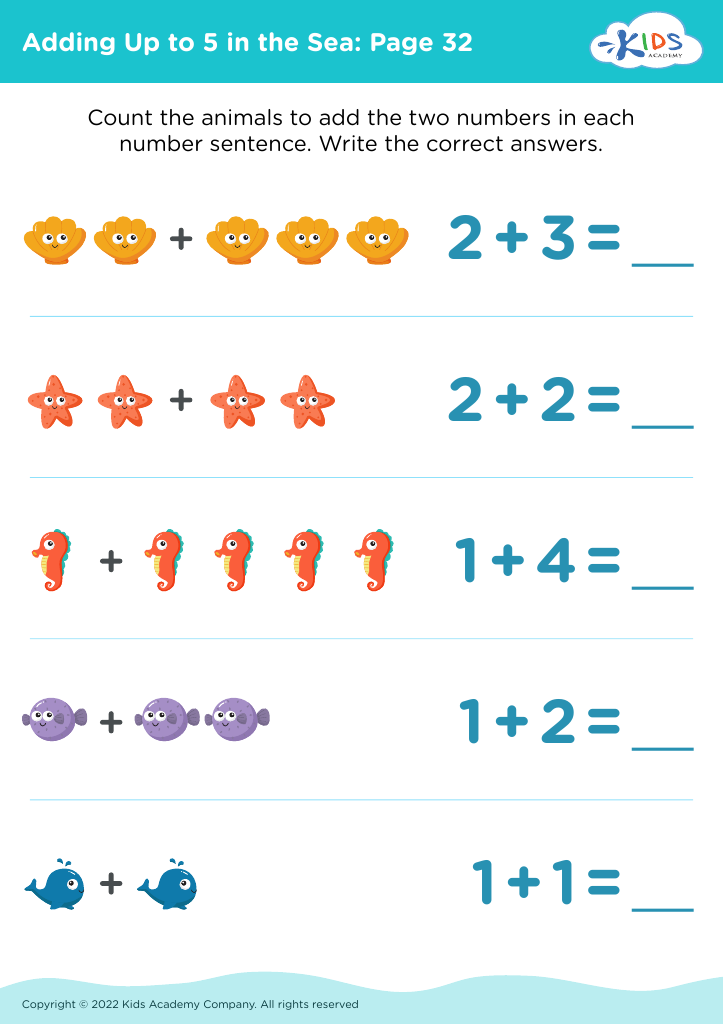
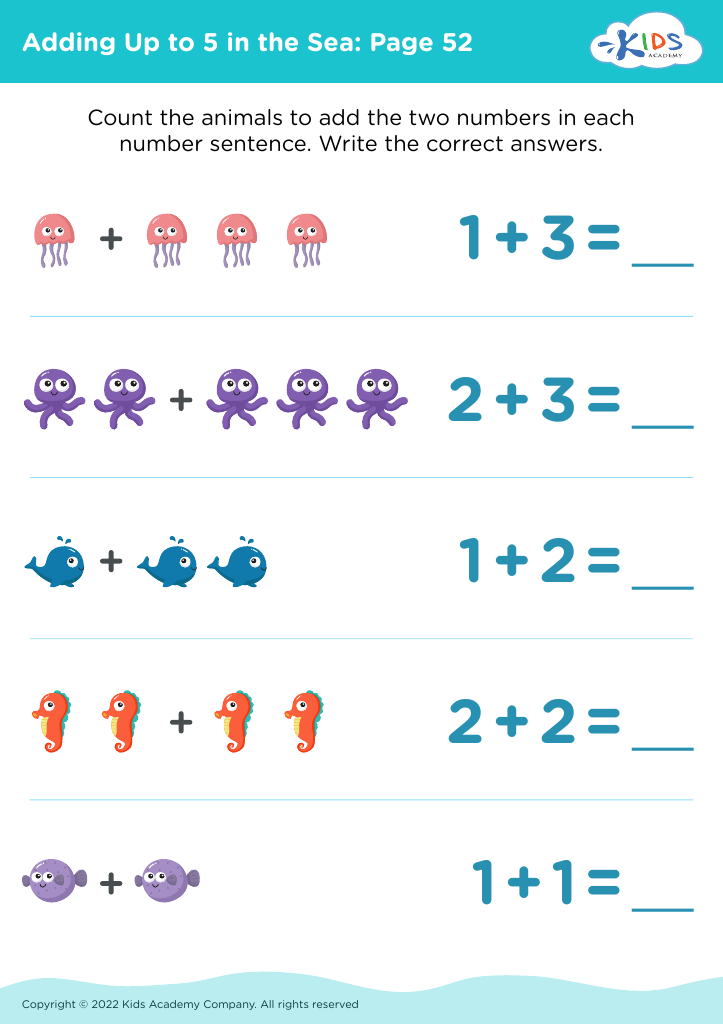


Fine motor skills are crucial for preschool-aged children, particularly when it comes to writing numbers. These skills involve the use of small muscles in the hands and fingers to perform precise movements, essential for writing and other academic tasks. When teaching children through engaging activities, like "Adding in the Sea," educators can capture their interest while promoting fine motor development.
Engaging in activities that combine learning with play, such as using sea-themed manipulatives to form and write numbers, helps children develop strength and coordination in their hands. This playful approach not only reinforces mathematical concepts like addition, but also builds confidence in their ability to express themselves through writing. Fine motor skills facilitate a child's ability to control a pencil, which is fundamental for writing neatly and legibly as they progress in their education.
Moreover, when parents and teachers prioritize fine motor skill development, they are laying a foundation for lifelong learning. Children with strong fine motor skills are more likely to excel in writing, art, and even technology-based tasks in the future. Thus, focusing on these skills is essential for overall academic success and encourages positive attitudes toward learning from an early age.