Animal recognition Preschool Adding on the Farm Worksheets - Page 2
31 filtered results
-
From - To
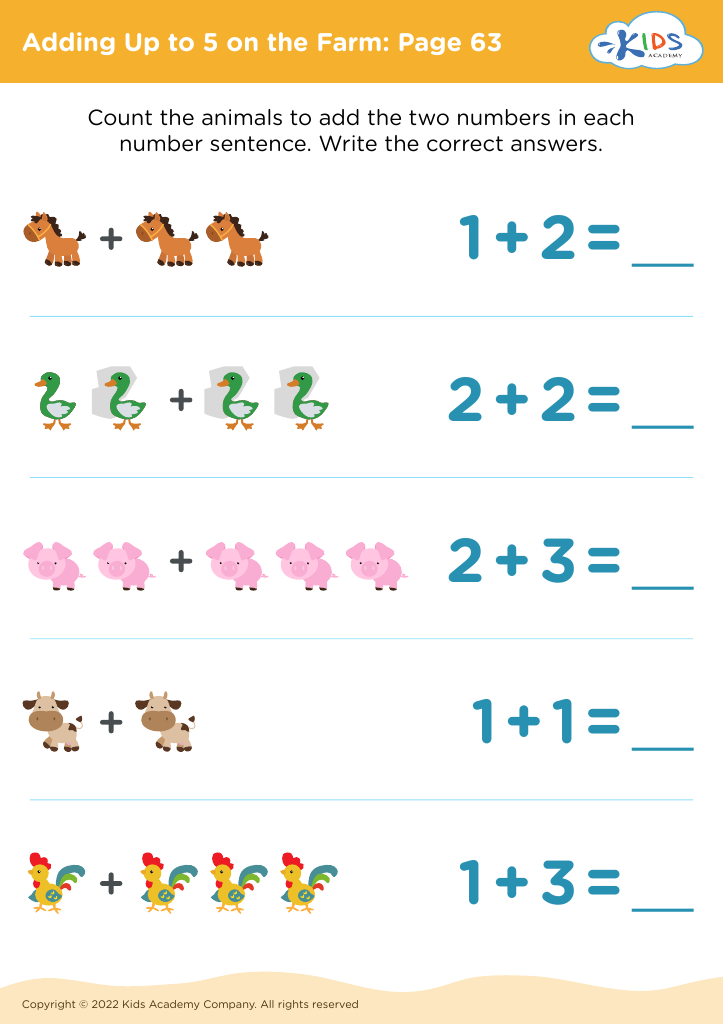
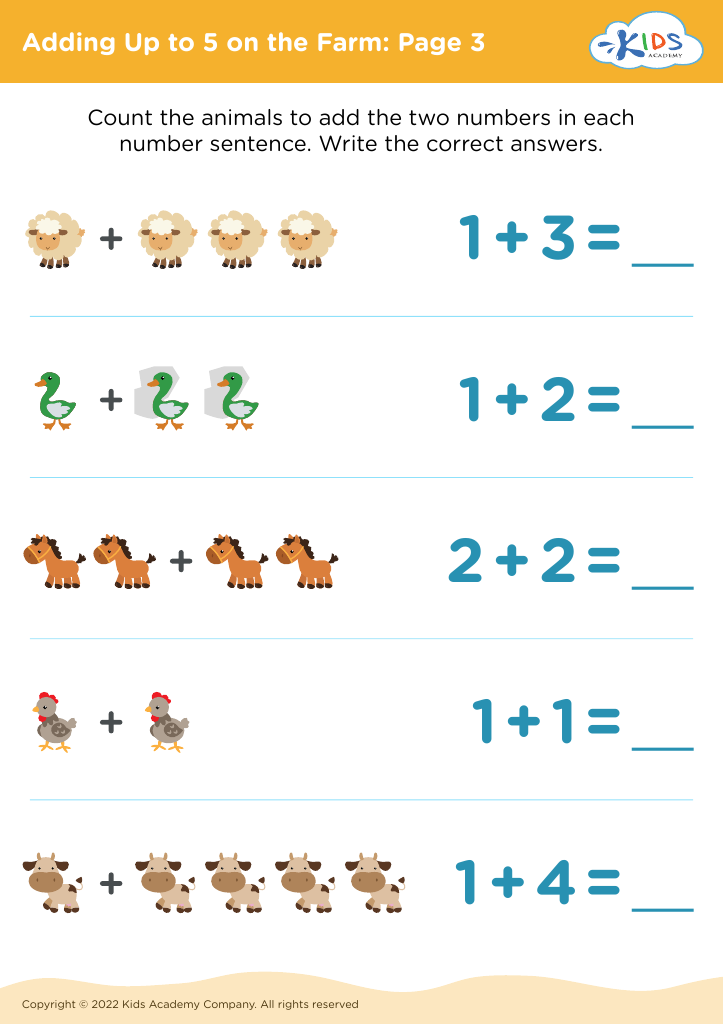
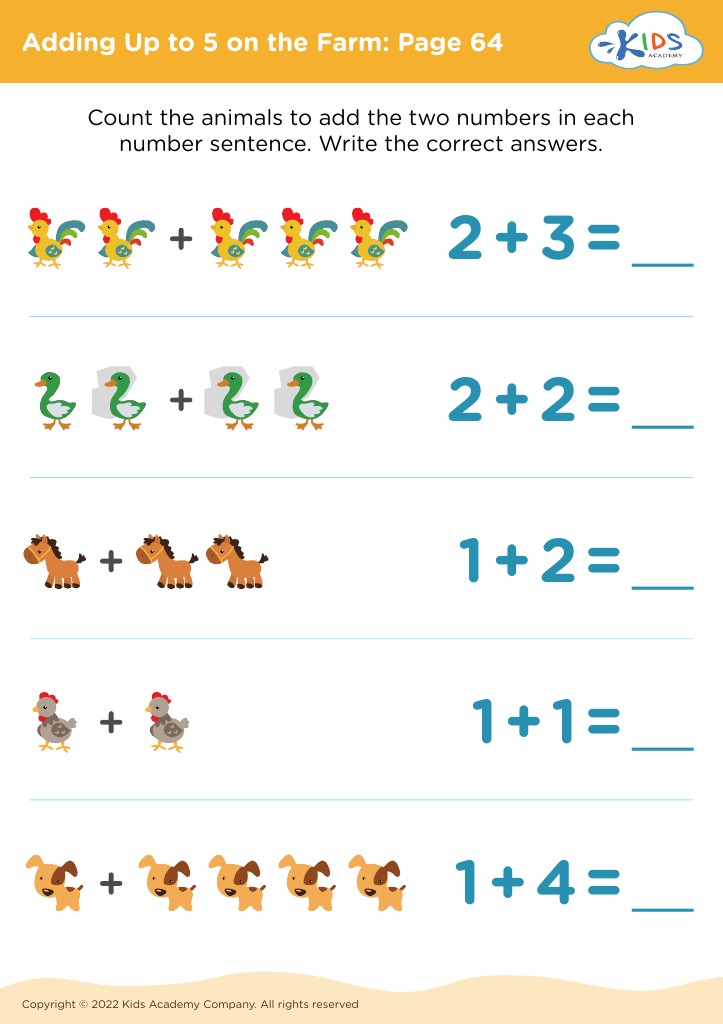
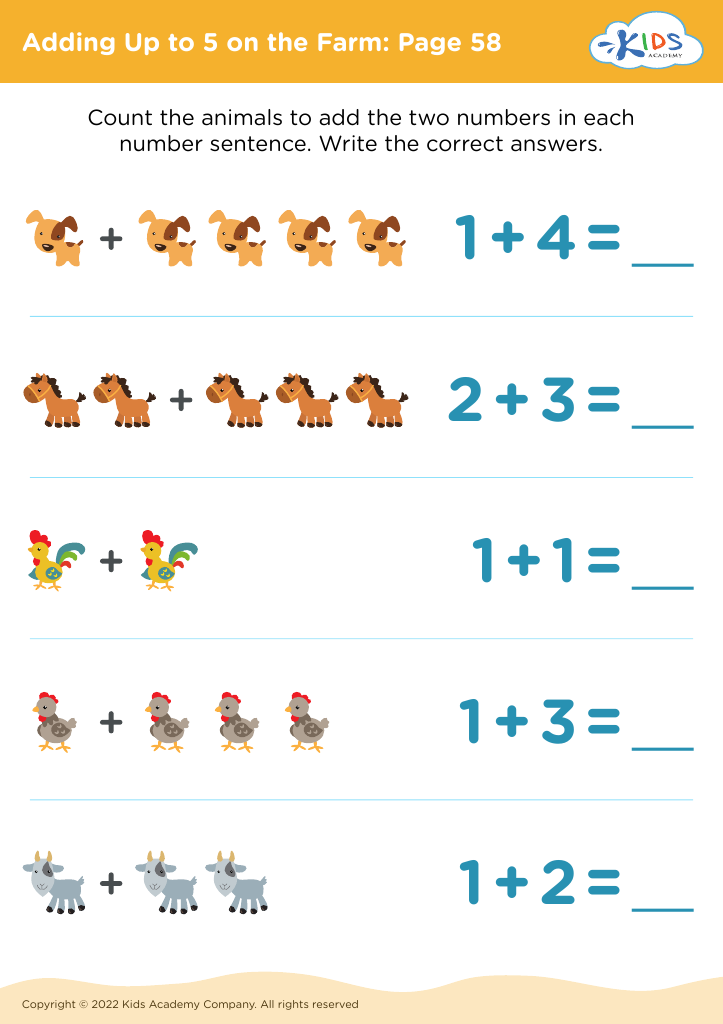
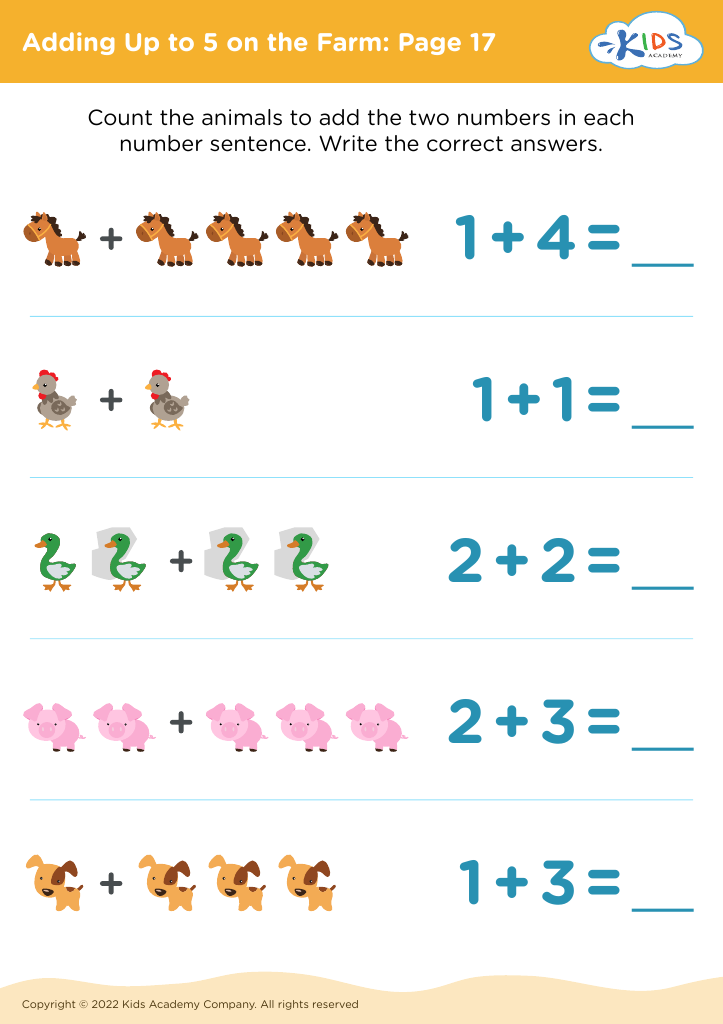
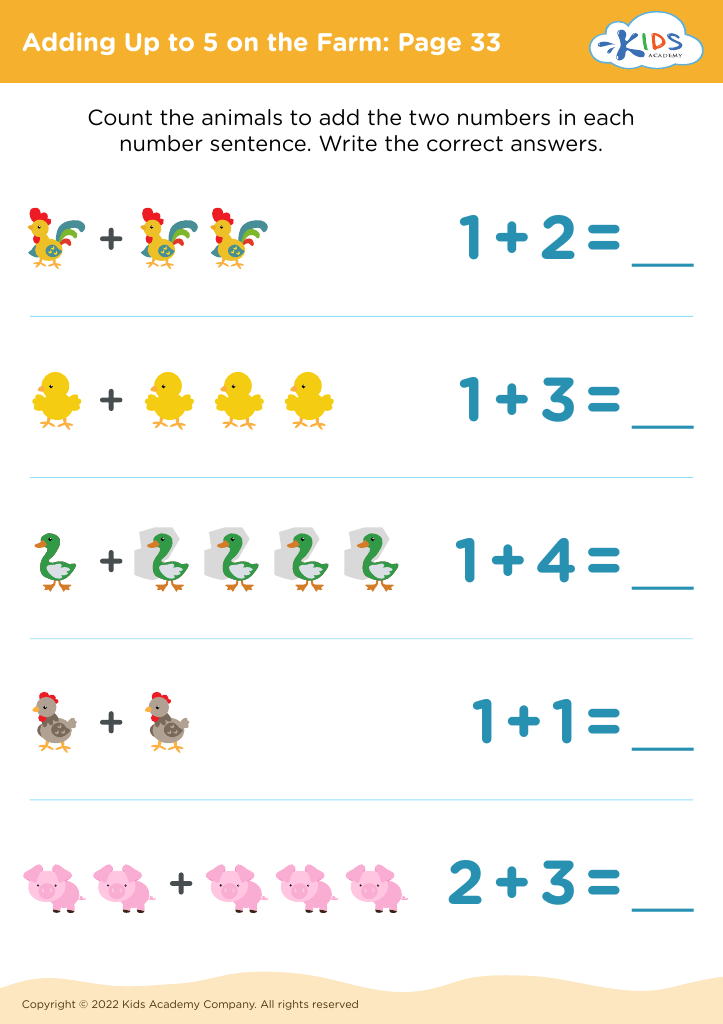
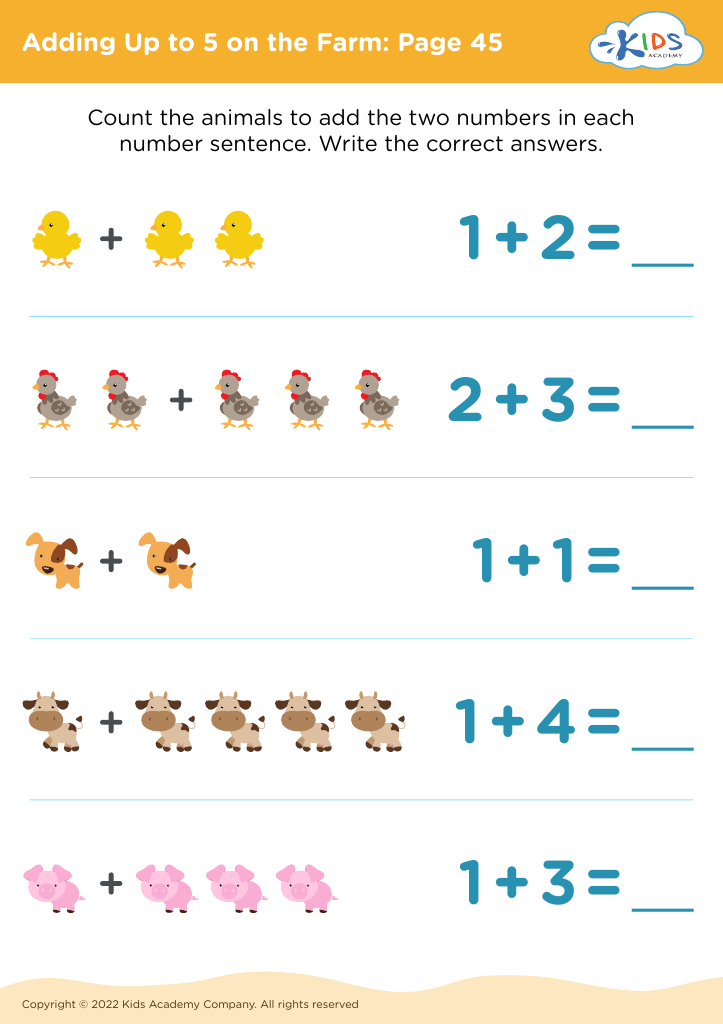


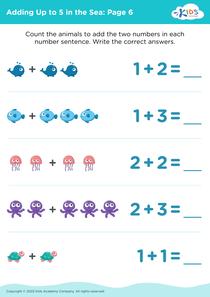
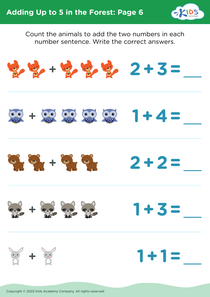
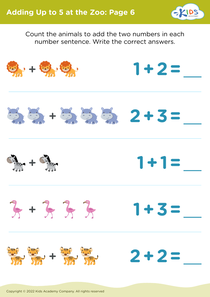
Animal recognition is a crucial aspect of preschool education, especially when incorporating themes like "Adding on the Farm." This approach enriches children’s learning experiences by merging fundamental concepts of math and animal knowledge. Here are some reasons why parents and teachers should prioritize this in early education:
Firstly, animal recognition enhances vocabulary and language skills. As children learn about different farm animals, they simultaneously expand their understanding of words and sounds associated with those creatures.
Secondly, it fosters a connection to nature and understanding of the world around them. Recognizing various animals encourages curiosity and empathy, as children learn not just their names but also their habitats and roles in the ecosystem.
Moreover, integrating animal recognition into math learning, like counting sheep or measuring grain, makes abstract concepts more tangible. Engaging children with relatable contexts allows for better comprehension and retention of math skills.
Finally, activities involving animals can be incredibly fun and engaging, helping to create a positive learning environment. Overall, teaching preschoolers to recognize animals while incorporating counting or adding helps develop essential cognitive, social, and emotional skills that lay the foundation for lifelong learning.