Fine Motor Skills (coloring) Preschool Addition & Subtraction Worksheets
3 filtered results
-
From - To
Discover our engaging Fine Motor Skills (Coloring) Preschool Addition & Subtraction Worksheets, specially designed to make early math learning fun and interactive. These worksheets combine the joys of coloring with essential math skills practice, allowing young learners to strengthen their fine motor skills while mastering basic addition and subtraction. Featuring vibrant, kid-friendly illustrations, these printables are perfect for preschoolers, helping them develop their hand-eye coordination and number sense simultaneously. Foster a love for learning and build a solid math foundation with our delightful and educational worksheets available at Kids Academy.
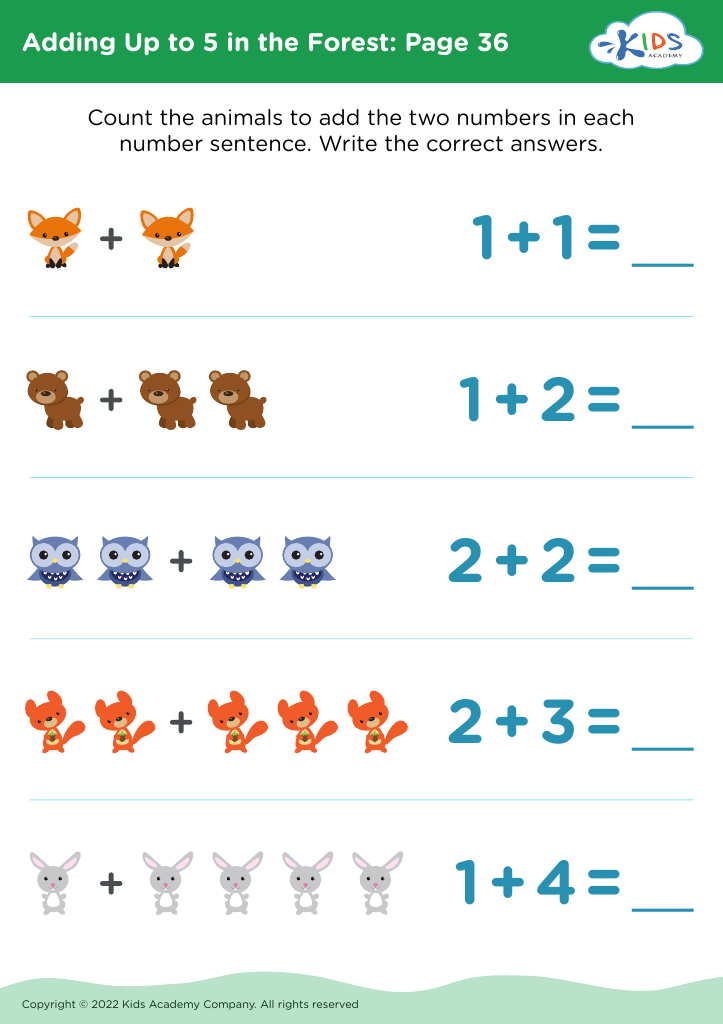
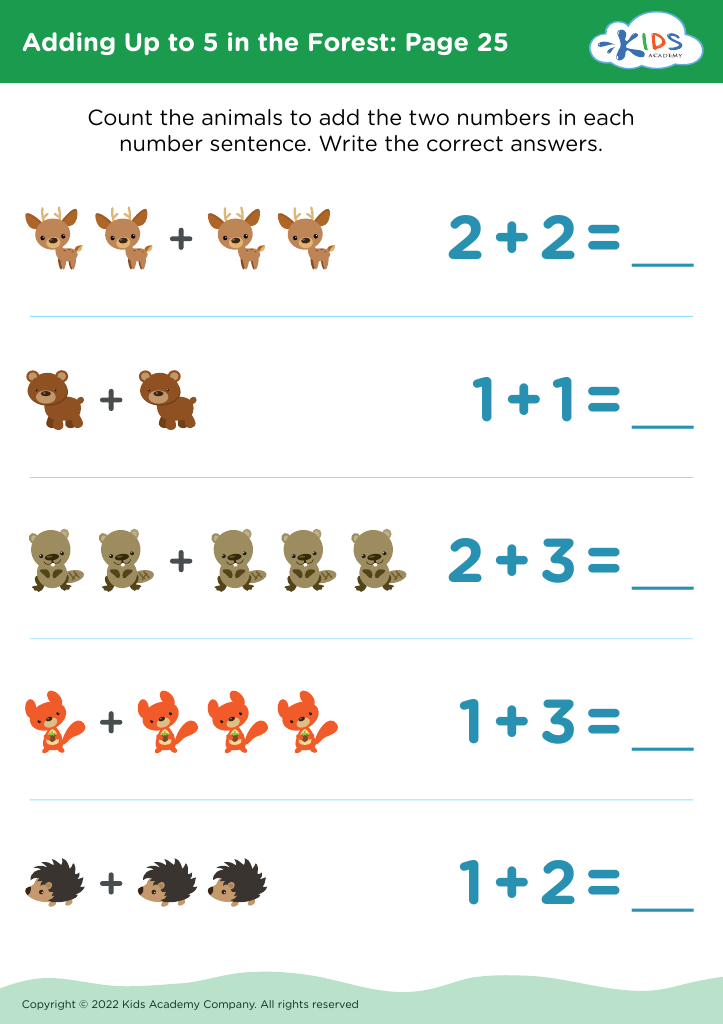
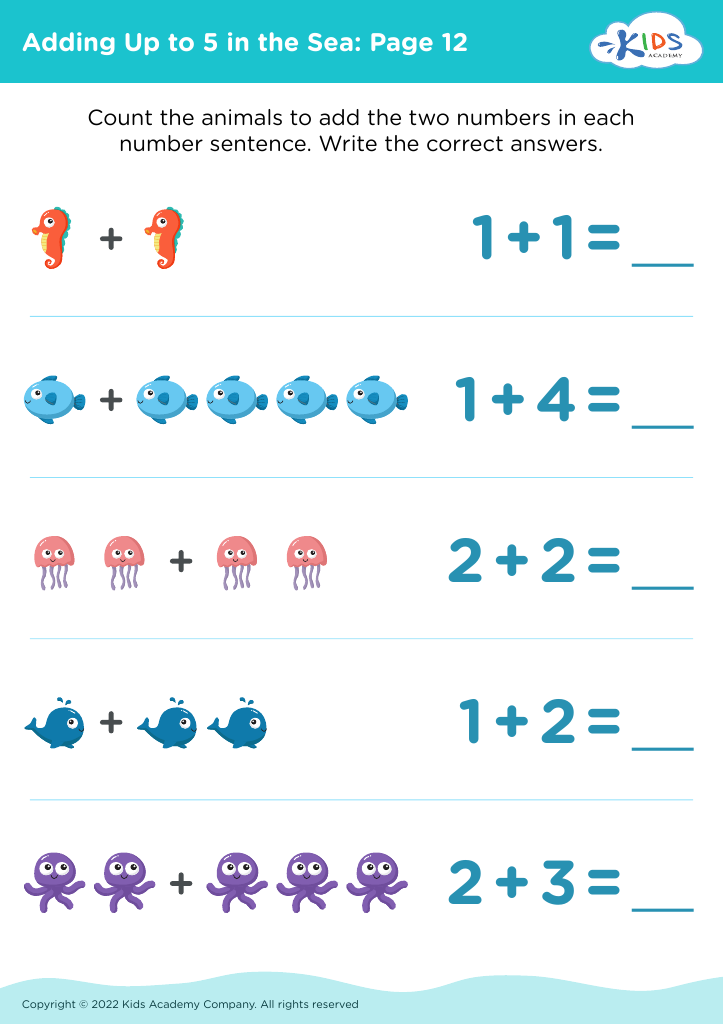








Fine motor skills are essential abilities that enable children to perform tasks that require precise hand and finger movements. For preschoolers, developing fine motor skills is foundational for future academic and daily life activities. Coloring, addition, and subtraction exercises play a pivotal role in enhancing these skills.
When children color, they engage their hand muscles, fine-tune their gripping abilities, and enhance hand-eye coordination. This practice lays the groundwork for writing readiness, enabling smoother transitions when they start to write letters and numbers. Precise coloring within small lines or specific patterns encourages focus and control, directly contributing to developing neat handwriting down the line.
Additionally, combining fine motor development with basic mathematics, such as addition and subtraction, nurtures cognitive skills. These activities introduce children to basic numeracy in an engaging way, fostering early math familiarity. This dual focus of physical and cognitive engagement helps children better understand abstract mathematical concepts through tangible practice, setting them up for long-term academic success.
Overall, prioritizing fine motor skill development through activities like coloring and simple arithmetic is integral. It helps young learners build essential skills seamlessly, fostering their growth and ensuring they have the foundational tools needed for future educational challenges and everyday tasks.