Addition up to 5 Preschool Math Worksheets
4 filtered results
-
From - To
Welcome to our "Addition up to 5 Preschool Math Worksheets" page, where early learners can explore the exciting world of addition! Designed for children ages 3-5, these engaging worksheets introduce fundamental math concepts through colorful visuals and interactive problem-solving. Your preschooler will enjoy counting fun objects, completing simple addition sentences, and building a solid foundation in mathematics. Each worksheet reinforces critical thinking and enhances fine motor skills, making learning both effective and enjoyable. Perfect for home or classroom use, these resources are equipped with easy-to-follow instructions to support young learners as they embark on their math journey. Start counting today!
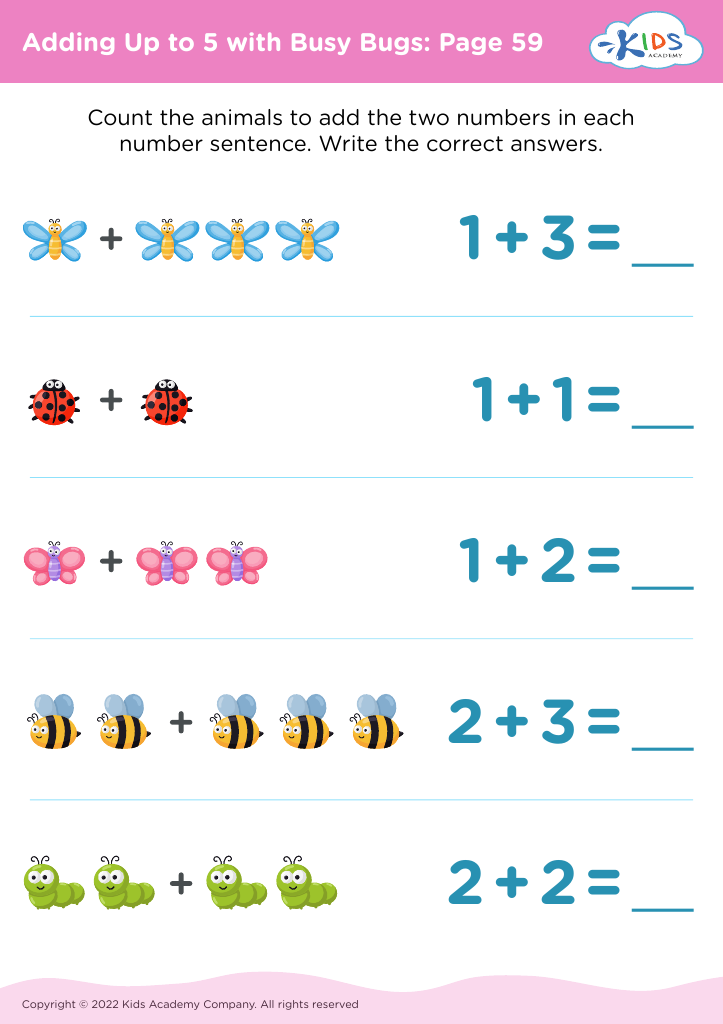
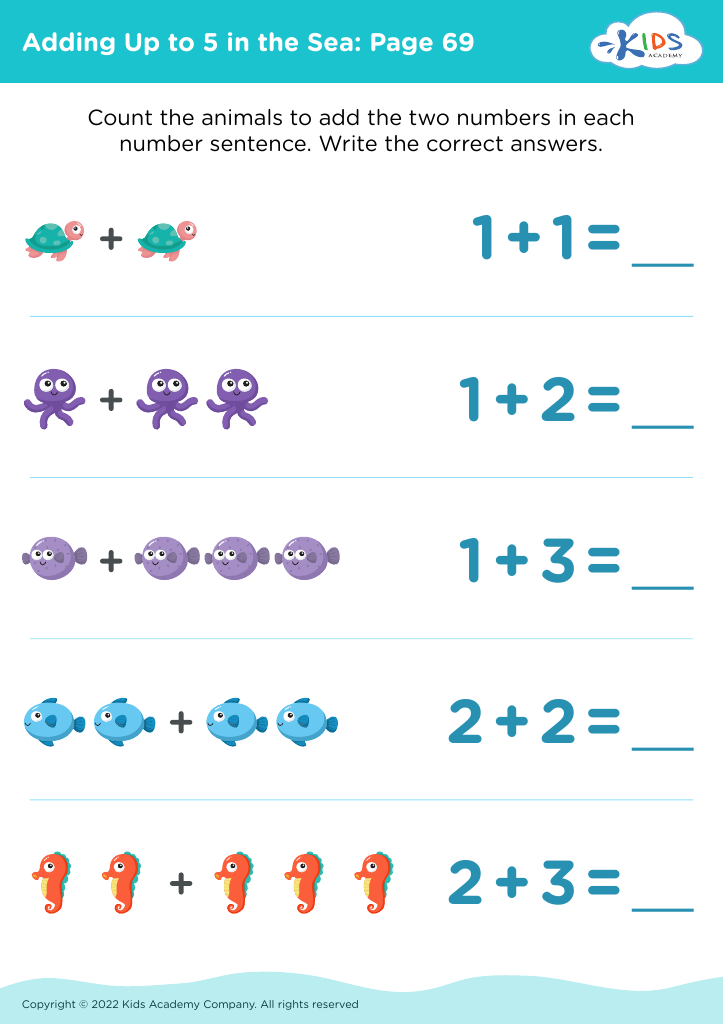
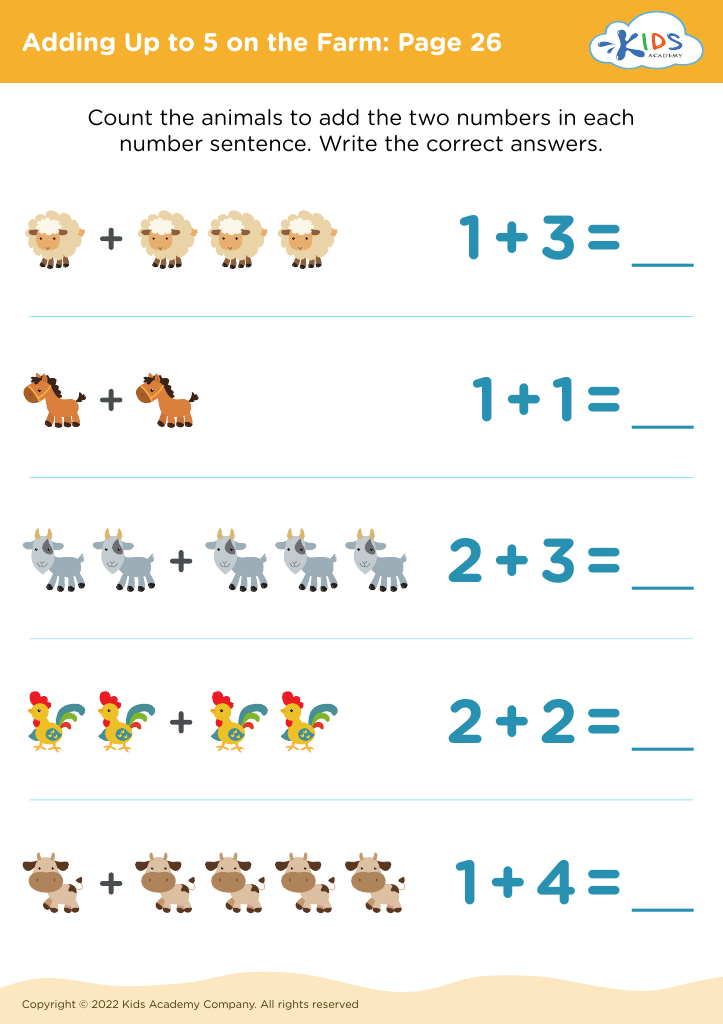
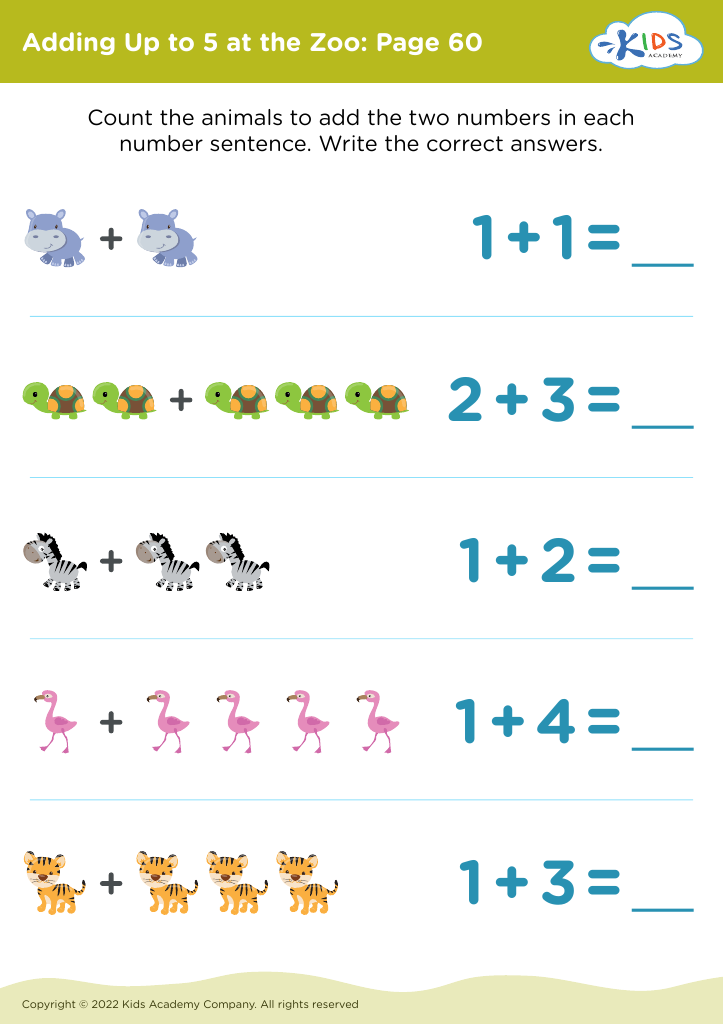







Parents and teachers should prioritize teaching addition up to 5 in preschool math for several important reasons. First, it lays a strong foundation for future mathematical learning. Mastering basic addition helps children develop numeracy skills that are essential for understanding more complex mathematical concepts later on. Second, early exposure to addition enhances cognitive development. Engaging with numbers promotes critical thinking, problem-solving, and analytical skills, which are valuable in all areas of learning.
Additionally, mastering addition up to 5 supports confidence in young learners. When children successfully solve simple addition problems, they experience a sense of achievement that encourages them to tackle more challenging tasks. This positive reinforcement helps build a love for learning and a positive attitude toward math.
Furthermore, teaching addition within this range can be made fun and engaging through games, songs, and hands-on activities. This playful approach can foster a positive association with math from a young age.
Finally, addition up to 5 introduces concepts of quantity and relationships, helping children understand their world better. By grasping these basic math skills, preschoolers can improve their ability to reason and make comparisons, essential skills for their everyday lives and academic journeys.