Developing fine motor skills Preschool Math Worksheets
3 filtered results
-
From - To
Enhance your preschooler's fine motor skills with our specially designed math worksheets. These printables from Kids Academy combine playful activities with educational content to foster essential skills in young learners. Crafted with engaging graphics and straightforward exercises, our worksheets help children improve hand-eye coordination, pencil control, and dexterity. Your child will enjoy counting, tracing numbers, and recognizing shapes while building the foundation for successful handwriting and daily tasks. Promote both academic and motor development with these effective preschool math worksheets. Visit Kids Academy to access our innovative resources and start your child on the path to learning excellence.
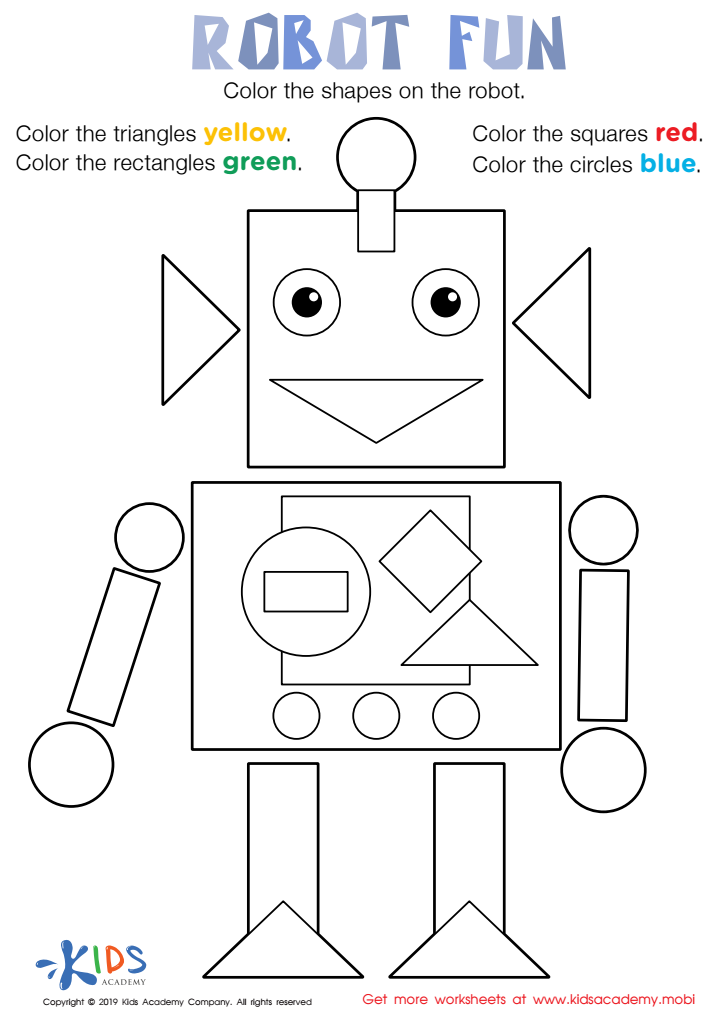
Robot Fun Worksheet
 Assign to My Students


.jpg)





Developing fine motor skills and preschool math skills is crucial for a child's overall development and academic success. Fine motor skills involve the coordination of small muscles, usually in the hands and fingers, allowing children to perform essential tasks such as writing, buttoning clothes, and using scissors. These skills are foundational for more complex actions, contributing significantly to a child's independence and self-esteem. Early proficiency in fine motor skills can prevent frustration and promote a positive attitude towards learning.
In parallel, preschool math skills form the basis for future mathematical understanding. Early math proficiency is a strong predictor of later academic achievement, not only in math but also in reading and other core subjects. Engaging children in counting, sorting, and basic problem-solving activities enhances their cognitive abilities and encourages logical thinking from a young age.
Integrating fine motor skill development with preschool math activities provides dual benefits. When children count beads, trace numbers, or complete puzzles, they simultaneously refine their motor coordination and build early mathematical concepts. This combined approach nurtures a well-rounded, competent learner prepared for the structured challenges of formal education. Therefore, parents and teachers must prioritize these skill sets to foster a child's immediate and long-term scholastic and personal growth.