Fine motor development Preschool Math Worksheets
3 filtered results
Difficulty Level
Grade
Age
-
From - To
Subject
Activity
Standards
Enhance your preschooler’s math skills while boosting their fine motor development with our engaging worksheets! Designed for young learners, these resources feature fun activities that encourage children to practice their hand-eye coordination, dexterity, and creativity. From tracing numbers to connecting dots, each worksheet seamlessly integrates essential math concepts with fine motor exercises. Our worksheets are perfect for home or classroom use, helping preschoolers build confidence in both their math abilities and motor skills. Explore our diverse range of activities tailored for early learners and watch your child thrive as they develop crucial skills essential for future academic success! Start the journey today!
Favorites
With answer key
Interactive
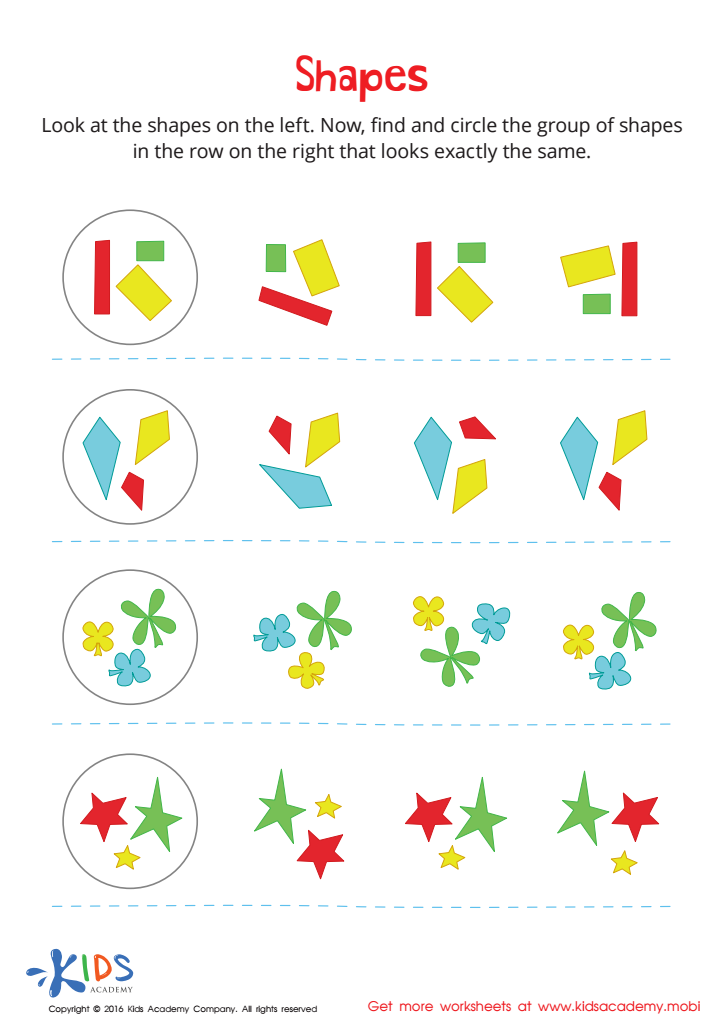
Shapes Worksheet
This fun worksheet will challenge your child to recognize tricky patterns, sort through similar ones, and create strategies to get the right answer. It'll also help them to strengthen problem-solving skills and build confidence. With more challenging tasks, your child will be ready to tackle higher level math and sequencing skills.
 Assign to My Students
Shapes Worksheet
Worksheet
Join Kids Academy for Free
Who is primarily going to use this learning content?






.jpg)

Fine motor development is crucial for preschool children as it lays the foundation for various skills, including handwriting, self-care, and overall academic success. Fine motor skills involve the coordination of tiny muscles in the hands and fingers, which enable children to perform tasks such as writing, cutting, fastening buttons, and manipulating small objects. When children refine these skills, they not only gain independence but also build the confidence to tackle more complex activities.
Incorporating fine motor activities into preschool math enhances this development while reinforcing mathematical concepts. For instance, using manipulatives like counters, blocks, or shapes encourages children to practice counting, sorting, and recognizing patterns, all while strengthening their grip and dexterity.
Moreover, engaging in fine motor tasks helps improve a child's focus and concentration—essential qualities for understanding math concepts. Research has shown that early experiences with hands-on activities lead to better cognitive outcomes in later grades. By prioritizing fine motor development within the context of math, both parents and teachers can contribute to a child's holistic growth, ensuring they are equipped with critical skills for success in school and life. This symbiotic approach fosters a love for learning and aids in the development of a well-rounded individual.