Weather identification Preschool World Around Us Worksheets
4 filtered results
-
From - To
Explore the "Weather Identification Preschool World Around Us Worksheets," designed to engage young learners in discovering various weather patterns! Tailored for preschoolers, these worksheets encourage children to recognize and classify different forms of weather, such as sunny, rainy, snowy, and windy. Through fun activities, children enhance their observational skills and vocabulary while developing a deeper understanding of the environment around them. Ideal for parents and educators, these printable resources offer a delightful way to introduce essential science concepts in an interactive format. Foster curiosity and a love for learning about nature with these enriching weather identification activities today!
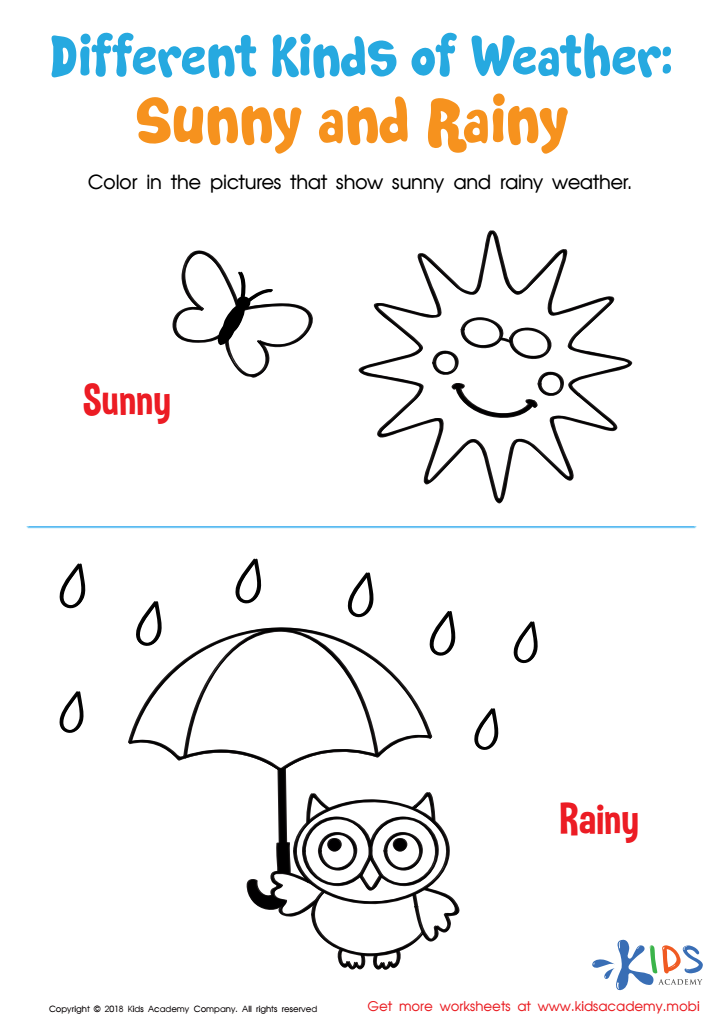
Different Kinds of Weather: Sunny and Rainy Worksheet
 Assign to My Students
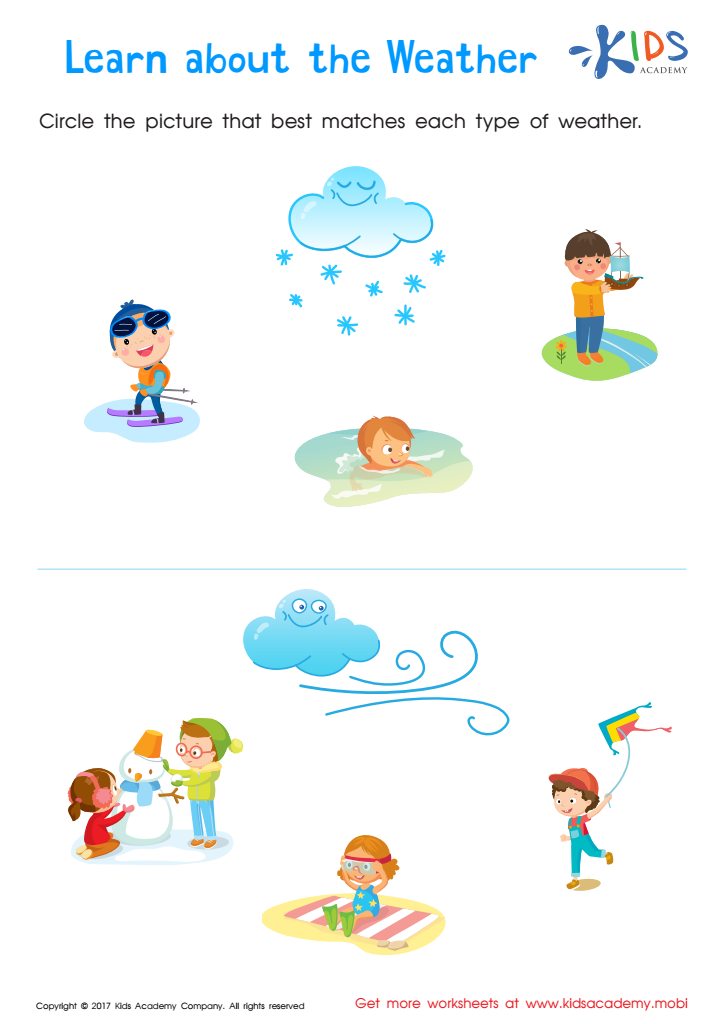
About the Weather Printable
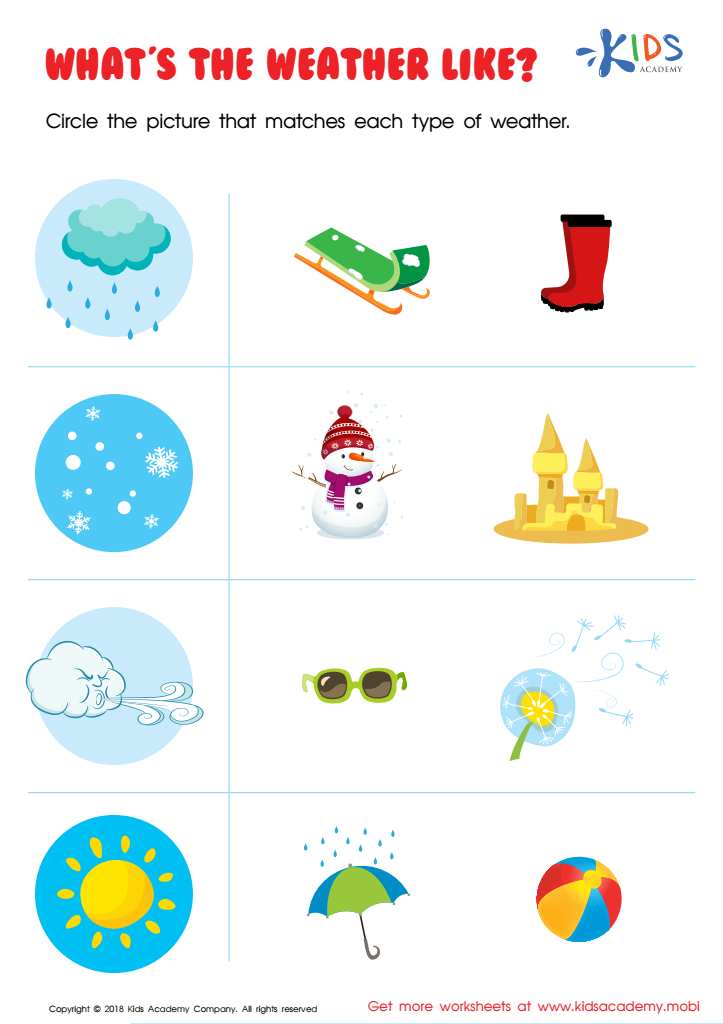
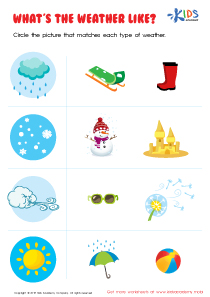
What's the Weather Like? Worksheet
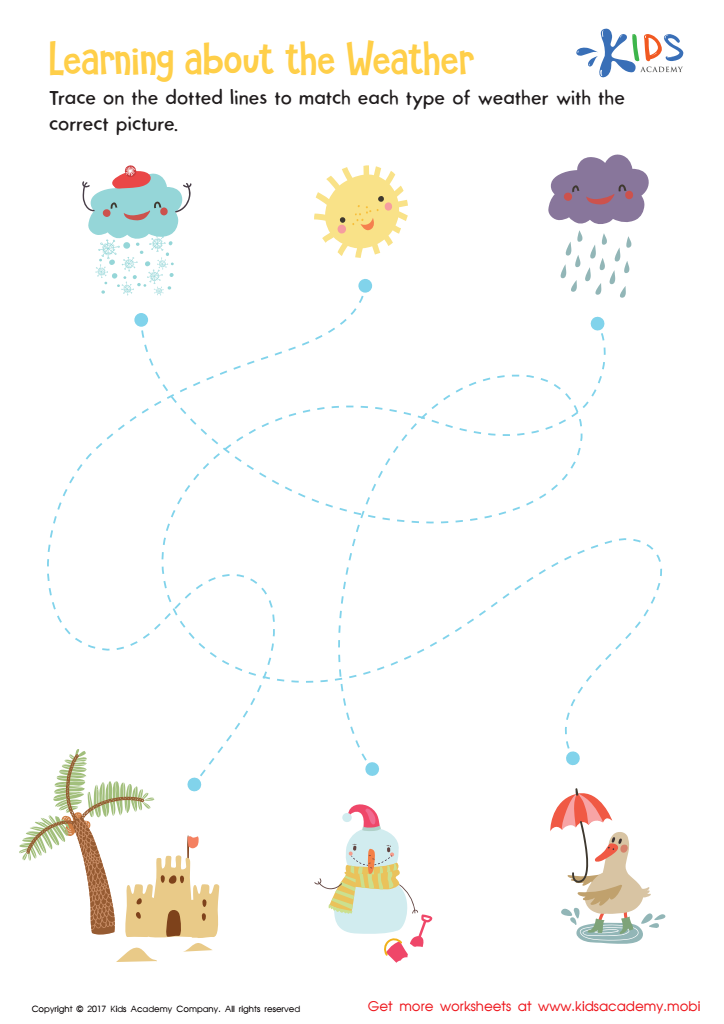







Weather identification is a crucial aspect of early childhood education that impacts a child's understanding of the world around them. Parents and teachers should prioritize teaching weather concepts for several reasons. Firstly, it fosters observation skills; children learn to notice changes in their environment, enhancing their cognitive development. Recognizing weather patterns—sunny, rainy, windy, or snowy—helps children make connections between their surroundings and everyday activities.
Understanding the weather also encourages critical thinking. As children learn to identify weather conditions, they begin to predict how it will affect their day-to-day life, such as deciding what to wear or planning outdoor activities. This practice nurtures decision-making and problem-solving skills, essential for their overall growth.
Additionally, weather themes can introduce science concepts in a fun and accessible way, sparking curiosity about nature. It serves as a gateway to conversations about climate, seasons, and the planet, igniting an interest in environmental stewardship early in life.
Finally, discussing weather enhances language development as children learn new vocabulary related to meteorology. By integrating weather identification into the preschool curriculum, educators and parents can create enriched learning experiences that support holistic childhood development, building a foundation for future learning.