Letter recognition Grade 2 Tracing Letters Worksheets - Page 2
26 filtered results
-
From - To
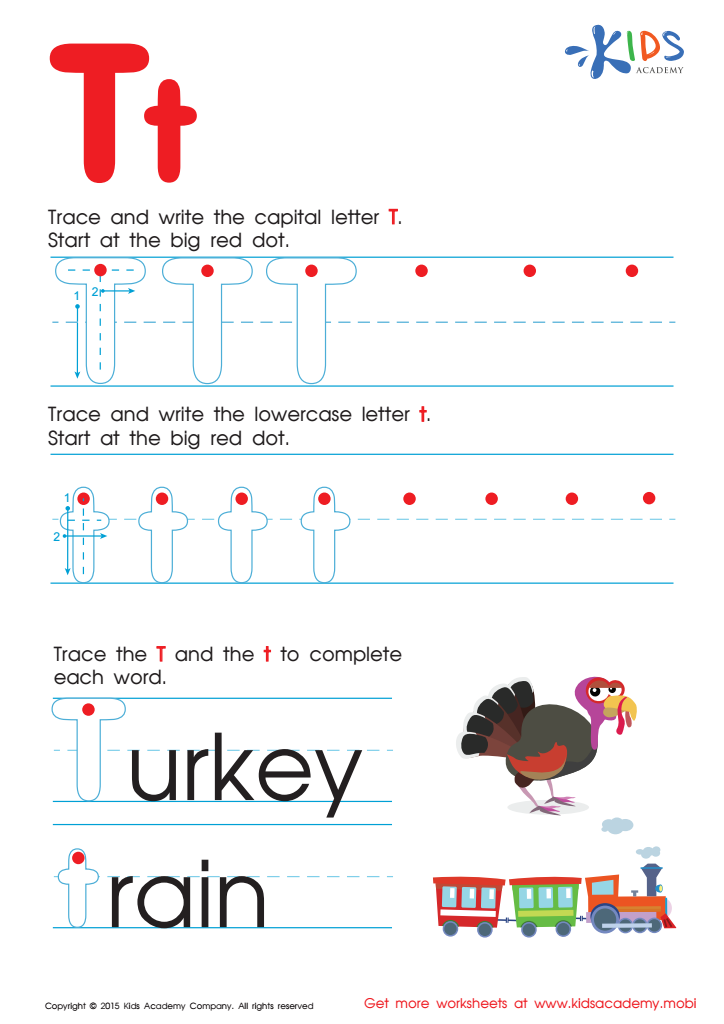
Letter T Tracing Page
 Assign to My Students

Letter D Tracing Page




Letter recognition is a crucial skill for Grade 2 students as it lays the foundation for literacy development. At this stage, children are transitioning from learning to read to reading to learn, making letter recognition increasingly important. Tracing letters helps reinforce these skills through a hands-on, interactive experience that engages students in active learning.
Parents and teachers should prioritize letter tracing because it enhances fine motor skills, gears students for more complex writing tasks, and builds confidence in their writing abilities. When children trace letters, they learn proper letter formation and improve their writing speed and legibility, which are essential for academic success. Additionally, by understanding the relationship between letters and sounds, students develop phonemic awareness, which is fundamental for reading proficiency.
Moreover, recognizing letters supports vocabulary development and comprehension skills as children encounter and use new words in their reading and writing. Engaging in letter tracing activities also promotes a love for learning, as children often enjoy the tactile nature of writing with pencils or crayons. Ultimately, fostering letter recognition through tracing prepares children for future academic challenges and instills a sense of accomplishment as they progress in their literacy journey.