Counting skills Grade 2 Adding up to 100 Misc Worksheets
7 filtered results
-
From - To
Boost your second grader's arithmetic prowess with our "Counting Skills Grade 2: Adding up to 100 Misc Worksheets." These engaging and diverse exercises are designed to strengthen counting and addition skills, making math fun and approachable. From colorful puzzles to practical word problems, each worksheet provides an opportunity to enhance fluency in adding numbers up to 100. Crafted by educational experts, these resources support learning objectives and cater to different learning styles. Ideal for both classroom use and at-home practice, our worksheets will help young learners build a solid numerical foundation, boosting their confidence in math.
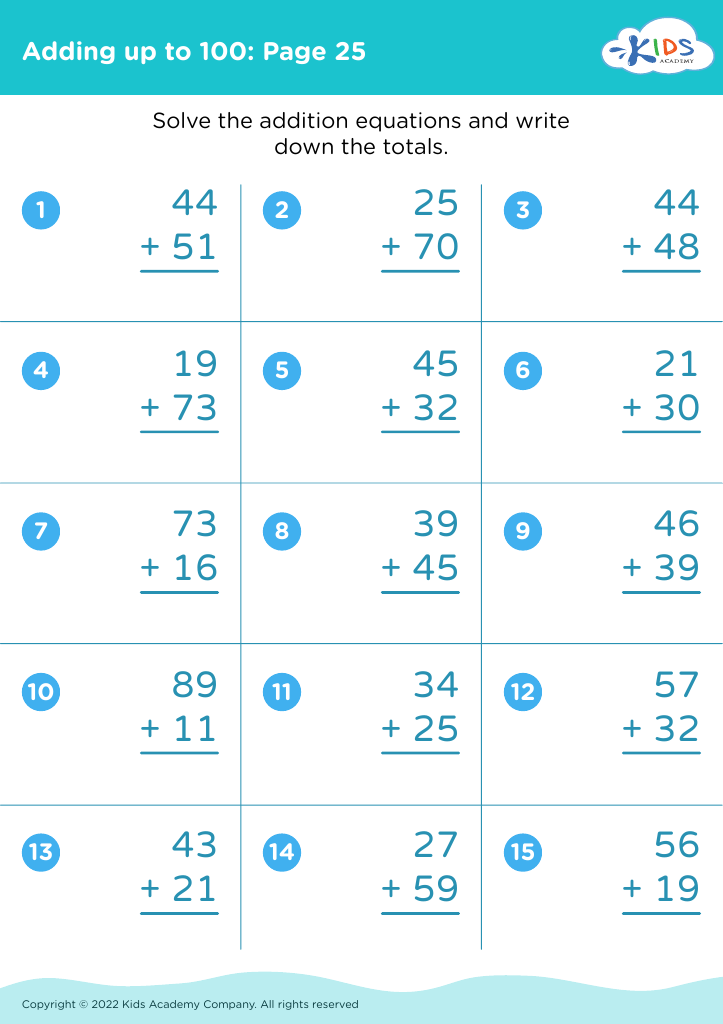
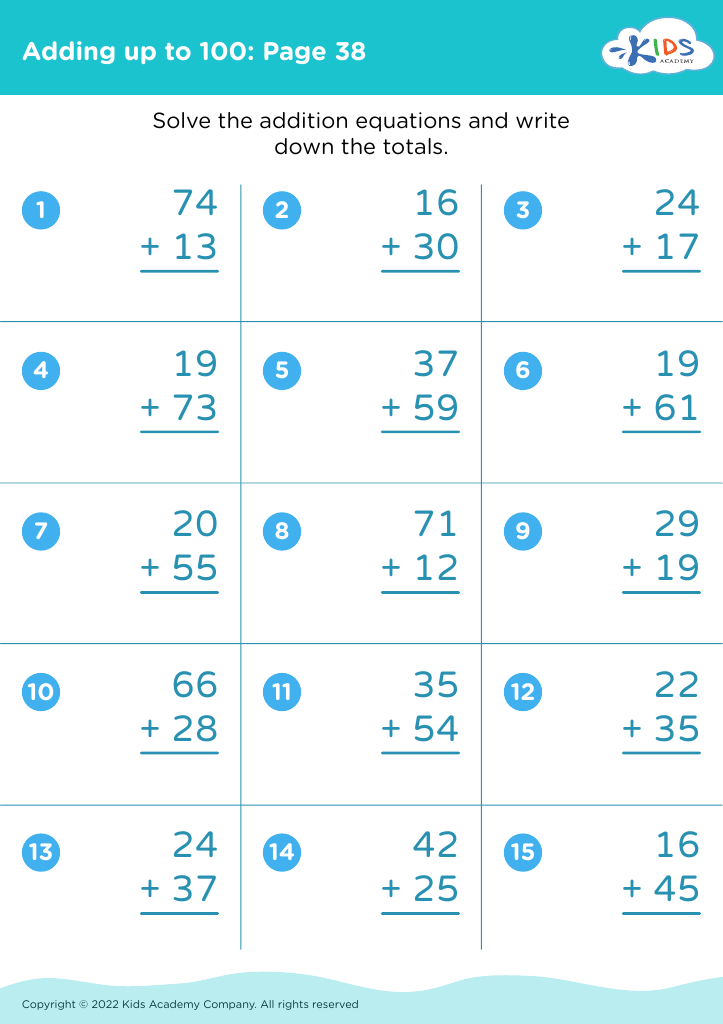
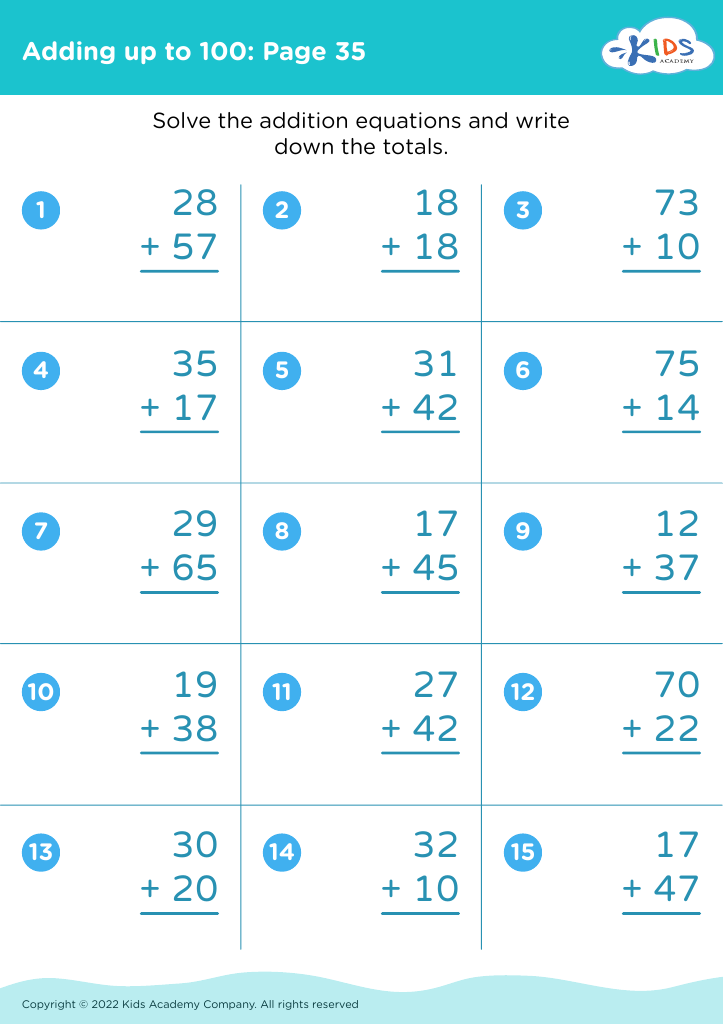
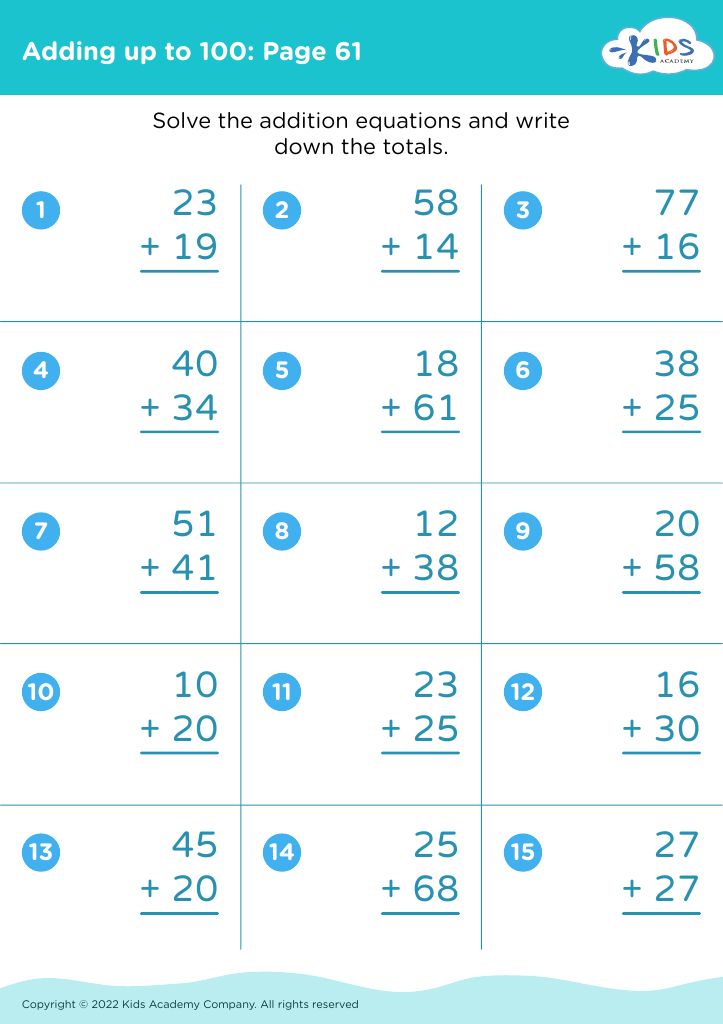
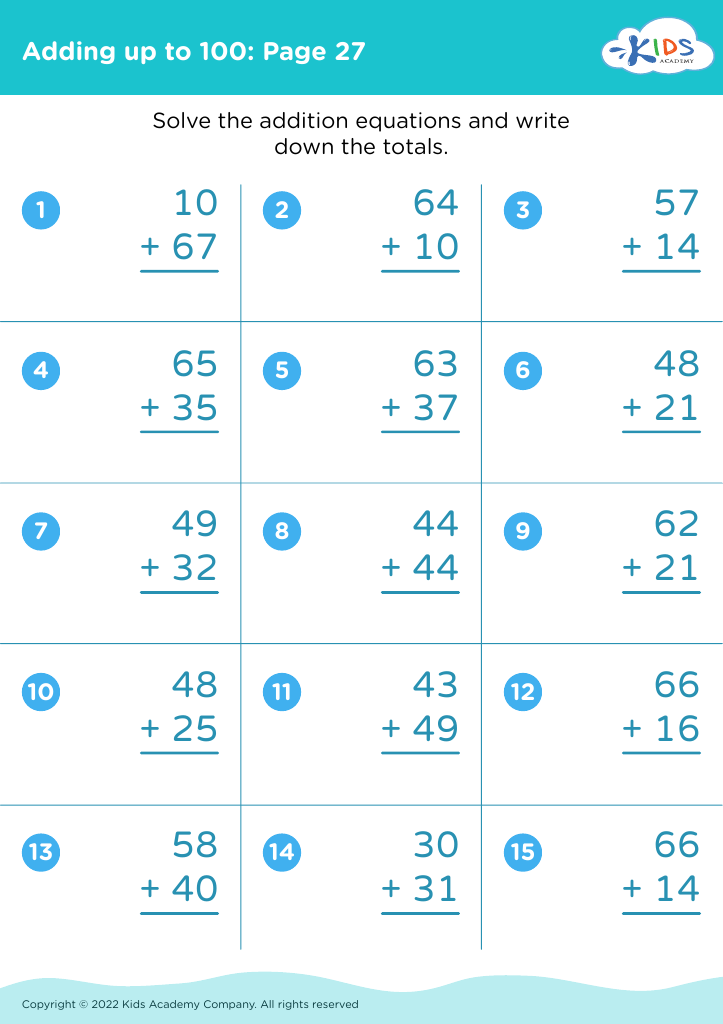
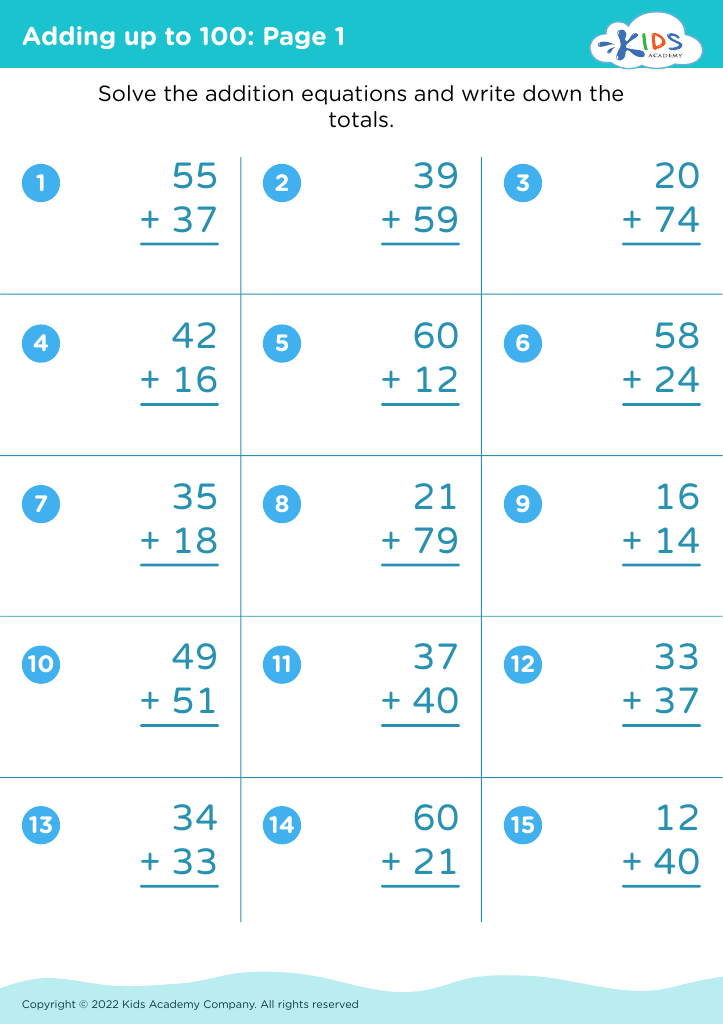
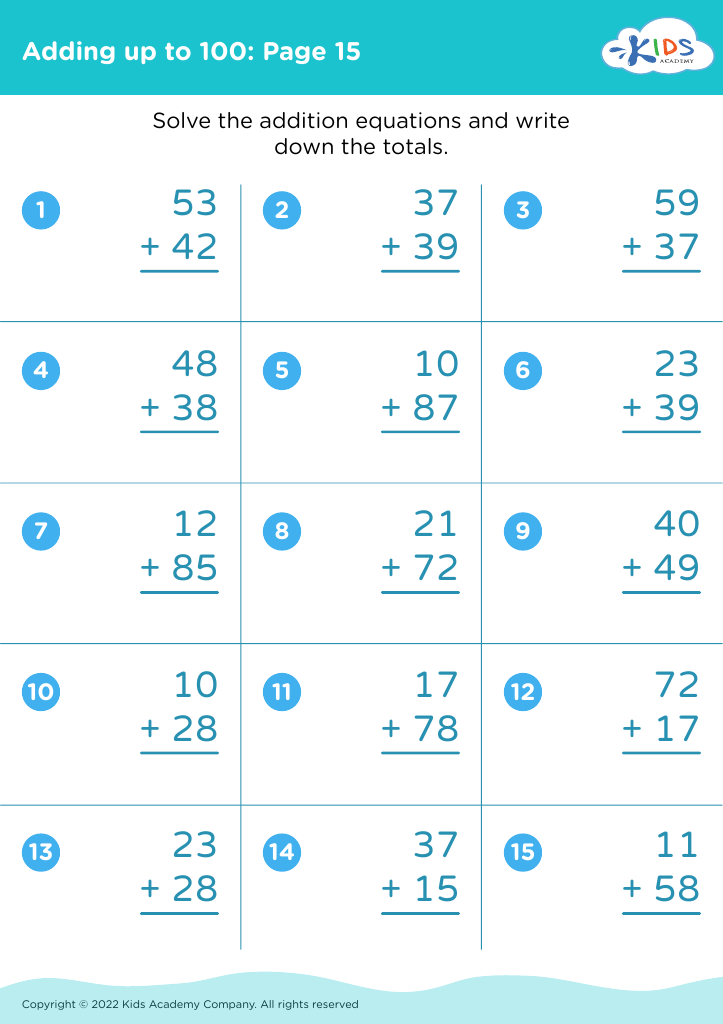


Counting skills in second grade are foundational for a child's mathematical development and are crucial for their future academic success. By second grade, students are expected to begin adding numbers up to 100, which requires a solid understanding of numerical concepts, place value, and addition strategies.
When parents and teachers focus on developing counting skills, they are not just helping children perform arithmetic operations; they are nurturing a sense of number fluency and confidence. Adding up to 100 involves understanding how numbers work together, recognizing patterns, and developing problem-solving skills. These abilities are essential for more complex math topics that will be introduced in later grades.
Moreover, proficiency in counting and arithmetic fosters critical thinking and enhances a child's ability to perform day-to-day activities involving numbers. Whether it is calculating change, managing time, or even playing sports, numerical skills play a substantial role.
Additionally, early math skills are often indicators of future academic achievement. Studies have shown that children who are proficient in math at an early age tend to perform better academically across subjects. Therefore, parents and teachers should invest time and resources into reinforcing counting skills to provide a strong mathematical foundation, boost overall cognitive development, and set the children up for long-term educational success.