Fraction simplification Grade 2 Adding up to 100 Misc Worksheets
6 filtered results
-
From - To
Enhance your 2nd grader's math skills with our comprehensive Fraction Simplification worksheets, designed for adding up to 100. Tailored for young learners, these engaging activities simplify fractions while boosting comprehension. Perfect for classroom or home use, our printable resources are crafted to make learning fun and effective. Explore various exercises that build foundational fraction understanding, ensuring a robust mathematical future. Foster confidence and proficiency in mathematics with these expertly curated worksheets from Kids Academy. Download, print, and watch your child master the art of simplifying fractions and adding numbers up to 100 with ease and enjoyment!
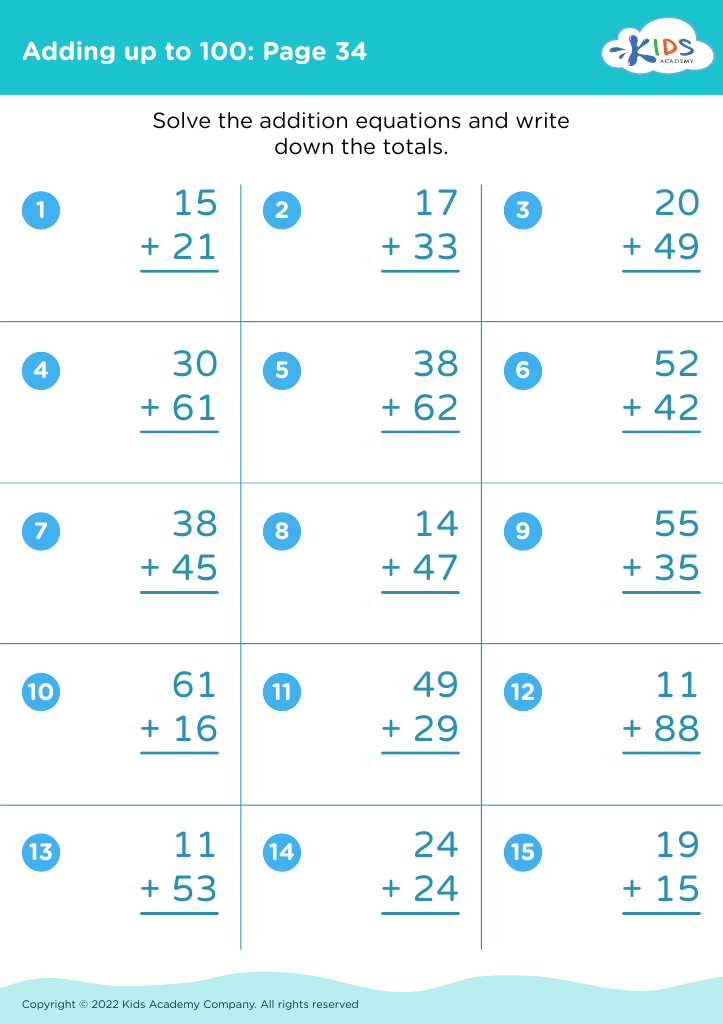
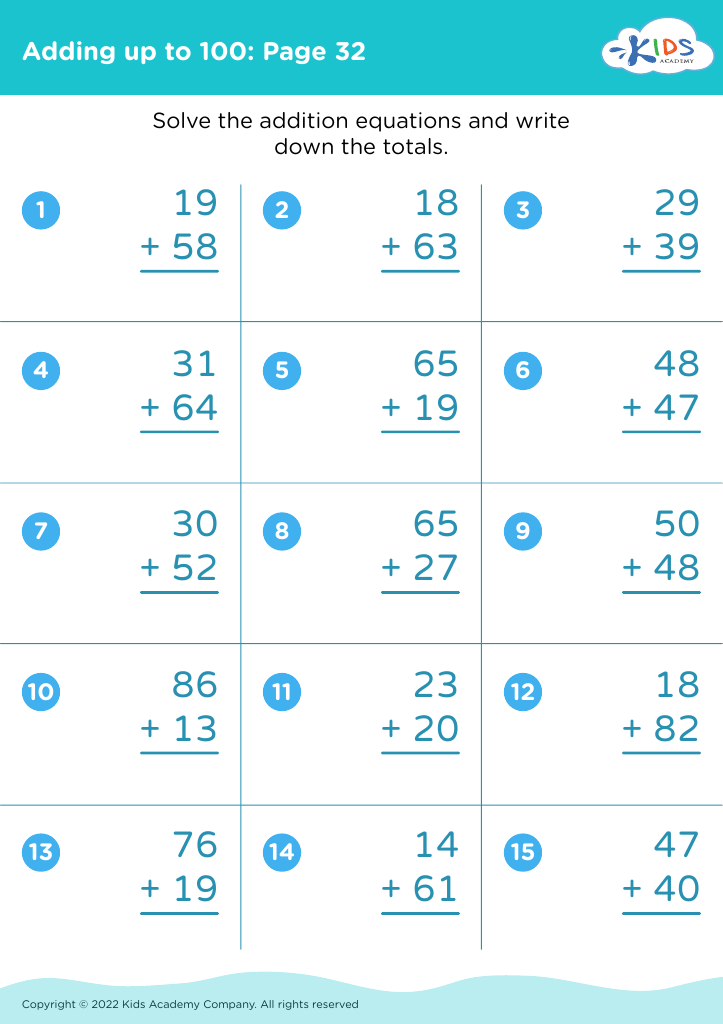
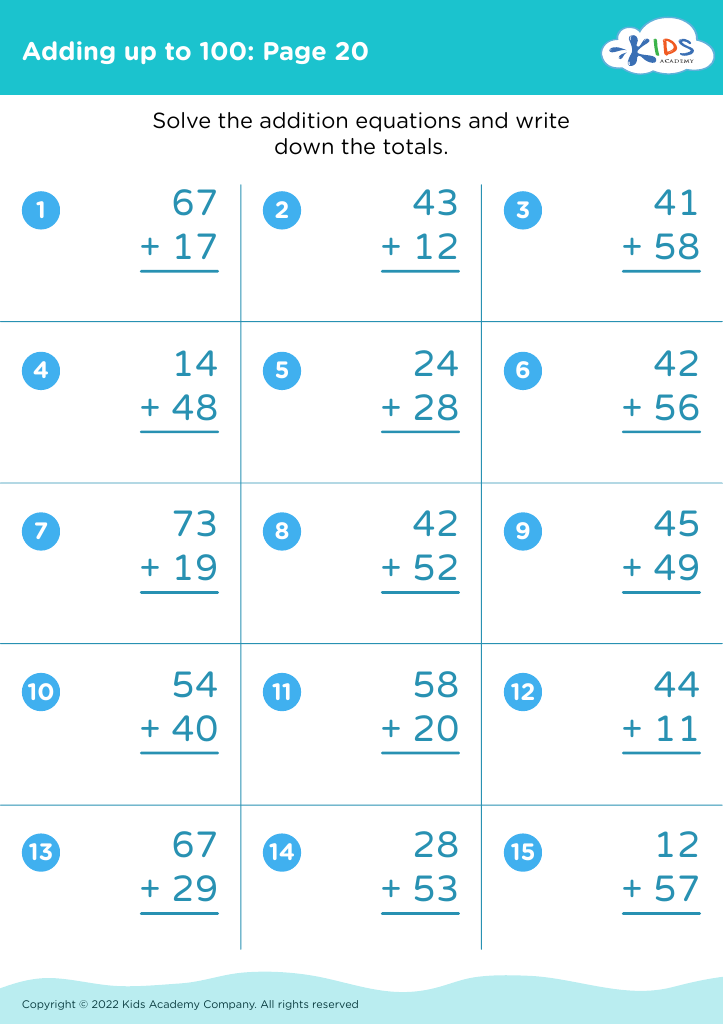
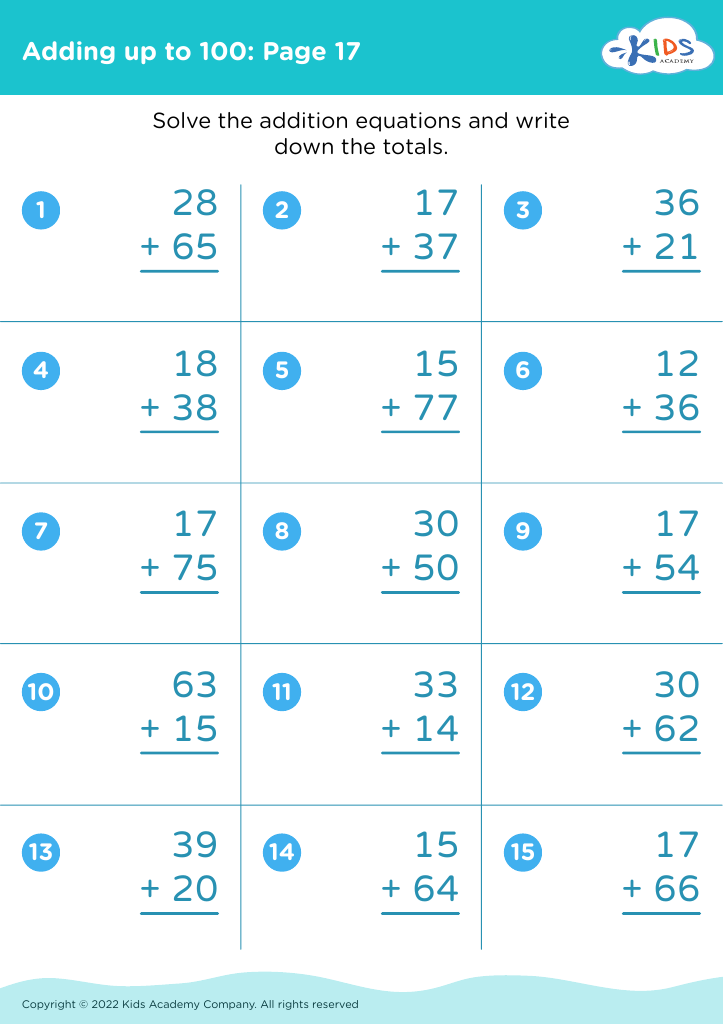
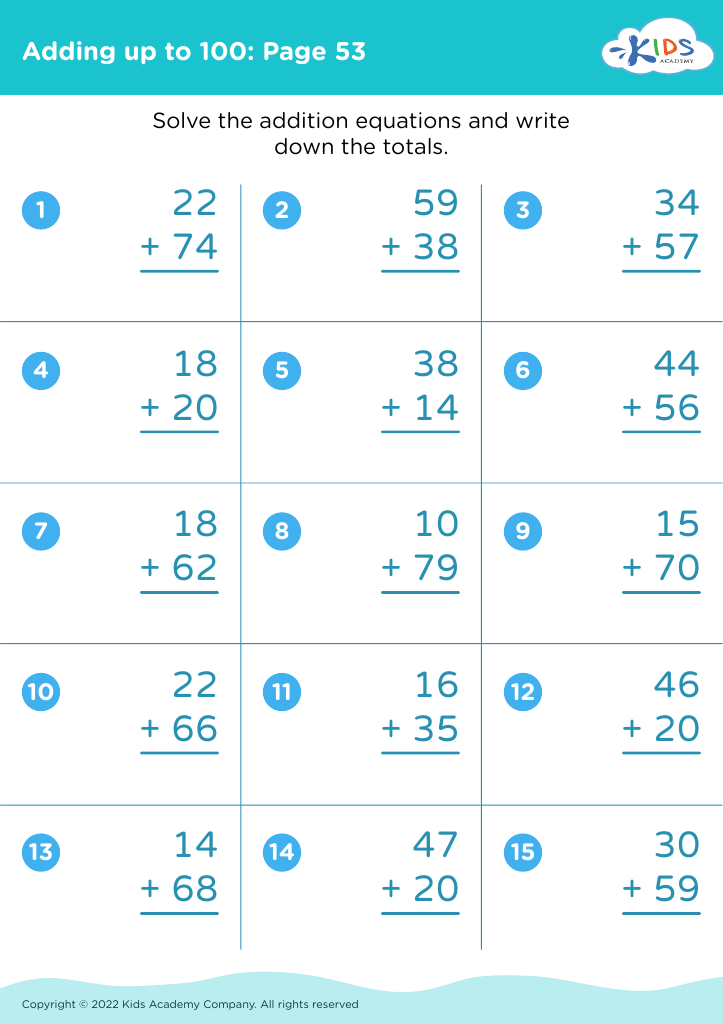
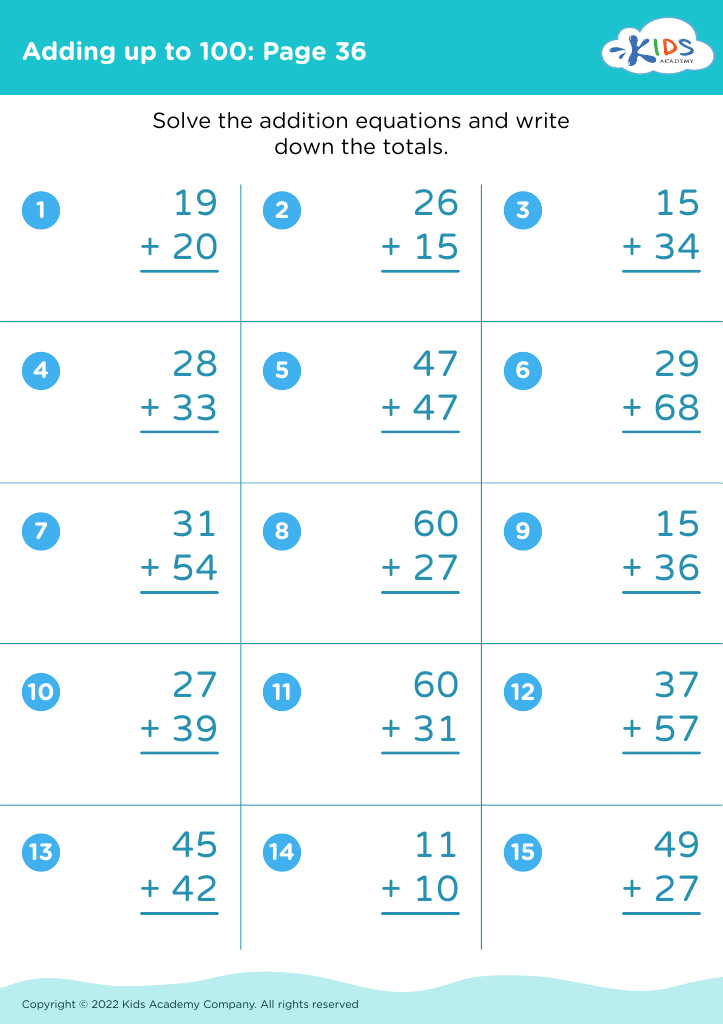


Parents and teachers play a crucial role in a young child's mathematical development, particularly concerning concepts like fraction simplification, addition up to 100, and other miscellaneous math skills. Understanding these foundational skills is pivotal for several reasons.
Firstly, fraction simplification helps students to break down complex math problems into simpler tasks, making advanced math more manageable as they progress. By learning to simplify fractions at an early age, students develop critical thinking, which is essential for higher-level mathematics and real-world applications such as measuring ingredients in recipes or dividing a bill among friends.
Secondly, the ability to add numbers up to 100 is not only crucial for arithmetic but also forms the foundation for number sense, an essential component of mathematical literacy. Proficiency in addition up to 100 prepares students for tasks involving money management, time calculation, and basic statistics.
Additionally, covering a variety of mathematical skills ('Misc') in the curriculum enhances problem-solving abilities and logical reasoning. Engaging students in diverse mathematical exercises keeps their interest alive and prevents skill gaps, laying a robust foundation for advanced grade levels.
Insum, early mastery of these concepts builds confidence and competence in young learners, preparing them for the everyday challenges that require mathematical knowledge, and fostering lifelong numeracy skills. Thus, parental and teacher engagement in these areas is indispensable.