Identifying shapes Grade 2 Adding up to 100 Misc Worksheets
3 filtered results
-
From - To
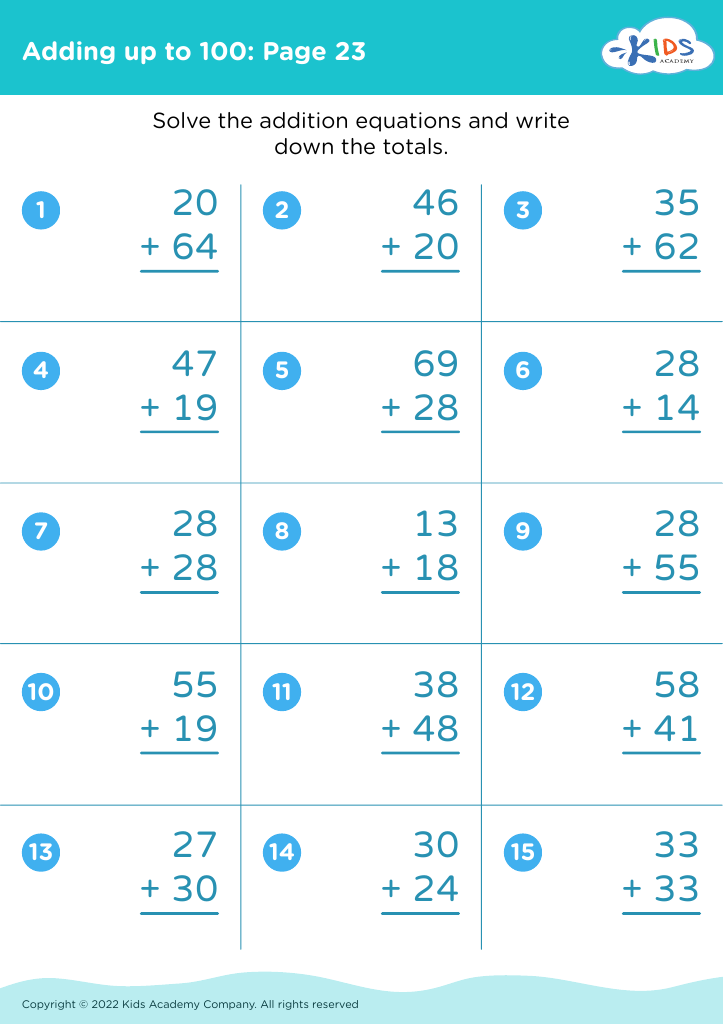
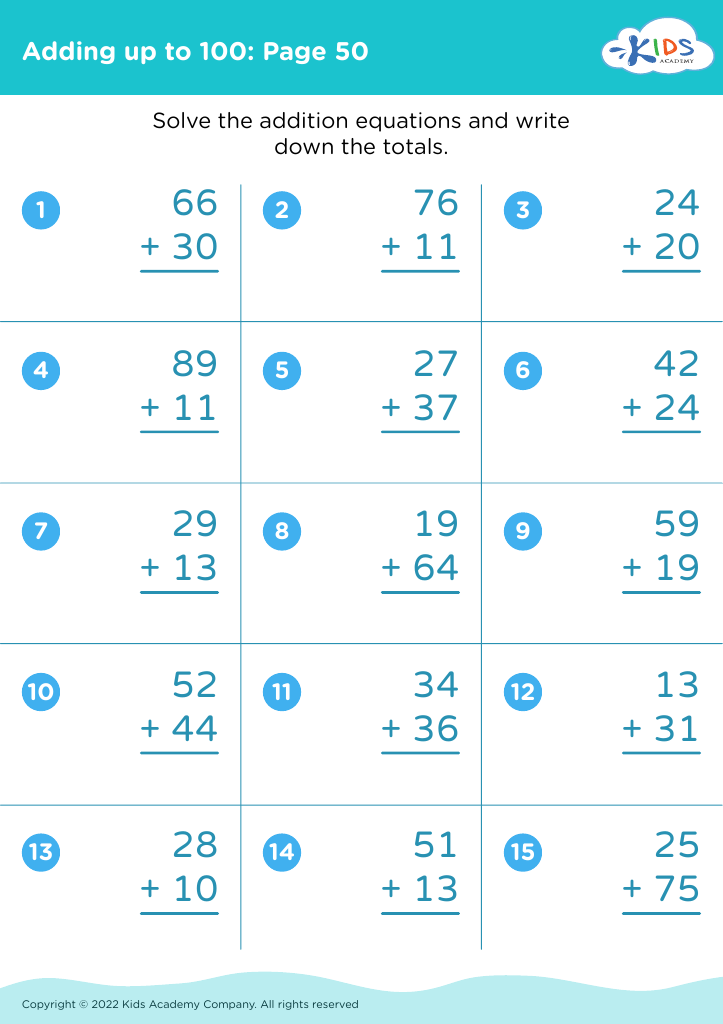
Enhance your second graders' mathematical skills with our "Identifying Shapes Grade 2 Adding Up to 100 Misc Worksheets." These engaging worksheets not only focus on shape recognition but also incorporate essential addition practice, boosting their understanding of numbers up to 100. Designed for young learners, these resources feature fun illustrations and interactive exercises that promote critical thinking and problem-solving. Perfect for classroom use or home studies, our worksheets help students make connections between shapes and numbers, reinforcing both geometry and arithmetic skills. Download today to provide your students with a comprehensive learning experience that makes math fun and accessible!
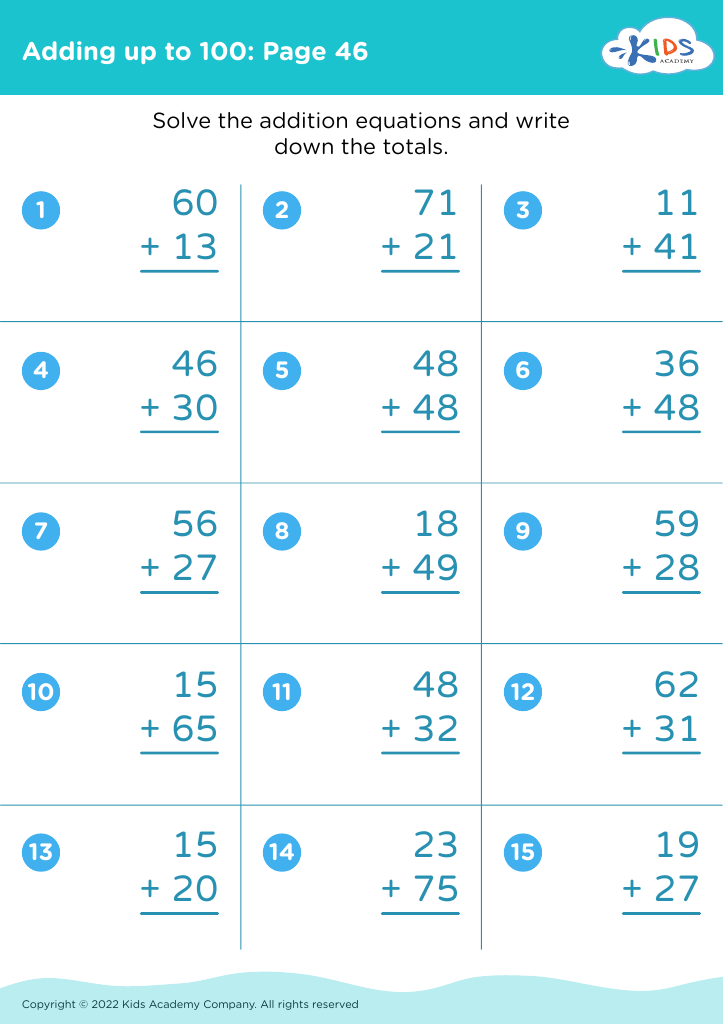


Identifying shapes and mastering addition up to 100 are essential skills for Grade 2 students that support their overall mathematical development and reasoning abilities. First, understanding shapes helps children recognize and classify objects in their environment, fostering spatial awareness and problem-solving skills. This foundational geometric knowledge is critical as it serves as a gateway to advanced topics in math, such as measuring, symmetry, and area.
Furthermore, adding numbers up to 100 equips students with fundamental arithmetic skills that are crucial for daily life and future learning. Mastery of addition enhances their ability to solve complex math problems, making more advanced concepts, like subtraction and multiplication, easier to grasp. Additionally, it builds their confidence in mathematics, encouraging a positive attitude toward learning and problem-solving.
Parents and teachers play a pivotal role in creating engaging learning environments that make these concepts come alive. By providing opportunities for hands-on activities with shapes and practical applications of addition, they can make math enjoyable and relevant. Ultimately, mastery of these skills not only supports academic success but also fosters critical thinking, resilience, and independent problem-solving that will benefit students throughout their educational journey and beyond.