Problem-Solving Skills Grade 2 Adding up to 100 Misc Worksheets
7 filtered results
-
From - To
Discover engaging "Problem-Solving Skills Grade 2 Adding Up to 100 Misc Worksheets" designed to enhance your child's mathematical abilities! These worksheets help second graders practice addition skills while solving various word problems related to adding up to 100. Tailored to reinforce critical thinking, each worksheet presents fun, interactive challenges that promote understanding and retention of mathematical concepts. Perfect for classroom use or at-home learning, these resources encourage kids to explore different problem-solving strategies. Empower your child’s confidence in math and watch them excel as they tackle exciting addition problems! Start their journey to becoming a math whiz today!
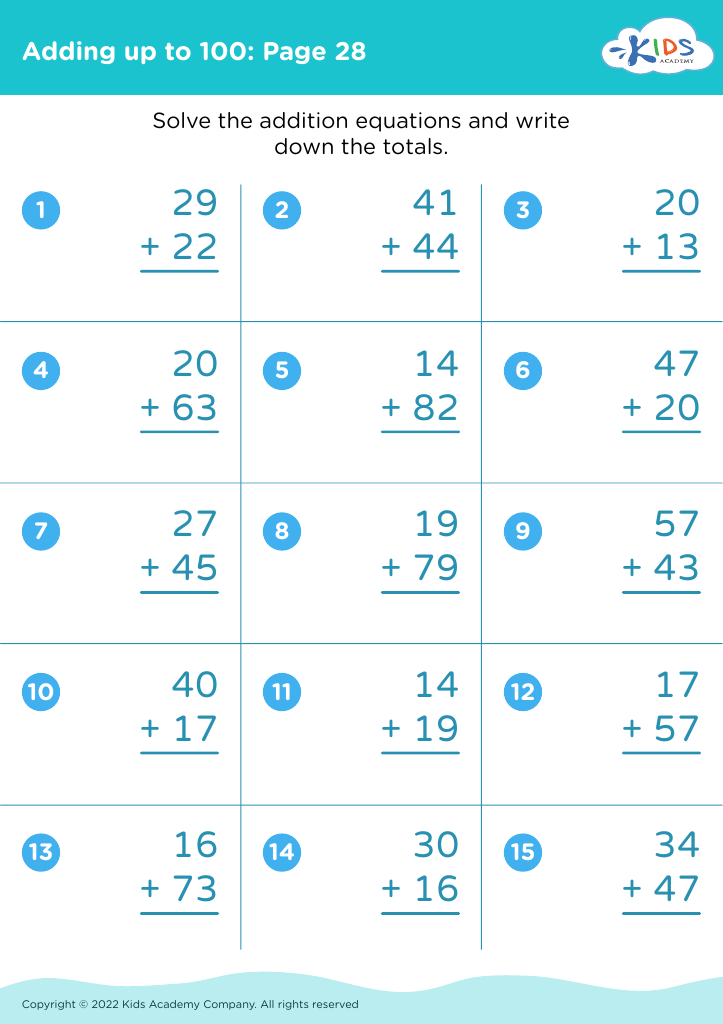
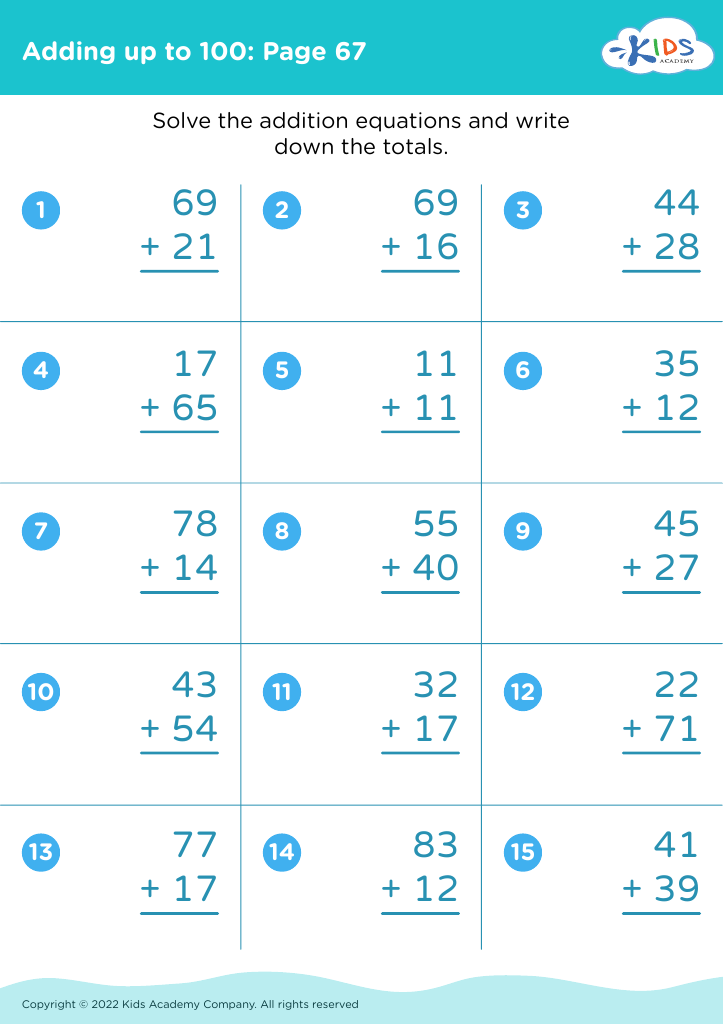
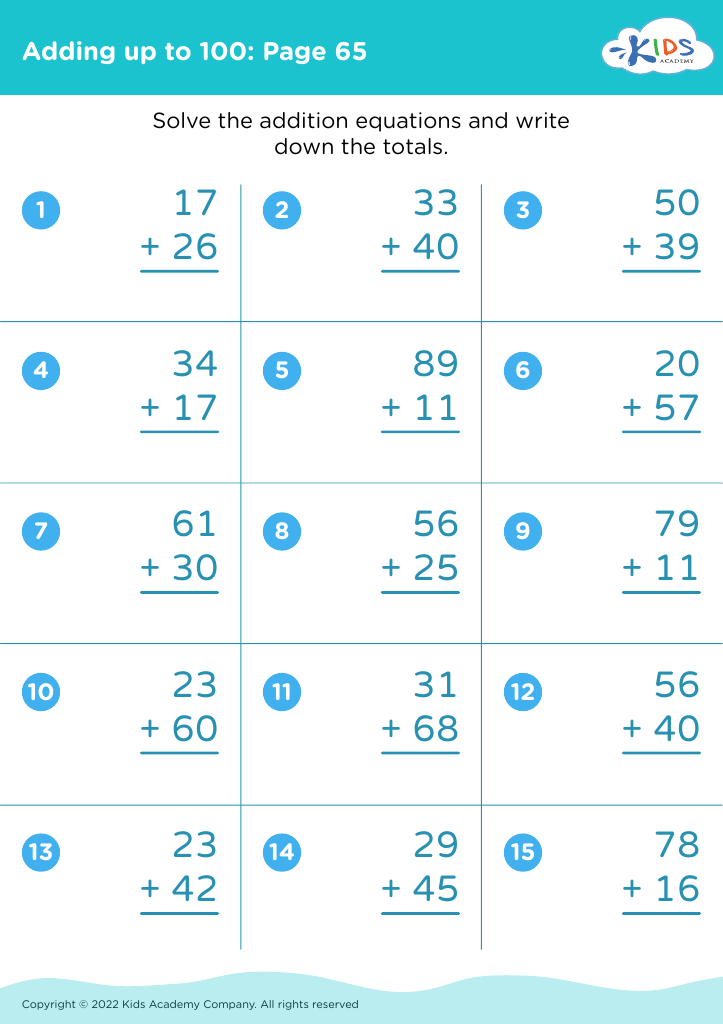
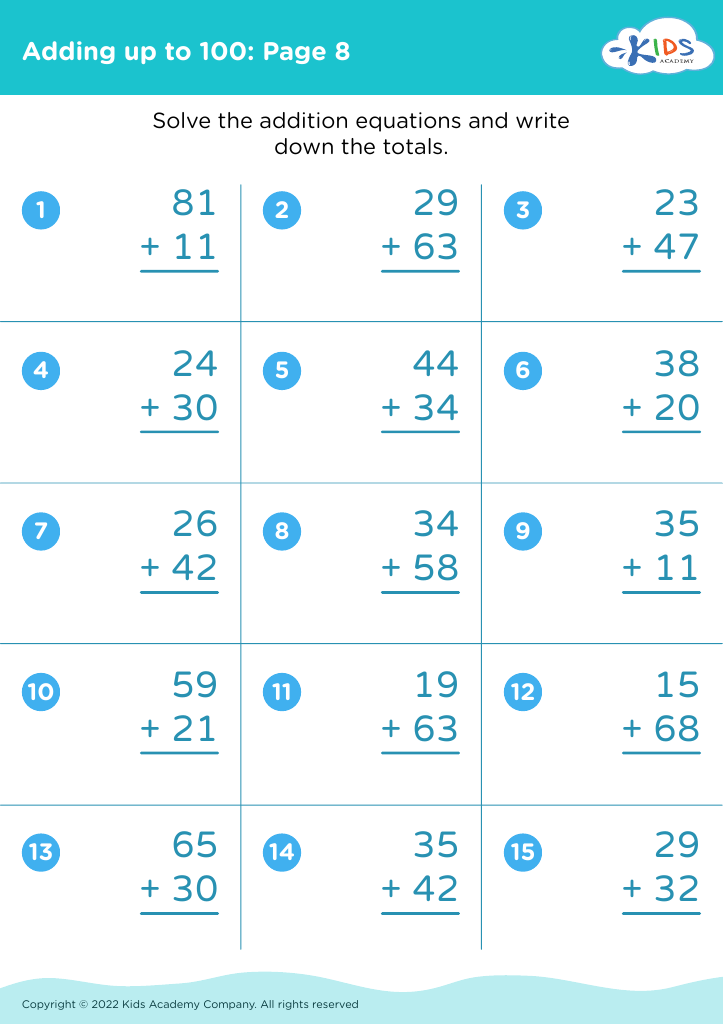
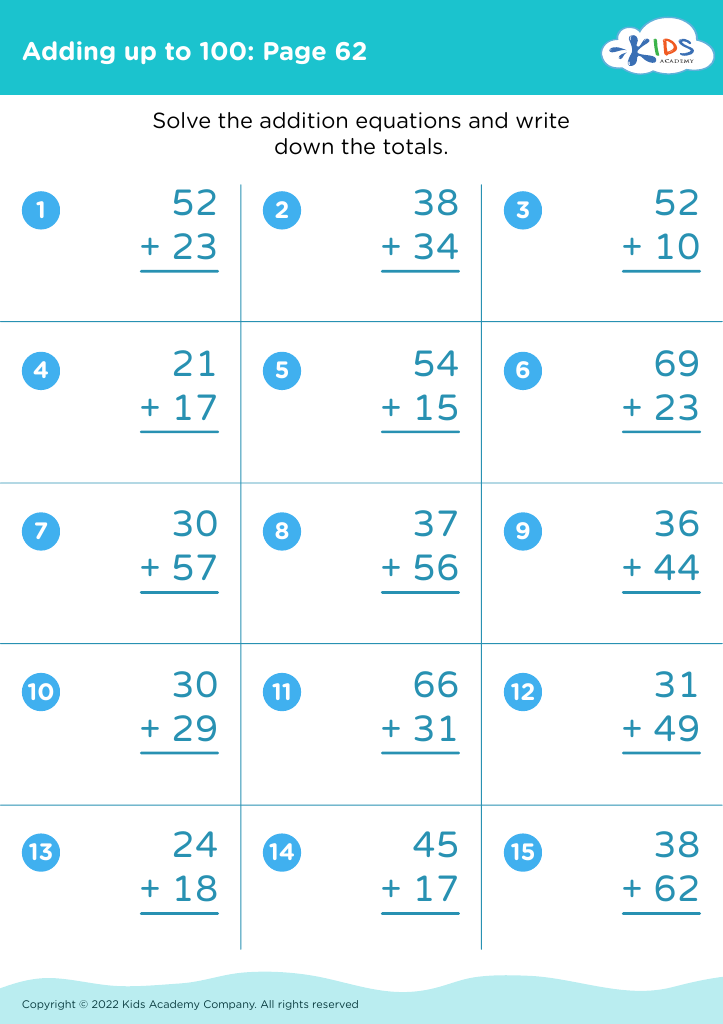
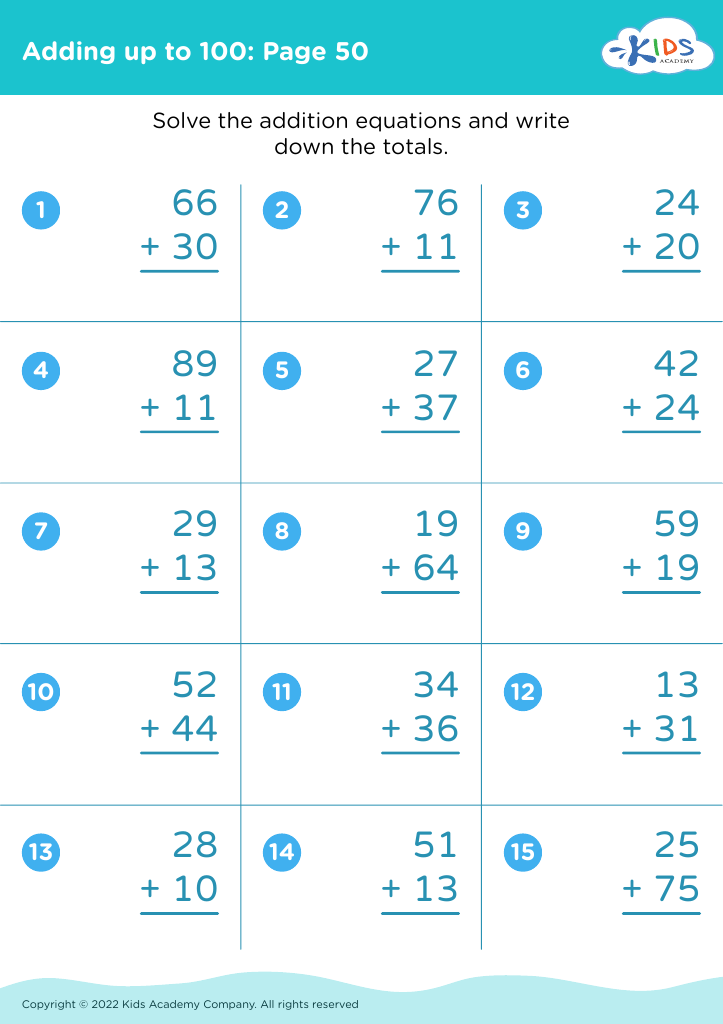
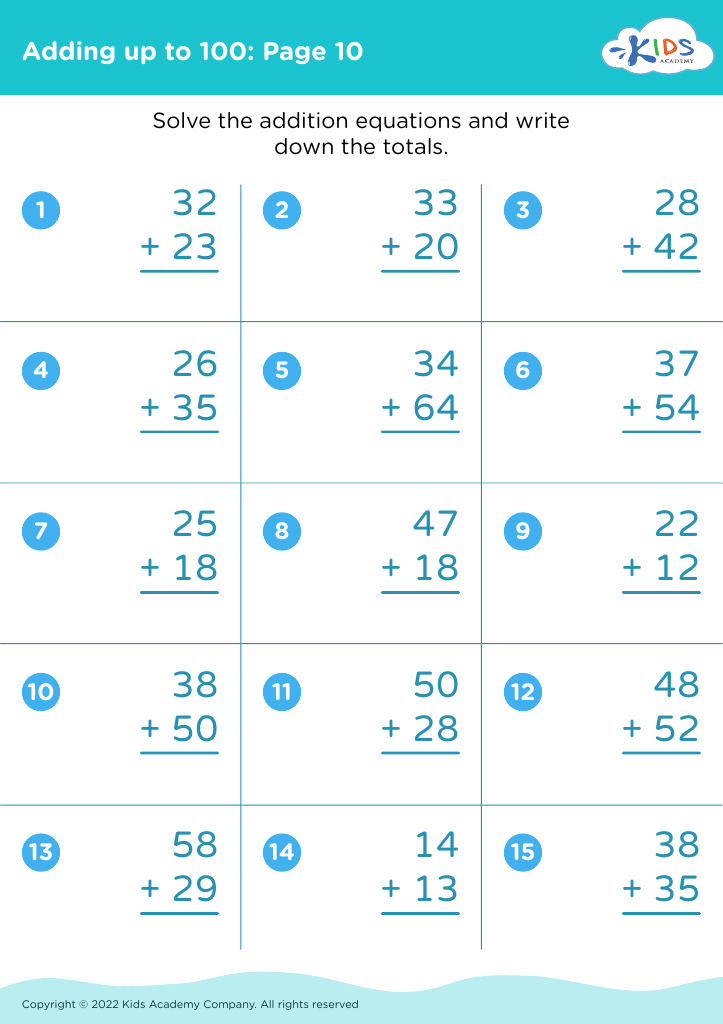


Parents and teachers should prioritize problem-solving skills in Grade 2, particularly in the context of adding up to 100, because these skills serve as the foundation for future mathematical understanding and critical thinking. At this developmental stage, children are transitioning from basic arithmetic to more complex problem-solving scenarios. Mastering the ability to add numbers up to 100 lays the groundwork for higher-level math skills, including subtraction, multiplication, and eventually, more advanced concepts.
Furthermore, the process of problem-solving enhances children's cognitive abilities, helping them develop analytical thinking, persistence, and resilience. By encountering various scenarios that require them to think creatively and apply different strategies to find solutions, students become more confident in their abilities. This practice not only supports academic growth but also contributes to life skills essential for everyday decision-making and challenges.
Encouraging these skills fosters a love for learning and a positive attitude towards mathematics, which can help combat math anxiety later in life. In collaboration, parents and teachers can create an environment where children feel safe to experiment, make mistakes, and learn from them, ultimately empowering them to embrace problem-solving as a valuable lifelong skill.